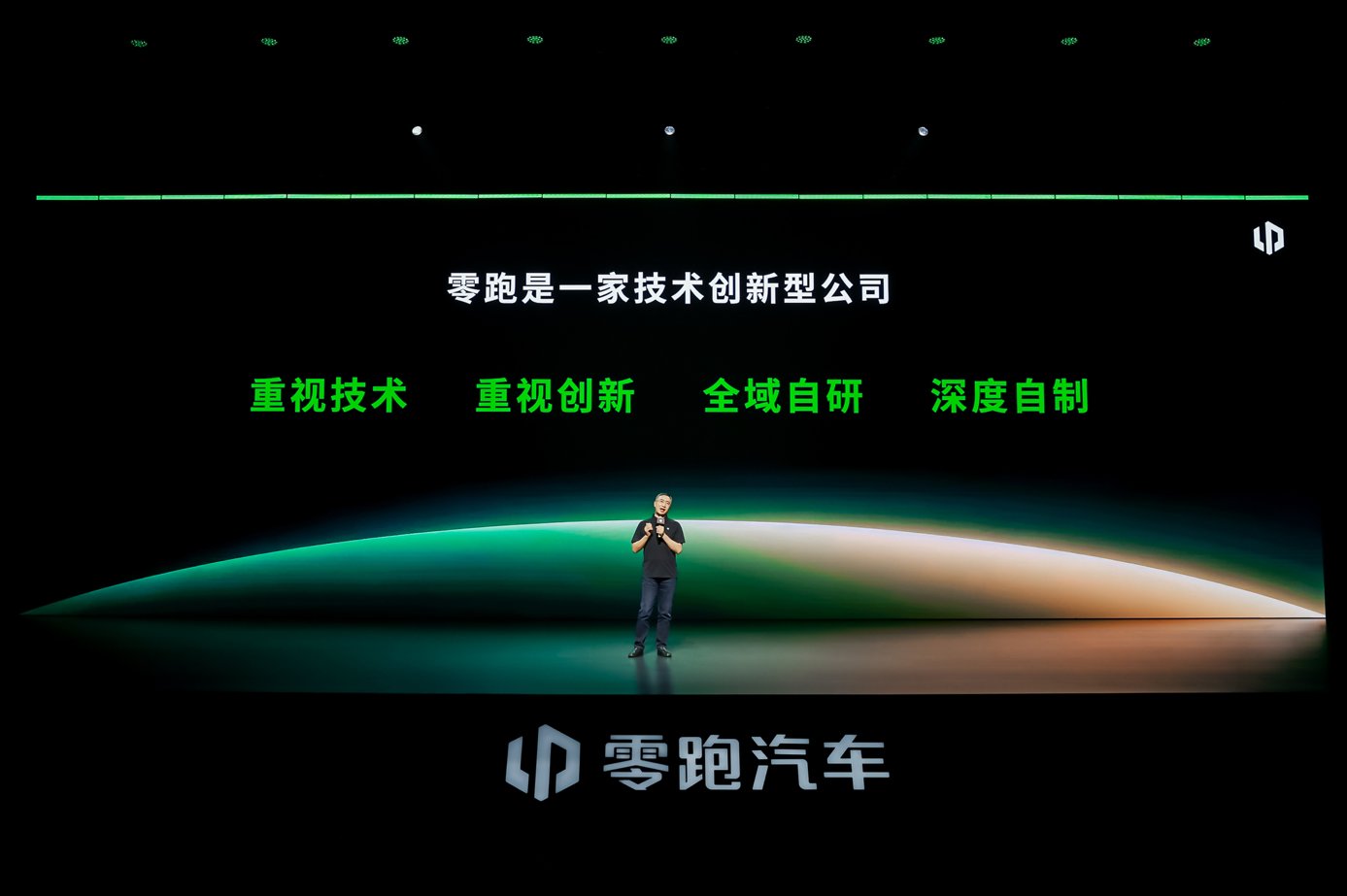
On September 16, the 2026 Leapmotor Tech Day was held under the theme "Confidence." This was a concentrated presentation of Leapmotor's 11 years of full-domain in-house research and deep self-manufacturing strength: on site, it released a new LEAP5.0 vehicle architecture, three major core technologies, and multiple technological reserves, systematically showcasing its innovation achievements from vehicle architecture to core systems, and from automotive technology to cross-sector robotics.
When industry discussion focuses more on the existing competition over screens, computing power, and configurations, Leapmotor's judgment is this—the current replacement of fuel vehicles by electrification is the replacement of electronics for mechanics, and from the underlying architecture to the overall vehicle functional experience, there is still substantial room for innovation. Leapmotor founder, chairman, and CEO Zhu Jiangming said: "Leapmotor will not innovate for the sake of showing off technology. Every innovation released this time will be implemented in the next generation of products, so that good technology can be enjoyed by everyone."
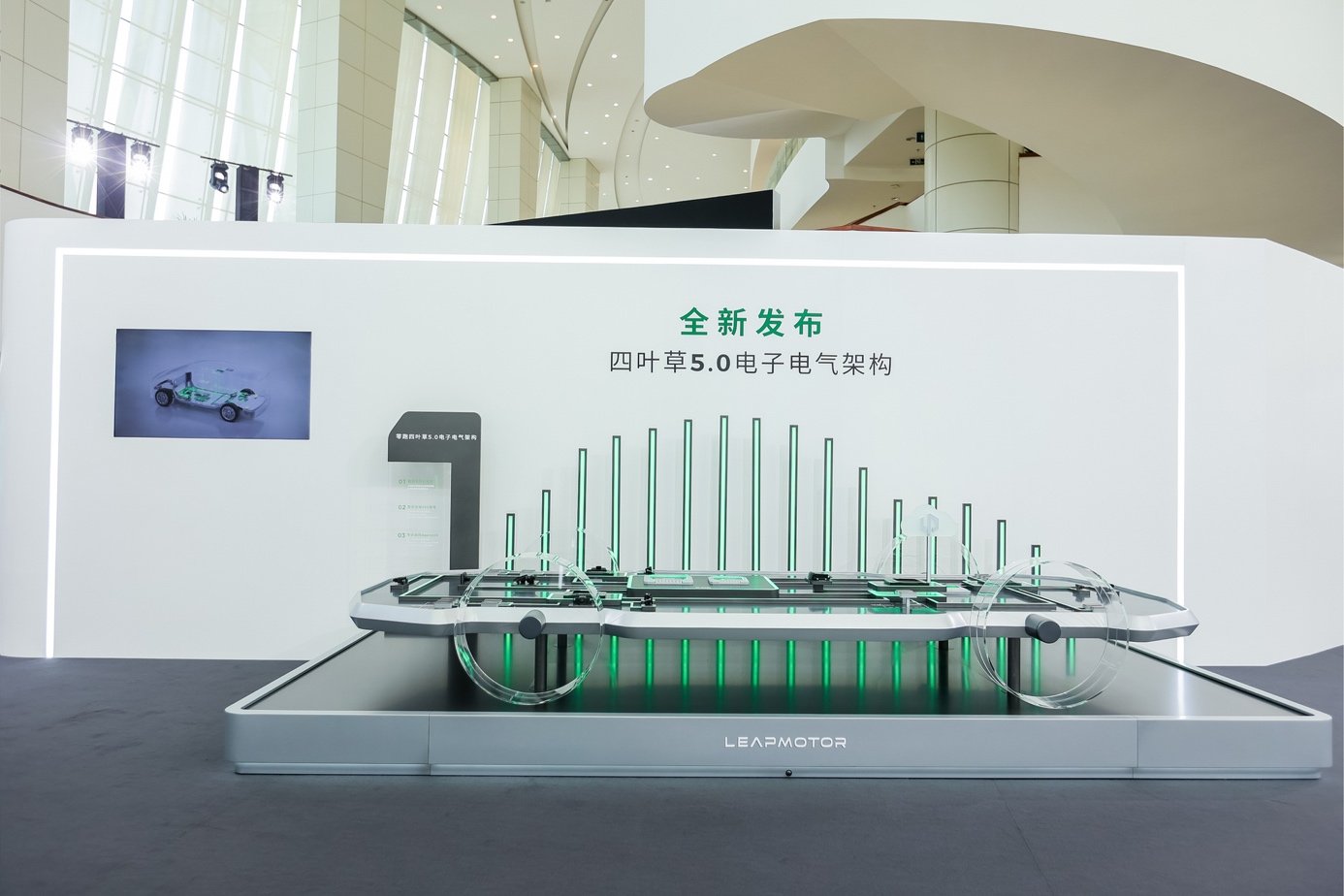
LEAP5.0 Vehicle Architecture: Reconstruction of Physical Space and Electronic Intelligence
LEAP5.0 is Leapmotor's all-new generation architecture after LEAP1.0–4.0, comprising both physical and electronic layers, and its core was born for all-new category products of Leapmotor's second brand.
On the physical level, the new mobile space architecture breaks the traditional automobile layout inertia of horizontal, longitudinal, and vertical directions, achieving XYZ three-direction expansion: through the integration of a super air-conditioning all-in-one unit and the rear placement of the powertrain, cabin length space is increased by 19%; through the upright layout of shock absorbers and a small shock tower package, front-row leg width is increased by 37.5%; through a native integrated intelligent lifting roof and a completely flat low floor, cabin height is increased by 63.7%. The three-direction expansion ultimately achieves a space utilization rate of over 100%, and the spatial layout can be flexibly combined to create a true "third mobile space."
On the electronic level, the Four-Leaf Clover 5.0 central domain control architecture uses full-vehicle 48V power supply, full-vehicle Ethernet, and vehicle-cloud AgentOS to achieve true central integrated control, with the remaining domain controllers only performing execution, shortening the vehicle wiring harness to the industry's shortest at 500 meters. To put it plainly: 48V power supply gives the vehicle more ample power, lighter wiring, and lower losses; full-vehicle Ethernet is equivalent to laying a "high-speed network" for the entire vehicle, and is the foundation for full-vehicle OTA, cabin-driving integration, and vehicle-cloud collaboration, and also determines how long a vehicle can continue to be upgraded in the future. Only by combining breakthroughs in physical space with the evolution of electronic intelligence can the space with "over 100% space utilization rate" also possess advanced intelligent experience. It is reported that the all-new category products of the second brand based on this architecture will feature free combinations of multiple forms such as restaurant, cinema, bedroom, and coffee bar, and will debut next year.
LWM World Model Intelligent Driving: Algorithmic Innovation Enters the First Tier, World Model Extended to Under 100,000 Yuan
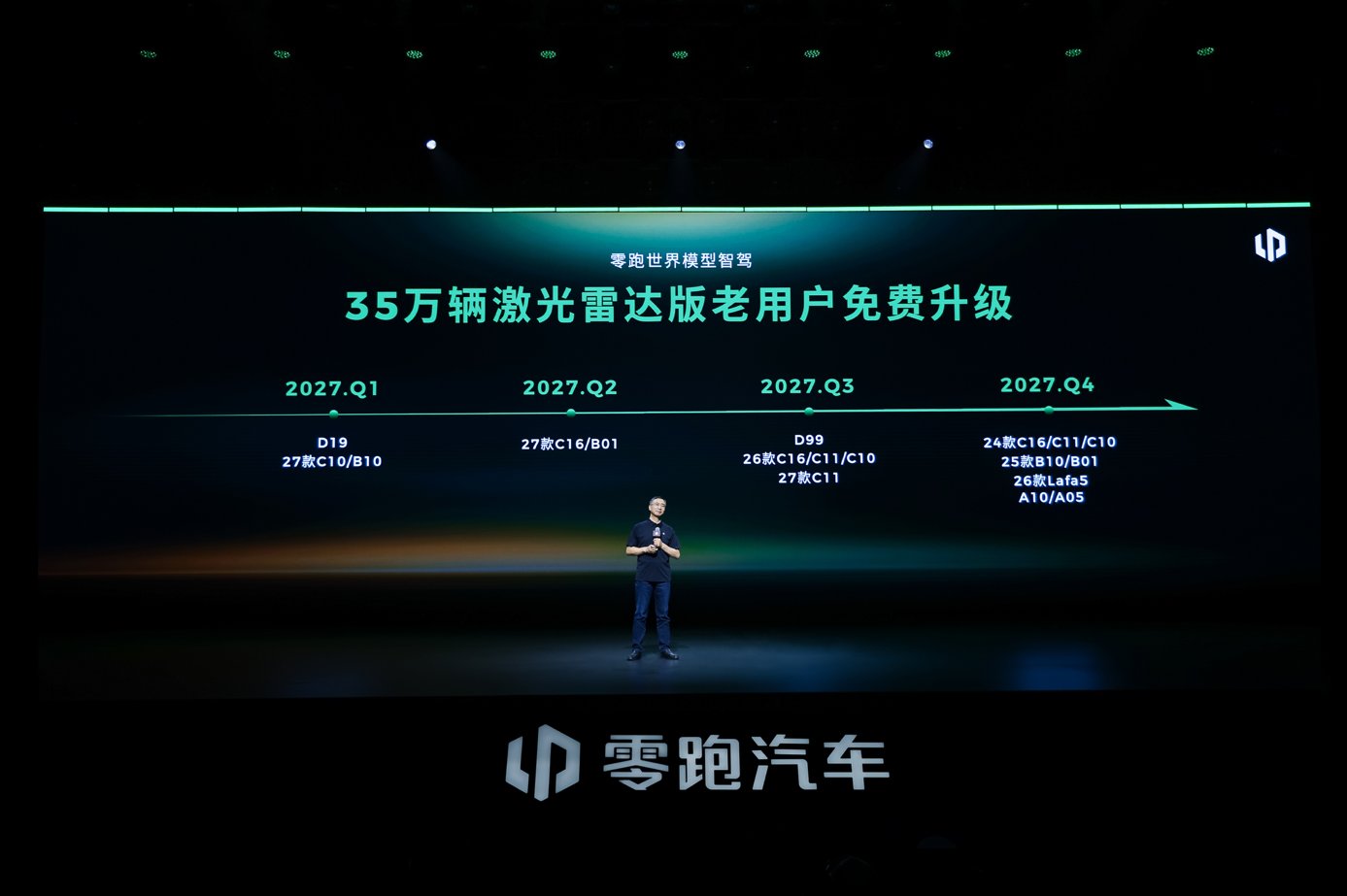
In the field of intelligent driving, Leapmotor officially released its self-developed world model assisted driving system. The world model moves vehicles from "memorizing road conditions according to rules" to "truly understanding road conditions"; algorithmic innovation that does not rely on BEV perception, does not depend on rule-based code, and uses lidar as safety redundancy, combined with cloud-based large models, can achieve fleet-level collaborative evolution: after complex road conditions encountered by one vehicle are learned in the cloud, all vehicles can master the corresponding handling strategies, effectively resolving long-tail scenario challenges.
Zhu Jiangming said on site that as of the end of August, Leapmotor had delivered 350,000 vehicles equipped with lidar versions. Leapmotor promises: all lidar version users will receive a free upgrade to the world model intelligent driving version, and lifetime free use. Among them, for the earliest batch of more than 10,000 users, because their hardware platform is inconsistent, algorithm migration and reconstruction alone requires at least 50 million yuan in investment, yet Leapmotor still chose to complete the upgrade regardless of cost. Relying on algorithms and systematic efficiency, Leapmotor has further extended advanced assisted driving capabilities to models under 100,000 yuan, including the A10, so that mainstream consumers can also access it.
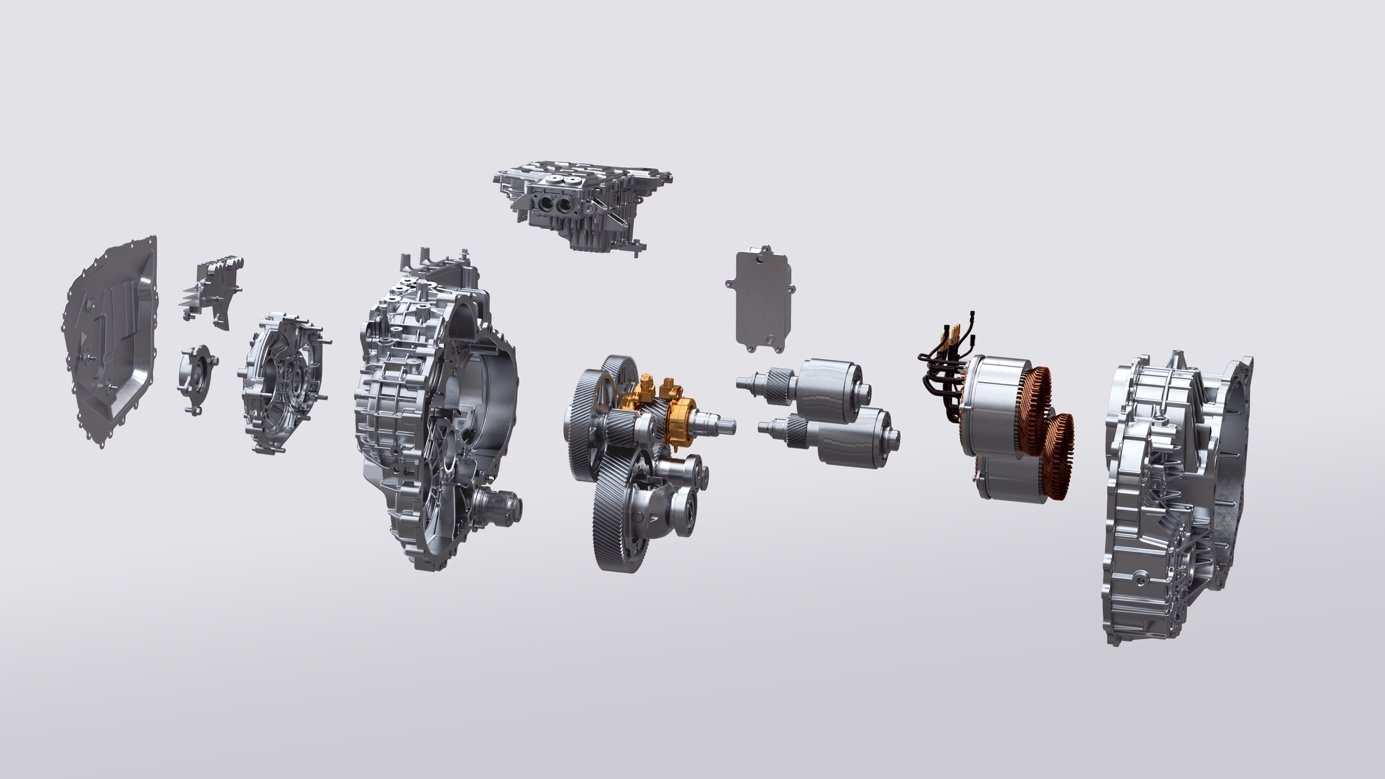
MM-i Multi-Mode Hybrid Electric Drive: Three Major Industry Firsts, Officially Entering the Plug-In Hybrid Track
Leapmotor also released the MM-i multi-mode hybrid electric drive, officially entering the plug-in hybrid track, thus completing a full powertrain layout of "pure electric + extended range + plug-in hybrid."
In traditional hybrids, the generator only generates electricity and the drive motor only drives, leaving components idle in their respective roles, which also brings problems such as weaker pure electric performance, higher high-speed energy consumption, and larger volume. MM-i returns to the structure itself and reconstructs this system with three major industry firsts: first, a generator reuse architecture, allowing the generator to also participate in driving when needed, with dual motors outputting together, achieving a system peak power of 206kW, 28% higher than the same class; second, coaxial integration of dual electromagnetic clutches, with the entire electric drive weighing only 106kg, 40% lighter than the same class, and an overall width of only 313mm, 25% smaller in volume than the same class, allowing high-performance hybrid coverage from A0 to D class; third, intelligent dual-motor control, seamlessly switching among multiple operating conditions and modes, shortening shift time from 400ms to 150ms, with no power interruption throughout, and achieving drive efficiency of 91.5% and generation efficiency of 94.4%, the highest in the industry.
This capability was not achieved overnight. Since the mass production of its first extended-range model in 2022, Leapmotor has cumulatively launched 7 extended-range models, and with full-link in-house development of the electric drive system, the structural form of MM-i comes from original co-creation within the team and has broken through the patent barriers of traditional overseas clutches. Leapmotor judges that globally, direct-drive plug-in hybrids still have a 5–10 year life cycle, especially in regions with inconvenient charging conditions, where users need better hybrid solutions.
CTC3.0 High- and Low-Voltage Integrated Battery: Eliminates Independent Low-Voltage Battery, Maintenance-Free for Life, Patents Open-Sourced to the Entire Industry
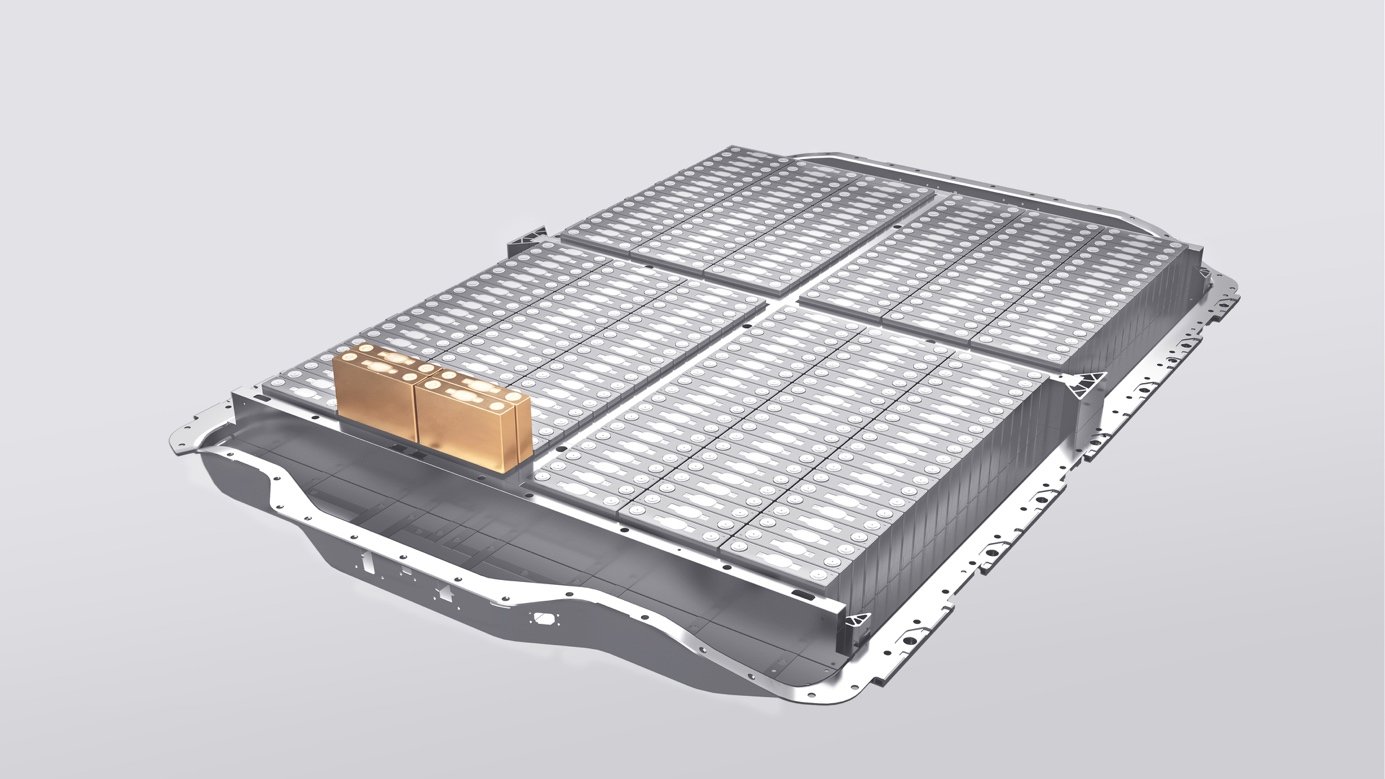
In the battery field, Leapmotor released the CTC3.0 high- and low-voltage integrated battery. While the industry generally regards the low-voltage battery as an independent standard configuration, Leapmotor eliminates the low-voltage battery that was originally external and needed replacement every few years, integrating its functions into the large power battery pack and sharing one management system: low-voltage battery capacity is increased 7 times, achieving lifetime maintenance-free operation, and saving more than 2,000 yuan per vehicle in usage costs.
Leapmotor is the domestic automaker that was the earliest to achieve mass production installation of CTC and has the largest cumulative installation volume. Through three generations of technological iteration and verification through more than one million vehicle installations, it has fully mastered the key links of the entire CTC chain, which is also the confidence behind its daring to innovate and its provision of lifetime battery warranty to first owners. At the press conference, Leapmotor also announced that it would open-source patents related to the high- and low-voltage integrated CTC battery to the entire industry. According to estimates, if this technology is widely applied across the industry, it can reduce the use and disposal of more than one million low-voltage batteries each year.
Multiple Technological Reserves: The Natural Spillover of Full-Domain In-House Development Capability
In addition to the officially released architecture and three major systems, multiple self-developed technological reserves were also displayed on site.
Facing the hot embodied intelligence track, Zhu Jiangming maintained Leapmotor's consistent pragmatism: "Do not hype concepts; implement when the time is right. A robot that can go for a stroll is not a real skill; a robot that can make money is what is presentable." According to introduction, Leapmotor's humanoid robot has achieved fully in-house development and entered the testing stage, with underlying capabilities such as motors, controllers, batteries, perception algorithms, and computing platforms all independently mastered; the company is investing on a small scale and actively exploring application scenarios that can be scaled up and have commercial value.
In addition, Leapmotor also showcased the industry's first super integrated air-conditioning all-in-one unit + 14-way valve control; a three-level hybrid transmission pure electric drive with comprehensive efficiency of 94% and torque exceeding 5,500 N.m; and automotive optical achievements such as a self-developed all-solid-state lidar, an 8-megapixel three-in-one camera, and a panoramic head-up display P-HUD.
Technology and Innovation Are Leapmotor's Confidence for the Future
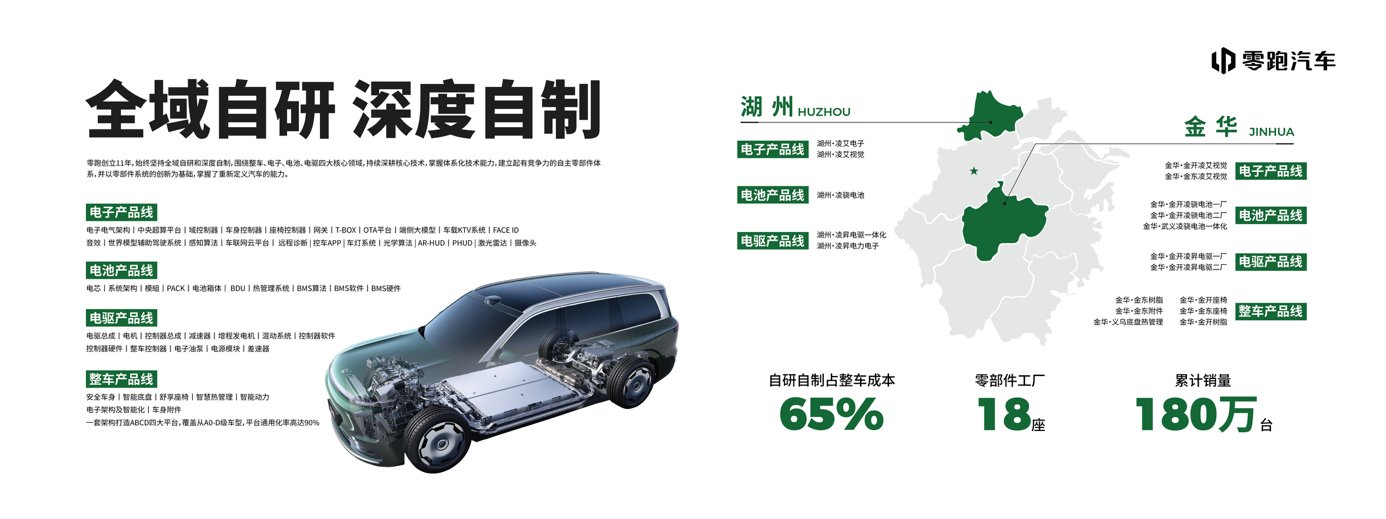
Behind a vehicle architecture for the second brand, three major core technologies, and multiple reserves is the systematic capability accumulated from Leapmotor's 11 years of persisting in full-domain in-house development and deep self-manufacturing. At present, Leapmotor has built 18 parts factories, with self-developed and self-manufactured parts covering 65% of vehicle cost, and a platform commonization rate of 90%; since 2026, monthly deliveries have continuously exceeded 100,000 vehicles, ranking among China's top three new energy brands, and it has achieved profitability for three consecutive half-year periods; its products have entered 45 countries and regions worldwide, with cumulative sales exceeding 1.8 million vehicles.
Not chasing short-term concepts, not avoiding technical challenges, and sinking resources into underlying R&D and product experience—this is precisely the footnote of Leapmotor-style long-termism. Zhu Jiangming said: "Technology and innovation are the confidence of an enterprise facing the future, and also its most core competitiveness." The innovations released at this Tech Day will continue to be implemented in the next generation of products, driving Leapmotor to accelerate toward becoming a respected world-class smart electric vehicle company.


