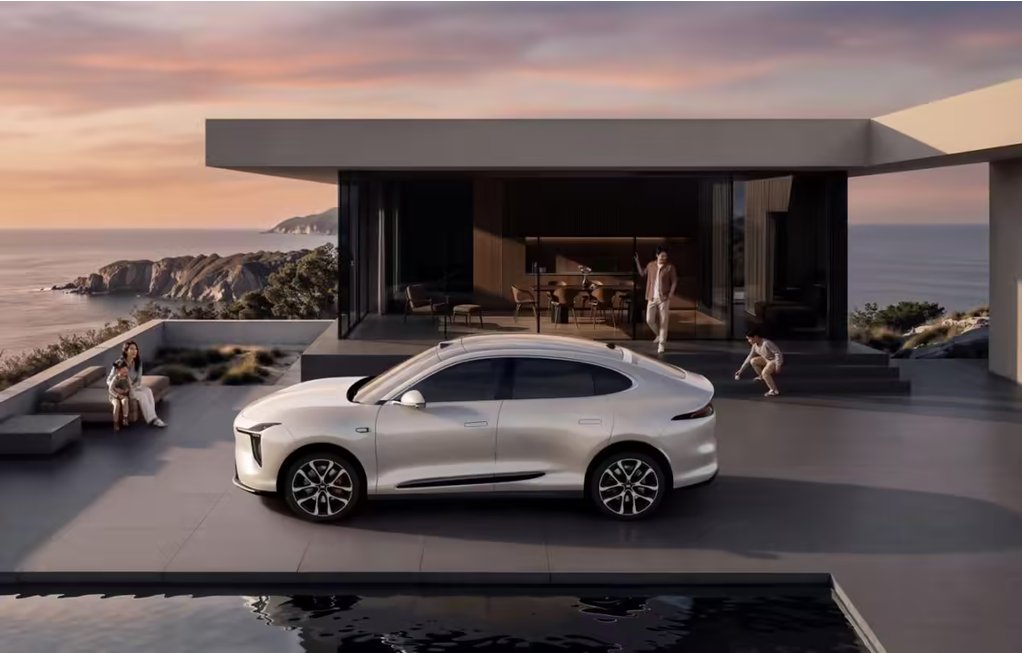
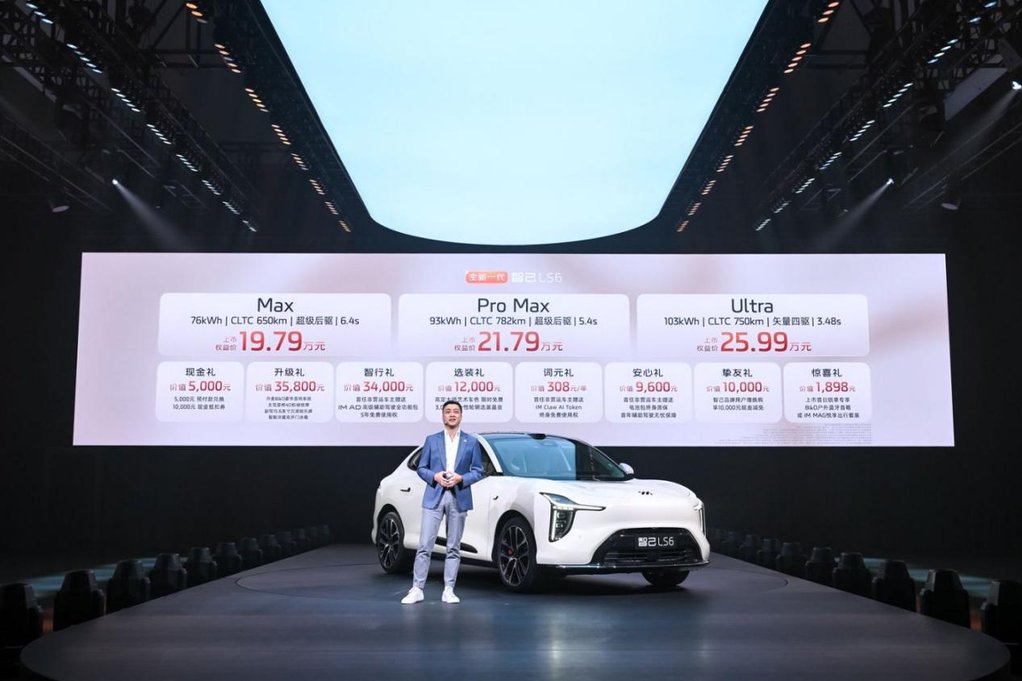
Starting at 197,900 yuan, orders exceeded 11,000 units just 57 minutes after launch. When I got this data, my first reaction was: are people really this decisive about buying cars now? Later, after going through the spec sheet, I roughly understood—it's not that everyone is impulsive, it's that this car gives you everything it should give, and you can't find a reason to wait any longer. I've been an old editor in automotive media for over a decade, and to be fair, do you know how intense the competition in the 200,000-yuan-class pure electric SUV segment has become this year? There's a new car launched every week, and every brand says it's "fully loaded." But after seeing the IM LS6, I think a lot of that talk can be skipped.
When it comes to safety, it's not playing the crash-test game
Nowadays, when automakers talk about safety, they're still comparing who has five stars, who has more airbags—that mindset is actually stuck twenty years in the past. The all-new IM LS6 does something different. It brings the civil aviation logic of "don't let you lose control" onto the car. Full line-control Lingxi chassis, standard across the entire lineup. In the 200,000-yuan class, you won't find a second one. Steer-by-wire reliability reaches 10FIT aviation grade—put plainly, that means a failure might occur only once every billion hours. Two steer-by-wire systems back each other up, plus rear-wheel steering as a third layer of redundancy. Three layers of insurance, and this approach is the same line as the Airbus A320's fly-by-wire flight controls.
SynVector full-domain line-control vector torque coordinated control responds to sudden danger in 20 milliseconds. I watched the demo video on site, and during that emergency avoidance maneuver, the car was so stable it didn't feel like a nearly 5-meter SUV. The Lingxi tire blowout stability control is 3 times faster than traditional solutions, and Active Anti-Rollover 2.0 can reduce rollover risk by 45%. As for the battery, it's jointly packaged by SAIC and CATL, with Pyrofuse millisecond-level fusing, and zero spontaneous fires since delivery. Honestly, you may not remember these numbers, but when you're on the highway with your whole family, whether that tight string in your heart can relax depends on exactly these things.
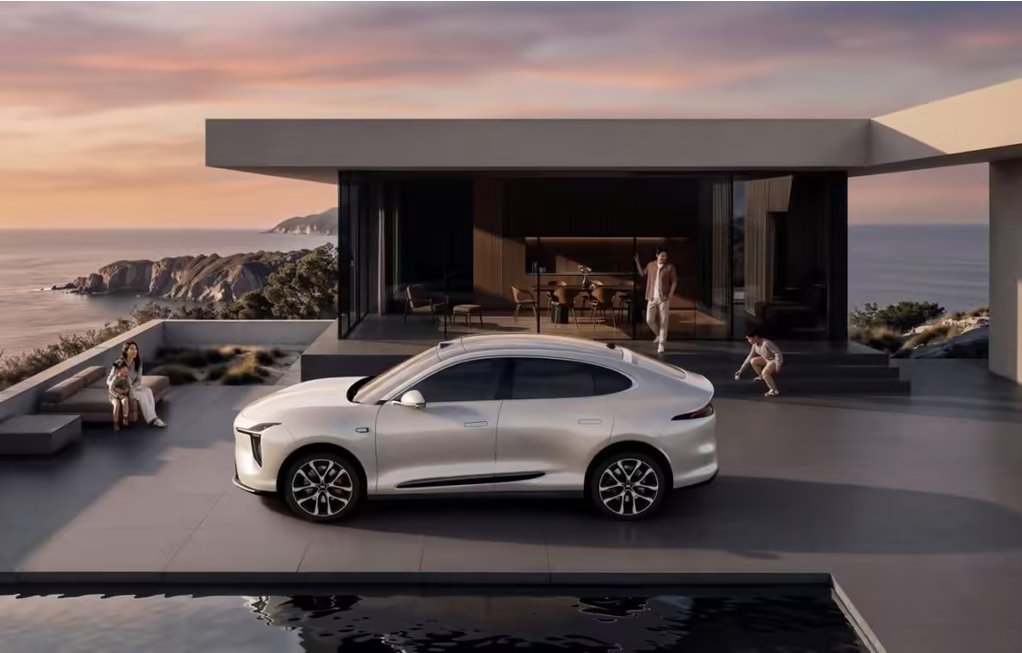
A car nearly 5 meters long that drives like a Golf
I've driven quite a few big cars, and honestly most of them are "fine to sit in, tiring to drive." The rear-wheel steering on the LS6 really has something—18° in both directions, a turning radius of 4.49 meters. You read that right, smaller than a Polo. In a narrow old residential compound, half a turn of the steering wheel and you're through in one go. For two-lane U-turns at the school gate or passing oncoming cars on narrow old-town roads, before you'd have to shuffle the wheel twice in a big car, but now you just lightly guide it in. This experience is extremely friendly to female drivers and beginners—no more worrying that "the car is too big to park."
During high-speed lane changes, wheel response is at the millisecond level, with all four wheels turning in coordination, and the body doesn't sway or swing. In quick cornering, the car follows exactly how much you turn the wheel, with no need for correction. After steer-by-wire eliminates the mechanical connection, there's another benefit—road vibrations don't reach the steering wheel, so your hands don't go numb over rough sections. There are three steering modes to adjust: women can choose the light one, veteran drivers can choose the steady one, and one car feels natural for whoever in the family drives it.
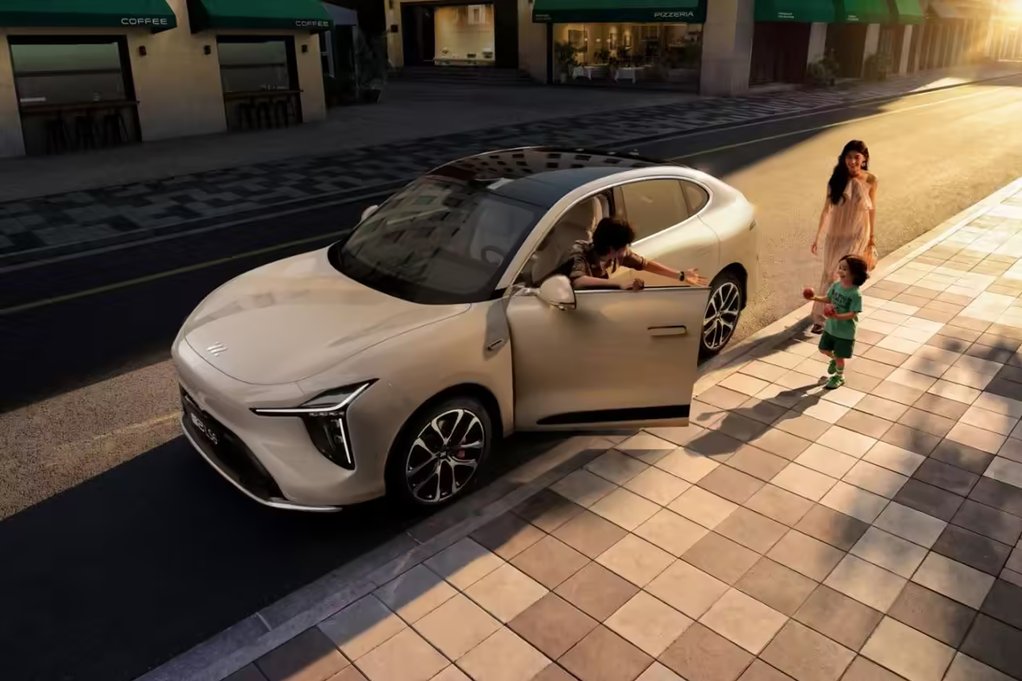
Once you sit inside, you know where the money went
With family cars, what I hate most is the "boss seat" mentality—on long trips the driver is exhausted while the front passenger has the time of their life. In the LS6, front, rear, left, and right, honestly every seat feels thoughtfully designed. That super right-side front passenger seat has three modes: zero gravity, empress chair, and forward folding to give rear passengers more space. Paired with a 15.6-inch 3K screen. The whole car has ventilation, heating, and massage, the rear seats recline to 131°, with 5 massage techniques and 7 times the pneumatic strength—this thing isn't just for show; after ten minutes it really feels like your lower back loosens up.
Danish B&O audio, 16+1 speakers, 3036W peak power. Combined with RNC active noise cancellation and double-layer acoustic glass, the cabin is so quiet you can hear the front passenger breathing. Soft-close doors on all four doors—no need to slam them; when the kid is asleep, you can just gently pull it shut and it locks. An 11L heating and cooling refrigerator, cooling down to -6°C and heating up to 50°C, and it can hold temperature for 48 hours after you leave the car. Ice-cold cola in summer, hot coffee in winter—this kind of feature used to only exist on 400,000 to 500,000-yuan cars.
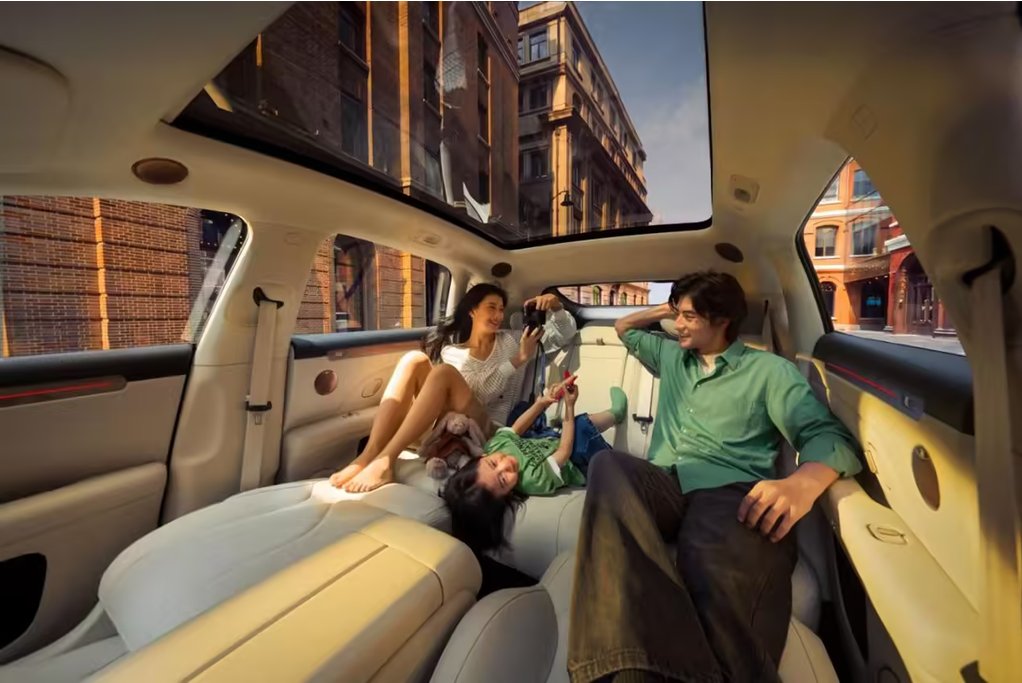
In terms of space, it truly lives up to the phrase "large flat-floor apartment"
Cabin utilization rate close to 90%, 4937mm body length, 2960mm wheelbase, 992mm rear legroom. Even for someone 1.82 meters tall in the back, there's still more than two fists of space between the knees and the front seats. Nearly 30 storage compartments throughout the car, so cups, tissues, toys, and charging cables each have their place. The 105L front trunk pops open with two taps from outside, and a 20-inch suitcase goes right in. The rear trunk can hold eight 20-inch cases. The IM MAG magnetic expansion dock design is quite clever—the driver can attach a phone mount, rear passengers can attach a tablet, and the vanity mirror can attach too, so each family member gets what they need.
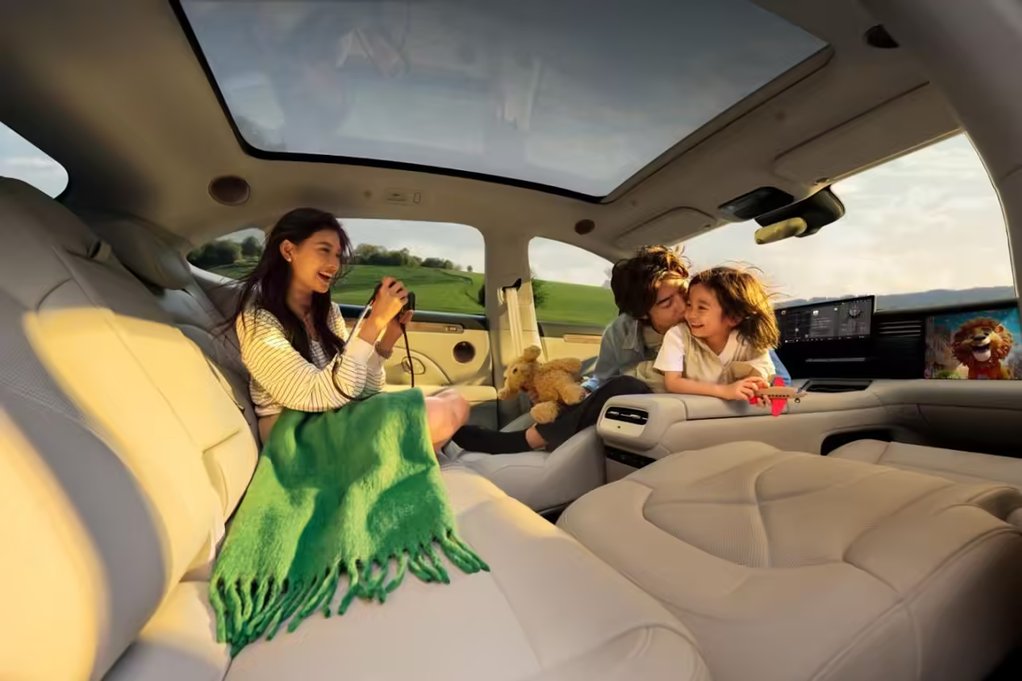
The three-electric system is this car's strongest hidden card
A few key numbers: minimum energy consumption of 12.7kWh per 100 kilometers, about 4 cents per kilometer in electricity cost. A 93kWh battery, CLTC range of 782km. Full-domain 800V, up to 396kW ultra-fast charging, adding 530km of range in 15 minutes. What do these numbers mean?—If you commute 40 kilometers a day, charging once a week is enough. On a long trip, by the time you stop at a service area and buy a coffee, the range is back by more than 500 kilometers. And it isn't picky about chargers: plug into more than 90% of charging piles on the market and it can run at full power, no need to specially hunt for ultra-fast charging stations.
It can charge stably even in -20°C low temperatures, with a 95% charge retention rate. Friends in the Northeast won't have to worry about their car dying in winter this time. SAIC's latest NEO three-electric architecture, 0.2mm ultra-thin silicon steel sheets, stator direct waterfall oil cooling, rotor tunnel cooling, a pile of patents. IM ECU Master Energy Efficiency Master 3.0 uses AI to manage energy consumption; in summer, sitting in traffic with the air conditioning on for an hour uses about half a kilowatt-hour. It's not showing off tech—it's genuinely helping you save money.
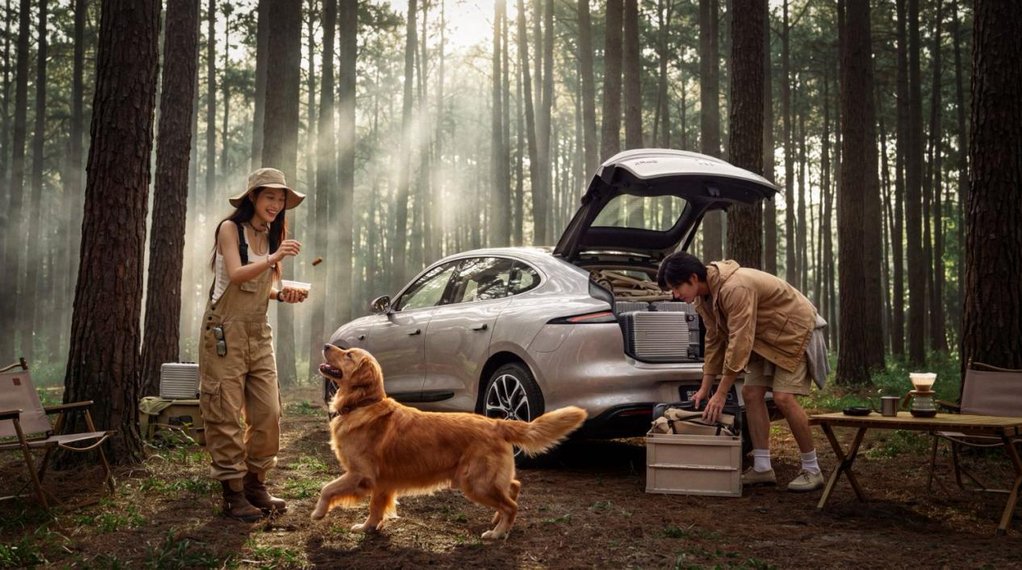
For the smart part, it finally stops feeling like it's putting on a show for you
IM Motors and Momenta are founding partners with cross-shareholdings, a relationship that's rare in the industry. IM AD Zeta assisted driving uses an L4-level model to do L2 work, with mapless NOA available nationwide, covering highway ETC, roundabouts, and U-turns. One-click AI valet can help you park in narrow spaces. Forward AEB works from 8 to 155km/h, and rear RAEB from 2 to 10km/h.
There's one feature I think deserves special mention—driver incapacitation assistance. If the system detects that you've lost driving capability and there's no response for 7 seconds, it automatically applies intermittent braking; once total incapacitation is confirmed, it turns on the hazard lights, changes lanes, and pulls over to stop. You may never use it in your life, but with this thing there, the whole family feels more at ease on long trips.
IM Claw lobster agent, an industry first. It's not the kind of voice toy where you say "turn on the AC" or "navigate to the office." If you say "pick up the kid from school and buy a cake on the way," it plans the route itself, calculates timing, and handles everything. Fuzzy intent reasoning, multi-agent orchestration, backed by the Qwen large model. The old voice assistant was like feeding it one line and it moves once; with Claw, you give it a goal and it finishes a whole chain of tasks by itself. Once you use this, you can't go back.
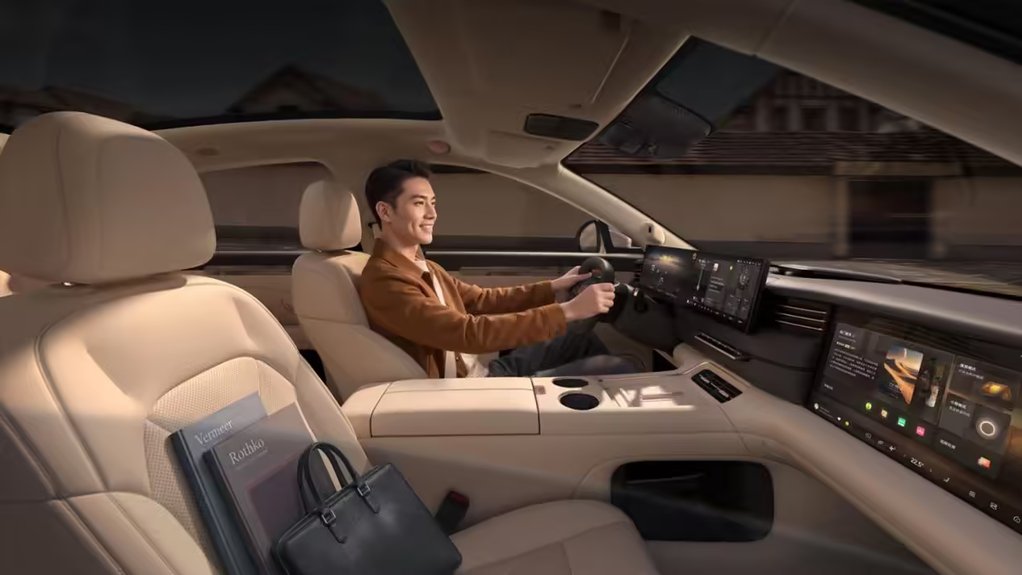
Final thoughts:
With SAIC's 70 years of car-building heritage, the NEO three-electric system, the full line-control Lingxi chassis, and intelligent full-domain delegation, three major next-generation technologies are all piled into this car. In the 200,000-yuan class, if you want safety, it has aviation-grade redundancy; if you want easy driving, it has rear-wheel steering; if you want comfort, it has zero-gravity seats and B&O audio; if you want efficiency, it has the three-electric architecture as a backstop; if you want intelligence, it has IM AD and Claw. This car makes me feel that family SUVs finally no longer have to be a multiple-choice question. If you've recently been looking at 200,000-yuan-class pure electric SUVs, my advice is: test drive the LS6 first, then decide whether you still need to look at others. Not because it's perfect, but because at this price, it gives so much that after testing other cars you'll feel shortchanged.


