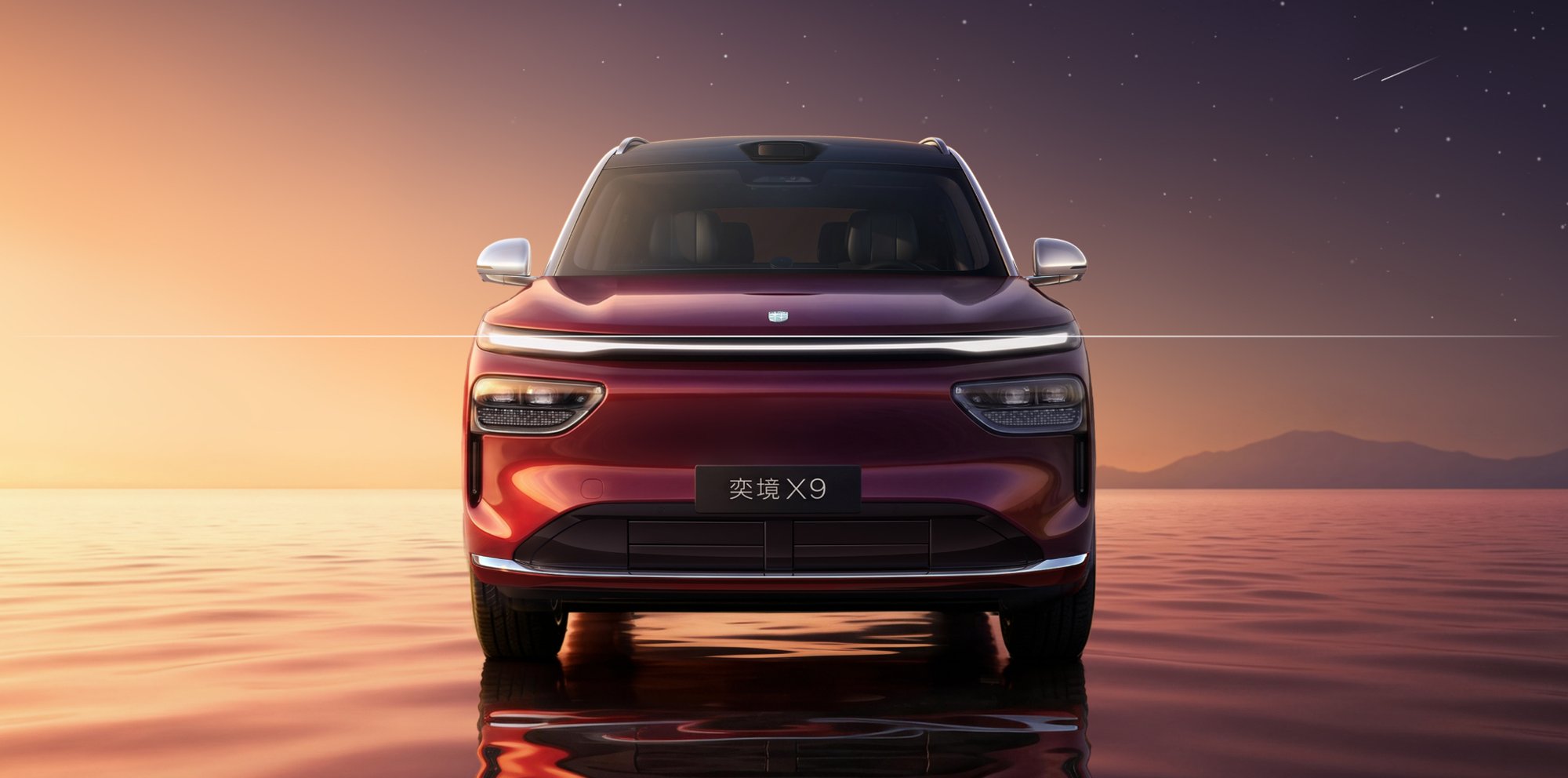
Over the past two years, the large six-seat SUV market has appeared to flourish, but in reality it has left family users trapped in a "multiple-choice dilemma." If you want advanced intelligent driving, the threshold is generally above 400,000 yuan; if you want reliable pure electric range, most extended-range large six-seat SUVs offer only three to four hundred kilometers; if you want a third row that is not cramped, you often have to compromise on the trunk and driving dynamics. If you want space, intelligence, range, and safety without settling on any of them, there are only a handful of cars to choose from.
The Yijing X9 is aimed squarely at this gap.
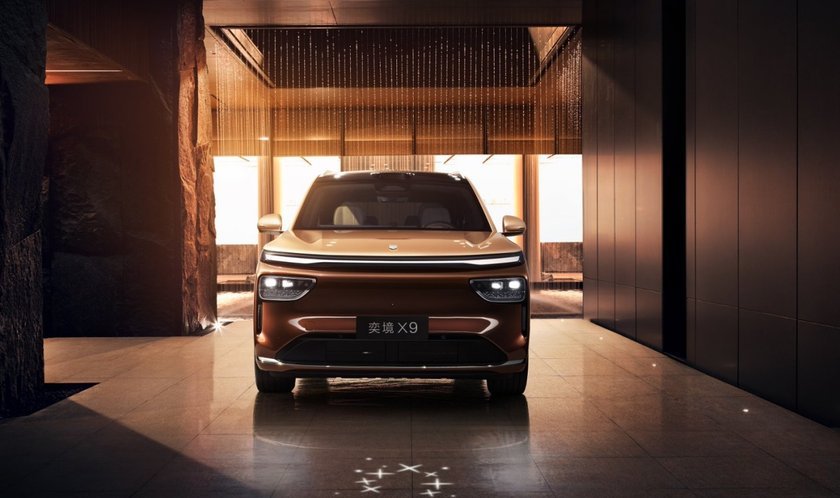
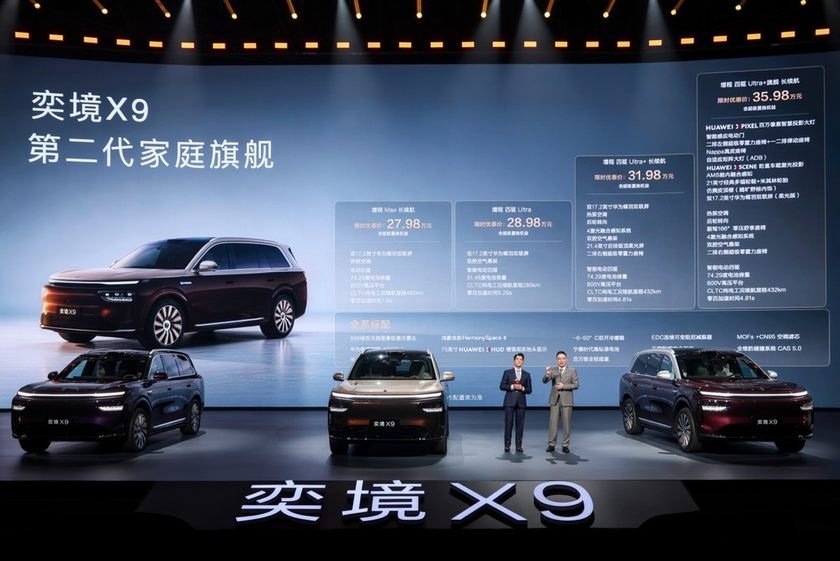
On September 24, this first large six-seat flagship SUV, natively co-created on a full-stack basis by Dongfeng and Huawei Qiankun, launched in Guangzhou, with a limited-time benefit price starting at 279,800 yuan — a further 20,000 yuan reduction compared with presales, and with the super trade-in gift stacked on top, the total benefit value reaches up to 100,000 yuan.
After launch, the Yijing X9 received widespread attention, not because there was another large six-seat SUV on the market, but because it attempts to bring the configuration standards of a 500,000-yuan-class flagship up to par all at once with a 300,000-yuan-class budget. Even more aggressive is that this launch also specifically added a four-wheel-drive Ultra version aimed at the intelligent driving hardware users have demanded most — thereby firmly establishing its title as the only four-lidar large six-seat SUV under 300,000 yuan.
The "ceiling" of intelligent driving has been pulled below 300,000 yuan
Intelligence is the most core premium of a 500,000-yuan-class flagship, and it is also where the Yijing X9 strikes hardest.
The entire lineup comes standard with Huawei Qiankun Intelligent Driving ADS 5, equipped with an 896-line dual-light-path image-grade lidar, with comprehensive coverage of advanced capabilities such as highway NCA, urban NCA, parking spot to parking spot, and automatic parking. The 896-line lidar belongs to the current "ceiling" level in the automotive lidar field, and as of 2025-2026 it is in the highest-line-count and strongest-performance tier among mass-produced automotive-grade products. Its cost is high, with a single unit typically costing 2-3 times that of a 128-line unit, and it is often installed on high-end models priced above 500,000 yuan.
This time, the extended-range four-wheel-drive Ultra version newly added to the Yijing X9 lineup is a formidable player, priced at 289,800 yuan, with the full Qiankun Intelligent Driving ADS 5 hardware set, dual-chamber air suspension (aluminum alloy air chambers), second-row zero-gravity seats, and a rear soft-light screen as standard; on this basis, for only an additional 10,000 yuan, the Huawei Qiankun ADS 5 four-lidar solution can be optioned.
This is the industry's only large six-seat SUV under 300,000 yuan that can obtain both four lidars and the full Huawei Qiankun Intelligent Driving ADS 5 hardware set at the same time — in the past, this kind of specification was unthinkable without spending 500,000 yuan.
Active safety is likewise fully equipped. Relying on the CAS 5.0 all-dimensional collision prevention system, the vehicle no longer waits for danger to occur before remedying it, but instead intervenes to avoid it at the budding stage of risk; the WEVA 2.0 intelligent architecture introduces multi-agent game theory and online reinforcement learning, handling complex road conditions more intelligently and directly reducing collision risk by 50%.
The cabin also holds nothing back. It is among the first to be equipped with the HarmonySpace 6 cockpit, dual 17.2-inch 3.4K Dieyu dual connected screens, and debuts soft-light screen technology to reduce strong-light reflections; the MoLA intelligent agent, HAMOMO Hamengmeng AI companion robot, AMS in-cabin fusion perception, HUAWEI XPIXEL million-pixel intelligent headlights, XSCENE in-car laser projection, and HUAWEI SOUND are all onboard. The Huawei content is not just one or two selling points, but an entire Huawei ecosystem.
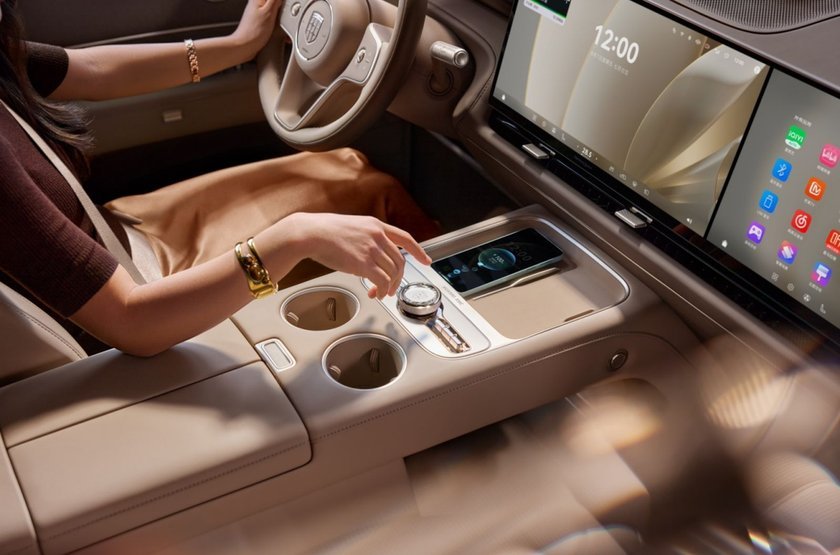
It is worth noting that this kind of lead is not built by piecing together single-point procurement. Most brands are still competing on parameters and stitching together functions, while the Yijing X9 connects intelligent driving, the cockpit, and safety into one coherent experience — leadership on the specification sheet ultimately only counts if it proves stable and usable in real road conditions.
The shortcomings in range and driving dynamics have been addressed all at once
The range anxiety of a family large six-seat SUV is essentially not "can it refuel," but "how far can it go on pure electric power."
The entire Yijing X9 lineup is equipped with a CATL 74.29kWh battery, matched with an 800V high-voltage platform, with CLTC pure electric range of 465km, combined range exceeding 1500km with a full tank and full charge, and 20% to 80% charging in only 10 minutes. Compared with the 350-400 kilometer pure electric range common among mainstream 500,000-yuan-class extended-range large six-seat SUVs, one charge is enough for a week of daily commuting, and on long interprovincial trips there are fewer service area stops. Using the large-battery approach to solve range anxiety is far more pragmatic than simply stacking up combined range figures.
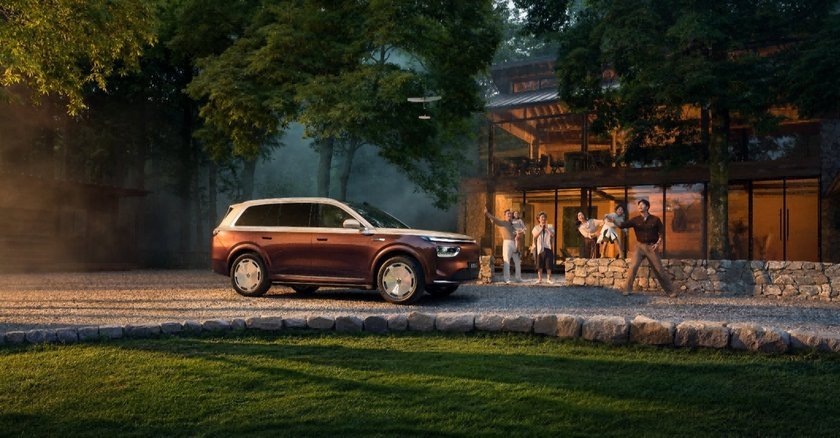
The chassis, meanwhile, is aimed directly at 500,000-yuan-class luxury SUVs. A front double-wishbone + rear five-link all-aluminum chassis (91% aluminum alloy), intelligent dual-chamber air suspension + EDC continuously variable damping shock absorbers, and ±7-degree rear-wheel steering compress the turning radius to 5.3 meters, the level of a compact sedan. With the support of the Huawei Qiankun Chitu platform, vehicle control precision increases by 30%, and it also brings capabilities such as tire blowout stability control, dynamic steering assistance, and active predictive anti-slip.
In the past, 300,000-yuan-class large six-seat SUVs generally emphasized space and neglected driving dynamics, feeling like "driving a boat." The Yijing X9 equips the all-aluminum chassis, dual-chamber air suspension, rear-wheel steering, and digital chassis engine all at once, making it clear that it does not want to be just a nanny car, but to be the "good-to-drive" option among large six-seat SUVs.
Comfort and safety: the bottom line for family users is taken seriously
In terms of body dimensions, the Yijing X9 is 5301mm long with a wheelbase of 3120mm, upholding "equal rights for all three rows." The third row has 1101mm of effective seat space, and the VIP seats support 43° recline, no longer a small bench only for short emergency trips; the second row has dual zero-gravity seats, a queen passenger seat, Nappa leather, 43 storage spaces, and still 484L of trunk space with six people aboard, plus a dual-opening hot-and-cold box, MOFs air conditioning filter, and negative oxygen ion fresh air — almost fully covering high-frequency family travel scenarios.
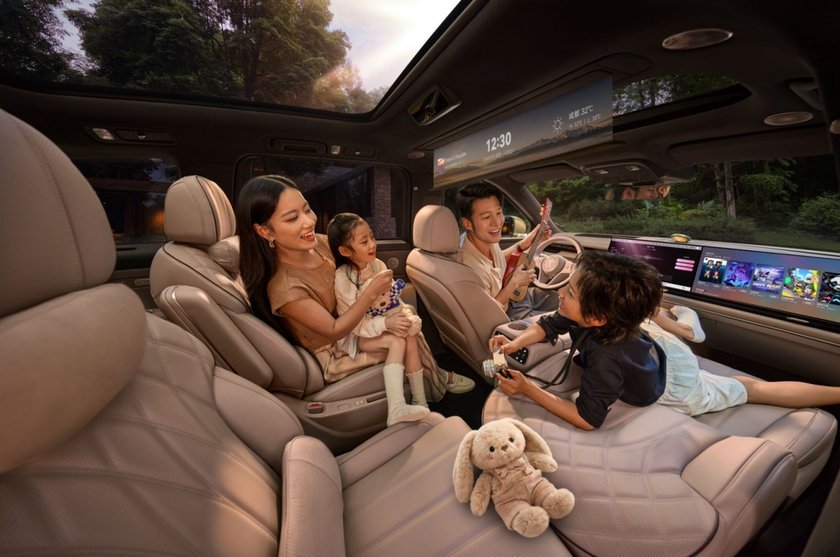
The first generation of family flagships competed on "refrigerator, color TV, big sofa," while the second generation competes on "comfort for all + proactive service." Not settling on the third row and building hot-and-cold and health features into the details — this is what family users truly pay for.
Safety is the most expensive and also the hardest part of a 500,000-yuan-class flagship to equalize. The Yijing X9 debuts the "all-time-space" safety architecture Tianqiong Zhidun, covering six major dimensions: intelligent driving, active safety, passive safety, battery, rescue, and health, extending safety from "withstanding a crash" to "predicting beforehand and providing backup afterward."
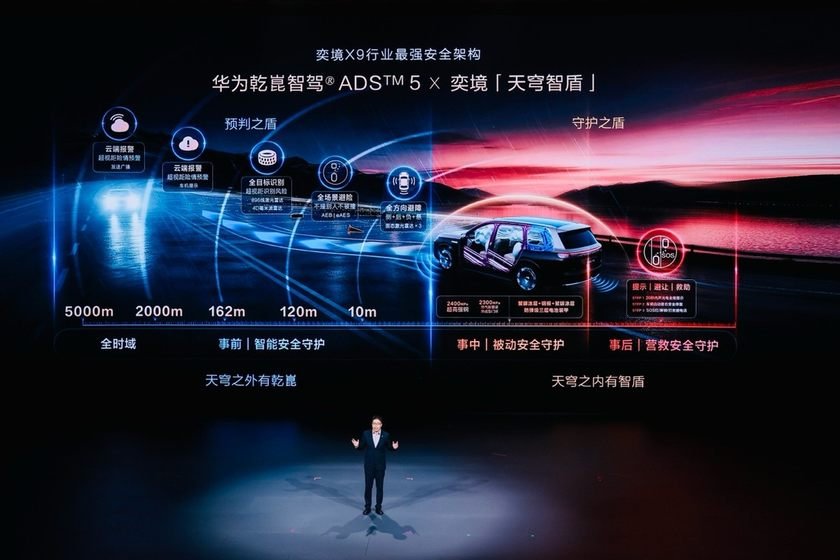
In materials, 2400MPa ultra-high-strength steel, a body-in-white with high-strength steel + aluminum alloy accounting for 92.4%, a 2300MPa hot gas-formed tube beam for the A-pillar, and an anti-puncture steel plate for the third-row seatback; it is the first mass-produced SUV to pass a 105km/h ultra-high-speed frontal offset crash and the first to pass a 20-ton container vertical roof crush test. The battery uses three layers of bulletproof armor plus aerospace aerogel insulation, and does not explode after being burned for 180 seconds. Safety is never a line on a specification sheet, but a systematic engineering effort of materials, structure, validation, and rescue.
Behind the full configuration is the systemic strength of full-stack co-creation
The confidence of the Yijing X9 comes from the full-stack native co-creation system in which Dongfeng and Huawei are deeply bound 1:1. Huawei provides the six core Qiankun technologies and the full set of IPD/IPMS management and quality control standards, deeply embedded in the entire R&D and manufacturing cycle; Dongfeng, with 57 years of carmaking accumulation, provides the complete vehicle intelligent manufacturing system, supply chain, and the credibility of a central state-owned enterprise. The two sides co-create across the entire value chain of R&D, production, supply, sales, and service, rather than a simple supplier transaction.
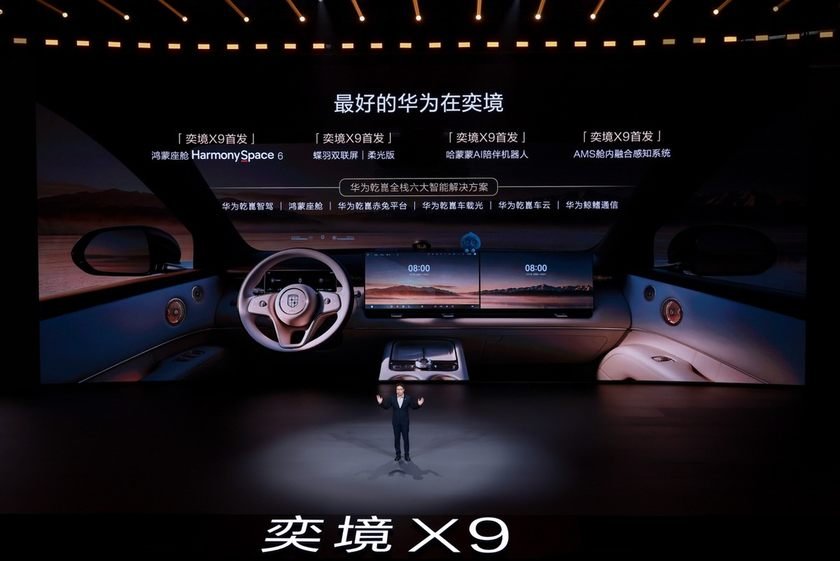
The direct result of this system is concentrated in the extended-range four-wheel-drive Ultra + long-range version priced at 319,800 yuan: six major Huawei core technologies including Qiankun Intelligent Driving ADS 5, four-lidar fusion perception, HarmonySpace 6 cockpit, and the HUAWEI XMC Chitu platform, plus dual-chamber air suspension + EDC, rear-wheel steering, all-aluminum chassis, CATL 74.29kWh battery, and 800V platform all fully equipped. At a price in the low 300,000s, you get nearly the full hardware set of a 500,000-yuan-class flagship — this is the dimensional strike of systemic technology transfer downward.
For family users, the emergence of the Yijing X9 means the competitive logic of large six-seat SUVs has changed: no longer a contest of brand premium, but a contest of who can fully provide what is truly needed in one go. "300,000-yuan-class full configuration, 500,000-yuan-class flagship" — this positioning is turning from a launch event slogan into the starting line for a new round of competition in the large six-seat SUV market.


