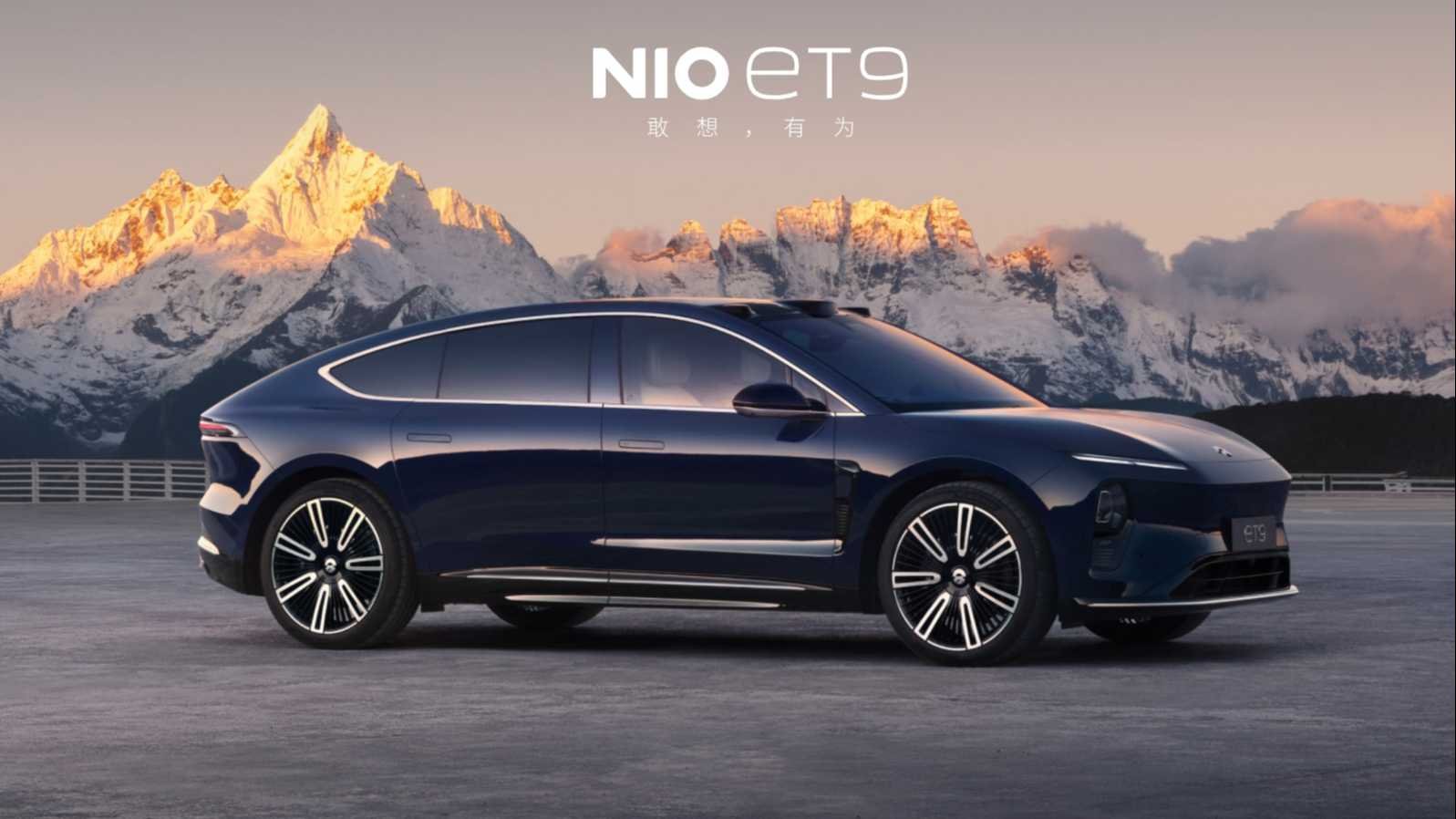
As NIO's first pure electric executive sedan, the ET9 takes "composure" as its core philosophy, redefining luxury mobility in the intelligent era from design to technology to experience.
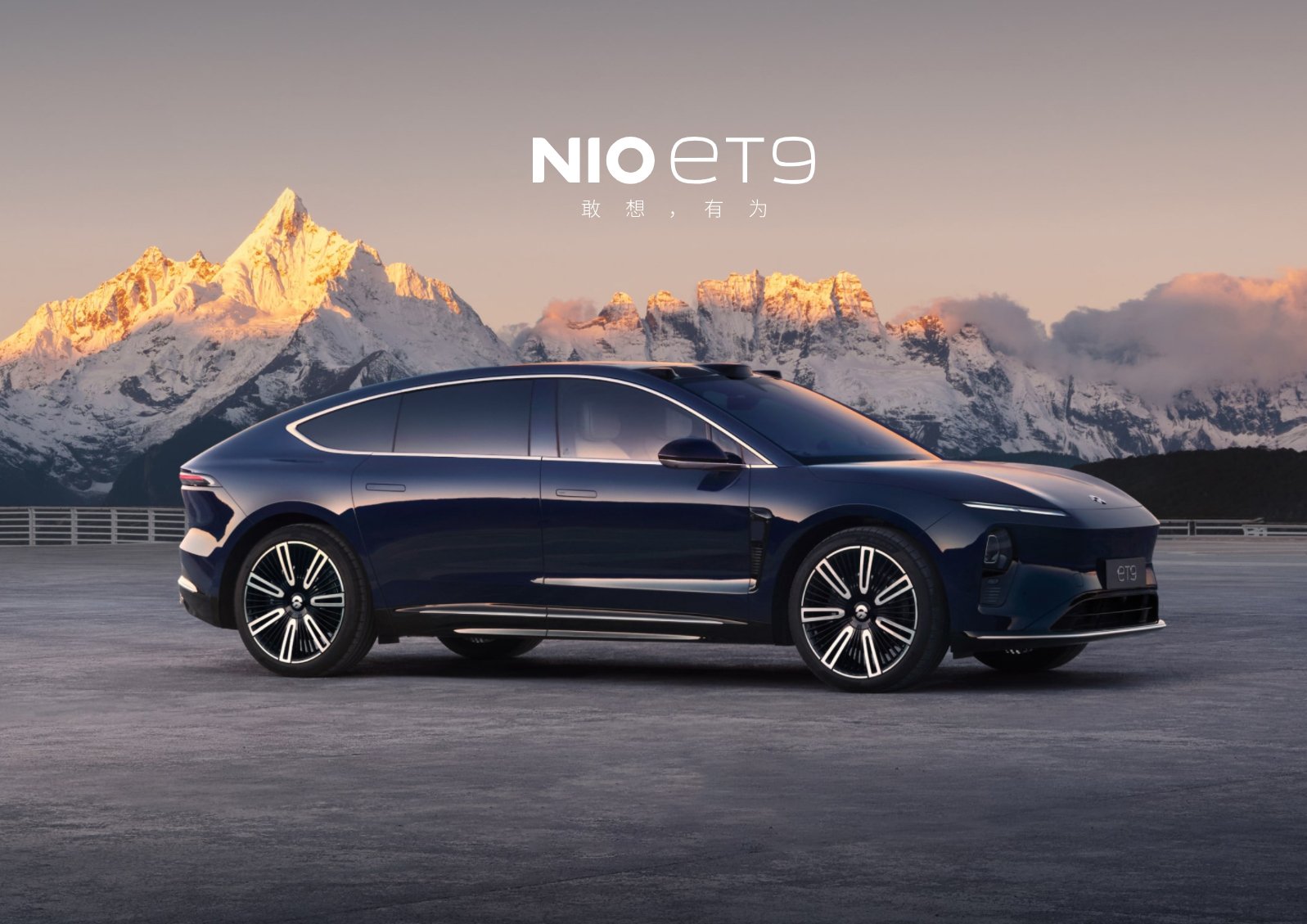
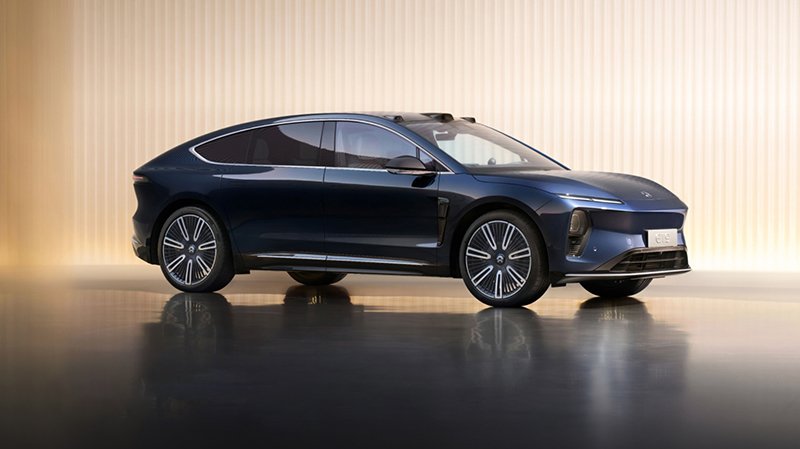
At first glance, the ET9's "Shy-Tech" hidden design language gives the entire vehicle an elegant sense of restraint. The fastback roofline flows as smoothly as a swan's neck, the active grille integrates seamlessly with the continuous daytime running light strip, and the slightly lowered front end conceals a sharp edge. The moment the doors unlock, the hidden door handles automatically pop out, and the welcome lights beneath the door panels project the NIO logo and a dynamic light carpet onto the ground, delivering a full sense of ceremony.
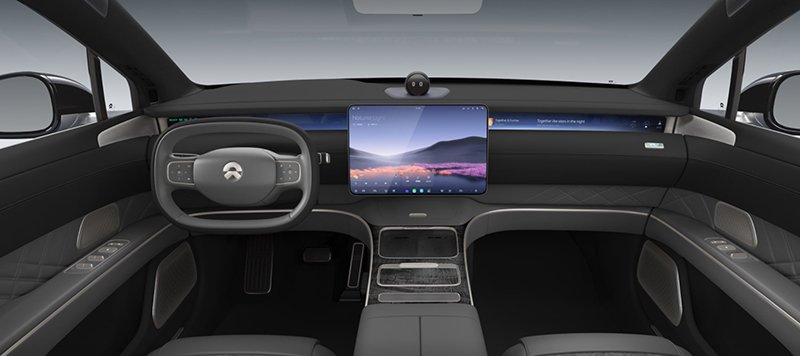
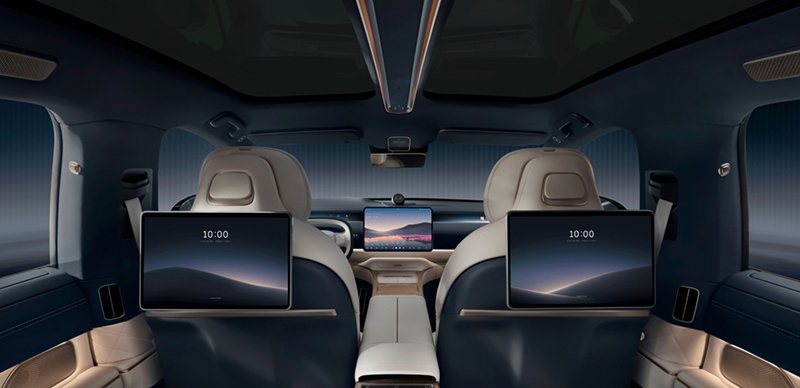
Opening the door, the ET9's "Sky Island" design concept instantly overturns the seriousness of traditional executive sedans. The wraparound intelligent cockpit is centered on the native in-car AI NOMI, with four screens (instrument cluster, center control, front passenger entertainment screen, and rear central control screen) achieving seamless collaboration through the独创 "Star Ring Computing Architecture." The 12.8-inch AMOLED screen on the passenger side supports gesture control, and rear passengers can adjust seats, air conditioning, and even switch driving modes through the 6.6-inch control screen on the armrest.
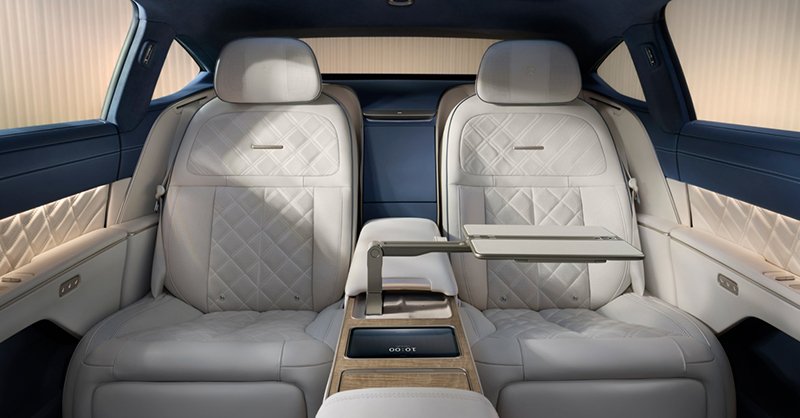
But what truly sets the ET9 apart is its ultimate pursuit of "comfort." The entire vehicle's seats adopt a self-developed "zero-gravity floating design," with micro airbags embedded in the seat padding that automatically adjust support intensity based on the passenger's body shape. In actual testing, the "executive seat" on the rear right, in one-touch lie-flat mode, extends the leg rest to nearly horizontal, and with 16-way power adjustment and full-body zone heating/ventilation/massage functions, long-distance travel surprisingly gives the illusion of "flying on clouds."
Pressing the "Power+" button on the right side of the steering wheel instantly switches the ET9 to sport mode. The combination of a 480kW front induction asynchronous motor and a rear permanent magnet synchronous motor allows this 5.2-meter-long flagship sedan to complete 0-100 km/h acceleration in 3.8 seconds. But unlike the violent push-back feeling of performance cars, the ET9's acceleration feels more like being gently lifted by an invisible giant hand, with the front end rising smoothly and the body posture as stable as a rail train. This is thanks to its pioneering "fully active suspension system": cameras scan the road surface in real time, and with millisecond-level responses from air springs and electromagnetic dampers, whether it's speed bumps or potholed roads, the vibrations transmitted to the cabin are dissolved into a delicate "sense of the ground breathing."
Even more impressive is the real-world performance of the full-domain 900V high-voltage architecture. In actual testing at NIO's third-generation battery swap station, the ET9 went from 10% to 80% charge in just 12 minutes, and 5 minutes of charging added 255km of range (CLTC conditions). And in urban congested sections, the intelligent all-wheel-drive system precisely distributes torque, and with the rear-wheel steering system (maximum angle 8.3°), this "big block" with a 3060mm wheelbase can actually maneuver flexibly through narrow alleys, with a turning radius smaller than most B-segment cars.
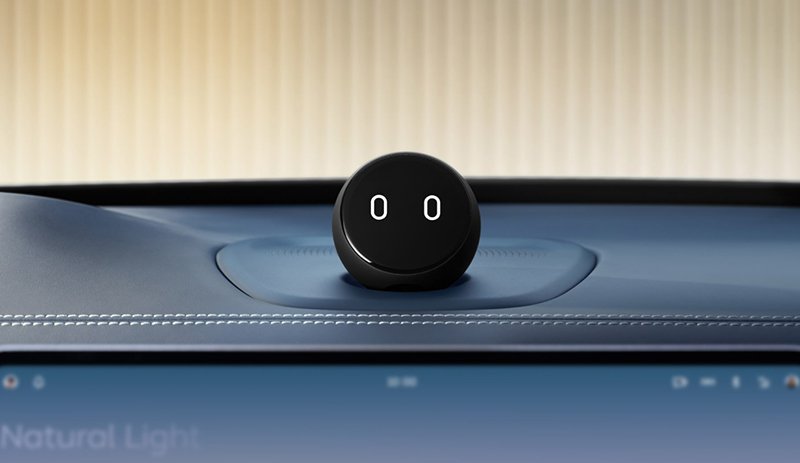
If hardware is the ET9's skeleton, the NIO Adam 2.0 intelligent system is its soul. During the test drive, when I spoke the continuous command "Turn on the AC to 25 degrees, play Chopin's nocturnes, navigate to Leifeng Pagoda," the system executed it step by step with almost no delay, and could even suggest a better route based on real-time traffic conditions. Even more praiseworthy is its "scenario engine": when the vehicle recognizes that the front passenger is taking a nap, it automatically dims the screen brightness, closes the windows, and switches to soothing white noise; if there are children in the rear, the air conditioning vent angle automatically avoids blowing directly on them.
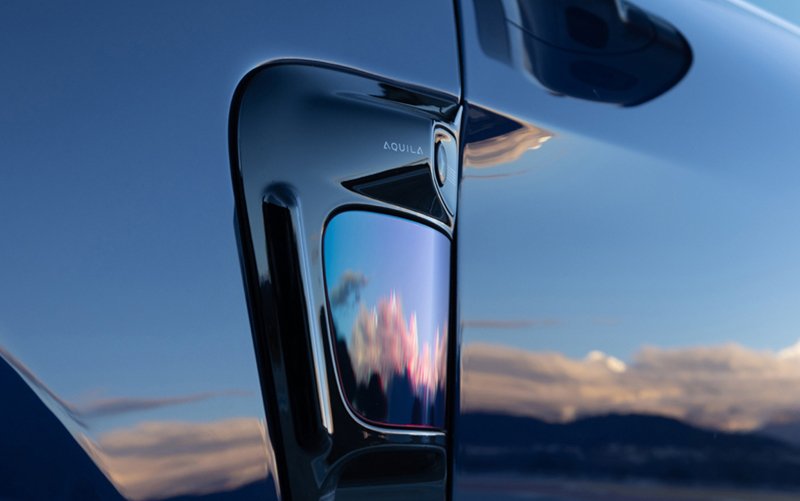
In terms of autonomous driving, the Aquila 3.0 ultra-perception system equipped on the ET9 features 33 high-precision sensors, among which 4 NVIDIA Orin-X chips deliver a total computing power of 1016TOPS. In the complex traffic conditions of Hangzhou's evening rush hour, the NOP+ enhanced navigation assist function demonstrated human-like decision-making capabilities: when facing a vehicle suddenly cutting in, the system does not brake hard but slightly shifts left to avoid it; when an electric bike suddenly intrudes into the lane on the right, the vehicle actively sounds the horn as a warning and decelerates, the entire process flowing as smoothly as an experienced driver.
For the new elite class pursuing technological refinement, the value of the ET9 lies not only in the 17 world-first technologies it carries, but also in bringing the intelligent mobility scenarios of the next decade into the present day ahead of time. While competitors are still competing over the number of screens, the ET9 has already taught the car to proactively understand people's needs—this is the true "luxury moat" of the intelligent era.


