By 2026, the new energy vehicle industry is no longer an era where you can raise money just by telling a good story.
In the first half of the year, domestic passenger car retail sales fell by nearly 20%. In July, the traditional off-season, combined with the prior pull-forward of demand, kept the industry as a whole on a downward trend. Even more striking is the profit margin, which has been squeezed to just over 3 points. For a car selling for 200,000 yuan, the manufacturer may end up with only about 3,000 yuan. The price war has been raging for more than a year: you cut 20,000, I cut 30,000, and in the end no one really came out ahead. Consumers, meanwhile, have become increasingly hesitant to act—afraid of buying too expensive, and even more afraid that the brand will be gone after they buy.
This worry is not unfounded. In recent years, one new energy brand after another has collapsed, many of which were once thriving. After-sales service was cut off, parts could not be found, and used-car prices cratered outright. So nowadays, when people buy a car, besides looking at range and intelligent driving, they also have to ask one question first: can this brand be relied on?
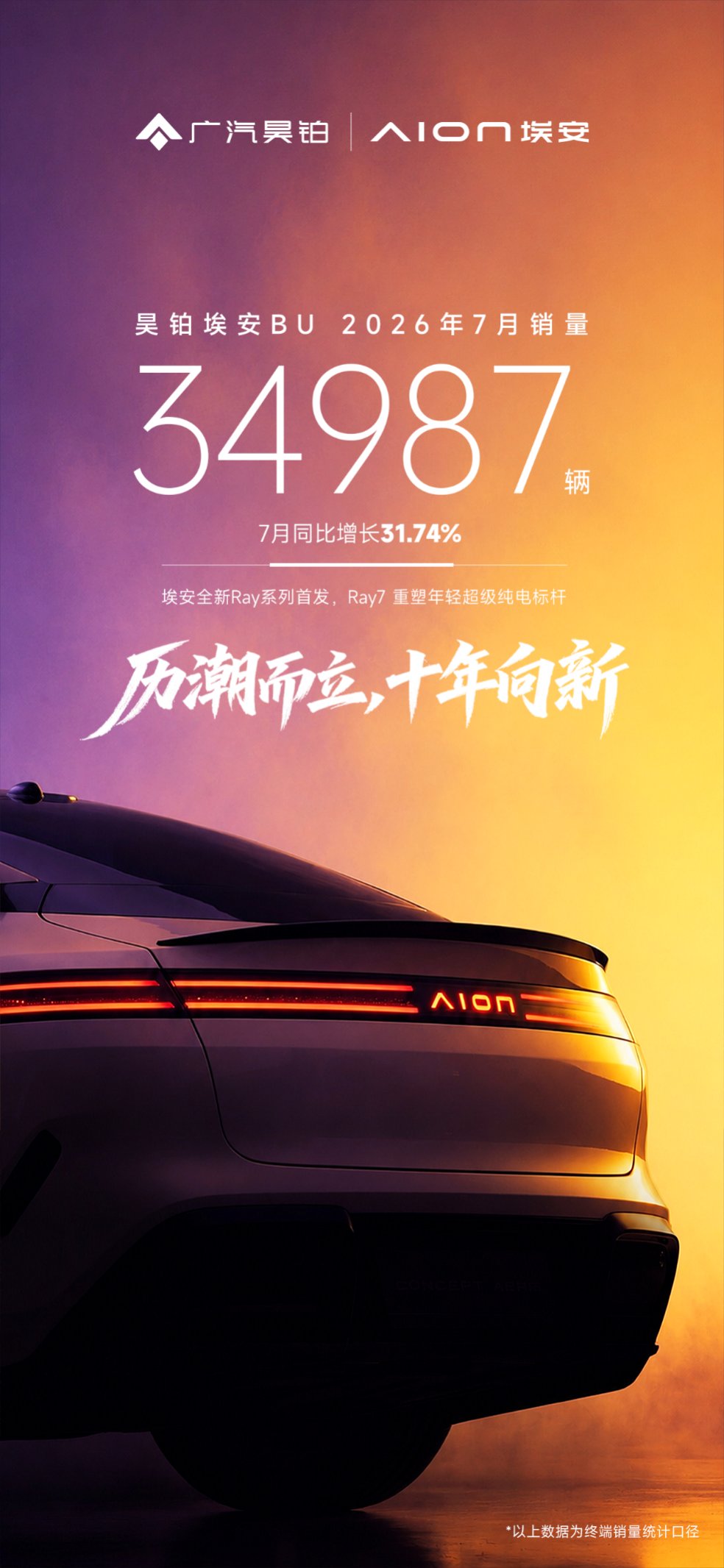
Against this broader backdrop, Hyper Aion delivered a July scorecard. 34,987 vehicles, up 31.74% year on year, and its fifth consecutive month of double-digit year-on-year growth. The overall market is heading down, yet it has kept heading up. Anyone who understands knows what that is worth. Even more critical is another number: in the first half of this year, the share of private C-end users already reached 81%. Behind this figure is a real transformation of the brand.
So how did the brand win private users back? Two models are very convincing.
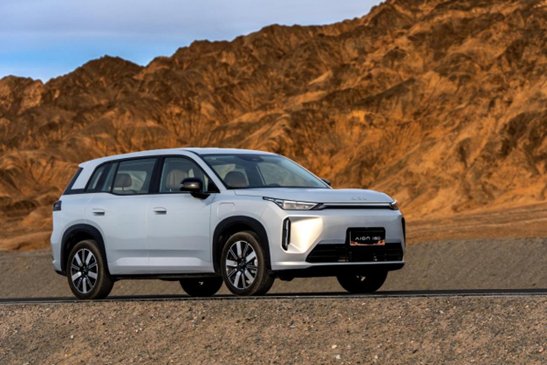
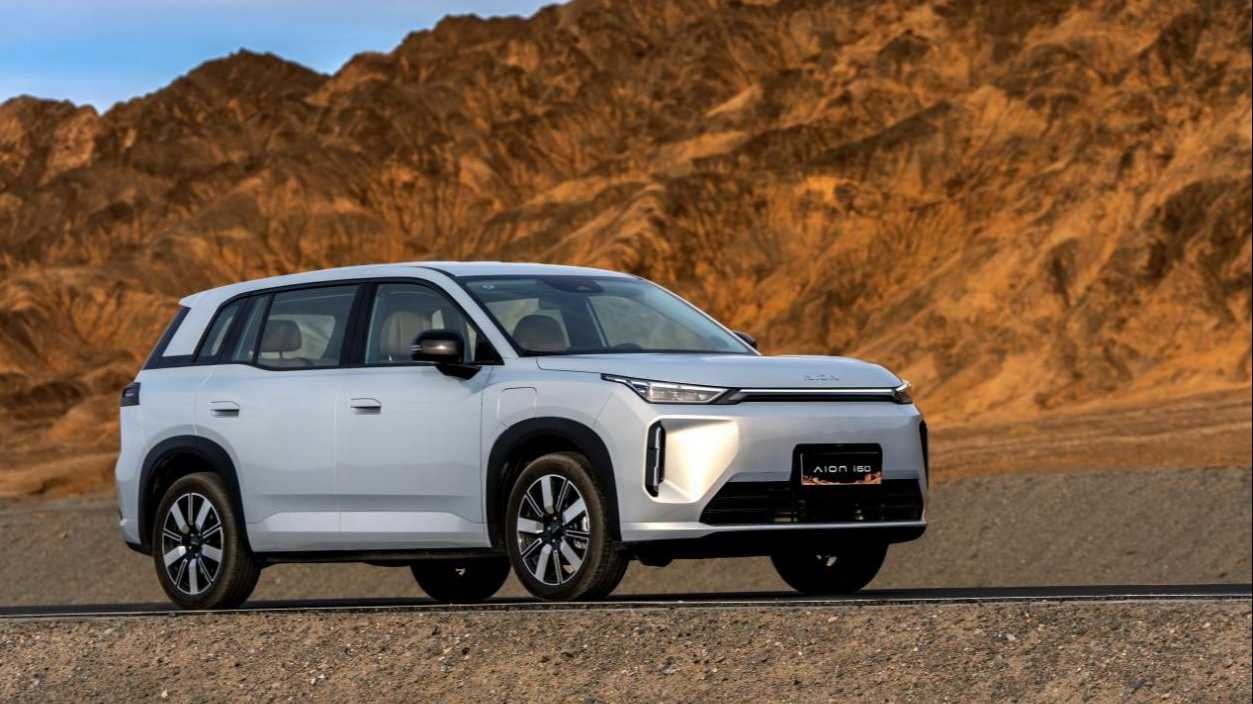
One is the Aion i60, which they call a "cultivation-style blockbuster product." This description is very down-to-earth: it means listening to user feedback, continuously iterating, and changing whatever users want changed. Among buyers of this car, young families aged 26 to 35 account for more than 40%, and monthly sales steadily exceed 10,000 units. Simply put, it has accumulated word-of-mouth bit by bit by constantly aligning with the needs of real families.
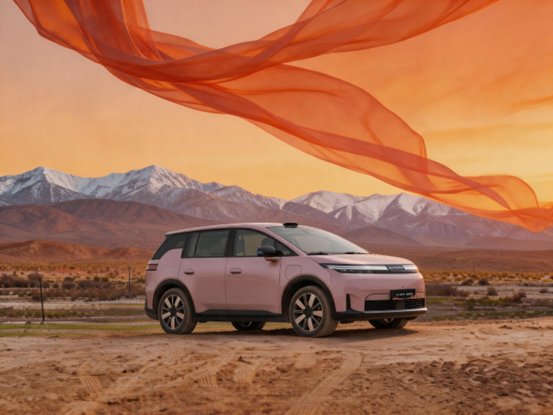
The other is the N60, which directly brought L4-origin lidar intelligent driving down to the 100,000 to 150,000 yuan price range. Young users account for nearly 80%, and it managed to become the sales champion in the most competitive segment. Bringing advanced intelligent driving to a price young people can afford sounds simple, but there are only a handful of companies in the market that dare to do it, can do it, and can do it well.
The paths of these two cars are different, but the logic is the same—not relying on stacking features and competing on low prices, but putting truly leading technology within reach of more people. Using product strength to keep private users loyal is more effective than any marketing.
But merely guarding one's own small patch of land is certainly not enough.
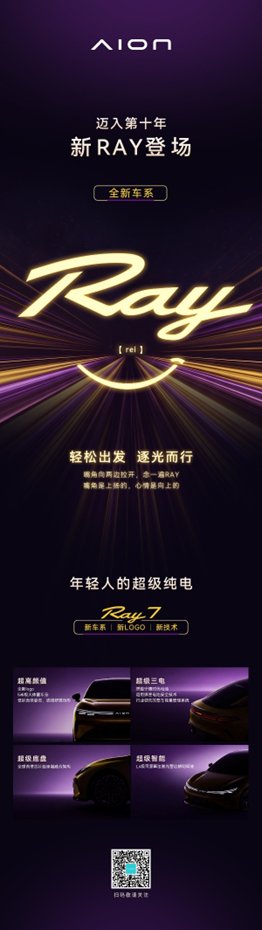
On July 28, Aion officially entered its tenth year as a brand. It did not hold some grand celebration, but instead launched a completely new vehicle series—Ray. The first model is called Ray 7, positioned as "young people's first super pure electric sedan."
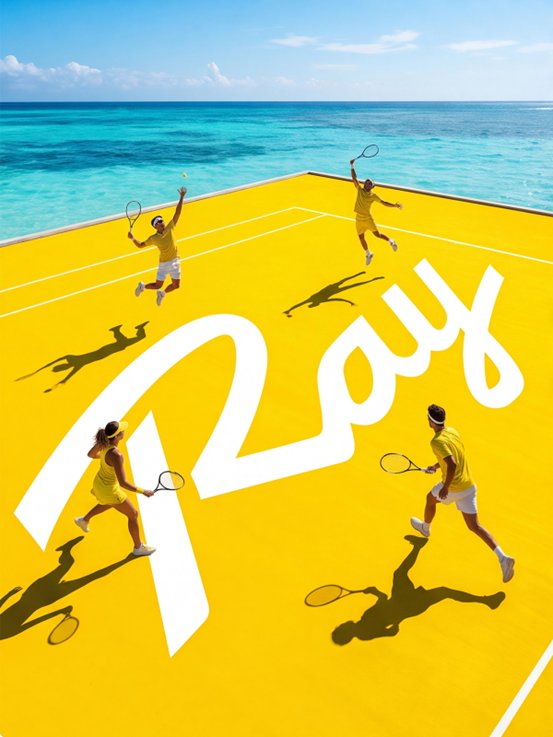
Ray means light. What they want to convey is a younger, more vibrant, more upbeat attitude toward life. This is not a simple expansion of the product line, but a move aimed at the main force in new energy consumption—young people. At present, buyers under 30 already account for nearly 40%. Many brands are still making products with old thinking, and homogenization is severe. Consumers have long grown tired of it. At this moment, Aion proactively stepped out of its comfort zone, using new design, new technology, and a new attitude to open a second growth curve. The direction is right.
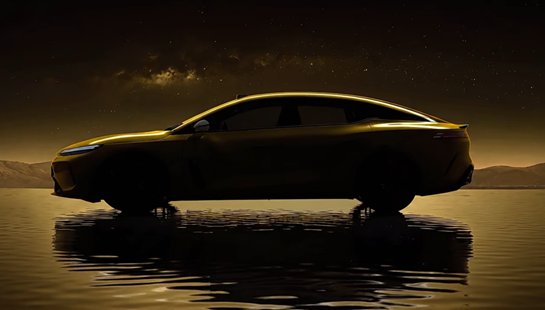
From the perspective of product strength, it has indeed invested heavily. A 5-meter-class low-slung wide-body coupe, the world's first super chassis with a chip-level drive-control integration architecture, CATL batteries plus magazine battery technology, L4-level same-origin algorithm lidar intelligent driving, and a clear commitment to bring advanced intelligent driving into the 150,000 yuan market. Once this combination is deployed, it is not here just to make up the numbers.
Short-term bursts are easy, but surviving cycles is hard. China's new energy industry went from more than 480 vehicle manufacturers at its 2018 peak to only about 40 that can still operate normally today. That Aion has been able to keep standing and keep delivering throughout this brutal elimination process has never been due to luck.
Backed by the GAC system, it began investing 45 billion yuan in 2017 to build a new energy industrial park, step by step keeping core technologies such as in-house development of the three electric systems, magazine batteries, and Quark electric drive in its own hands. It does not rely on outsourced assembly, but can truly control the supply chain and technological iteration. This kind of foundation is the greatest source of confidence when the industry is in decline.
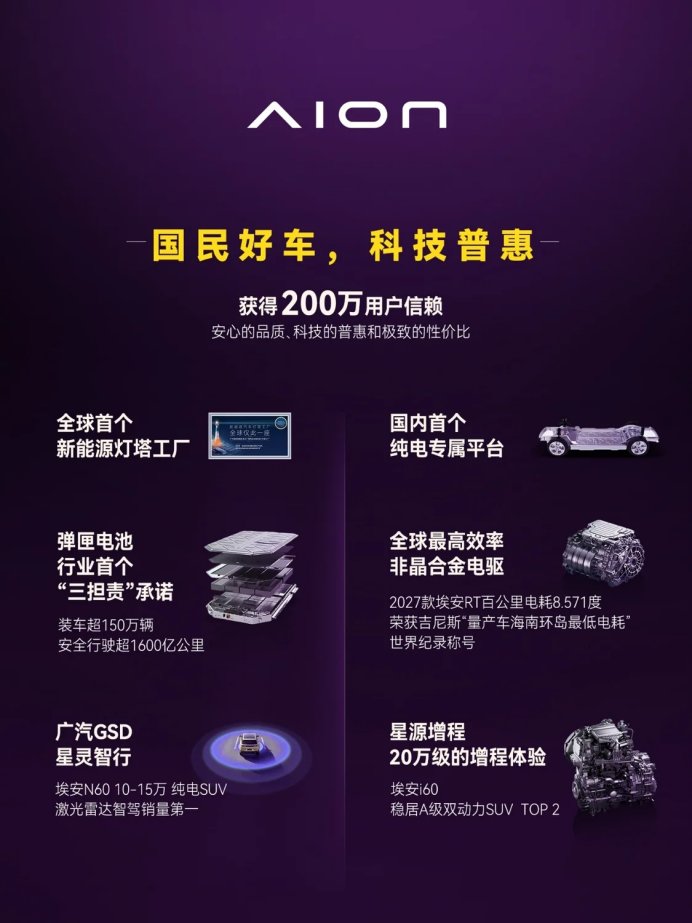
In less than ten years, cumulative sales reached 2 million vehicles. Many owners have driven several hundred thousand kilometers without major repairs, and battery health can still remain above 80%. This kind of reputation is not built by marketing spending, but earned kilometer by kilometer. Lifetime warranty for the three electric systems, backing for spontaneous combustion, full compensation for excessive degradation, and for the i60 even "burn one, compensate three"—daring to make these commitments shows real confidence in one's own products.
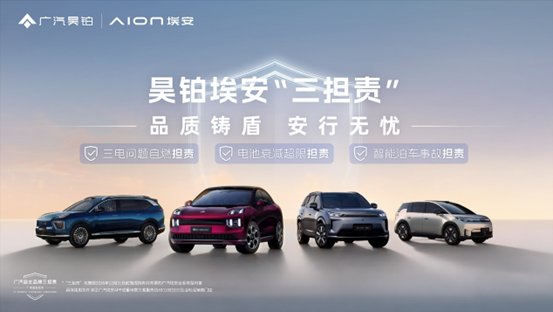
For people now wanting to buy a new energy vehicle, the main worries are no more than two: first, whether the brand can last, and second, whether after-sales service is guaranteed. With five consecutive months of counter-cyclical growth, an 81% share of private users, and ten years of steady operation, Aion has answered these doubts fairly well.
Running fast when the wind is at your back is nothing rare; what is rare is still being able to keep moving forward after the wind stops.
From "a good car for the people" to "young people's super pure electric," Aion has taken a step that is not small. Whether the Ray series can succeed will still depend on how the market responds. In a 2026 that has already become white-hot, a brand that can survive, can grow, and still dares to go all in on a new track is itself worthy of being taken seriously.
After all, for nearly a decade, there have not been many new energy automakers that can stay at the table and play more and more steadily.
Nearly a decade on, GAC Aion Hyptec is still at the table, and playing with growing steadiness.
Related Stories

funnytechnology
Shenzhen Takes Off, China's Denza Soars! APEC Official Designated Vehicle First Batch Delivery Ceremony Grandly Held

ZXKC20200214
Geely Auto Appears at 2026 Sustainable Global Leaders Conference, Empowering Sustainable Development with Technological Innovation

StarCoreLabs
Hybrid sedans under 150,000 yuan: Seal 06, Volkswagen ERA 5S, MG 07 PHEV — how to choose?