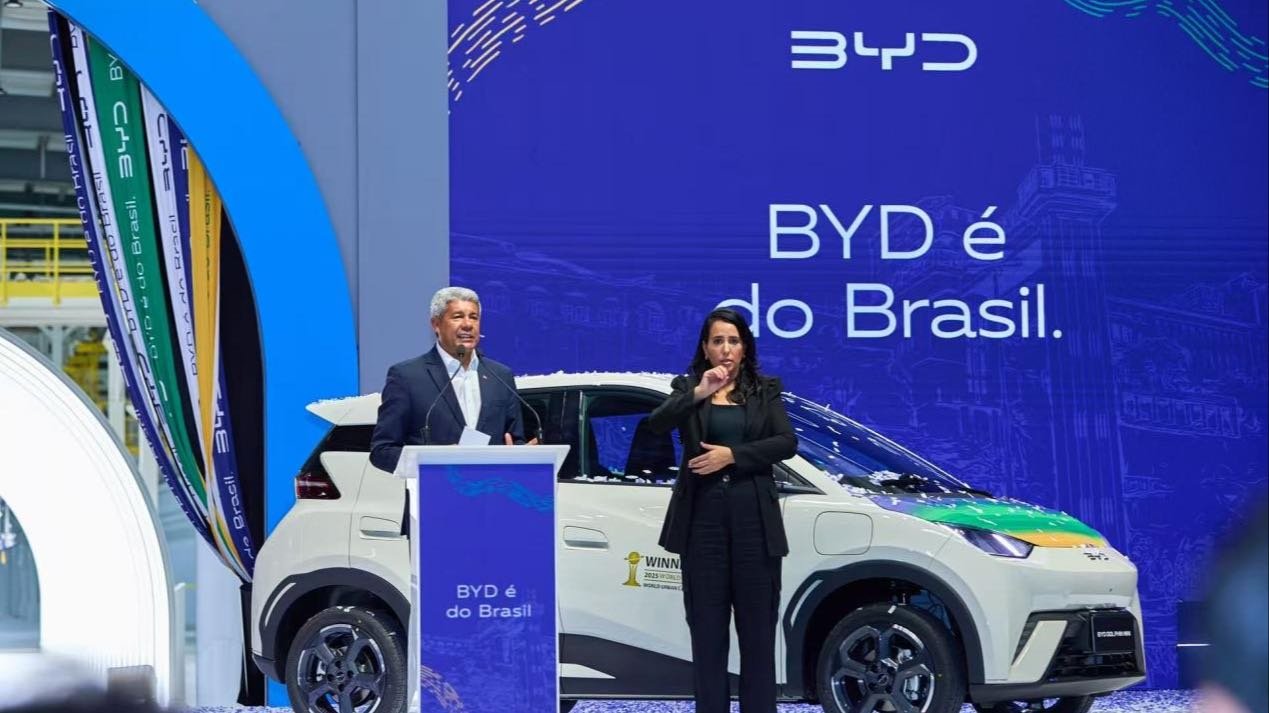
On July 1 local time, BYD held the roll-off ceremony of the first vehicle at its Brazil passenger car factory in Camaçari, Bahia, Brazil, marking a new stage in BYD's globalization strategy. Bahia Governor Jerônimo Rodrigues, Brazilian Minister of Culture Margareth Menezes, Camaçari Mayor Luiz Carlos Caetano, BYD Executive Vice President Li Ke, and BYD Brazil General Manager Li Tie attended the ceremony.
BYD's Brazil passenger car factory not only carries BYD's important mission in its global layout, but has also become a strategic pivot for activating the entire Latin American new energy market. In his speech, Bahia Governor Jerônimo highly praised it: "The completion of BYD's factory in Bahia, Brazil is not only a symbol of industrial development, but also a new chapter in cooperation between Brazil and China. We are ready to welcome a greener and more innovative Brazil. This factory will promote local economic development, drive local employment, and become a model of technological transformation."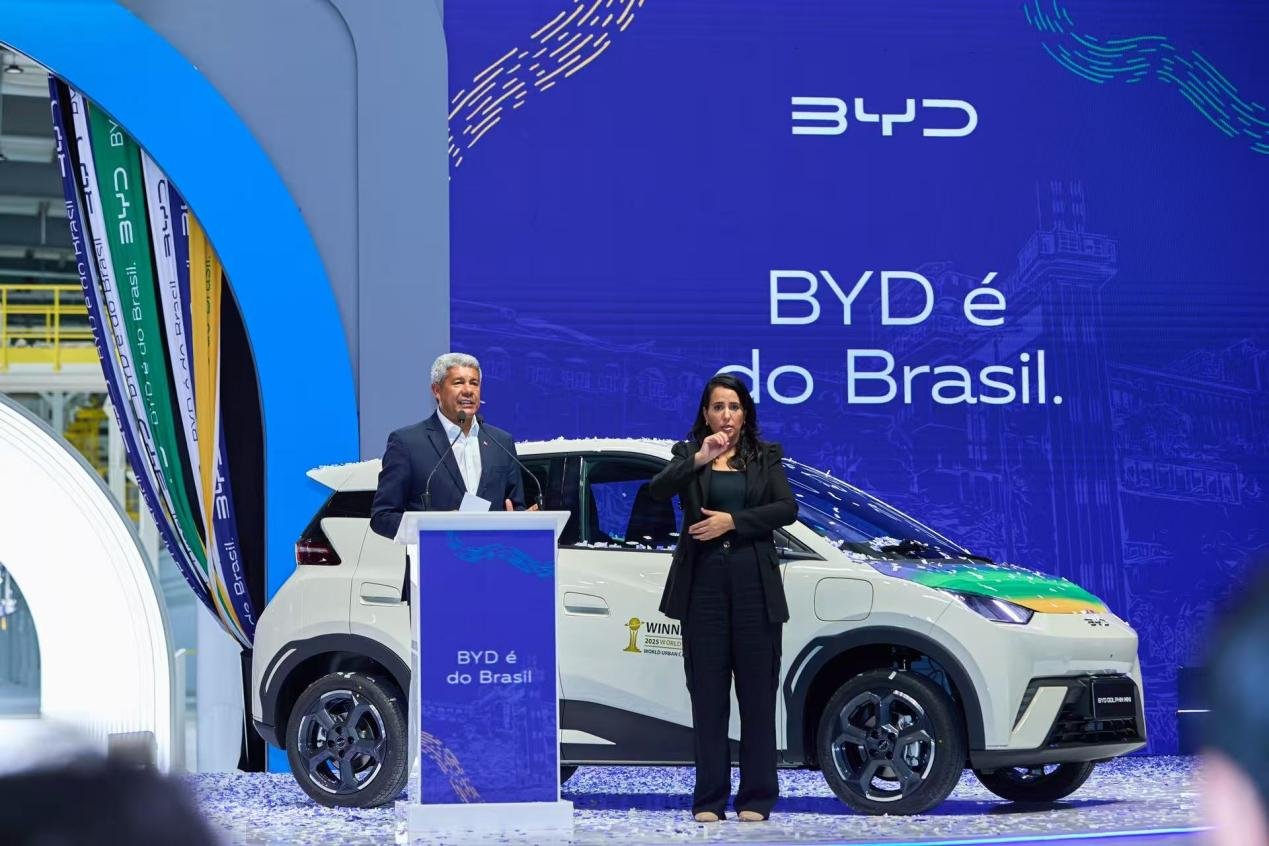
Li Ke said at the ceremony: "As one of the companies with the highest R&D investment in the world, BYD is injecting leading technological strength into Brazil. From groundbreaking to the first vehicle rolling off the line, we took only 15 months. This is a milestone for BYD and a new starting point for the development of sustainable transportation in Latin America. We chose Bahia because it has passionate people, experienced workers, and the potential to change the landscape."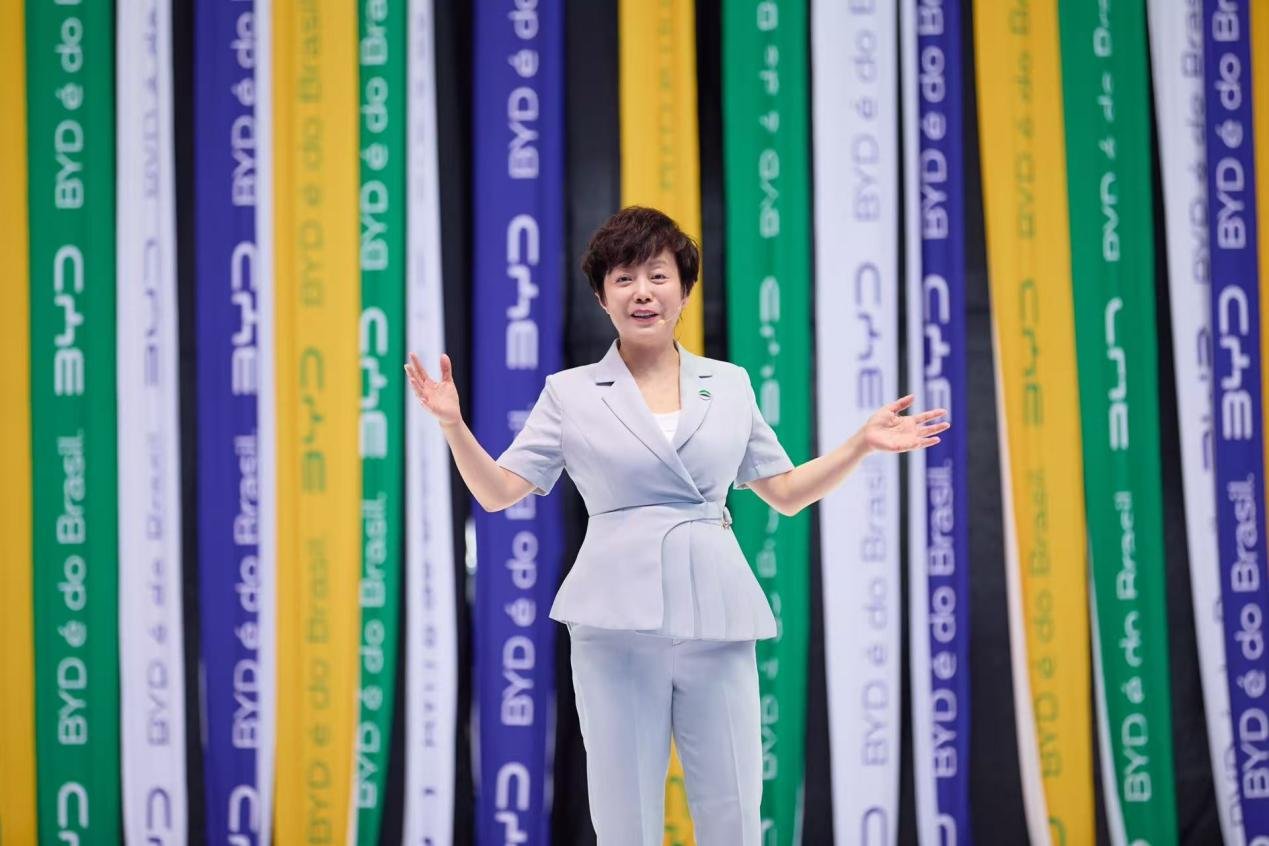
BYD's Brazil passenger car factory is located in Camaçari, within the Salvador metropolitan area. This city is not only an important industrial and economic center of Bahia, but also has a complete automotive industry chain support system and mature port logistics infrastructure.
As difficult as it is for Chinese automobiles to go global, so too is their courage. In July 2023, BYD announced the construction of a large production base complex consisting of three factories here, with a total investment of 5.5 billion reais (approximately 7.1 billion yuan). The base's new energy vehicle production line will produce pure electric and plug-in hybrid models, with a planned capacity of 150,000 vehicles, and is expected to create 20,000 local jobs. At the same time, BYD will also work with multiple local supply chain partners to build a localized industrial collaboration model and promote the sustainable development of the new energy industry chain.
Since entering the Brazilian market with new energy passenger vehicles in 2021, BYD products have won the favor of more than 130,000 Brazilian families. In the first quarter of this year, BYD's sales in Brazil exceeded 20,000 units, making it the local sales champion for new energy vehicles. In May, BYD rose to fourth place in Brazil's automobile brand retail sales ranking, with a market share of 9.7%.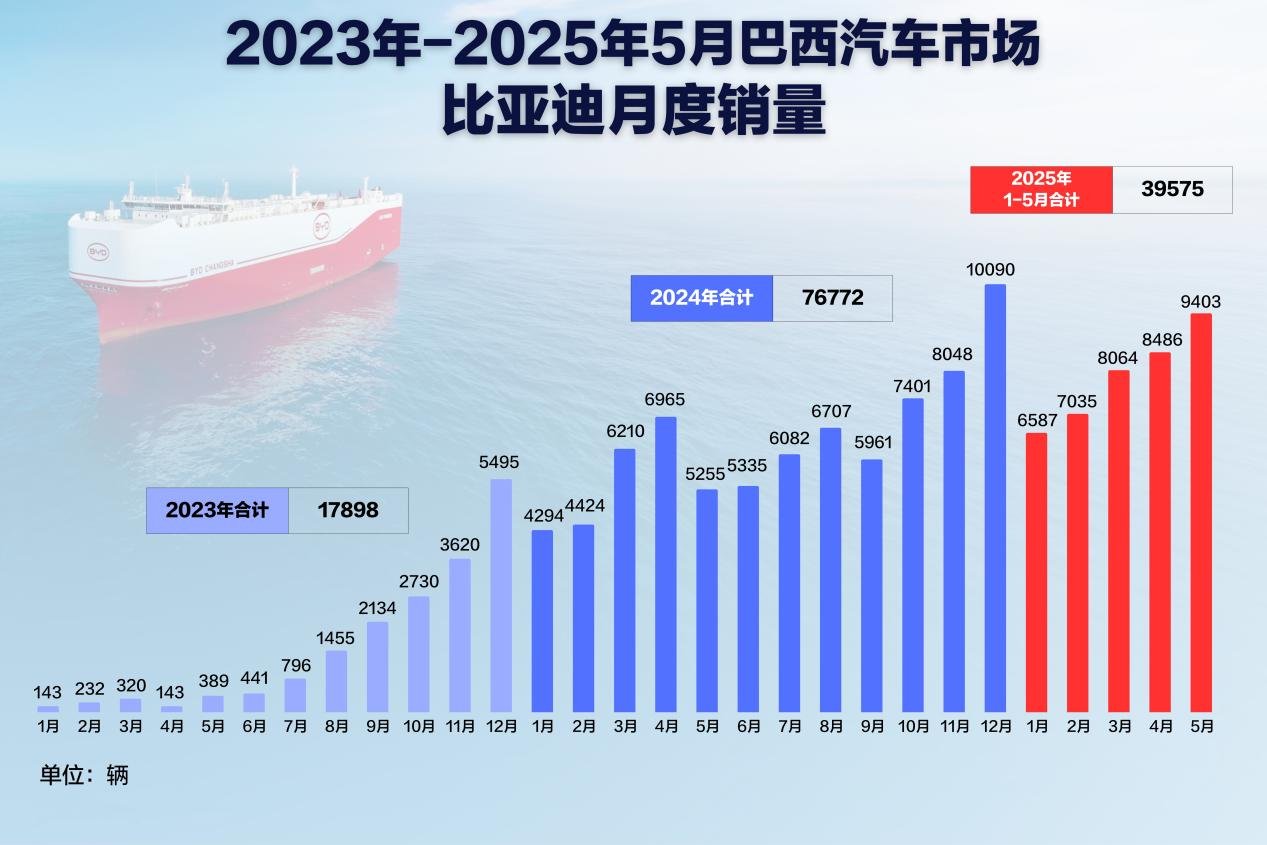
Behind the strong sales results is BYD's strategic determination and long-termism in continuously deepening its presence in the Brazilian market. Facing a complex policy environment and market competition, BYD responds to protection barriers with localized production and operations. Today, BYD is rewriting the competitive landscape of the Latin American automobile industry with "Intelligent Manufacturing in China," becoming a model for China's new energy going global "from product export to ecosystem co-construction."
In recent years, BYD has actively expanded its overseas industrial layout. Up to now, BYD's new energy footprint has covered six continents and more than 110 countries and regions worldwide. In the first half of the year, BYD's overseas sales exceeded 470,000 vehicles, a year-on-year increase of 132%, and it is expected that full-year overseas sales in 2025 will exceed 800,000 vehicles.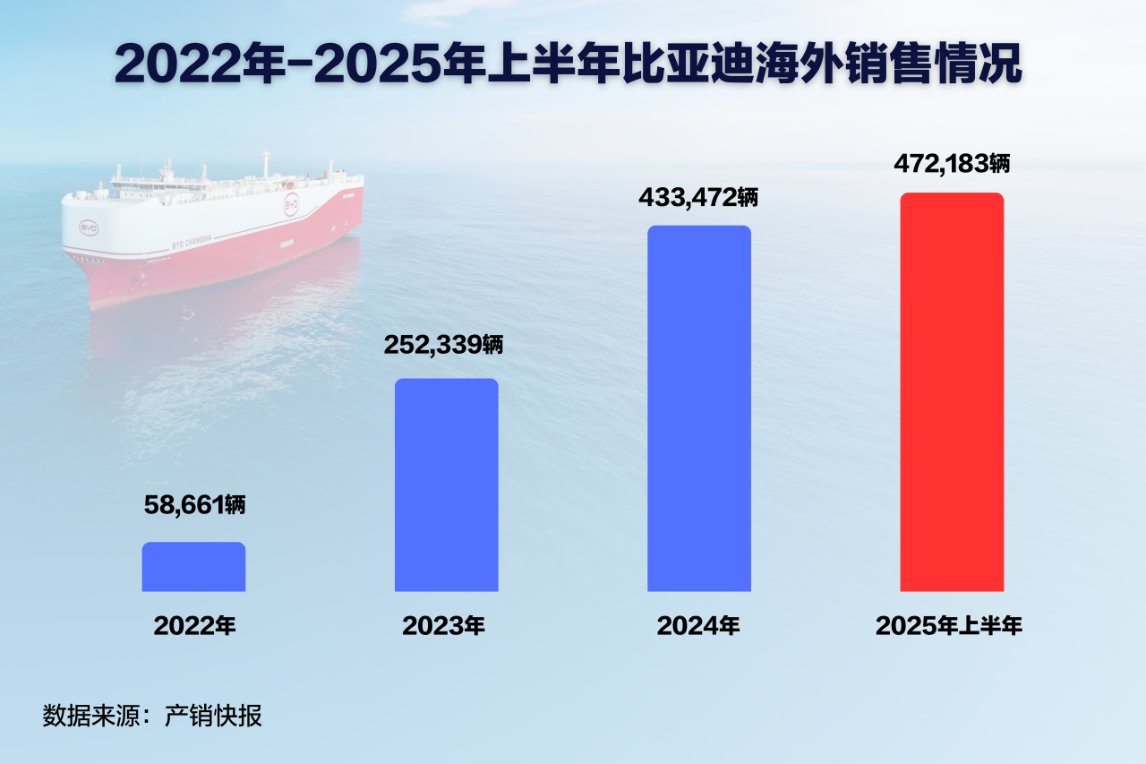
In the future, BYD will continue to firmly uphold a development strategy combining internationalization and localization, allowing Chinese brands to benefit global users and helping the green transformation of the automobile industry.
BYD's Brazil plant rolls off first vehicle: A milestone for China's smart manufacturing!
Related Stories

funnytechnology
Shenzhen Takes Off, China's Denza Soars! APEC Official Designated Vehicle First Batch Delivery Ceremony Grandly Held

ZXKC20200214
Geely Auto Appears at 2026 Sustainable Global Leaders Conference, Empowering Sustainable Development with Technological Innovation

StarCoreLabs
Hybrid sedans under 150,000 yuan: Seal 06, Volkswagen ERA 5S, MG 07 PHEV — how to choose?