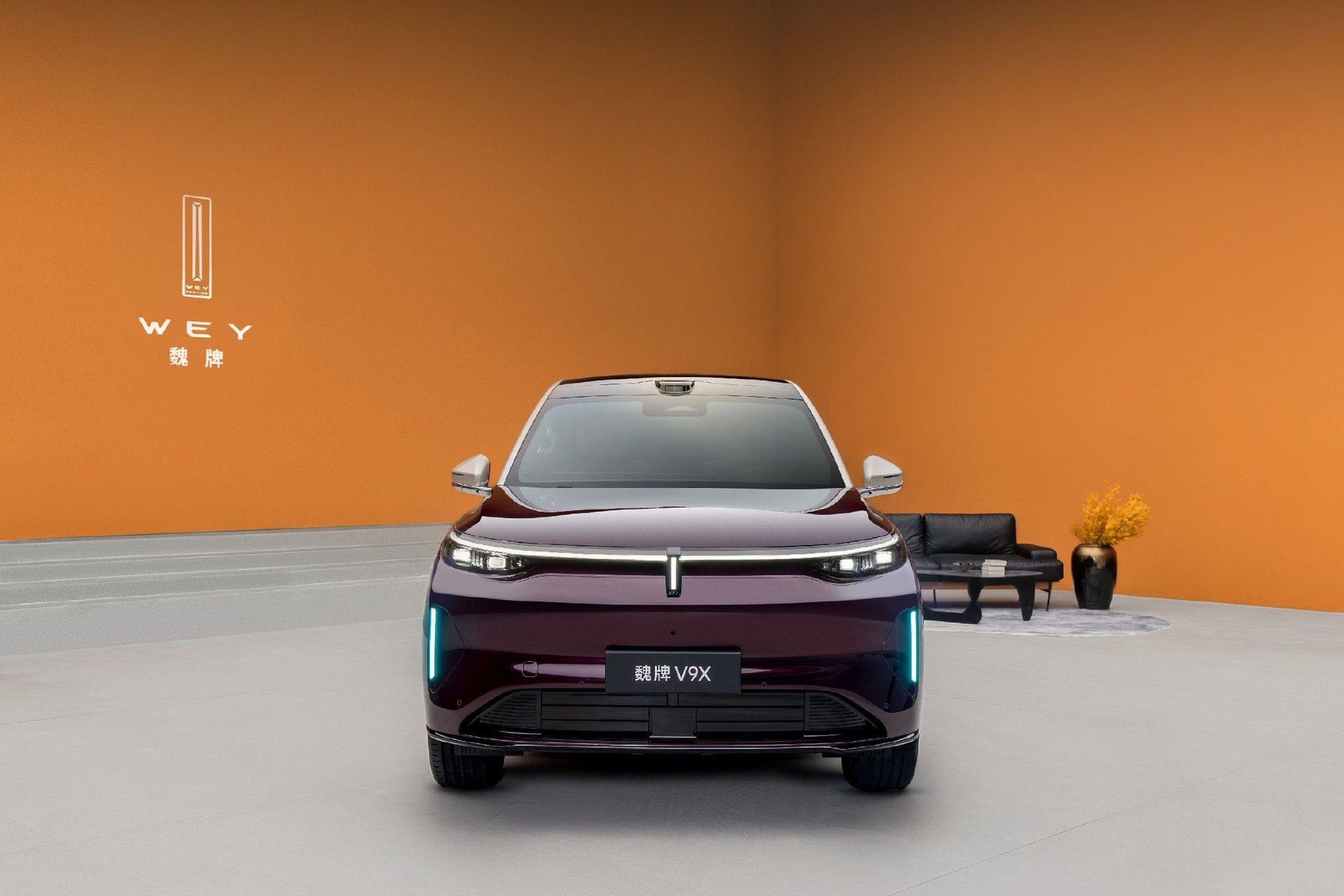
Let me be fair first: the Wey V9X is by no means a bad car. On the contrary, it is extremely sincere in its hardware. Dual-chamber air suspension standard across the range, rear-wheel steering at ±10°, turning radius compressed to 5.1 meters, 4-speed Hi4 tri-engine powertrain, 800V/6C ultra-fast charging... This list, at a starting price of 349,800 yuan, genuinely looks impressive on paper.
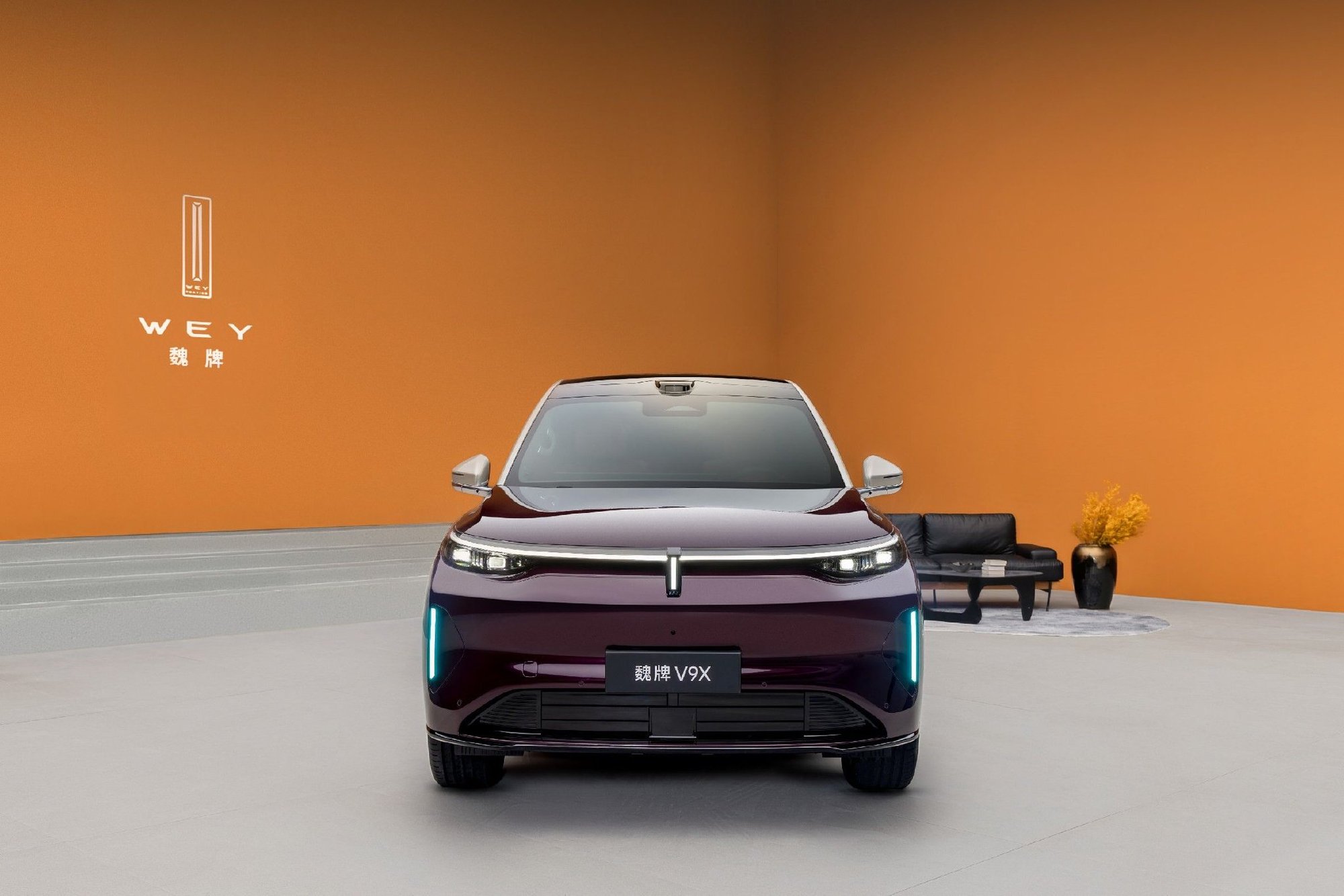
Great Wall spent 6 years polishing this car, and Wei Jianjun even put his own surname on the line to endorse it—the gesture has been maxed out. But the problem is, you don't buy a car based on a spec sheet; you buy it to live with day in and day out. Looking at it from the "daily living" dimension, the Wey V9X has a series of structural problems that will make a considerable number of buyers start muttering three months after delivery: "Should I have taken another look at Li Auto or AITO?"
I. The design lacks a "soul"—the interior is loaded with materials but the aesthetics miss the mark
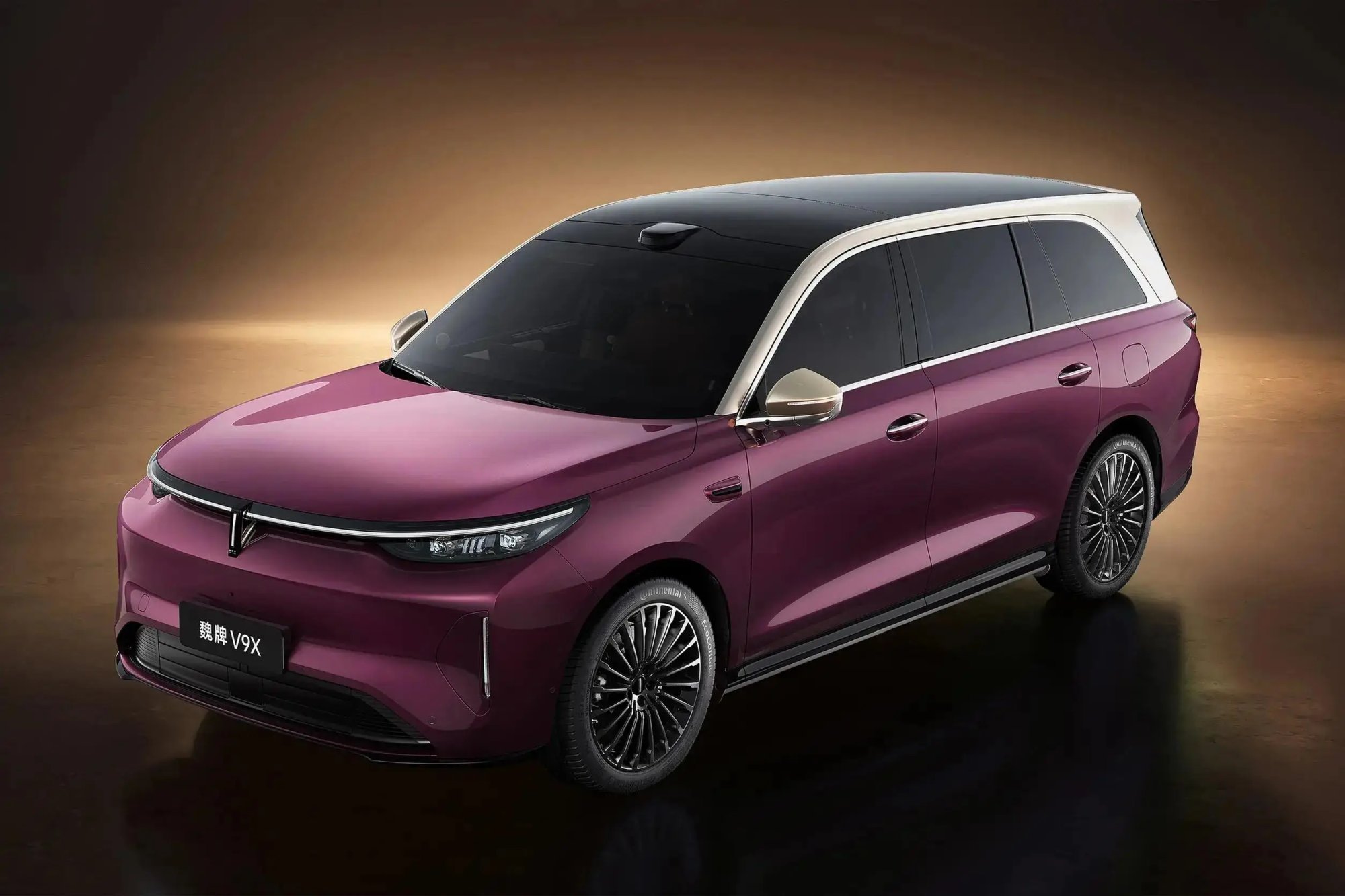
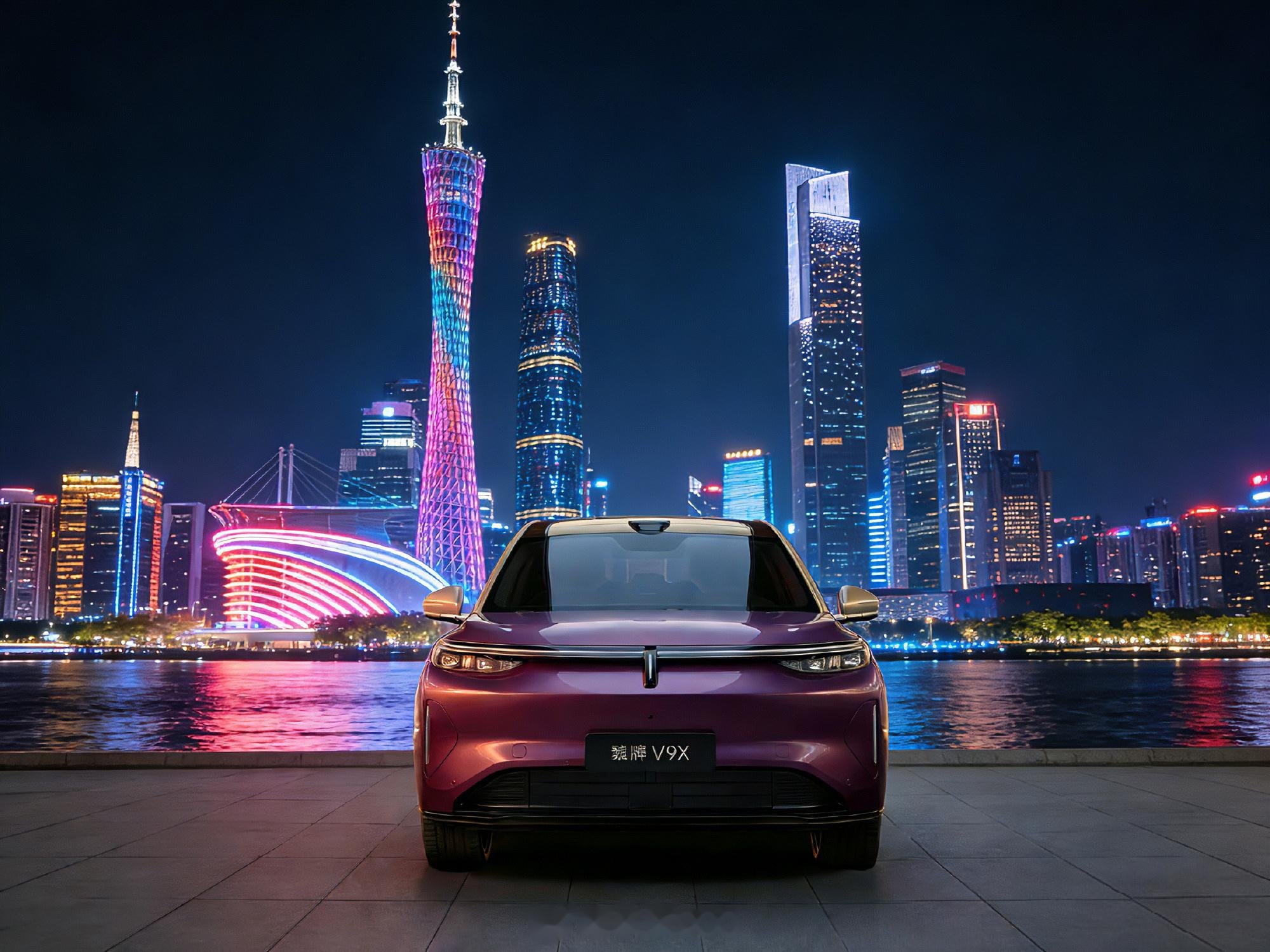
Wey's design once had a peak—the VV7 era had considerable originality and recognizability. But the V9X's exterior has been jokingly called a "Frankenstein" by many netizens: the front face looks like Leapmotor, the side looks like Li Auto, the taillights look like AITO—anything but Wey itself. For a flagship SUV carrying the brand's upward mission, this kind of design lacking a family language makes it very hard for users to build an emotional connection.
The interior is even more emotionally complicated. The materials are indeed solid—large areas of soft wrapping and suede headliner are all there—but the design style leans old-fashioned, the orange interior has been mocked as "like a nouveau riche," and the air vents and some button styles are even the same as those on cars costing just over 100,000 yuan. Luxury is not something you can achieve just by piling on materials; it requires the aesthetic depth of a design team—and Wey is clearly still figuring this out.
II. The space shortcomings of a six-seat SUV: the third row is only suitable for emergencies
The Wey V9X is positioned as a six-seat mid-to-large SUV with a 2+2+2 layout and a wheelbase of 3,150mm. The paper specs look roomy, but the SUV body structure inherently has the flaw of a raised floor—an irreparable gap compared with an MPV at the same price. In actual static testing, the third-row seat cushion thickness and length have obvious shortcomings, the cushion height is on the low side, and there is a lack of full support for the thighs. When adults over 175cm sit there, a large portion of their thighs is left suspended. It is tolerable for short trips under 30 minutes, but continuous long-distance rides of 1-2 hours will cause obvious backache and leg numbness.
To reserve space for the chassis, battery, and four-wheel-drive transmission structure, the V9X's overall floor height is on the high side. Elderly people and children need to lift their legs significantly to get into and out of the third row. For families with elders who have mobility issues or very young children, the convenience of getting in and out is far inferior to a native MPV. At the same time, limited by the sloping roofline of the SUV, the third-row headroom margin is compressed. Even if the long-wheelbase version's headroom figures look decent, actually sitting in it feels oppressive and cannot be as fully stretched out as an MPV's third row.
Storage capacity when fully loaded with six people is also a major pain point. When all six seats are in use, the trunk depth is greatly reduced, fitting only two 20-inch carry-on suitcases. For a three-generation family trip, it is very difficult to simultaneously store luggage, a baby stroller, and camping gear; while MPVs at the same level costing just over 200,000 yuan generally have over 660L of trunk volume with seven seats fully occupied, and expanded volume easily exceeding 1,700L, the gap in family hauling practicality is obvious at a glance. Many families choose a six-seat car precisely because of the core need for three generations under one roof and long-distance family travel. The V9X's third-row space performance—"adequate for emergencies, miserable for long-term use"—does not fit the core demands of families at all. Relying solely on second-row aviation seats to create a sense of luxury while ignoring the basic seating experience of third-row passengers is a typical product mindset of emphasizing the front rows and neglecting the rear.
III. Tri-engine plug-in hybrid structure: excess performance, considerable ownership pressure
The Wey V9X is equipped with a 2.0T turbo plus front and rear dual-motor tri-engine nine-mode architecture, a 4-speed dedicated DHT hybrid transmission, a combined 748 horsepower, and 0-100 km/h acceleration in 4.6 seconds. The power reserve is indeed abundant, but this complex tri-engine structure represents excess performance for ordinary families who mainly commute daily, while also bringing continuously increasing maintenance and repair costs.
First is the issue of energy consumption divergence. The higher-trim 470km pure electric version can drive purely on electricity for short daily city commutes, keeping usage costs controllable; but the entry-level 310km pure electric version, if a one-way daily commute exceeds 60 kilometers, will easily trigger frequent engine intervention. WLTC fuel consumption on low charge is 6.3L/100km. Compared with mainstream extended-range MPVs at the same price, which consume around 5L on low charge, long-term mixed city and highway driving will add 1,000 to 2,000 yuan in annual fuel expenses.
Second is later-stage repair and maintenance costs. A single-motor extended-range structure is simple, with low failure rates for the transmission and drive motor, and routine minor maintenance costs only a few hundred yuan; while the V9X's tri-engine dual-motor plus 4-speed DHT doubles the number of drivetrain components. Oil, filters, transmission fluid, and motor coolant all have shorter replacement cycles, and a single basic maintenance service costs over 40% more. Once a motor or hybrid transmission failure occurs, repair quotes can easily reach tens of thousands of yuan, and the entire three-electric system has low parts commonality, meaning longer waiting periods for parts. For ordinary families seeking peace of mind and low-cost car ownership, this complex powertrain architecture oriented toward performance truly adds long-term ownership burden for nothing. The vast majority of family users simply do not need 4-second-level 0-100 acceleration or high-speed re-acceleration reserves. Bearing higher ownership costs purely for excess performance is not a good deal.
IV. High pricing threshold, fragmented configuration tiers, cost-effectiveness detached from family positioning
The Wey V9X's official guide price is 349,800 to 389,800 yuan. Even with trade-in and presale subsidies stacked on, the actual out-the-door price remains firmly above 330,000 yuan, and the top-trim executive long-wheelbase version heads straight into the 410,000 yuan range. At this price point in the 2026 new energy market, the options are enormous: just over 200,000 yuan can get you a native MPV, under 300,000 yuan can reach a fully loaded extended-range flagship SUV from a mainstream brand, and a budget above 350,000 yuan can even touch a mid-to-large pure electric flagship from a first-tier brand.
What most affects the family experience is its crude configuration tiering strategy. The entry-level model has core hardware cut down—it is not a balanced, fully equipped range across the board. The entry-level Luxury Family Edition is equipped with only a 53.6 kWh ternary lithium battery and a 400V low-voltage platform, with CLTC pure electric range of only 310km and a fast-charging rate of only 3C, taking 15-20 minutes to charge from 30% to 80%; while only the mid-to-high trims get the 77.7 kWh large-capacity battery and 800V high-voltage 6C ultra-fast charging, which can complete 30%-80% charging in just 9 minutes and add up to 200 kilometers of range in 5 minutes. For ordinary families with limited budgets who can only choose the entry version, it is equivalent to spending over 300,000 yuan but not getting the two high-frequency essential configurations of core fast charging and long range—the hardware experience is directly disconnected.
By contrast, many family flagships at the same price unify core chassis, intelligent driving, and safety hardware across the range, differentiating only in comfort soft trim, and do not create gaps in daily high-frequency functions like range and fast charging. Ordinary families do not buy cars to change them every year; a car is held for at least 5-8 years. The shrinking of core three-electric hardware in the entry version will magnify the experience gap in long-term commuting and long-distance travel indefinitely—saving a little money upfront, but enduring the trouble of slow charging and insufficient pure electric range year after year. It is hard for cost-effectiveness to support long-term family needs.
V. The brand's "negative magnetic field": it's not that the car is bad, it's that people "don't dare buy it"
This is the point most worth expanding on, and also the Wey V9X's biggest weakness.
Wey's history is a dynastic history of "sell one model, discontinue one model." From the VV series to the Coffee series (Mocha, Latte), and then to Blue Mountain and Gaoshan, almost every generation of products has experienced discontinuation or renaming. Old owners have been "stabbed in the back" too badly—the price protection agreement when Blue Mountain launched was ultimately not honored, with losses of tens of thousands of yuan within half a year; now the V9X has higher configuration and a lower price, directly crushing Blue Mountain's used-car residual value.
This historical liability has created a bizarre phenomenon: new users think "350,000 yuan for a 5.3-meter large car is really a steal," while old users say bluntly, "Who still dares to buy a Wey at launch?" The shadow of a roughly 25% three-year value retention rate makes potential buyers hesitant to place an order easily—after all, nobody wants to become an "out-of-print owner" like the VV7 owners of back then.
To make matters worse, there are marketing mishaps and internal turmoil. The launch poster was suspected of plagiarizing Land Rover, and Wei Jianjun personally apologized and angrily rebuked the marketing team, exposing the weakness of the brand's internal system. Over nine years, Wey has changed nine CEOs in succession. Frequent senior management turnover has caused the brand positioning to swing repeatedly from light luxury off-road to family MPV and then to flagship SUV, lacking a unified high-end impression. On the channel side, Wey invested 2 billion yuan to build more than 500 direct-operated stores, but average monthly sales per store are only 17 units, with most continuing to lose money. Sales professionalism and service experience are clearly behind Li Auto and NIO.
What ultimately matters is the value retention rate. Used-car dealers never go easy when taking in a Wey—they push the price down. The low trim you pick up today for 349,800 yuan may not even fetch 200,000 yuan in the used market two years later, and that has happened before. This is not because the car itself is not worth it, but because the brand premium is not recognized in the secondary market. Spending 400,000 yuan on a car and selling it three years later for about the same as a 250,000 yuan used Highlander—many people cannot bear that psychological gap.
VI. Sales data exposes true market recognition: the cruel reality from "strong start" to "cliff fall"
If the initial data after launch could still be glossed over with "production ramp-up," then the latest August and September sales figures completely tear off the fig leaf.
Launched on May 18, with only a 14-day delivery window in May, sales were 1,018 units. June, as the first full delivery month, saw sales climb to 1,505 units, and July even reached a peak of 1,855 units. At the time, the market still held a sliver of fantasy: had the V9X finally stabilized?
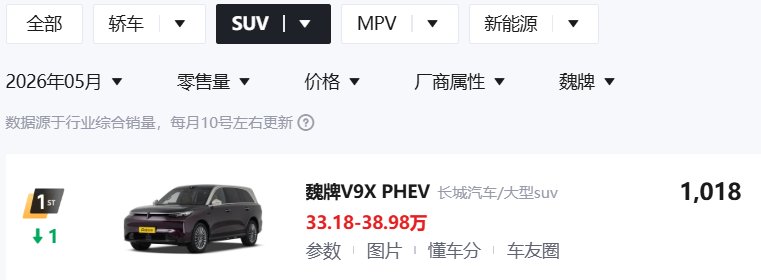
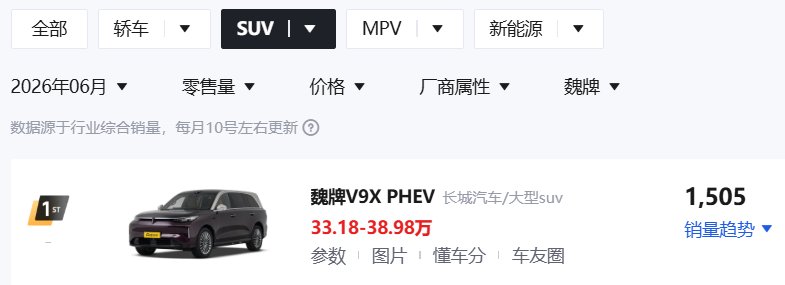
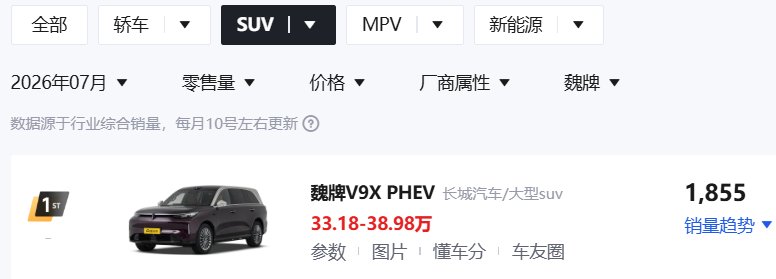
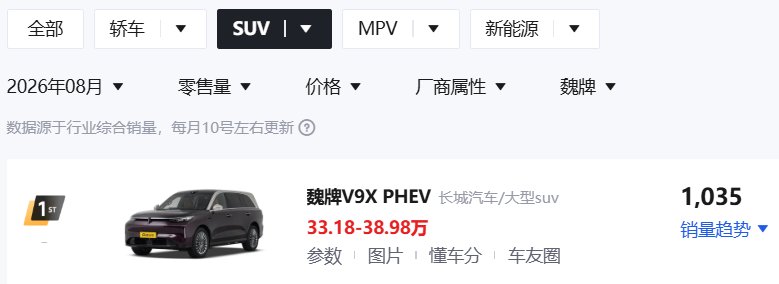
However, the August data gave the coldest answer: monthly retail sales plummeted to 1,035 units, a month-on-month drop of 820 units, falling directly back to the level of the first month on the market and ranking 285th on the all-model list. This kind of "cliff-style decline" is more terrifying than "consistently sluggish," because it means July's 1,855 units were not the market norm, but a short-term release of backlogged orders from the launch period. Once this wave of "early adopters" is exhausted, the V9X's true market appeal is instantly exposed for all to see.
Entering September, Wey's overall sales were only 6,796 vehicles, a sharp year-on-year decline of 36.73%. Although the official did not separately disclose the V9X's precise September retail figures, combined with August's dismal performance of just over a thousand units and the sharp contraction of Wey's overall volume, the V9X in September most likely still struggled painfully between the three-digit and one-thousand-unit edge.
Compared with the terrifying dominance of Li Auto L9 and AITO M9 in the same segment, which easily exceeded 5,000 units in their first month and sustained it, the V9X's traffic disconnect is visible to the naked eye. The high-end six-seat SUV segment is a typical winner-takes-all landscape. Among nearly 70 models on sale, only about a dozen exceed 5,000 monthly sales, while more than 30 have monthly sales below 1,000 units. If the V9X cannot quickly build word of mouth, it may very well become yet another "three-digit monthly sales" also-ran.
Summary: It's a good car, but buying it requires too much of a "gamble"
I must give the Wey V9X's product strength a high score—mechanical quality, space practicality, power and range—at the 350,000 yuan price point, it is almost unmatched. But its problem lies in this: brand trust, value retention expectations, design recognizability, channel service, and marketing system—these soft powers seriously hold it back.
For ordinary consumers, buying a car is not about buying specs; it is about buying peace of mind. The V9X's current state is more suitable for those technical-minded users who "know cars, don't care about the brand, and plan to hold long-term." But if you want a safe choice that is "satisfying for the whole family, presentable when driven out, and still able to fetch a good price three years later," my advice is: wait and see.
Wait to see whether sales can bottom out and rebound after September, wait for the real word of mouth from the first batch of owners, and wait for the brand's value retention rate and after-sales service system to mature a bit more. After all, we have seen Wei Jianjun's sincerity in saying "a pledge made in my own surname," but automobile consumption, in the end, cannot be paid for by sentiment alone.


