For car-buying families who want a car that is "nice and big," it may be hard to avoid the Teramont and Audi Q6 in the domestic auto market, especially when the Teramont first launched. At that price and with that large body at the time, it could be regarded as an "overlord"-like presence. Even today, the newly launched Teramont Pro still has an astonishing size, especially after a direct price cut of 40,000 and a fixed price starting at 269,900 yuan. Among models in the same price range, few can match its size. Consumers who want "nice and big" are fortunate.
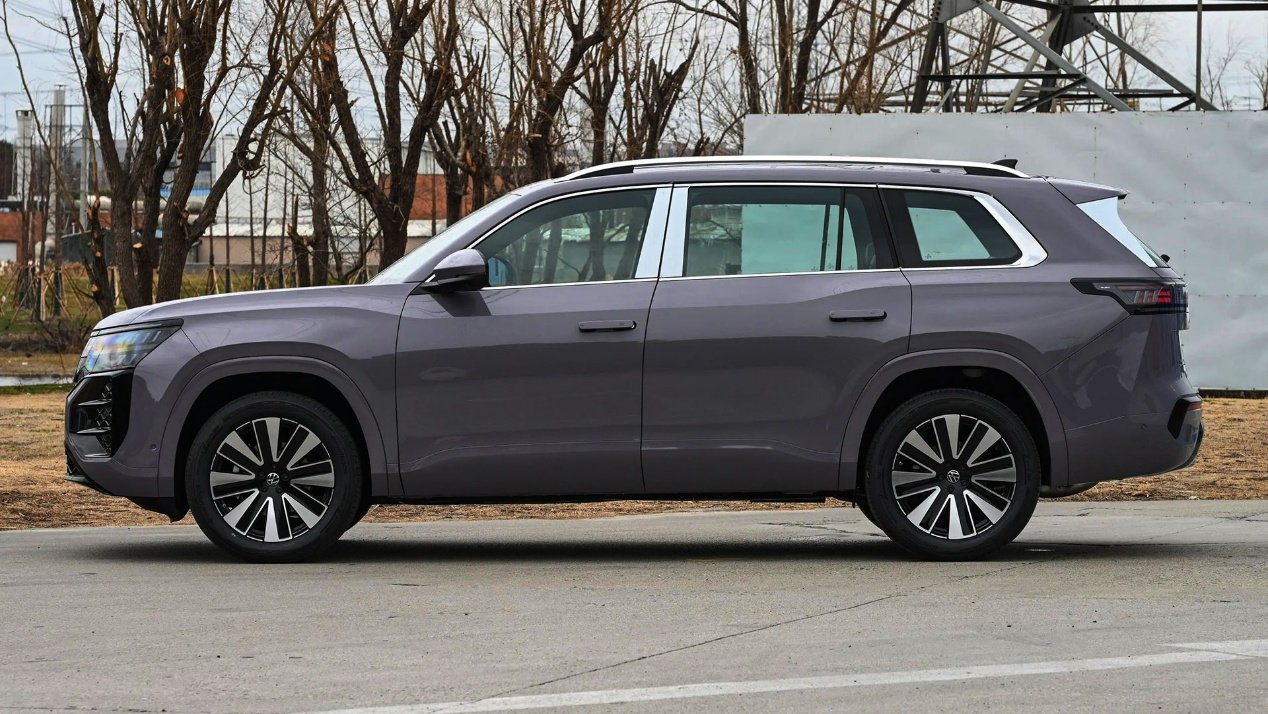
The Teramont Pro is 5158mm long, 1991mm wide, and 1788mm tall, with a wheelbase of 2980mm. I remember that in daily livestreams, when car enthusiasts insist on getting a three-row SUV, I generally recommend the Teramont or Talagon, because only at this size can the riding experience of a three-row seat approach that of an MPV in the same class.
Actually, I was initially opposed to choosing a car that is "nice and big," mainly based on considerations of driving agility, because I have seen so many times owners struggling again and again when parking. At that time I thought, "Why put yourself through this?"
However, in recent years, with the vigorous development of new energy vehicles, electric-drive acceleration monsters have become more and more ferocious, and drivers' driving skill levels have also gone from bad to worse, generation after generation. All kinds of bizarre and tragic traffic accidents are shocking. At that time, I suddenly understood car enthusiasts who choose big cars. This is their vehicle use need. A relatively larger body provides relatively better protection for occupants in collision accidents. Just this alone makes it worthwhile.
[Fifth-generation EA888]
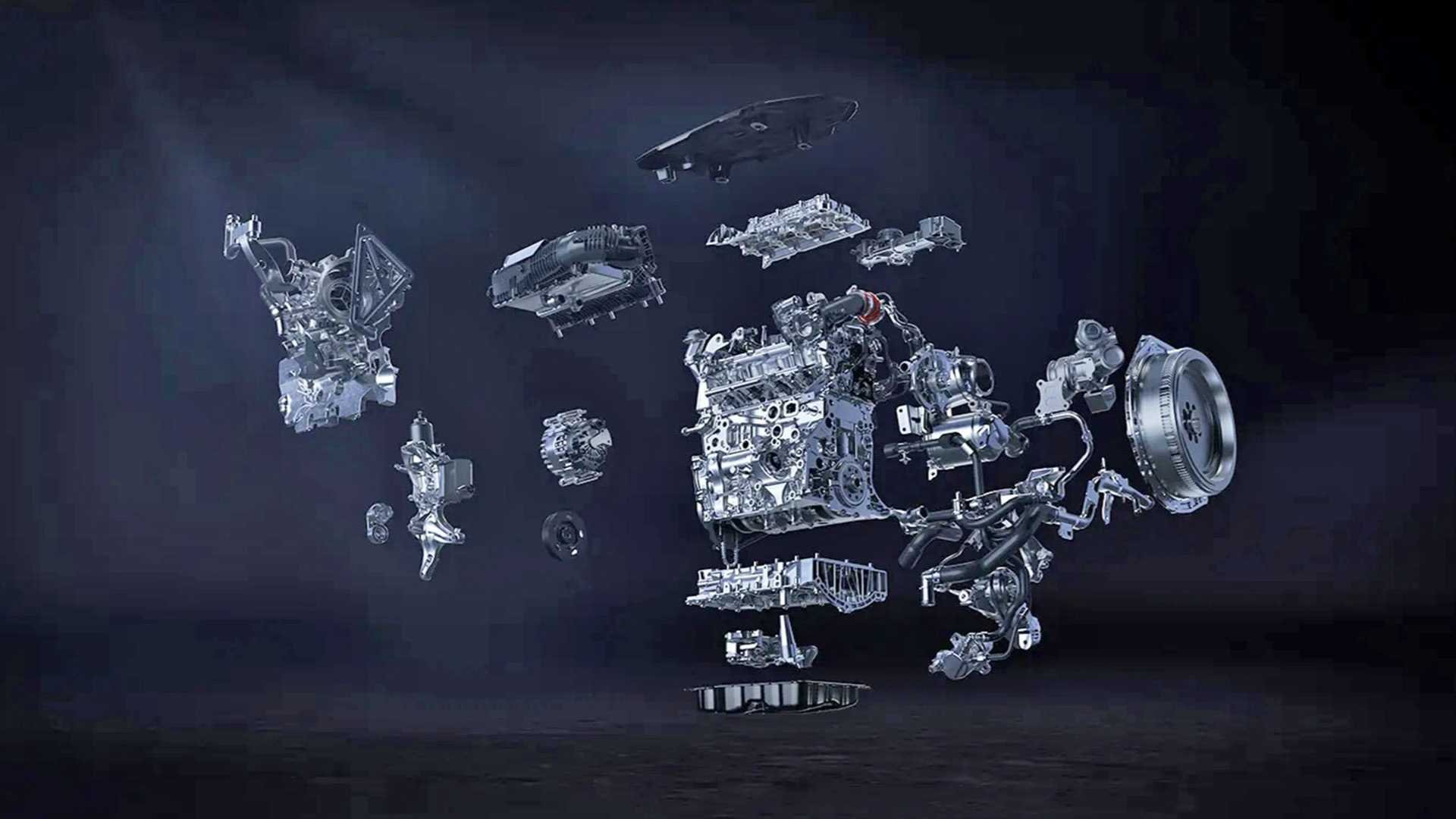
In my opinion, when talking about the Teramont Pro, the fifth-generation EA888 should be placed first, because fuel vehicles emphasize the three major components, and the engine is the core value of a car.
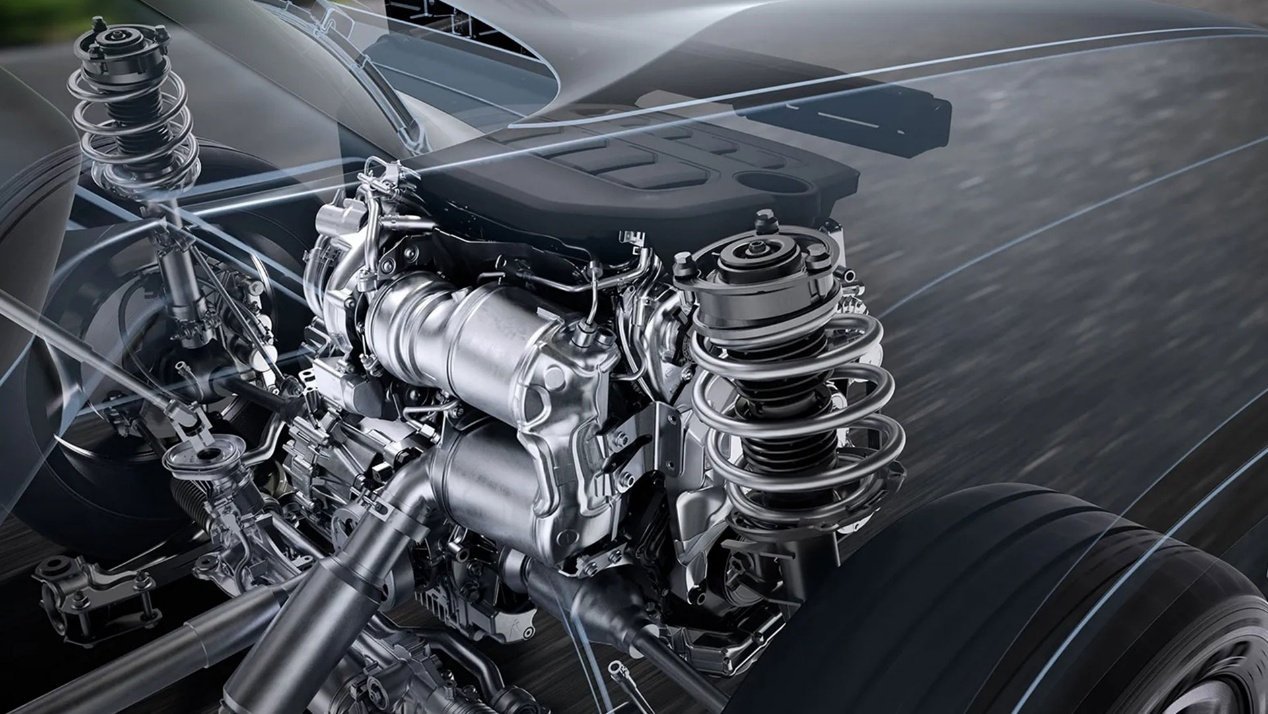
The Teramont Pro's official website separately lists the "close-coupled exhaust purification device," claiming it "absorbs high-temperature exhaust heat faster and solves the problem of particulate filter regeneration." It seems that the fifth-generation EA888 is already mature in this dimension, and some car enthusiasts who were worried about this can set their minds at ease.
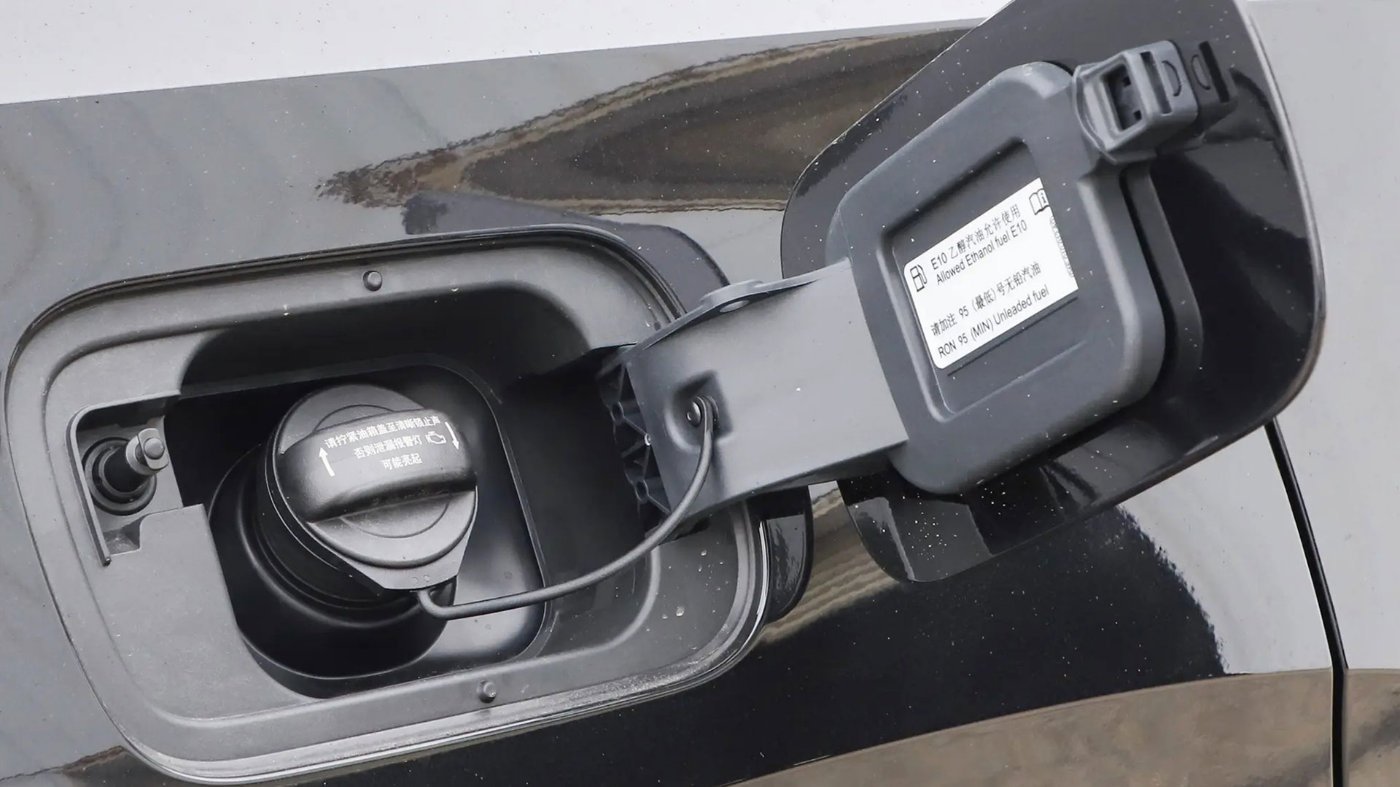
In addition, inside the fuel filler cap of the Teramont Pro it is noted that "E10 ethanol gasoline is permitted; please refuel with 95 (minimum) octane unleaded gasoline." This shows that the fifth-generation EA888 engine has a broader range of use, and consumers in regions across the country where ethanol gasoline is widely used can confidently choose the Teramont Pro.
Regarding the use of 95 octane gasoline, I have always suggested that car enthusiasts try to choose higher-octane fuel, because in theory higher-octane fuel has relatively better anti-knock properties, so the engine ignition timing advance angle can be relatively earlier, and the engine operating state will be better. In the past, many customers and car enthusiasts reported after using higher-octane gasoline that acceleration was lighter, noise was lower, and fuel consumption was relatively lower. So if you can afford the horse, you can afford the saddle. Don't you think that makes sense?
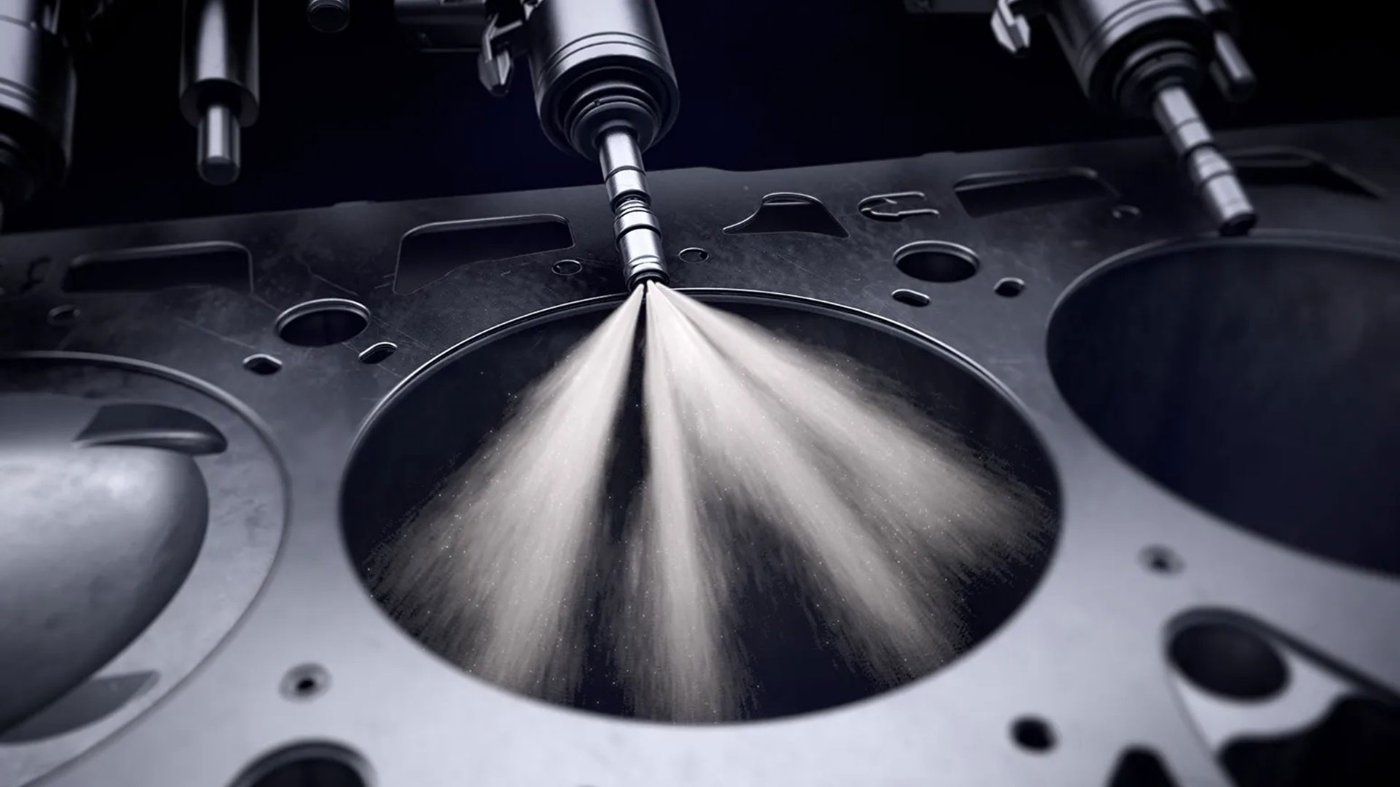
There is no need to explain too much about the 500bar ultra-high-pressure fuel system. If you have experienced showers under different water pressures, you can probably understand. The higher the injection pressure, the better the atomization, and with better atomization, combustion is relatively better, which means increased output and reduced emissions.
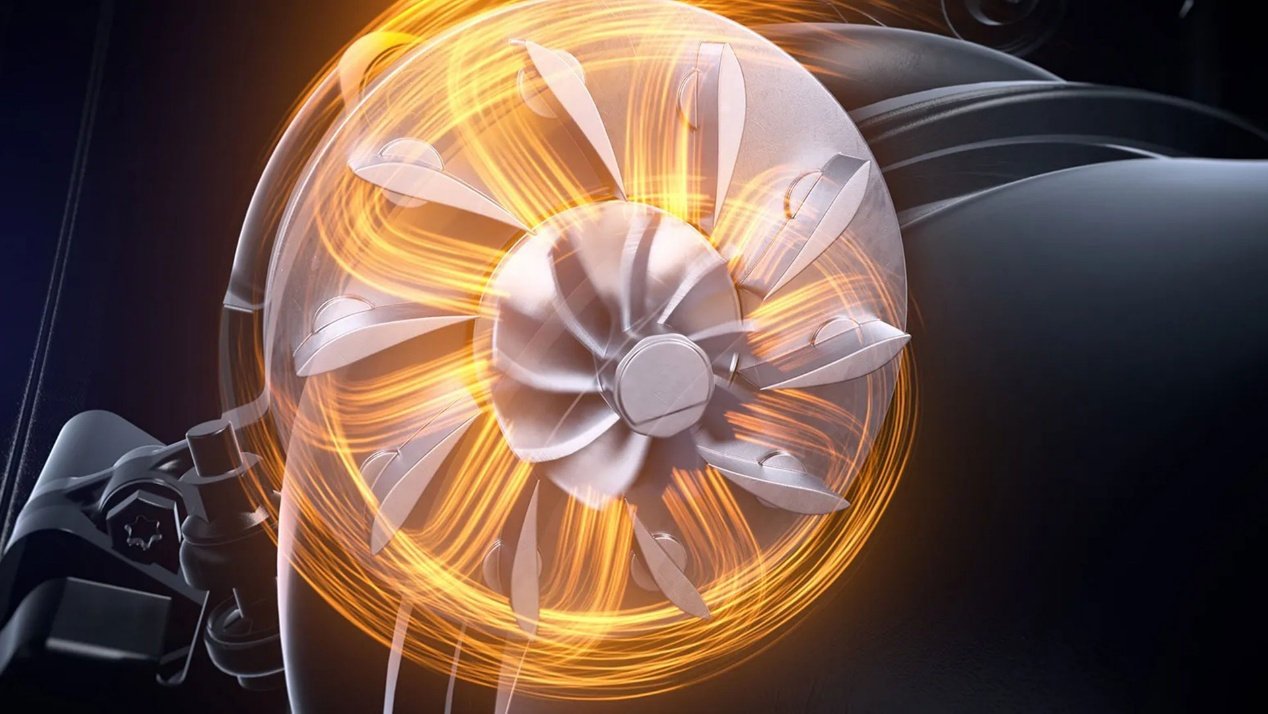
VTG variable-geometry turbocharging is not a new technology either. In short, from the perspective of turbocharging, it is mainly to improve low-end torque output, because the performance of turbocharged engines at medium and high speeds is itself not bad.
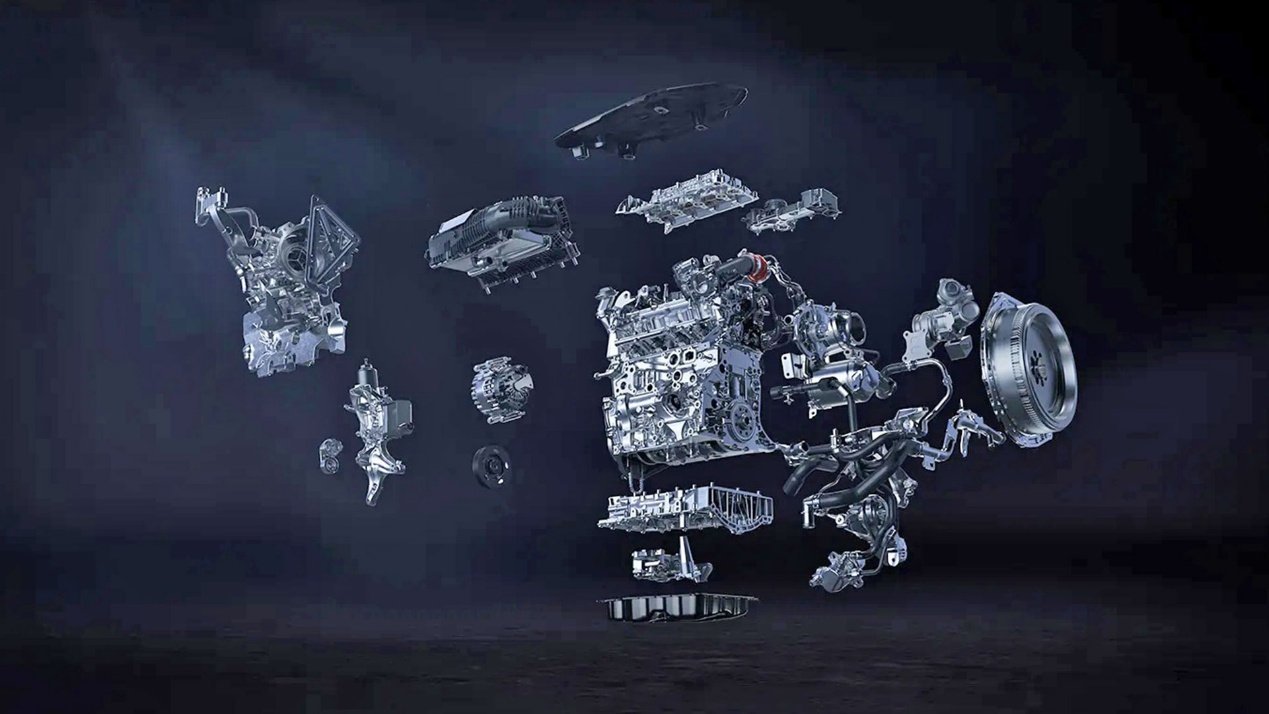
There are also things such as "optimal air-fuel ratio under all operating conditions, Miller cycle under all operating conditions," etc., all of which serve power output, fuel economy, and exhaust emissions. So for consumers, whether it is a fuel engine or an electric motor, only two indicators are useful: acceleration performance and energy consumption. As ordinary car consumers, we only need to focus on these two indicators.
The 450TSI engine installed in the Teramont Pro has a rated power of 200kW/5000-6500rpm and a maximum torque of 400N·m/1700-4500rpm, matched with a DSG seven-speed wet dual-clutch transmission. All three configurations come with 4Motion intelligent all-wheel drive, and 0-100 km/h acceleration takes 7.6 seconds. Regarding energy consumption, the official figures give fuel consumption at a constant 90km/h of 6.6L/100km, and WLTC combined fuel consumption of 8.35L/100km. If you do not drive particularly aggressively, daily road conditions are not especially congested, and single-trip mileage is not especially short, fuel consumption per 100 kilometers should be controllable within 10L.
Compared with pure electric vehicles, fuel vehicles still have a weight advantage. Such a huge Teramont Pro has a curb weight of only 2155kg. With a 70L fuel tank running at a constant 90km/h, a full tank should be able to travel more than 700km. If the Teramont Pro were a pure electric vehicle of this size with 700km of range, guess how heavy its curb weight would be?
[Passive safety protection]
I wonder if you have felt that such a powerful fifth-generation EA888 looks especially petite when placed in the engine bay of the Teramont Pro?
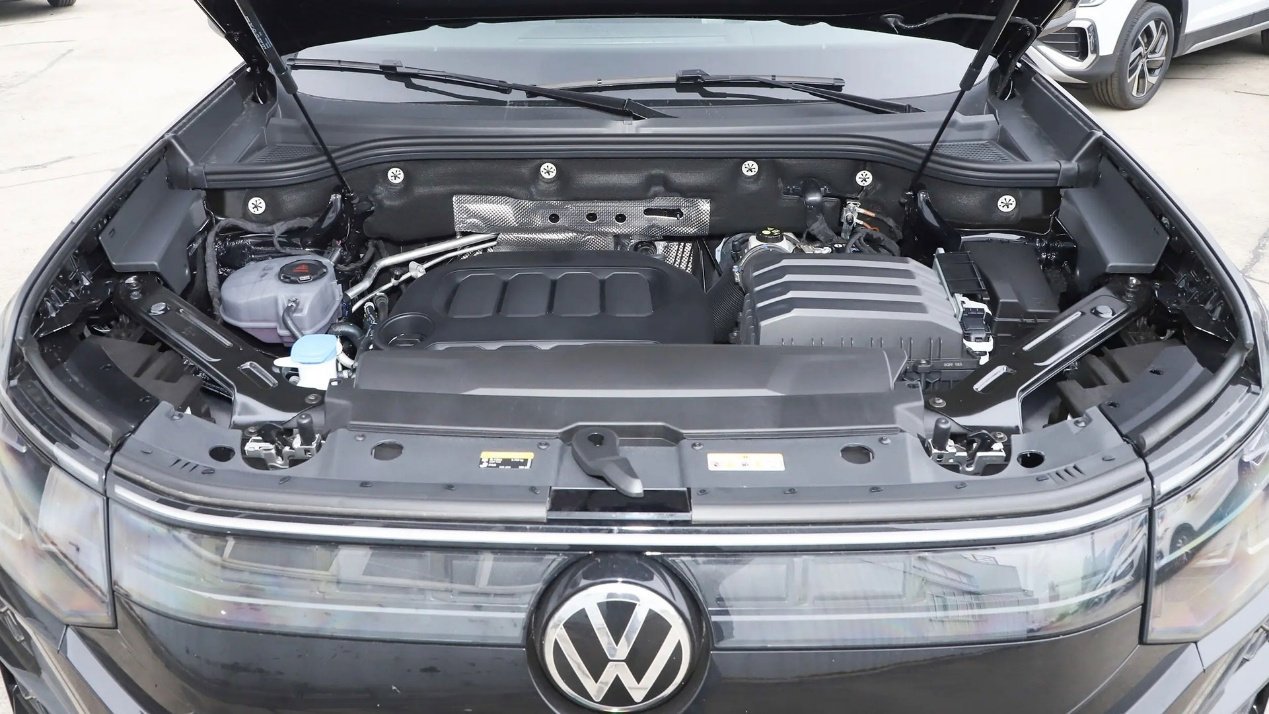
It can thus be seen that the crumple zone at the front of the Teramont Pro body is quite ample. In rear-end collisions, for most passenger cars ahead, there is basically no need to worry about the safety protection effect for the Teramont Pro's occupant compartment.
However, occupants in the vehicle must correctly use the restraint system, that is, fasten seat belts as soon as they get in, so that in the event of a collision they can cooperate with other passive safety protection equipment to provide better protection for occupants. There is no need to explain much about this, because many bloody cases have already told us this many times.
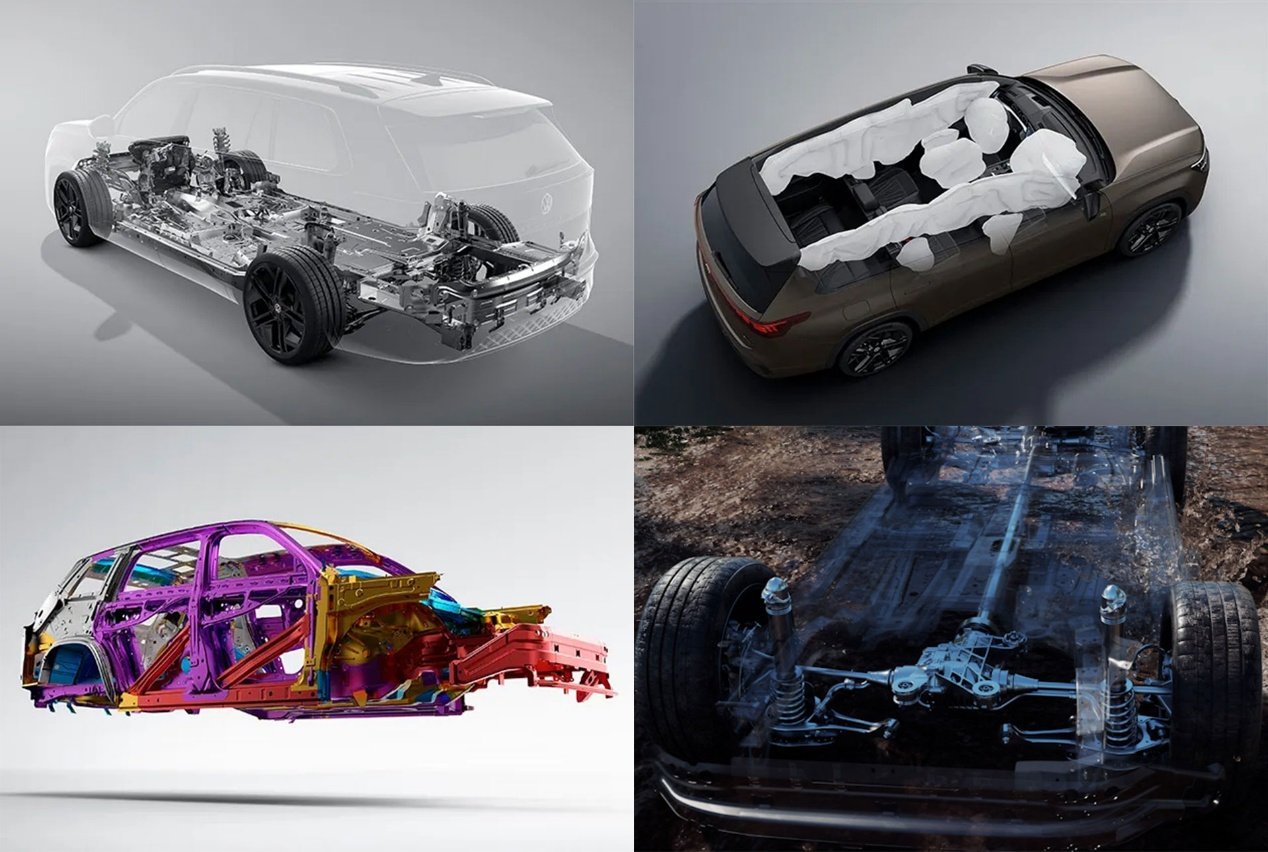
Looking again at the Teramont Pro's safety body cutaway view, body underfloor, airbags, and other components, I wonder whether saying this can win your agreement: "As long as you do not do anything reckless, in common urban traffic accidents, the Teramont Pro can provide thoughtful safety protection for occupants." Do you think that is right?
[Dynamic performance]
The driving performance of Volkswagen models enjoys a good reputation in the domestic auto market. At the very least, "stable at high speed" is a consensus among many experienced drivers. Never mind that it uses a subframe rather than a full-frame subframe; the stable driving performance of most Volkswagen vehicles is better than that of most same-class Japanese models. This is not to say that most Japanese cars are poorly dynamically tuned, but that these are simply two styles of tuning, like two people with different personalities. There is no distinction of superior or inferior; for consumers, it is just a matter of like or dislike.
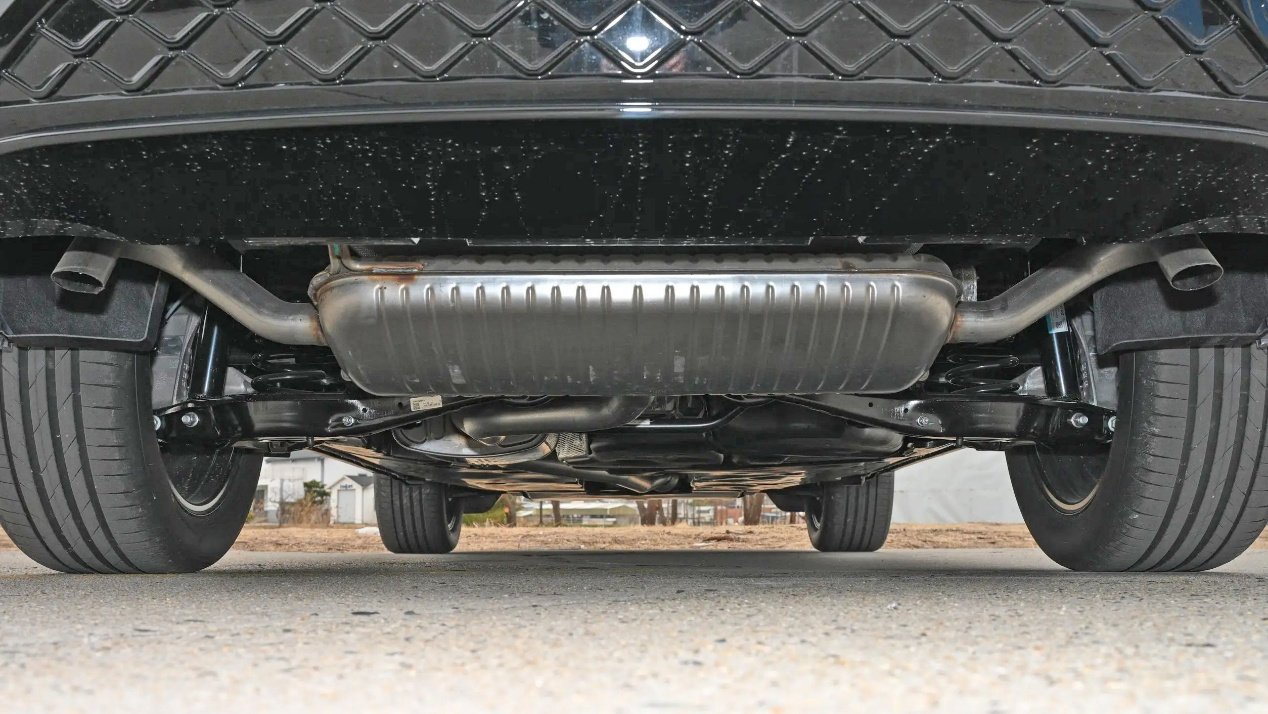
The Teramont Pro adopts a MacPherson independent front suspension and a multi-link independent rear suspension. In the Teramont Pro's official announcement, a new term appears again: "multi-link independent suspension."
However, based on my experience repairing Volkswagens back then and later disassembling and analyzing Volkswagen chassis, in terms of form, the suspension forms and related components of Volkswagens under 100,000 may not differ much from those of 300,000-level Volkswagens. Last time, when my colleague analyzed the chassis of the Tiguan L Pro and Tayron Pro, I also felt there was nothing to say, because although it cannot be said they are basically identical, it can be described as almost the same. If one must rank them under such circumstances, then it can only depend on who pays more.
There are also legends in the market about whether "North Volkswagen" or "South Volkswagen" is better, and the same goes for other twin joint-venture brands. I do not know why some car enthusiasts insist on believing that XX is better. In my opinion, in principle, the relevant standards implemented by a joint-venture brand investing and building factories in China should be consistent. If the products launched differ slightly, then perhaps the blame should fall on different parts suppliers or different assembly teams, rather than on the question of which one is better.
[Smart cockpit]
Actually, as far as my daily car use habits are concerned, the smart cockpit is of little significance. For example, on a long drive home, if I am alone, I always stare straight ahead expressionless. If I really feel bored, I turn on the audio and shout along to familiar old songs to wake myself up, and that is it.
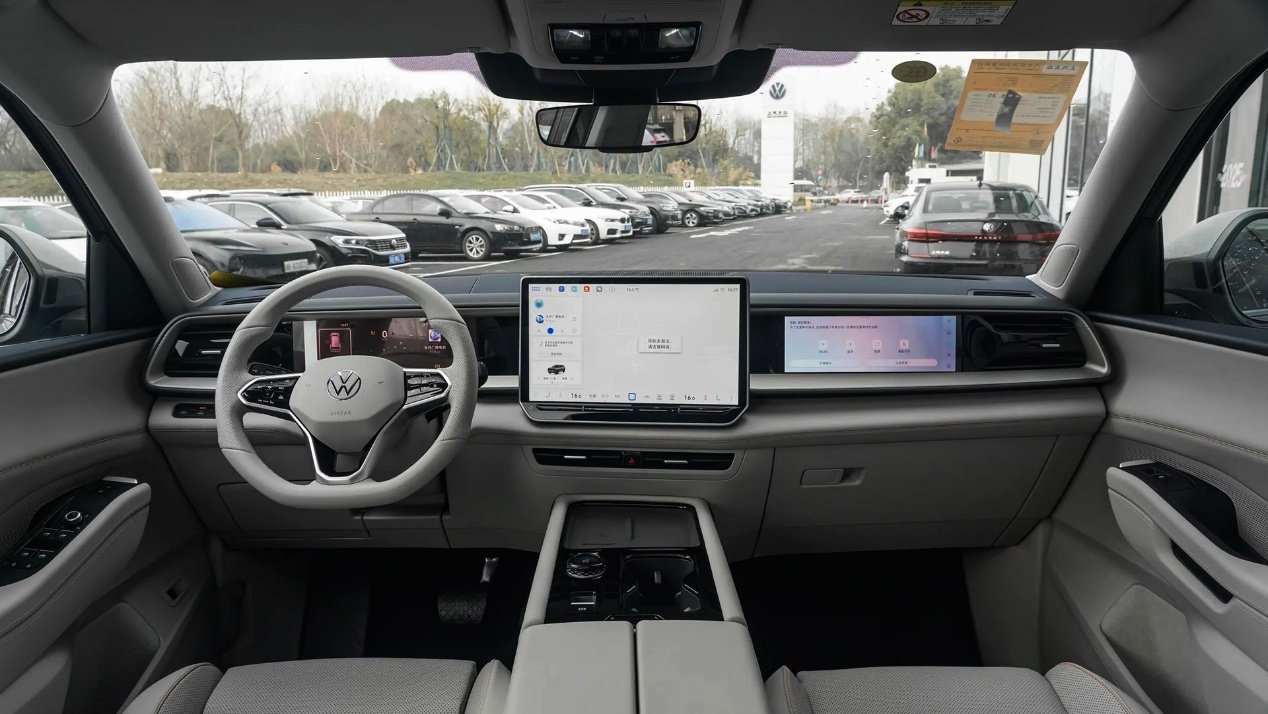
But car enthusiasts are picky, or perhaps car media hype makes it seem that the role of the smart cockpit is very important. No one cares that more entertainment has already seriously affected the driver's ability to focus on driving.
The Teramont Pro has also worked hard in this regard: Qualcomm 8155 chip, 12GB RAM + 128GB storage, 10.3-inch full digital LCD instrument cluster + 15-inch intelligent 2K floating screen + 11.6-inch front passenger entertainment screen, AR real-scene navigation, head-up display system, dashcam, 40W wireless phone charging, Type C interface, intelligent voice system, remote vehicle control, app store, cabin ambient lighting, and so on are all included. You tell me, isn't that all there is to play with in a car infotainment system?
In terms of in-car audio, the two lower trims of the Teramont Pro are equipped with a 9-speaker high-fidelity audio system, while the top trim gets a 14-speaker Harman Kardon premium audio system. With a good audio source, the listening experience is decent either way.
[Intelligent driving system]
Regarding intelligent driving, I more agree with the conservative approach of established automakers. For example, the Teramont Pro's official terms are still ACC advanced adaptive cruise system, lane keeping system, full-journey intelligent driving assistance system, lane change assistance system, and so on.
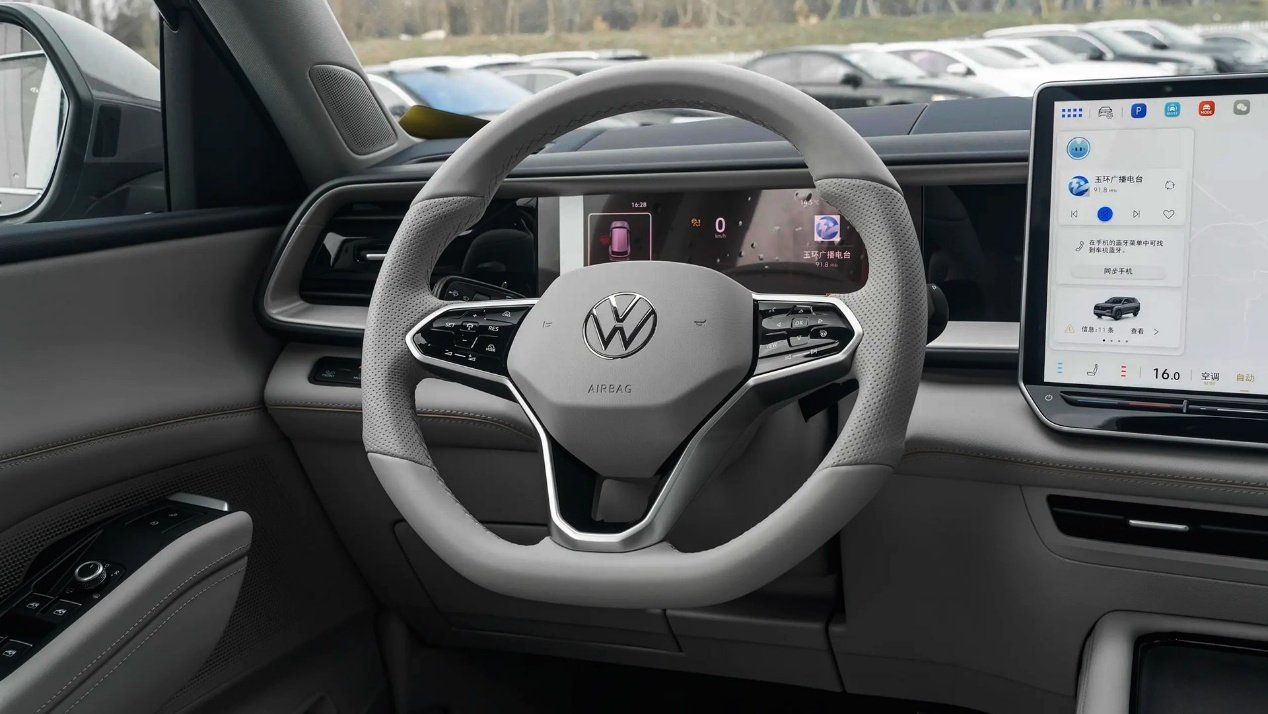
The top trim also uses terms such as "Advanced Adaptive Cruise System Pro, Lane Keeping System Pro, intelligent stalk lane change, intelligent cut-in response, intelligent obstacle avoidance, intelligent large vehicle avoidance." It is hard for these individual functions to make owners emotionally dependent on them. This may also be why some consumers feel it is "not premium enough." However, judging by the adaptive cruise experience, many joint-venture cars actually do not perform poorly.
Having worked in the auto industry for so many years, I also think many functions are completely pointless. For example, stalk lane change: we are already using the stalk, so are we really just one pull of the steering wheel short? Think carefully about whether that is really the case!
All three configurations of the Teramont Pro support intelligent parking assist, memory parking assist, and remote parking assist, and the official terms for all three functions include the word "assist." I believe their parking assistance experience is not bad, because more than a decade ago, high-end Audi and Volkswagen vehicles were already equipped with parking assistance, while at that time 300,000 to 400,000-level Japanese cars might not yet have been equipped with similar functions.
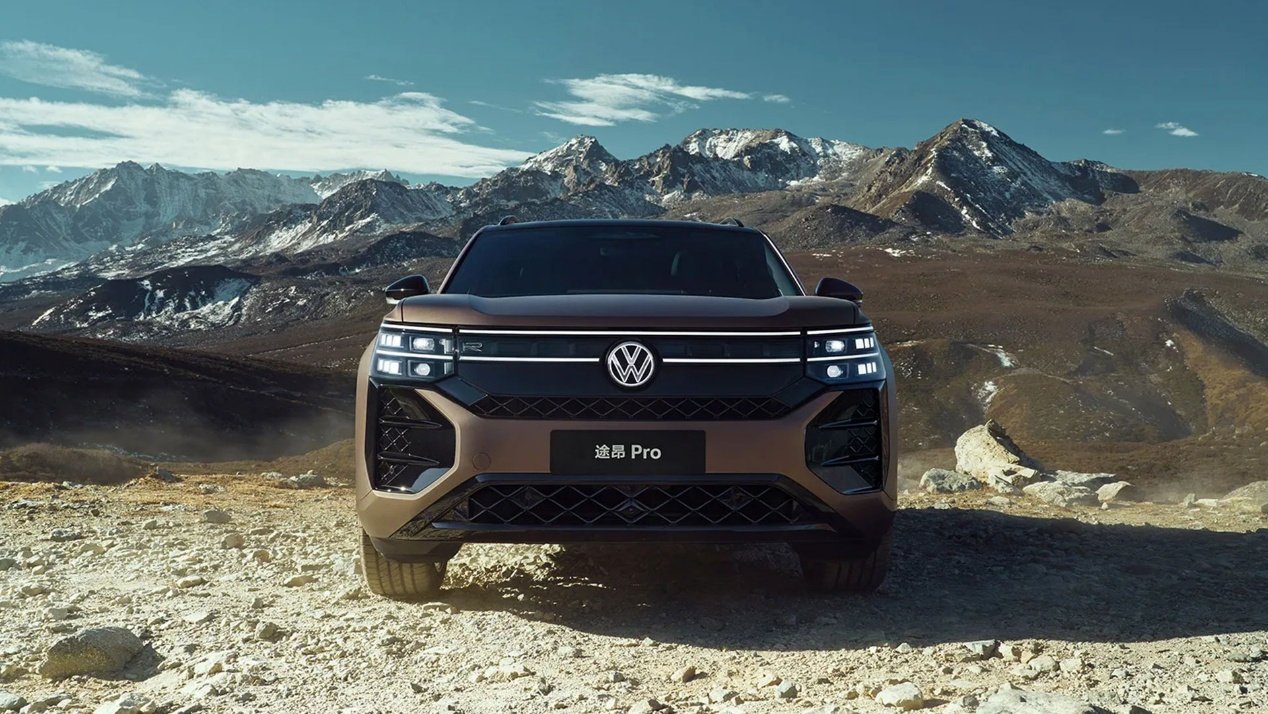
Therefore, if you have a car-buying budget of more than 200,000 and want a three-row SUV, or simply "want a nice and big car," under the reality of the Teramont Pro's fixed price, you really can give it a try. Whether it is space performance, dynamic performance, or the bit of joy from sitting in the car and looking down at other sedans on the road, it is already worth it. This also counts as respecting personal preferences first when choosing a car. Such a car-buying mindset is the right one; there is no need to pay attention to the endless talk of the public.
Note: Images in the text are from the internet and will be deleted if infringing! Written impromptu without review; please forgive any errors or omissions!


