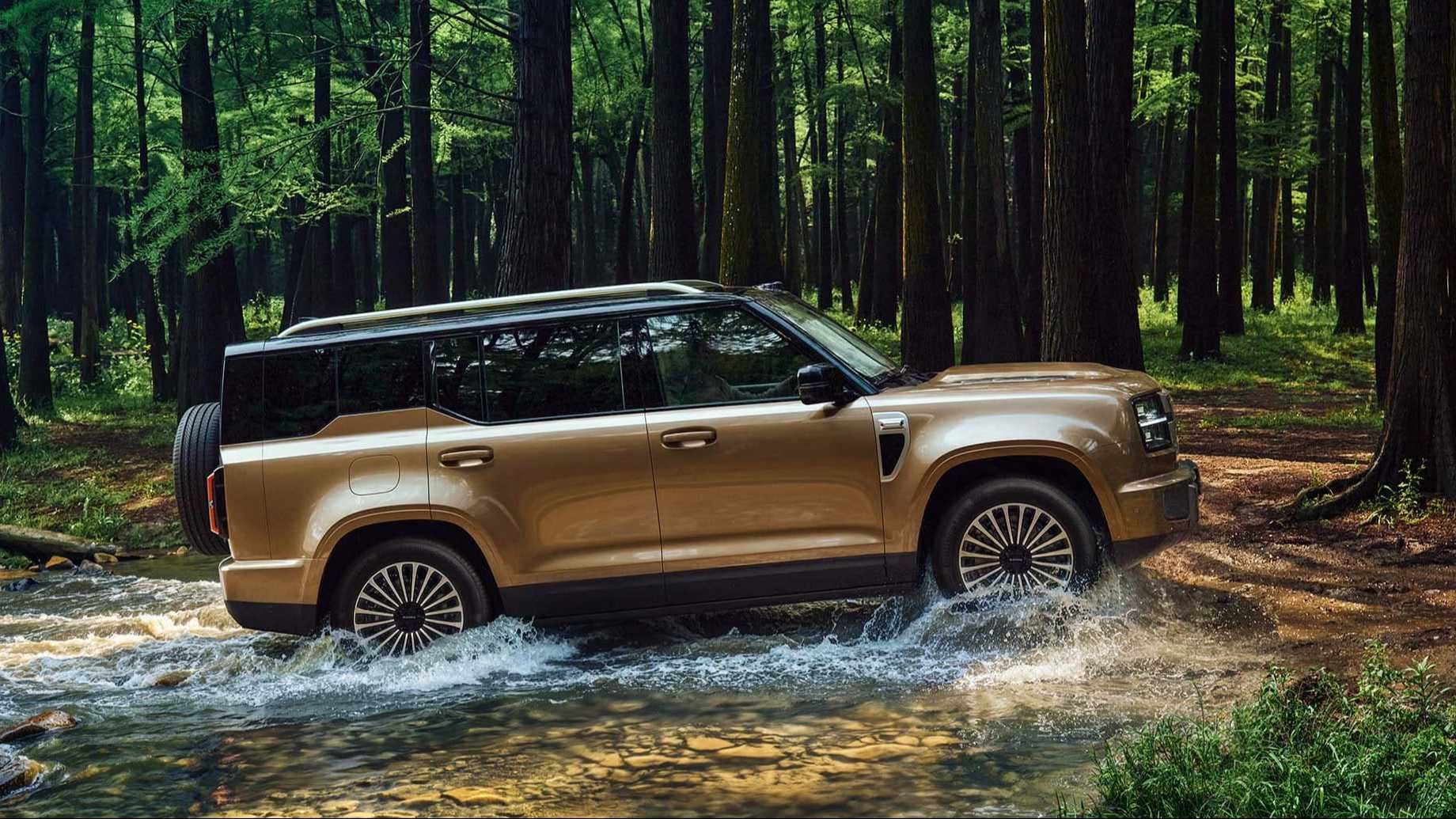
The Great Wall H10 can be considered an instant hit. When sales were announced in August 2026, it sold 10,178 units. This sales figure may accelerate Great Wall's pace toward full hybrid electrification. This is not just a way out for Great Wall alone; for other automakers still insisting on producing purely fuel-powered vehicles, if they cannot compete with pure electric market players and new car-making forces, then full hybrid electrification is their only way out.
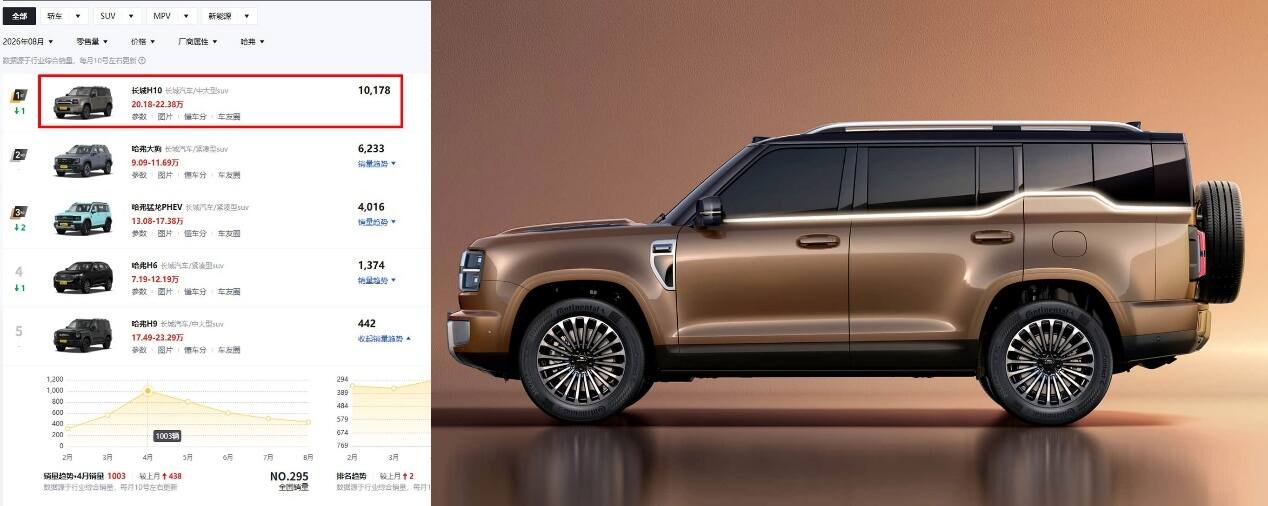
At present, the sales ranking given by a certain vertical automotive website still cannot show sales data under the name "Great Wall." The Great Wall H10 is classified under "Haval," as shown in the figure above. The strong sales of the Great Wall H10 correspond to the sluggish sales of the Haval H9, and at the same time indirectly indicate that the consumer group able to afford vehicles at the Haval H9 level may also care about fuel consumption. Therefore, the launch of the Great Wall H10 was still late. When the first-generation Hi4 was launched, Great Wall should have gone for "full hybrid electrification," and the same applies to other automakers still producing fuel-powered models. In terms of strategic vision, they are indeed inferior to BYD. As early as March 2022, BYD discontinued purely fuel-powered vehicles!
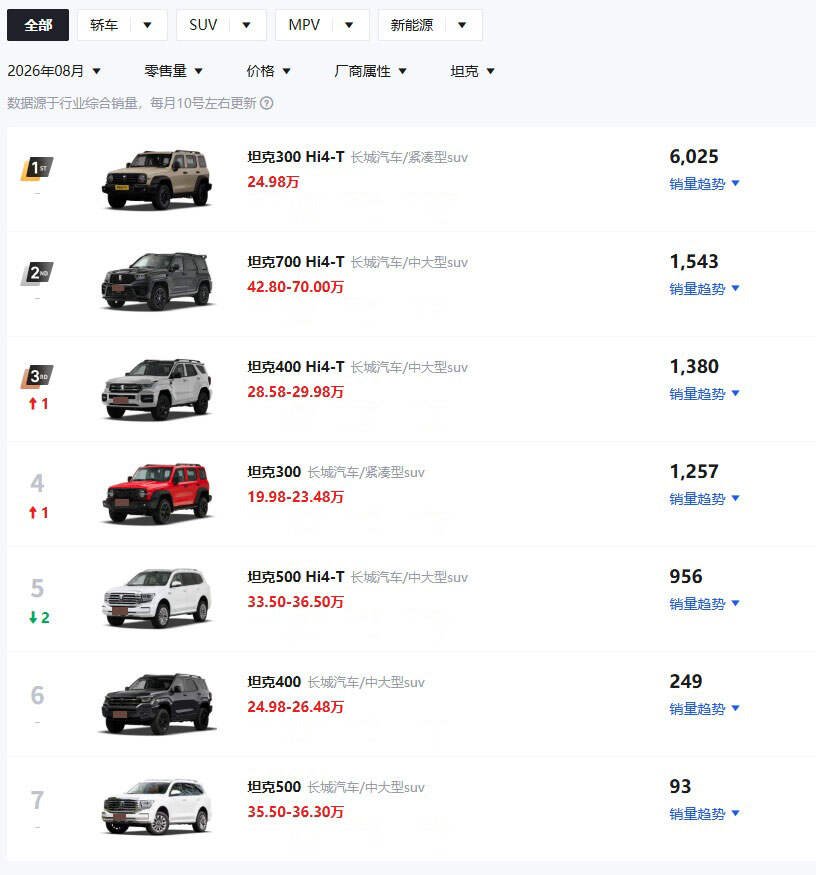
Let us now look at Tank's August sales. The Hi4-T version also sold better than the fuel-powered models, but it is unclear why vehicles of the Hi4-Z version were not listed separately, or perhaps they were also classified under the Hi4-T name.
The author has long said that launching a diesel version is meaningless. Purely fuel-powered vehicles have no future, because even if some consumers praise them, they are only a niche group among car consumers—hardcore off-road enthusiasts. They indeed fare better because fuel-powered vehicles have lighter curb weight, greater modification potential, and are more capable in dealing with harsher road conditions. But as a business, should it cater to such a small market demand? This is a question Great Wall needs to consider.
Therefore, it is not surprising to the author that the Great Wall H10 achieved more sales with the Hi4 hybrid system.
Take the 2026 Haval H9 as an example. With a 2.0T gasoline engine plus an 8-speed automatic transmission, the WLTC combined fuel consumption is 10.7L/100km. But if used for daily urban commuting, can this fuel consumption figure really hold? Friends who have driven 2.0T models of the same class surely know this from experience.
Although the diesel version has slightly lower fuel consumption, there is no need to mention it, because it is too niche.
Let us now look at the Great Wall H10. Its WLTC fuel consumption in charge-sustaining mode is 6.6-6.7L/100km, its WLTC pure electric range is 176-180km, and charging from 30% to 80% in the high-efficiency charging range takes 15 minutes. Even if commercial charging costs 1.7 yuan per kWh, its travel cost is still much lower than that of the gasoline version of the Haval H9. The sales of the Great Wall H10 reflect the real vehicle usage needs of the target customer group with a car purchase budget of more than 200,000 yuan.
【Power and Transmission】
Let us now look at this Hi4 hybrid system equipped in the Great Wall H10. It accelerates from 0 to 100 km/h in 4.9 seconds. No matter how strong an internal combustion engine is, it has declined in the era of electric drive and simply cannot compare.
The Great Wall H10 is equipped with a model GW4B15E 1.5T direct-injection engine, with a compression ratio of 12.4:1, maximum power of 123kW/5500-6000rpm, and maximum torque of 243N·m/1500-4000rpm, and it uses 92-octane gasoline.
Engine technologies include the Miller cycle, low-pressure exhaust gas recirculation, and others. The engine's thermal efficiency is 41.5%. Although neither the technical features nor the data are particularly outstanding, in the era of electric drive, none of this matters much anymore.
The Great Wall H10 adopts a front and rear dual-motor four-wheel-drive system. The total electric motor power is 320kW, and total torque is 482N·m. Together with this 1.5T engine, this hybrid system has a combined power of up to 440kW and combined torque of 722N·m. Therefore, even if it were made into an extended-range vehicle and the engine did not participate in driving, this dual-motor four-wheel-drive setup could still deliver good acceleration performance.
It is worth特别 pointing out that the Great Wall H10 is equipped with a 4-speed DHT. The author believes this hybrid system still has room for upgrading, and it would be better if it could be changed to a single-speed DHT in the future.
Even if the 4-speed DHT can bring better fuel economy during high-speed cruising, users who do long-distance overland travel are also a niche group, and the complex system structure brought by multiple gears creates a higher risk of future failures. For most consumers who use their cars for urban commuting, is it worth it?
【Chassis and Suspension】
The author checked the configuration table provided by a certain vertical automotive website and found that it does not list the "minimum ground clearance" parameter. However, the official website provides the three parameters of approach angle/departure angle/ramp breakover angle, which are basically enough to handle most light off-road conditions without much risk.
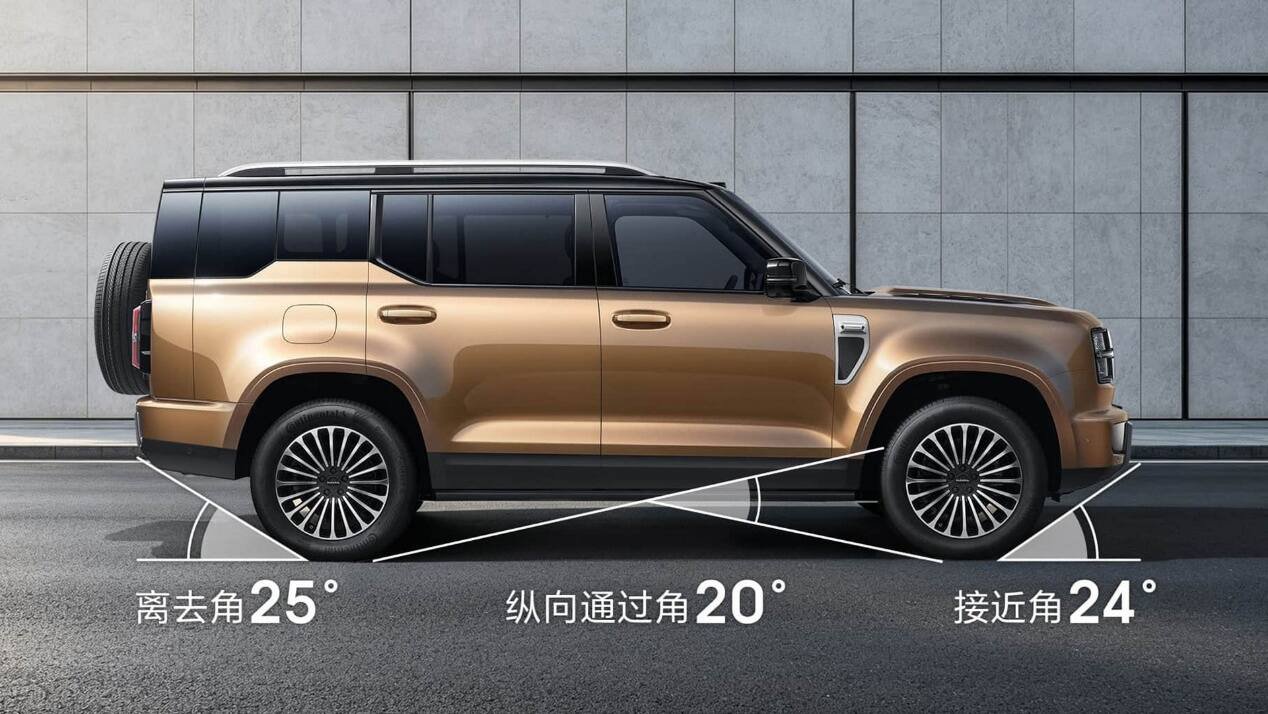
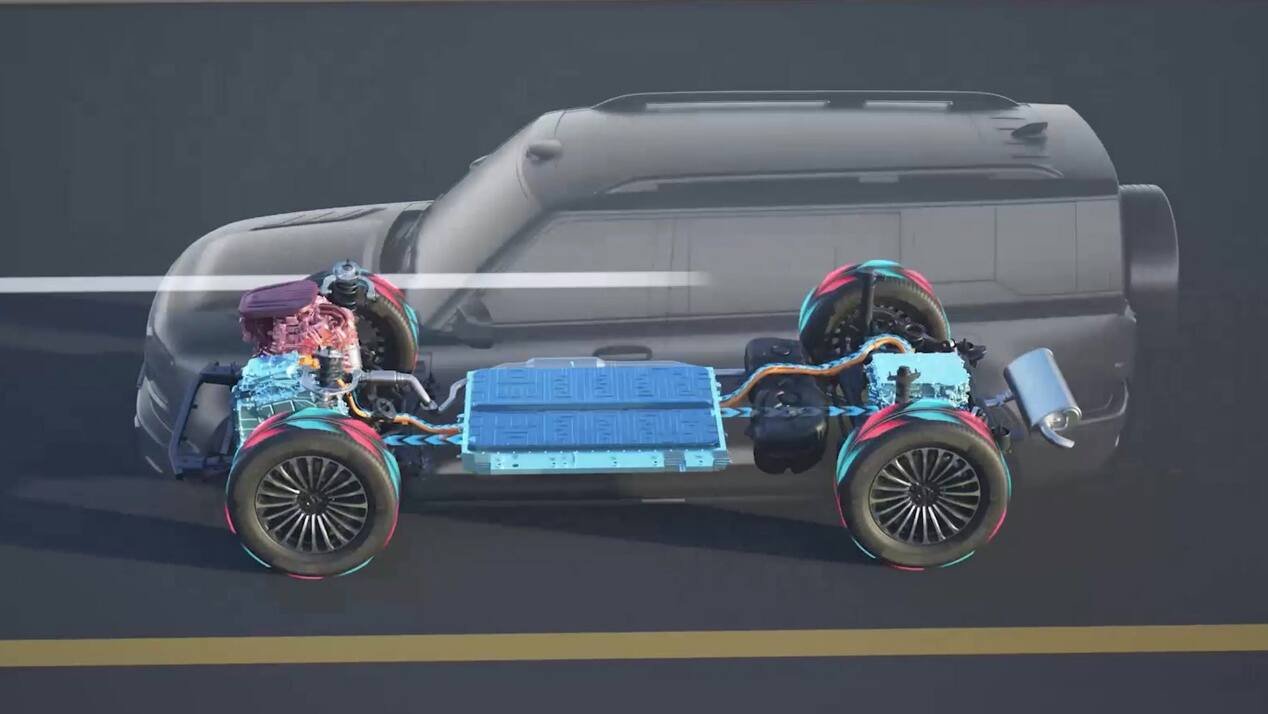
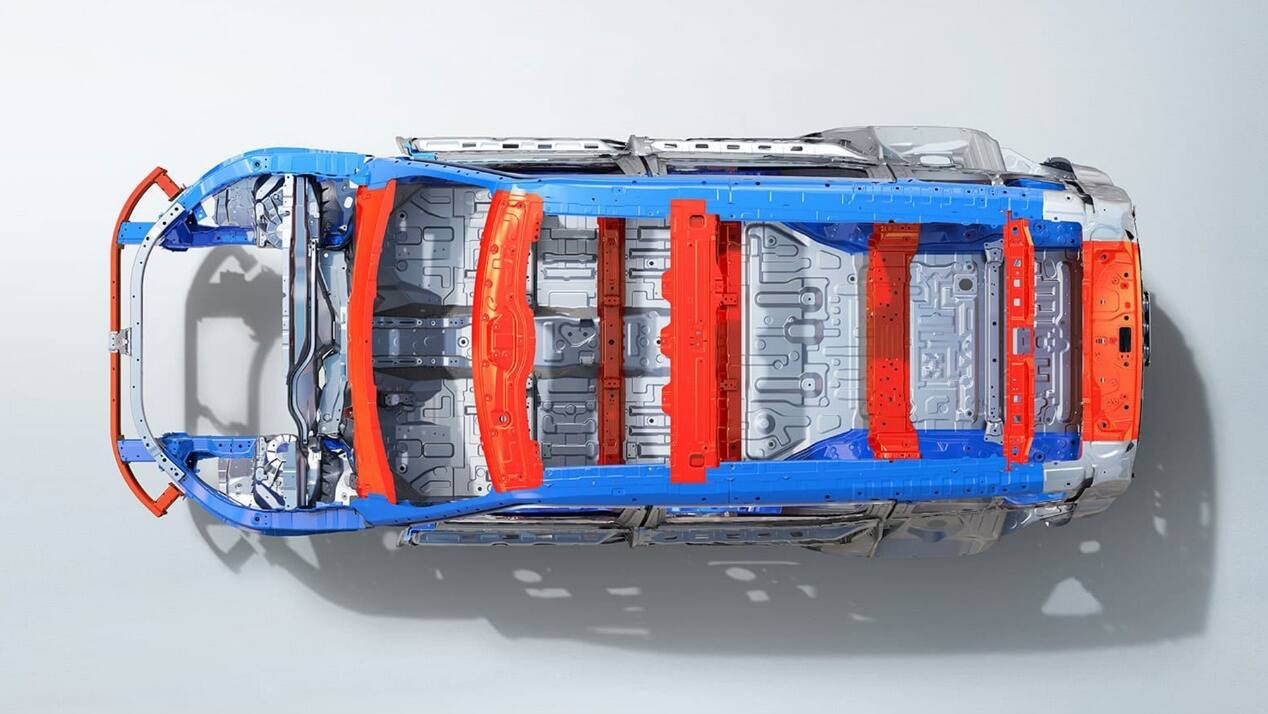
However, from relevant videos released on the official website (as shown in the figure above), we found that the power battery may still adopt a lower-mounted layout under the passenger compartment, and the Great Wall H10 has a unibody structure. It is only a "boxy urban SUV," so when encountering extremely harsh off-road conditions, one must be careful to avoid bottoming out so as not to damage the power battery.
Please remember that the Great Wall H10 is not a replacement for the Haval H9. These two models have different positioning.
In terms of the suspension system, the Great Wall H10 adopts a four-wheel independent suspension setup of front double wishbones plus rear multi-links. As for the vehicle's driving and handling performance, the author is confident in Great Wall's tuning capability. Interested car enthusiasts may as well take the time to try it themselves.
The curb weight of the Great Wall H10 is 2,510kg for the 5-seat version and 2,570kg for the 6-seat version, so the braking system is also equipped with four-wheel ventilated discs.
The tire specification is 255/60R20 across the entire lineup, and a full-size spare tire is also provided. This is quite good, because even for light off-road conditions, having a spare tire is much more reassuring than not having one.
【Assisted Driving】
In fact, we can see the emphasis of a vehicle's product strength, or the direction of its publicity and marketing, from the official website introductions of various models.
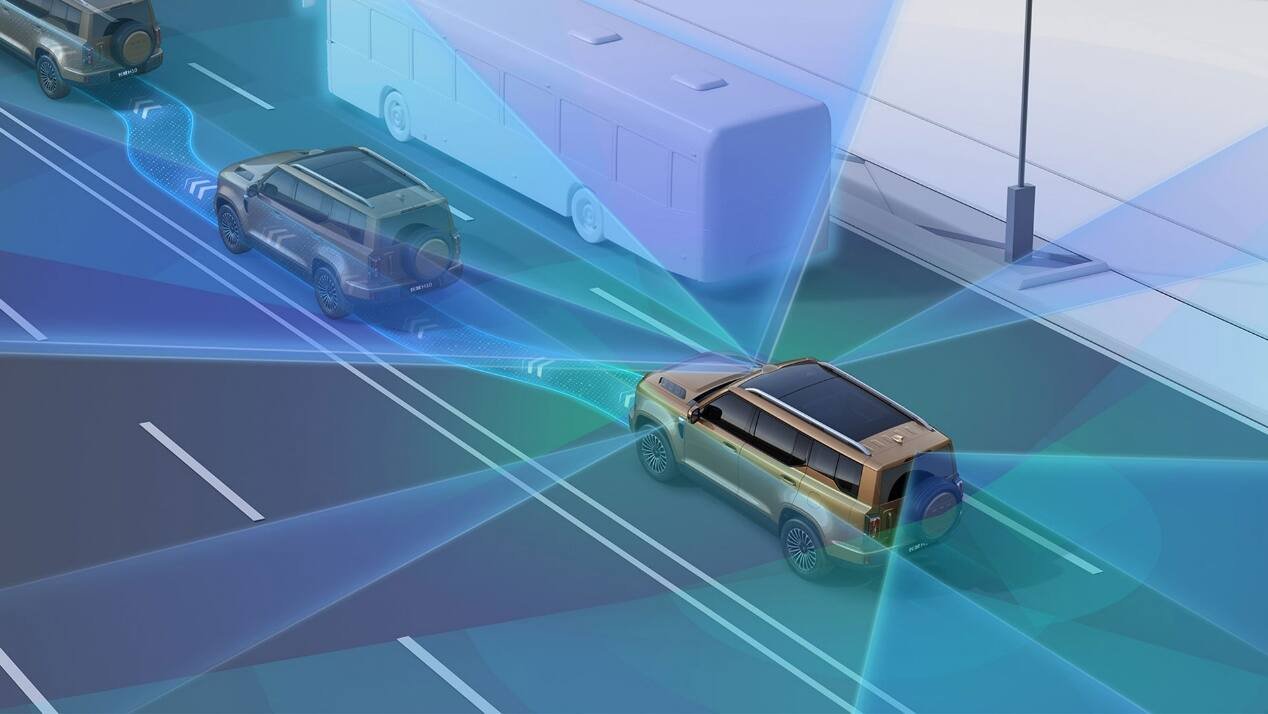
After introducing the vehicle's exterior and interior color schemes, the Great Wall H10 lists the "Coffee Pilot 3 third-generation assisted driving system." If viewed from the perspective of brand/model differentiated marketing, this kind of trend-following product strength publicity does not give it an advantage.
Because some models focus on intelligent assisted driving precisely because they lack advantages in other product aspects, some brands spend a great deal of effort marketing around intelligent assisted driving in order to move some "lazy consumers." For people in the automotive industry, is the difference in assisted driving levels among companies really that great? After test-driving a few more cars, everyone knows the answer in their hearts.
However, for traditional automakers like Great Wall, for example, the product strength advantages of the Great Wall H10 are not only in intelligent assisted driving. For example, its own hybrid system and years of experience in tuning SUVs could originally have been placed before intelligent assisted driving. But unfortunately, the author has seen many models whose publicity direction has been hijacked and led astray, and this in turn makes the public believe that "intelligent assisted driving is very important." No matter how much more investment is made, it is merely making a wedding dress for others, unless a greater price is paid to obtain an overwhelming advantage. But unfortunately, many automakers have not seen this clearly.
In terms of intelligent assisted driving, the Great Wall H10 comes standard across the lineup with LiDAR, supports multi-scenario smart parking assistance, parking-space-to-parking-space multi-scenario assisted driving, and an intelligent assisted driving experience. Most L2-level assisted driving functions are similar. In one sentence: when driving on the road in heavy traffic, as long as you watch carefully yourself, there is generally no problem.
Whenever there are cases circulating online of being saved by assisted driving, it is generally because the driver was distracted and did not predict the risk early. Many videos of being saved have remained online, but in fact many cases that were not saved were also once posted, and they are generally taken down after complaints by relevant parties. However, many consumers still choose to believe only what they want to believe. In future vehicle use, some of them will pay the price for technological advancement, and this cannot be completely avoided.
【Smart Cockpit】
The Great Wall H10 is equipped with the Coffee OS 3 new-generation smart space system, a 10.25-inch full LCD instrument cluster plus a 15.6-inch 2.5K central control screen, supports HUAWEI HiCar and Carlink, and comes standard across the lineup with 4G network. Actually, it would have been even better if 5G network were provided.
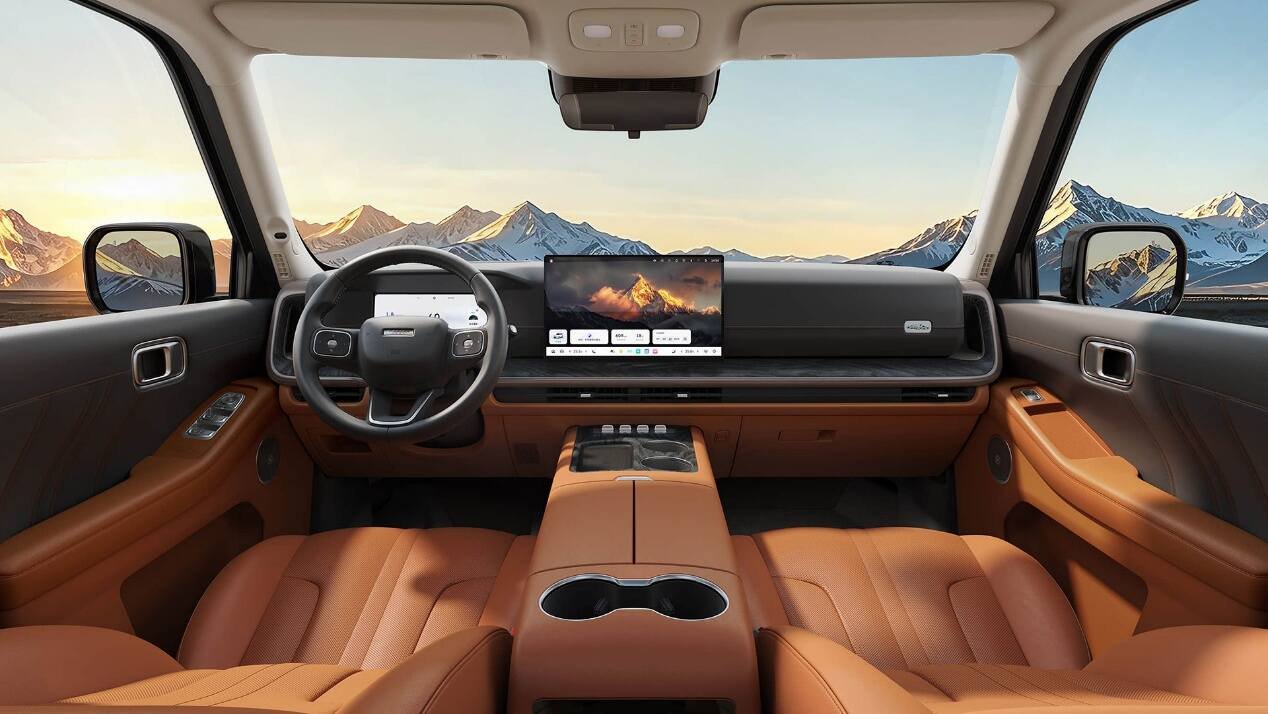
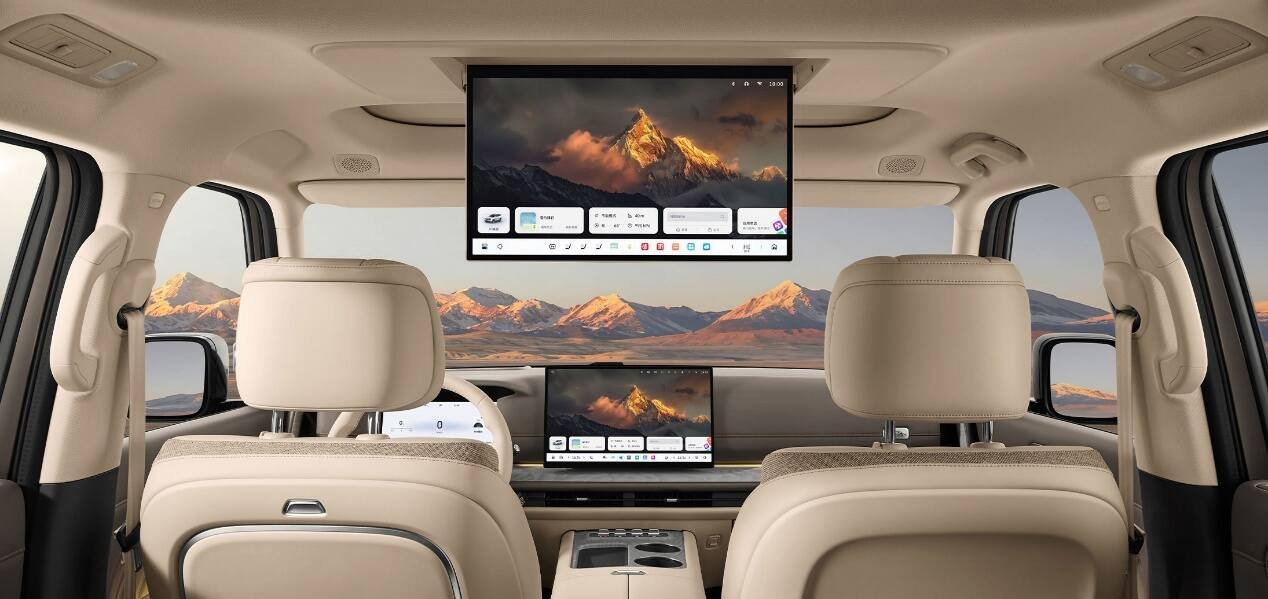
In terms of infotainment functions, it can basically be defined as "similar to today's mobile phones." In addition, to cater to the title of "new species of boxy vehicle for big families," the Great Wall H10 comes standard across the lineup with a 17.3-inch 3K rear roof-mounted screen.
In terms of onboard audio, except for the Hi4 Pro six-seat version, which is equipped with a 15-speaker audio system, the other three configurations all have a 21-speaker Dolby Atmos onboard audio system. This is also very strange, because after all, the price is 2,000 yuan higher. Although it adds a third row of seats, it is still hard to understand the audio downgrade. Even if the price were 2,000 yuan higher to keep the onboard audio configuration consistent, that would be better.
Of course, from the brand's perspective, this configuration setting may mean they did not intend for the Pro version to sell well.
【Active and Passive Safety】
In terms of building a safe body, this is Great Wall's strength. Coupled with the huge body of the Great Wall H10, its passive safety protection performance in daily traffic environments should be considered quite good.
The Great Wall H10 has a length of 5,138/5,299mm, a width of 2,050mm, a height of 1,970mm, and a wheelbase of 3,000mm. Aside from third-row passengers, the crumple zones at both the front and rear ends are enough to provide thorough protection for first- and second-row passengers.
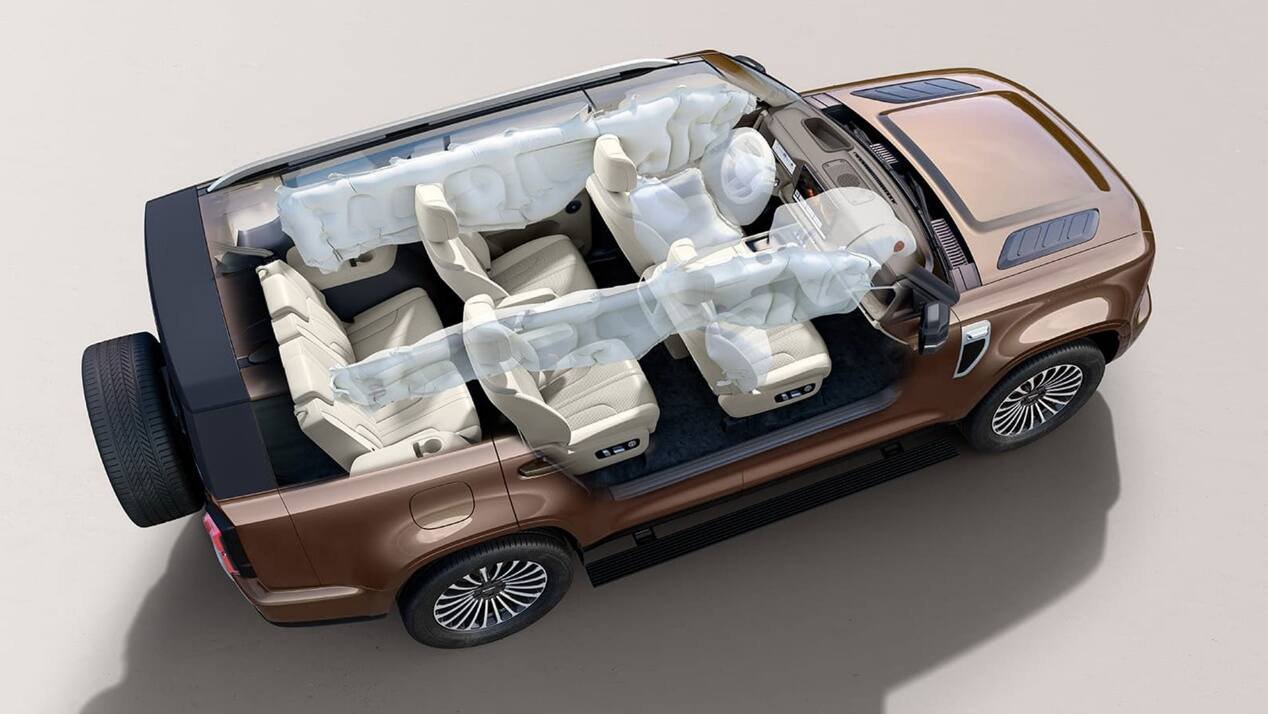
The Great Wall H10 comes standard across the lineup with 7 airbags, namely dual front airbags, front side airbags, side curtains plus a central far-side airbag. Considering the price and the vehicle's class and functional configuration, this airbag setup is also appropriate.
In terms of active safety configuration, the Great Wall H10 is equipped with forward collision warning, lane departure warning, rear collision warning, rear cross-traffic alert, door open warning, front cross-traffic alert, front cross-traffic braking, active braking, blind spot assist, lane keeping, lane centering, active DMS fatigue driving monitoring, traffic sign recognition, traffic light recognition, and other functions.
For new drivers, the Great Wall H10 comes standard across the lineup with front and rear corner parking radars, 360° surround view, full-speed adaptive cruise, urban navigation assist, highway navigation assist, automatic parking, reverse tracking, memory parking, hill-start assist, and other functions.
Summary:
At a price of just over 200,000 yuan, the Great Wall 10 offers good value for money. At the same time, it also brings considerable pressure to some joint-venture brand SUVs, such as the Ford Explorer, Nissan Pathfinder, Highlander, Teramont, and Talagon. Only by further reducing travel costs can they attract more customers.
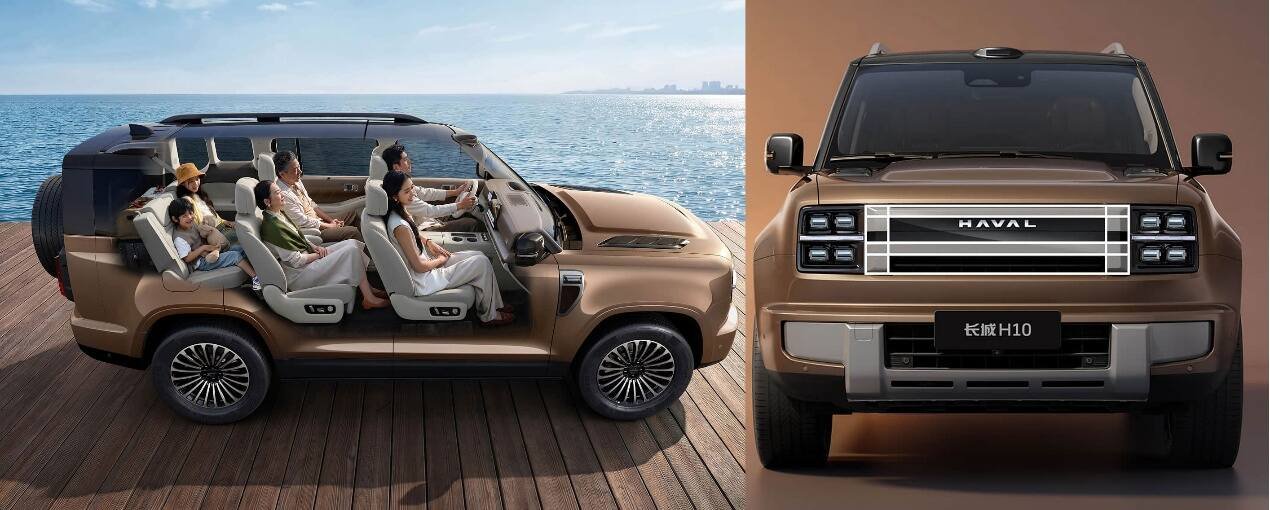
In addition, some car friends in the Automotive Insights live broadcast room also asked whether, if a three-row seat layout is a rigid need, they should choose an SUV or an MPV. As shown in the figure above, this is an official image released by Great Wall H10. The space performance of the front, middle, and rear rows is just like this. At a similar class level, an MPV's third-row space performance should be better than an SUV's. If the family often travels together, an MPV should be the better choice.
Is the Great Wall H10 worth buying? This is no longer a question. After all, in August, more than 10,000 consumers already voted with their wallets, and in terms of product strength, the Great Wall H10 can be defined as excellent value.
We look forward to Great Wall realizing full hybrid electrification as soon as possible and completely phasing out purely fuel-powered vehicles. The same applies to other traditional automakers. They must bring travel costs down, and also vigorously develop HEV models, and install the power battery in an appropriate position. At present, the method of mounting the power battery under the passenger compartment carries too high a risk of bottoming out. Such an important component should not bear this kind of risk. If small-battery HEV models are adopted, the power battery could possibly be placed in a safer position. Do you agree?
Note: The images and related data in this article come from the internet and will be deleted if infringing! This was written impromptu and has not been proofread. Please forgive any errors or omissions!


