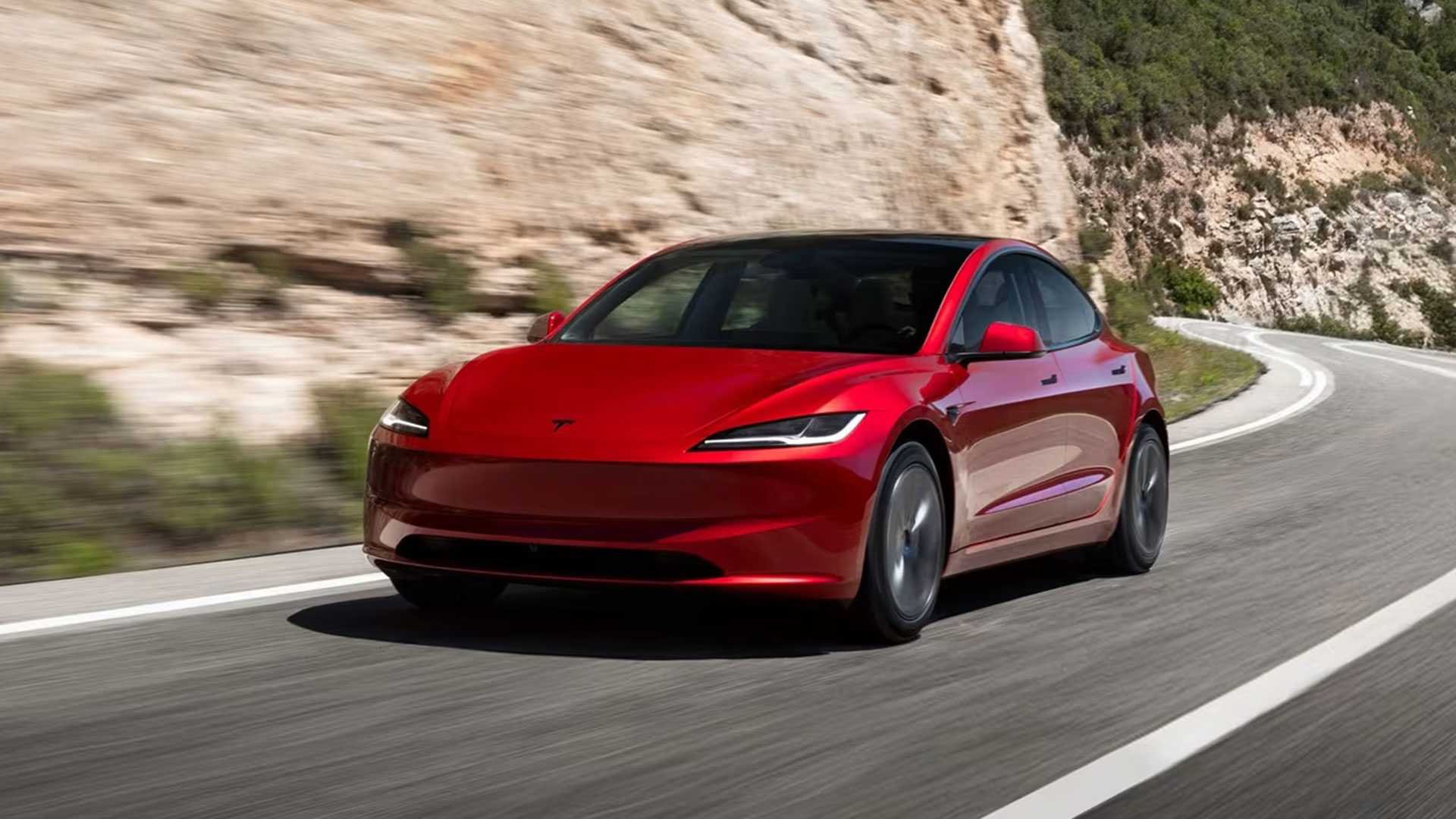
A few days ago I saw the news about Tesla's price-cut promotion. Could it be that Tesla is also feeling the pressure from the domestic auto market?
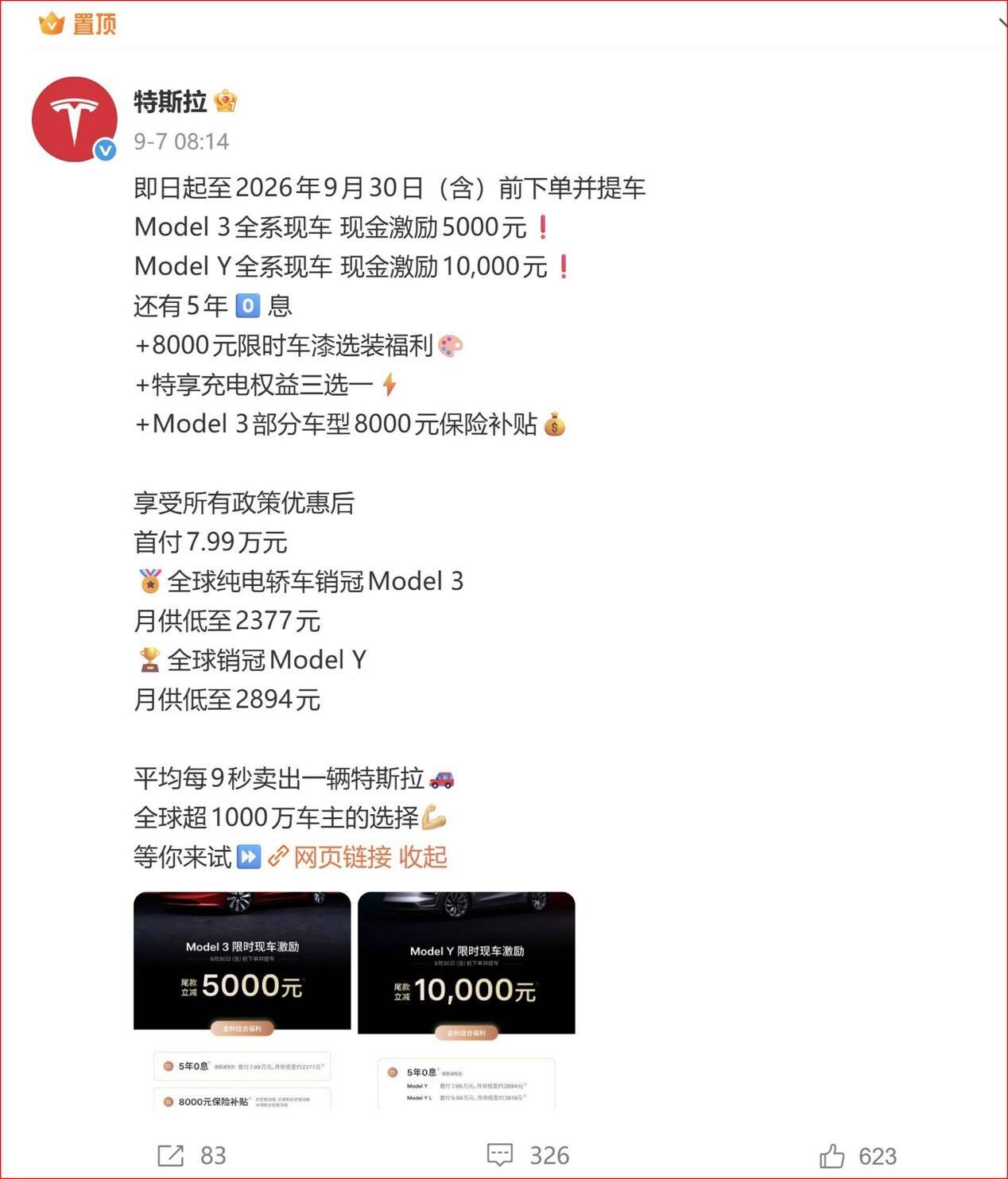
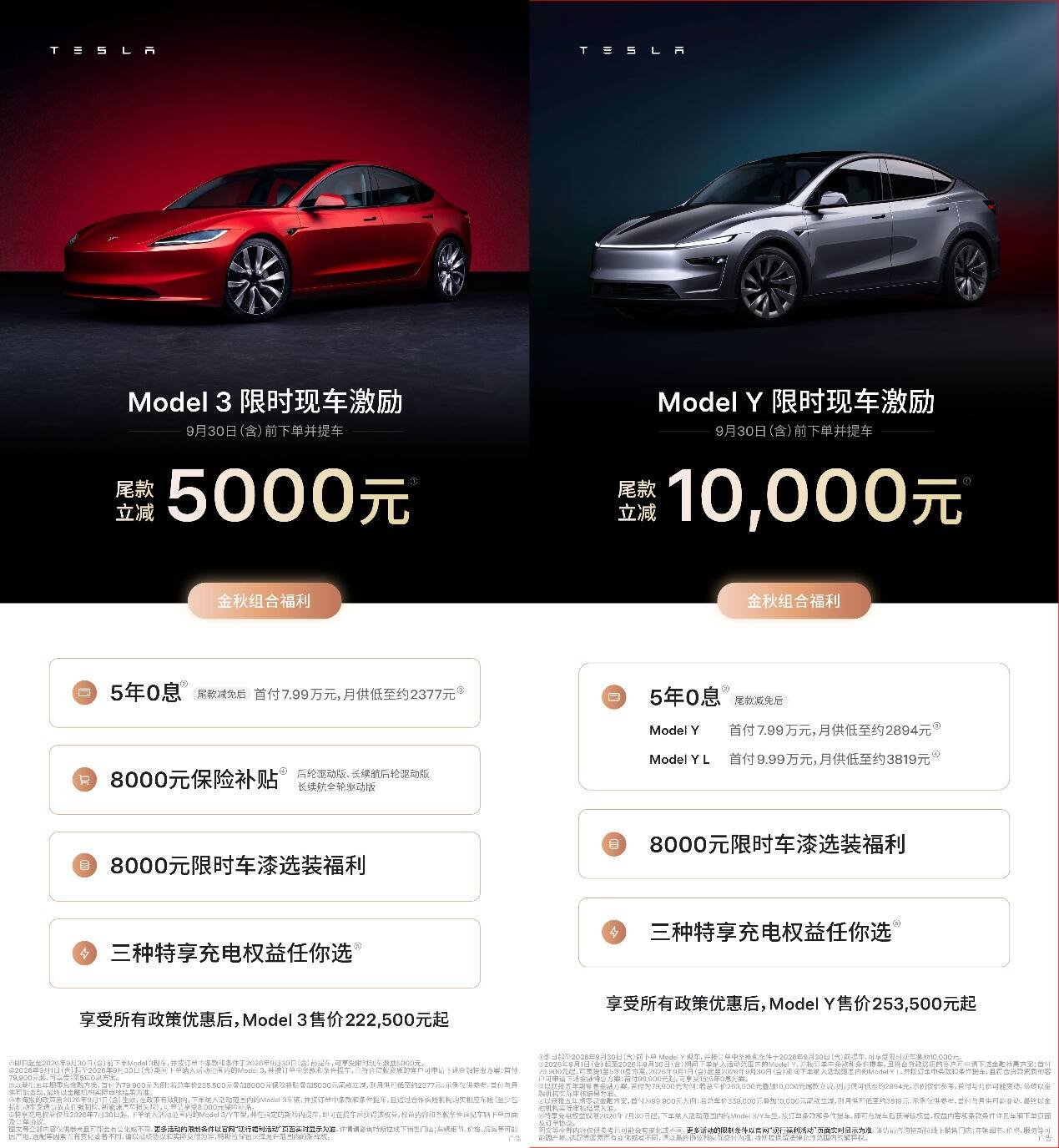
As of the time of the screenshot, Tesla's official Weibo still has this content pinned: Model 3 all series in-stock cash incentive of 5,000 yuan; Model Y all series in-stock cash incentive of 10,000 yuan;
There is also 5 years of 0 interest + 8,000 car paint option rights + choose one of three special charging benefits;
Among them, some Model 3 models can also enjoy an 8,000 insurance subsidy;
Let's first look at the various benefits for Model 3, 5,000 cash incentive + 8,000 insurance subsidy = 13,000 yuan;
According to the official Weibo image's "after enjoying all policy discounts, Model 3 starts at 222,500 yuan" and "down payment of 79,900 yuan," a rough calculation gives a loan amount of about 142,500 yuan; calculating "monthly payment as low as 2,377 yuan" × 12 × 5 = 142,620 yuan. From these two sets of data, 5 years of 0 interest is indeed very impressive.
If you have doubts about this point, you might as well calculate with the 12-installment interest rate of Baitiao and Huabei (annual interest of about 4%) to see how much interest would be paid over 5 years.
In addition, car paint options used to cost real money, worth 8,000, and as for charging benefits, because travel costs are relatively low, even if ignored, Tesla's promotion this time can still be considered a big spend.
Why?
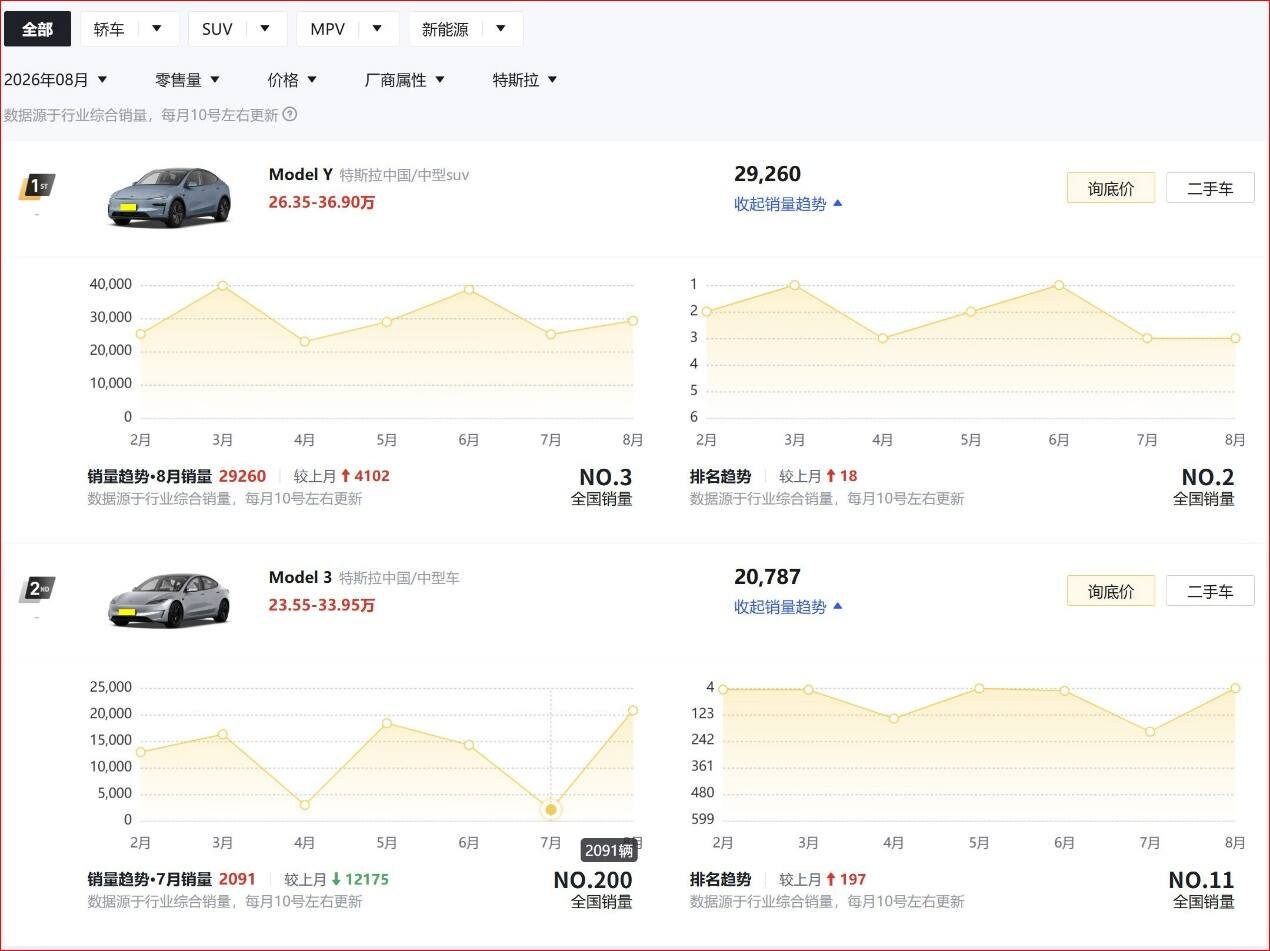
With this question, the author opened a domestic auto market sales ranking published by an automotive vertical website. Model 3's monthly sales in August were 20,787 units, which is quite a good result for this price range;
Because Xiaomi SU7's August sales were only 16,518 units;
However, when the author casually opened the sales trend for the past six months, he found that Model 3's sales curve was a bit strange. July sales were 2,091 units. Is this real? Should this be?
In addition, Model 3's sales in April were also absurdly low, 2,966 units. Could the sales data given by the automotive vertical website be wrong? This was the author's first reaction upon seeing this sales data. After checking other online information, the author confirmed that the data for these two months was correct.
In addition, let's look at Model Y's sales trend curve and Model 3's sales curve. Both fell to the bottom in April and July. Could this be intentional on Tesla's part?
Some bloggers believe that at the beginning of each quarter, Tesla's factory production is mainly for export, and only by the end of the quarter does it guarantee the domestic market. Although the sales curves of the two models do suggest this suspicion, the author believes that saying monthly sales of less than 3,000 units is "intentional regulation" is still a bit too exaggerated.
Because Model Y's April sales were 22,990 units, and July sales were 25,158 units. Even if it "fell to the bottom," such sales data is what fits Tesla's strength.
Monthly sales of less than 3,000 units is too unreasonable!
Do you think this is Tesla's "intentional regulation"?
But verifying this is also simple. Let's wait and look at the October sales data!
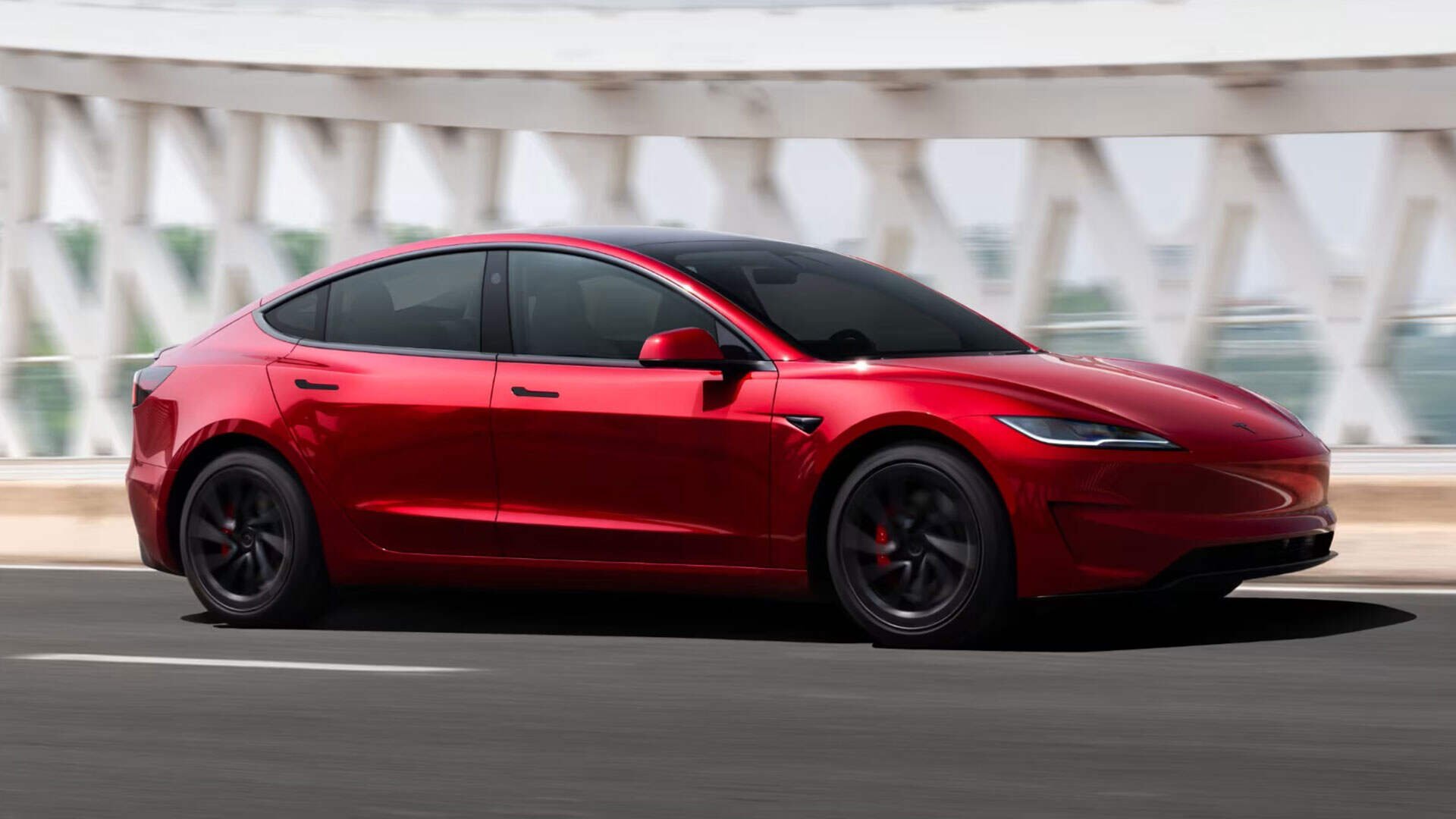
[Is Model 3 worth choosing?]
Many consumers may care about this question. Even calculated at a price of 222,500 yuan, in the domestic auto market's pure electric sedan segment, Model 3's product strength and cost-performance are actually not outstanding.
The author believes Tesla's hot sales are "no different from the hot sales of joint venture cars in the fuel vehicle era." However, compared with domestic cars in the fuel vehicle era, joint venture cars may indeed have had some advantages, but in the current era of new energy vehicles, the strength and overall performance of domestic pure electric cars are not weaker than Tesla's, and their cost-performance is even more advantageous.
Therefore, the author believes Tesla's hot sales should be more of "brand worship." If you don't believe it, let's analyze and think about it before speaking.
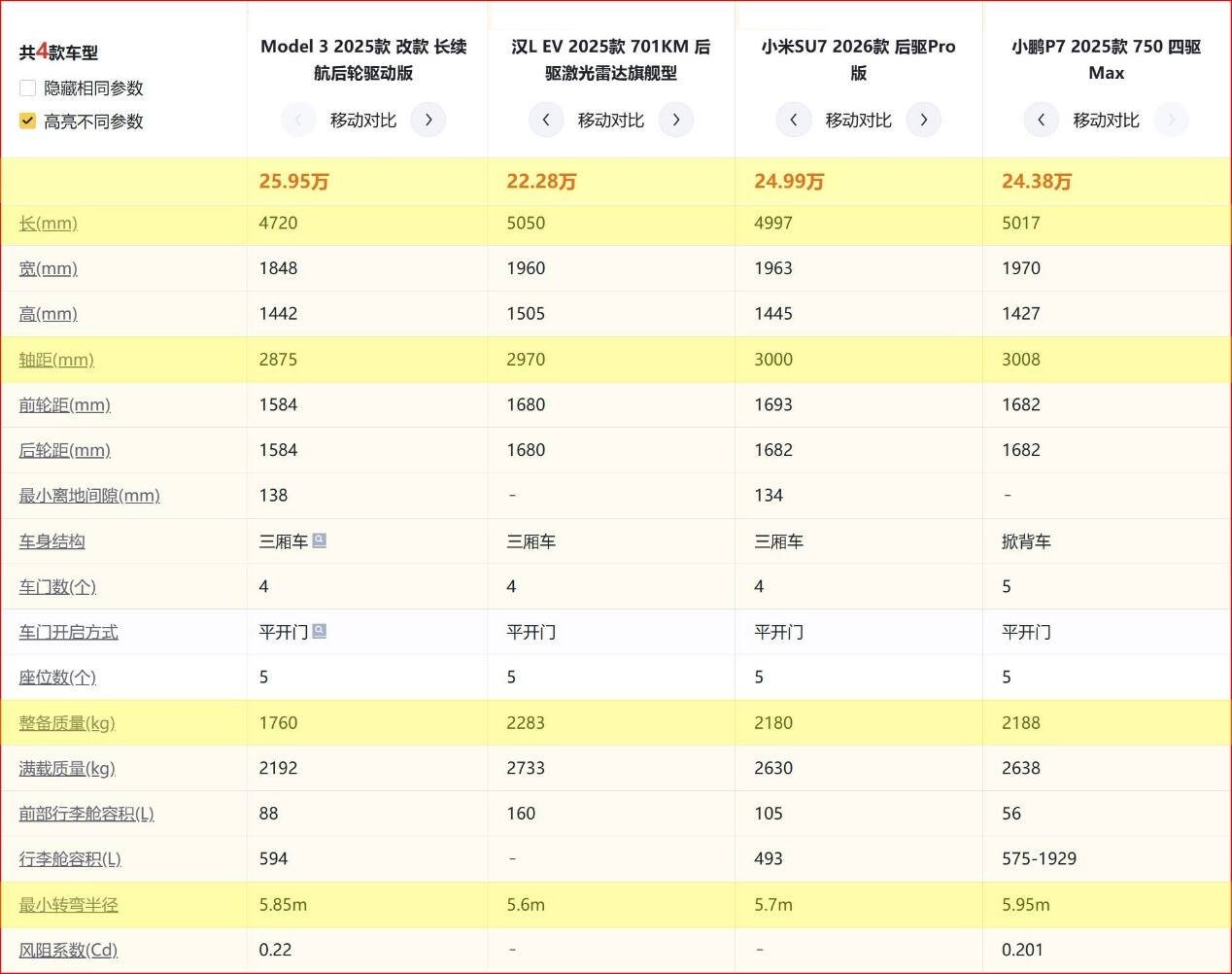
Let's take the 259,500 yuan Model 3 Long Range Rear-Wheel Drive as an example. The red price in the image above is the store reference price given by an automotive vertical website. Han L EV, Xiaomi SU7, and XPeng P7 all have slight price advantages;
Let's also classify by body length and wheelbase dimensions. Information given by an automotive vertical website shows:
Model 3 is a mid-size car, while the other three models are all mid-to-large cars. Therefore, considering both class and price dimensions, the other three domestic mid-to-large pure electric sedans have better cost-performance. Wouldn't you say so?
There are many claims online about Tesla's product advantages: long range and relatively higher range achievement rate. But these voices never point out the class differences among several vehicles, curb weight differences, and factors related to energy consumption such as tire specifications and tire pressure differences.
In the image above, Model 3's curb weight is only 1,760 kg;
Han L EV's curb weight is relatively 523 kg heavier
Xiaomi SU7's curb weight is relatively 420 kg heavier;
XPeng P7's curb weight is relatively 428 kg heavier;
If calculated by the weight of a medium-build consumer at 75 kg, these three cars are at least equivalent to carrying more than 5 medium-build adults. Would you say this brings differences in energy consumption?
Converted into range and range achievement rate, do you think a curb weight difference of as much as 400-500 kg would affect these two indicators?
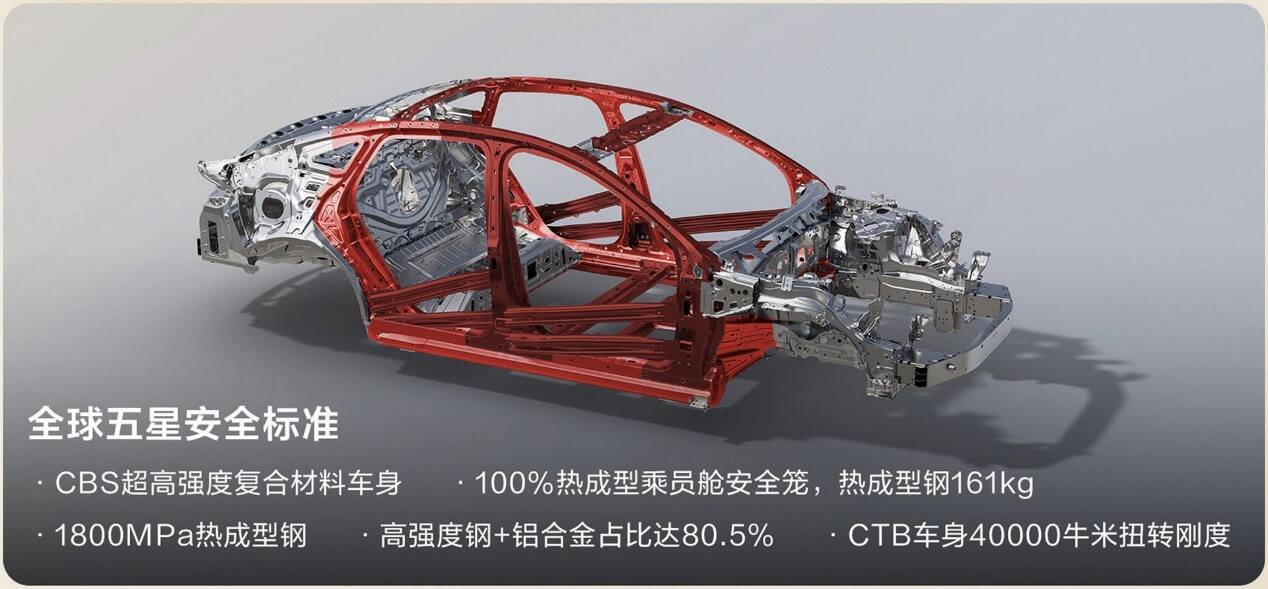
Seeing this, another voice may appear: lightweighting is also a technical advantage!
The author does not deny this, but a higher vehicle class and richer functional configurations will inevitably bring an increase in curb weight. At the same price, would you be willing to buy richer functional configurations? Moreover, the usability, ease of use, and durability of functional configurations in domestic pure electric sedans priced over 200,000 yuan are already quite good.
Let's look again at several other indicators of the four models in the image above:
0-100 acceleration — Model 3 is 5.2 seconds; Han L EV is 5.5 seconds, Xiaomi SU7 is 5.7 seconds, XPeng P7 four-wheel drive is 3.7 seconds;
Tire specifications — Model 3 is 235/45R18; Han L EV is 245/45R19, Xiaomi SU7 front wheels are 245/45R19, rear wheels are 265/45R19, XPeng P7 four-wheel drive front wheels are 245/45R20, rear wheels are 275/40R20;
If you know even a little about basic automotive technical knowledge, do you think wider tires will increase energy consumption and affect acceleration performance?
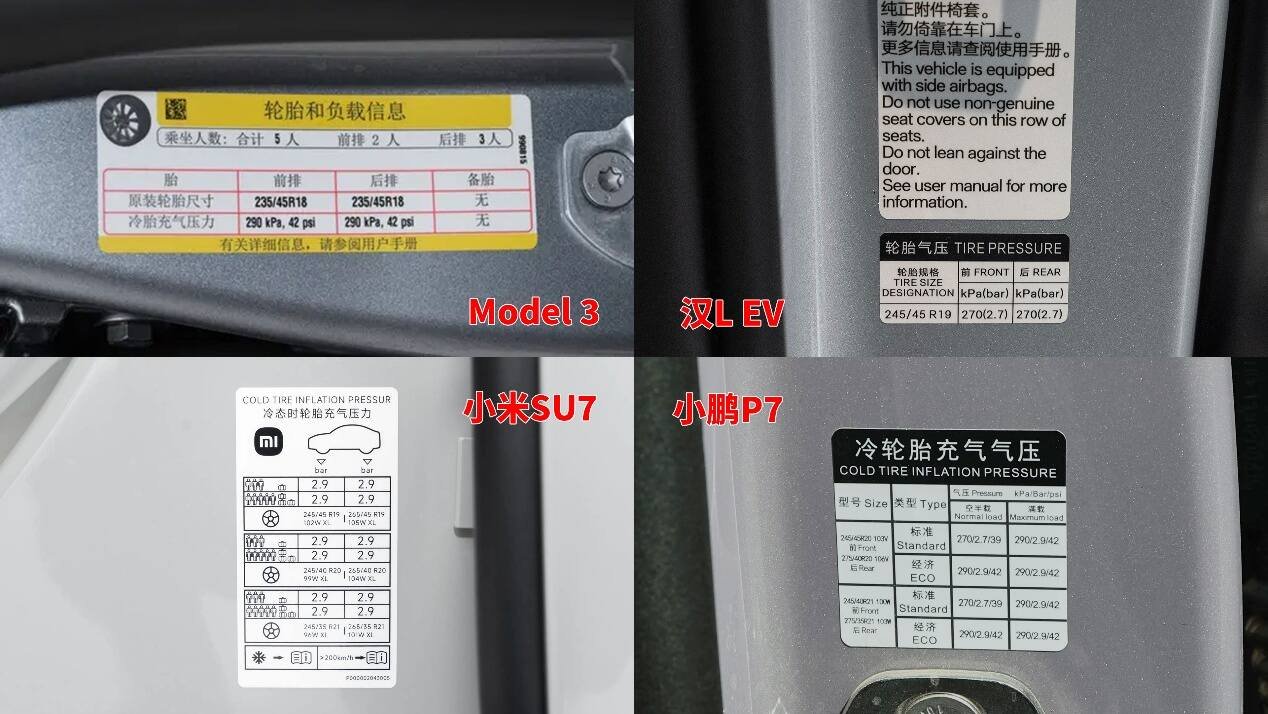
The author checked real photos of the tire pressure labels of the four models on an automotive vertical website. Among them, the Xiaomi SU7 one is a real photo of the rear-wheel-drive standard version. The website did not show this image in the real photos of the rear-wheel-drive Pro version, so the rear-wheel-drive standard version photo is borrowed for reference only for fellow car enthusiasts.
Model 3's labeling is very clever. The tire pressure for 5 passengers is 290 kPa. If carrying 5 people is regarded as full load, then we can consider 290 kPa to be the full-load tire pressure. That is to say, if you usually ride alone and feel it is a bit bumpy because the tire pressure is too high, appropriately lowering the tire pressure a little may be fine;
Han L EV's tire pressure is 270 kPa, without specifying whether it is full load or standard load, but it can likewise be regarded as "full-load tire pressure." If you usually ride alone and feel the tire pressure is too high and bumpy, appropriately lowering it a little may also be fine;
Xiaomi SU7 rear-wheel-drive standard version: 3 passengers + 1 suitcase is 2.9 bar, 5 passengers + 3 suitcases is also 2.9 bar;
XPeng P7's tire pressure label is the most detailed: no load 270 kPa, full load 290 kPa, economic tire pressure also 290 kPa;
That is to say, BYD engineers believe 270 kPa can satisfy both no load and full load; XPeng engineers believe 270 kPa is standard tire pressure, and full load or economic tire pressure is 290 kPa;
From the tire pressure data, which of these four automakers' engineers do you think is more professional?
So here comes the question: do you think tire pressure levels are related to range and range achievement rate?
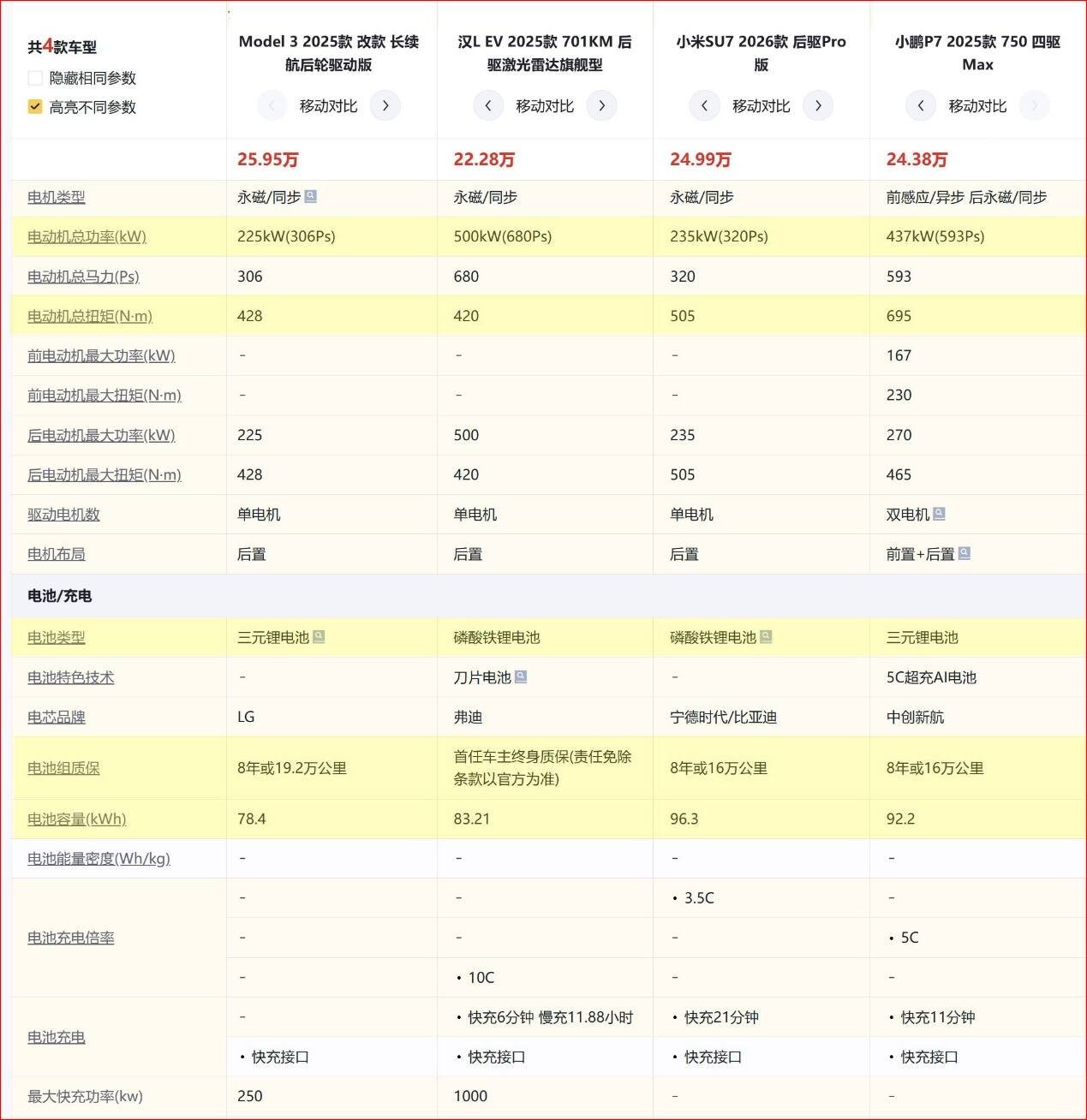
Let's also look at electric drive output. Model 3 has the smallest electric drive output power. Do you think electric drive output power is related to energy consumption levels?
Regarding power batteries, let's still look at capacity, because this means "cost difference." If vehicle prices are close, which model do you think has higher profit?
The author first gives a thumbs-up to car enthusiasts who persisted to read this far. At least you have thought about understanding the problem and solving it.
So lighter curb weight + narrower tires + higher tire pressure + smaller electric drive output power brings longer range and a higher range achievement rate. Does this count as a "technical advantage"?
The author believes this counts as a "hardware advantage." What do you think?
In terms of functional configuration, we won't compare. The three domestic mid-to-large pure electric sedans listed in the table above definitely have more advantages in the richness of functional configurations, whether in smart cabin, smart driving, or convenience and comfort configurations. If you have doubts about this, you might as well compare them yourself.
Therefore, the author believes that with a car purchase budget of over 200,000 yuan and wanting to choose a pure electric sedan, Model 3 is not the optimal choice. From the perspective of an industry insider, the author would not recommend Model 3 to people close to him, because considering product strength and cost-performance, it is not worth it. I wonder whether you support this statement?
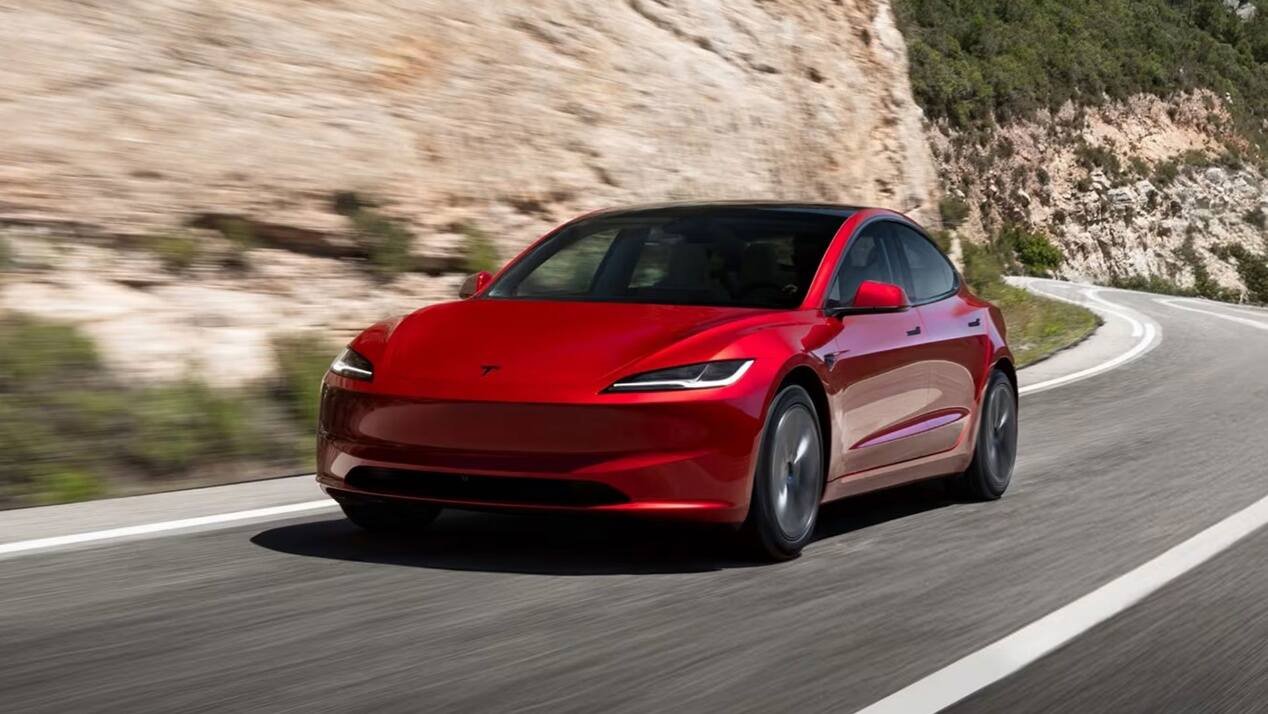
Therefore, the author says: Tesla's hot sales are "no different from the hot sales of joint venture cars in the fuel vehicle era," and should be more of "brand worship." I wonder whether you now agree with this view of the author?
Summary:
Combined with the product strength analysis of the above models and the intensity of competition in the domestic auto market, it is reasonable for Tesla to launch "price for volume" in September.
Has the cost of power batteries further decreased now?
Has the cost of chips further decreased now?
Has the cost of memory further decreased now?
Not really. So the claim that "because costs have decreased, prices are lowered to give back to customers" is also somewhat untenable. The author believes that launching "price for volume" in September is still a compromise to the market. What do you think?
After all, for some car enthusiasts with brand worship, a down payment of 79,900 yuan and a monthly payment of 2,377 yuan basically pose no pressure within 5 years if work is stable, and they can still choose a color they like, and they do not have to pay for the first year's insurance themselves. Why not do it?
Model 3's August sales have already reached 20,787 units, and September has launched such an impressive price-for-volume policy. Let's see how high September sales can go.
Also, let's wait for October sales to see whether Model 3 will repeat the sales troughs of April/July, and then we will know whether this way of playing is "intentional regulation."
Note: The images and data in the article come from the internet and will be deleted if infringing! Written impromptu without review; please forgive any errors or omissions!


