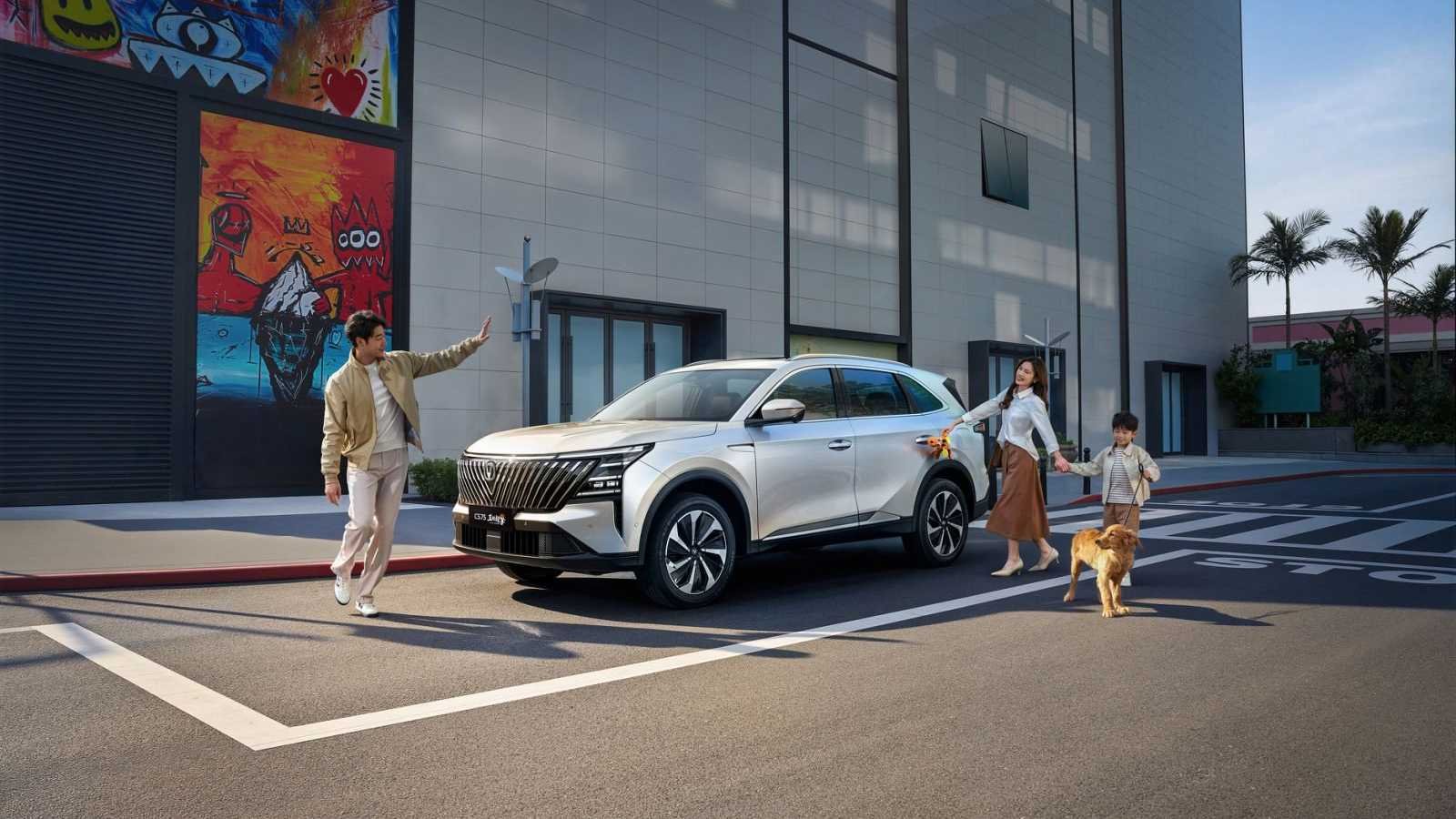
Recently, Chinese brands' hybrid technologies have been breaking out in a concentrated wave, with each one unveiling new HEV solutions. But to be honest, the era of PPT carmaking is over—what consumers want is not lab data, but hardcore performance in real-world scenarios.
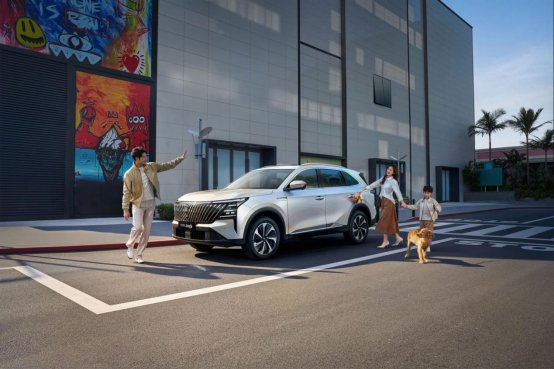
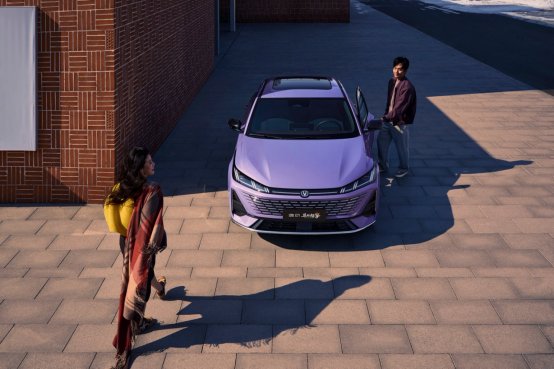
From April 10 to 14, 2026, 183 media outlets conducted a 5-day dynamic real-world test in Xi'an on the fourth-generation Eado and fourth-generation CS75PLUS equipped with the Blue Whale Super Hybrid. The test routes covered full-scenario operating conditions including urban congestion, expressways, and bridges. The results were impressive—the fourth-generation Eado Blue Whale Super Hybrid achieved a minimum measured fuel consumption of just 1.6L/100km, and the fourth-generation CS75PLUS Blue Whale Super Hybrid also achieved a minimum measured fuel consumption of 2.3L/100km. Keep in mind that the previously announced official urban fuel consumption label for the blue-plate sedan was 2.98L/100km, and for the SUV it was 3.98L/100km. This round of large-scale media real-world testing directly pushed the fuel consumption perception of the Blue Whale Super Hybrid into a new dimension.
The key point is this: this is not a theoretical value produced in a laboratory, nor an extreme number squeezed out by engineers under ideal conditions, but a result driven foot by foot by 183 media outlets on real roads. In the context of consumers' actual vehicle usage scenarios, the credibility of this data is far higher than any official announcement.
When hybrid power becomes "electricity-first, fuel-secondary," everything is different
Why can the Blue Whale Super Hybrid achieve such low fuel consumption? The core lies in its architectural logic. Traditional Japanese hybrids follow a "fuel-first" approach—the engine is the core, while the motor and battery are only auxiliary roles, with the motor more like the engine's "nanny." Changan's Blue Whale Super Hybrid completely breaks this path dependency and pioneers a new architecture of "equal emphasis on oil and electricity, intelligent integration." Simply put, it lets the motor be the main force while the engine retreats to a supporting role: under urban conditions, it prioritizes drawing on battery power, with the motor independently driving the vehicle, and the engine remains dormant or under extremely low load most of the time; only during high-speed cruising or hard acceleration demand does the engine intervene in its most efficient range.
A Changan engineer once gave a vivid metaphor: "In the past, hybrids had the engine doing the work and the motor doing odd jobs; now the motor is the main force, and the engine is a special forces soldier—resting normally, but fighting hard when needed." This deeply electrified intelligent hybrid system consists of four core components: a 500Bar ultra-high-pressure direct-injection hybrid engine, a high-magnetic-flux high-power electric drive, a high-performance high-safety battery, and the Ai Cloud Intelligent Control brain.
From engine to electric drive, hardcore parameters support hardcore fuel consumption
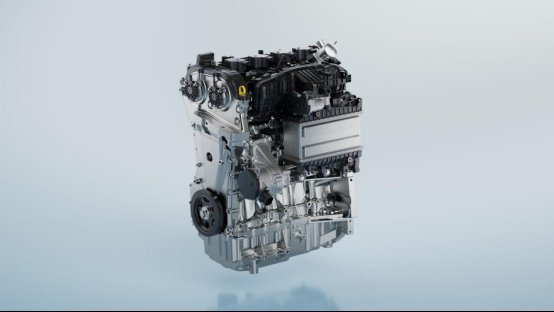
Look at the engine first. The hybrid-dedicated engine carried by the Blue Whale Super Hybrid adopts the world's first 500Bar ultra-high-pressure fuel injection system, with injection pressure reaching more than 1.4 times the industry mainstream 350Bar level and twice that of Toyota's 250Bar. Combined with a 150mJ high-energy ignition system, an industry-highest 1.45 stroke-to-bore ratio, and an ultra-high compression ratio of 16:1, the engine's thermal efficiency approaches 45%, and within the commonly used speed range of 1500–4200 rpm, the average operating efficiency is as high as 40.9%, with the high-efficiency zone accounting for 56.3%. This means that no matter what conditions you drive under, the engine operates in the high-efficiency range most of the time, ensuring from the source that every drop of fuel burns more fully and energy conversion is more complete.
The electric drive is equally impressive. The high-magnetic-flux high-power hybrid electric drive adopts the industry's first 3V high-magnetic-flux magnetic steel topology, and the rotor uses 0.2mm ultra-thin silicon steel sheets (a material previously mostly seen in high-performance electric drives of luxury brands). The motor's maximum efficiency reaches 98.1%, and the electric drive system's comprehensive operating efficiency reaches 92.8%. It has a volume of only 107L and a weight of 97 kilograms, 10%–20% lighter than the same class, yet its peak power is as high as 180kW, with a power density of 9.9kW/kg. More critically, it is equipped with a 6-core high-performance MCU chip with computing power 53.3% higher than the industry, enabling millisecond-level precise control.
Ai Cloud Intelligent Control: an invisible "hidden driver"
If the hardcore components above are the Blue Whale Super Hybrid's "muscles," then Ai Cloud Intelligent Control is its "brain"—without physical form, yet determining just how smart and efficient this system is. The class-leading Ai adaptive fuel-saving algorithm is the most core part of it. Relying on AI algorithms and cloud big data, it enables the drive strategies of the engine and motor as well as the energy recovery mode to adaptively adjust based on real-time terrain, road environment, and traffic conditions. Simply put, it is a chief commander: when you are about to enter a congested section, it will use the engine's high-efficiency operating range in advance to reserve more battery power; after entering congestion, the system switches to deep discharge mode, relying mainly on electric drive and reducing the frequency of engine intervention. This one technology alone can further reduce combined fuel consumption by 5%–10%.
The class-exclusive acceleration closed-loop control and driving-style self-evolution are also worth detailing. This system, based on intelligent perception of road conditions, terrain, and environment, adaptively generates acceleration targets and implements closed-loop control. In plain language: the accelerator is no longer simply linked to vehicle speed, but to your driving intention—how deeply you press, the system knows how much power output you want, and you can obtain smooth power without frequently changing the accelerator. In actual experience, the power response at the moment of overtaking is improved by 100% compared with traditional control, and in slope and high-speed scenarios the frequency of changes to the accelerator and brake pedals is reduced by 60%. As for driving-style self-evolution, the system analyzes your driving behavior through AI, proactively learns user habits, and from hundreds of driving modes generated in the background creates an exclusive driving experience for each user, enjoying a true thousand-people-thousand-faces experience.
ANC active noise cancellation and PSC imperceptible start-stop technology have made a huge contribution to quietness. Inside the cabin, reverse-phase sound wave interference is used to cancel low-frequency engine noise, reducing sound pressure level by 5%–10% and sound energy by 50%–90% under urban, high-speed, and slope conditions. At the same time, through pre-control of the shutdown state, the impact at the instant of engine startup is reduced, and the seat vibration acceleration during engine startup is as low as 0.005g—this is the black technology behind the imperceptible operation of the Blue Whale Super Hybrid engine.
It can be said that Changan Blue Whale Super Hybrid's Ai Cloud Intelligent Control integrates high efficiency and energy saving, intelligent driving control, and quiet noise reduction. You do not need to bother choosing a driving mode; it silently finds the most economical, best-driving, and most comfortable solution for you in the background.
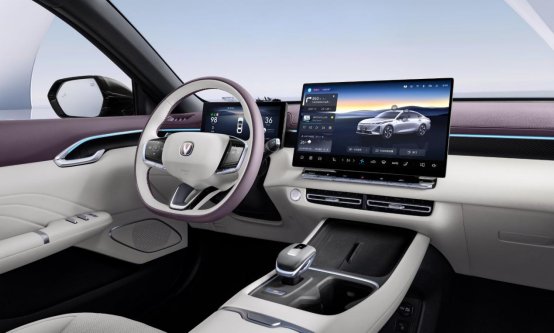
When choosing a blue-plate hybrid vehicle, three cognitive misunderstandings need to be guarded against
With the rise of Chinese solutions like the Blue Whale Super Hybrid, more and more consumers are beginning to pay attention to HEV hybrid models. But in the car-selection process, three common misunderstandings are worth noting:
Misunderstanding one: looking only at official fuel consumption, not real-world test results. Laboratory data has unified operating-condition standards, but real road conditions vary greatly. The value of the Blue Whale Super Hybrid lies in the fact that its fuel consumption data is not a theoretical value on paper, but has been dynamically verified by 183 media outlets on real roads in Xi'an. When buying a hybrid model, you must look at media real-world tests and user reputation, and at the system's true energy consumption performance under different road conditions.
Misunderstanding two: fixating only on peak thermal efficiency, not the proportion of the high-efficiency range. Many brands promote the engine's maximum thermal efficiency, but what truly determines actual fuel consumption is the engine's average thermal efficiency under commonly used conditions. The Blue Whale Super Hybrid engine achieves an average operating efficiency of 40.9% within the commonly used speed range of 1500–4200 rpm, with the high-efficiency zone accounting for as much as 56.3%. This means that for the vast majority of your daily driving, the engine operates in the high-efficiency range, rather than only "farming data" at one or two specific speed points.
Misunderstanding three: listening only to PPT data, not verifying mass-production performance. The auto industry is not short of "parameter warriors"—impressive data at the launch event, but discounted on production cars. The most valuable aspect of Changan Blue Whale Super Hybrid is that it is not PPT technology. After the launch event on March 30, 2026, the first models equipped with it, the fourth-generation CS75PLUS Blue Whale Super Hybrid and the fourth-generation Eado Blue Whale Super Hybrid, have gradually arrived in stores across the country, simultaneously launching the "Hundred Cities, Thousand Stores Fuel Consumption Challenge," inviting users to walk into offline stores and verify the real energy efficiency themselves. This attitude of "daring to let users test it" is itself the best proof of technological confidence.
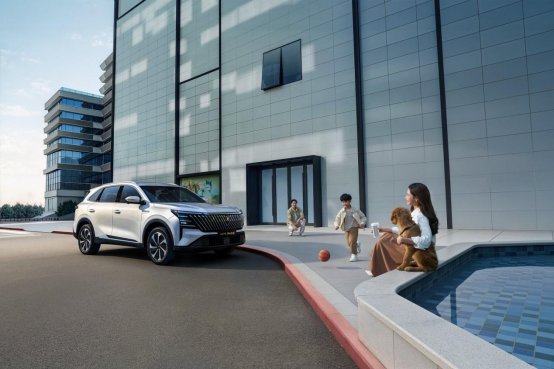
In closing
From the real-world test data, the Blue Whale Super Hybrid has indeed delivered a solid answer. The measured fuel consumption of the fourth-generation Eado Blue Whale Super Hybrid at a minimum of 1.6L/100km and the fourth-generation CS75PLUS Blue Whale Super Hybrid at a minimum of 2.3L/100km, together with the hardcore label of urban fuel consumption entering the "2L era," truly enables blue-plate fuel vehicles to achieve a triple breakthrough of low fuel consumption, high power, and excellent smoothness.
To sum it up in one sentence: the global hybrid landscape is being rewritten, and this time, it is the Chinese solution sitting at the table.


