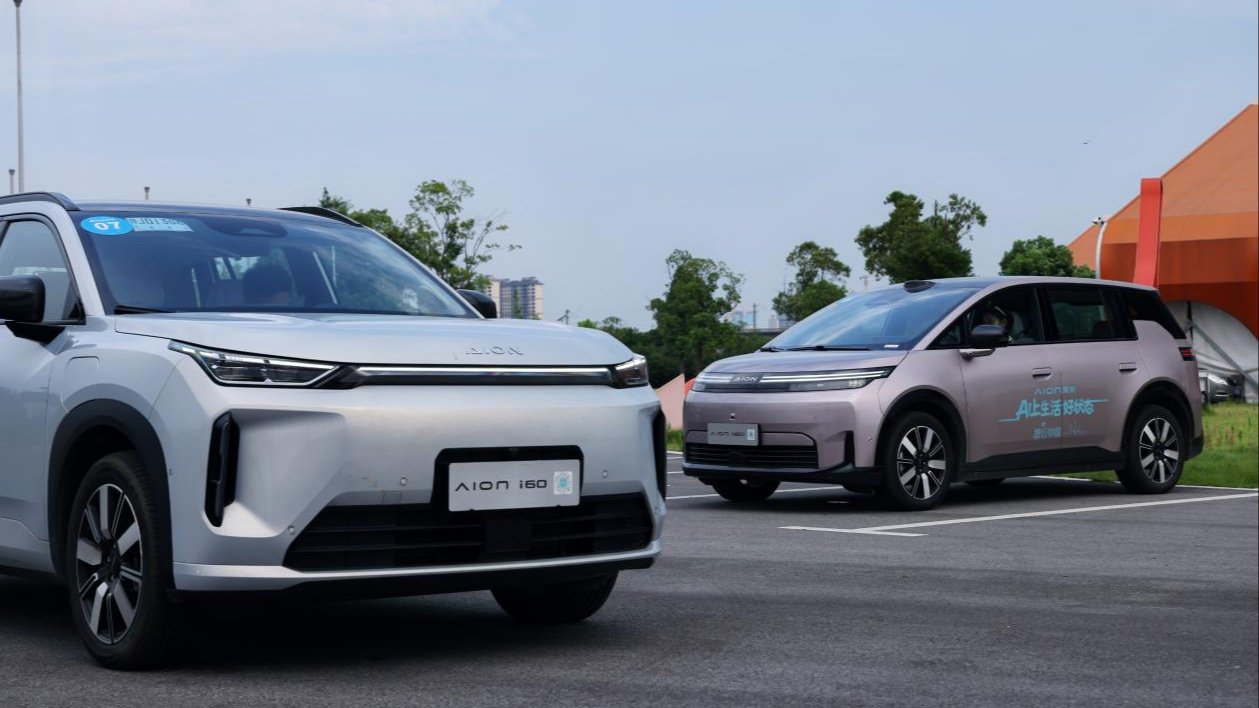
In 2017, China's annual sales of new energy passenger vehicles were less than 600,000 units. That year, GAC Group spun off its new energy business and established GAC New Energy Company—the predecessor of GAC Aion. At that time, most traditional automakers were still using "oil-to-electric" transitional solutions, while GAC Aion chose the dedicated pure electric platform route.
Nine years later, in July 2026, under the traditional auto market's off-season and multiple external pressures, the terminal sales volume of the Hyper Aion BU reached 34,987 units, a year-on-year increase of 31.74%, achieving double-digit year-on-year growth for five consecutive months. More importantly, in the first half of the year, the proportion of C-end users had already reached 81%.
This figure is the report card that GAC Aion most wants people to see.
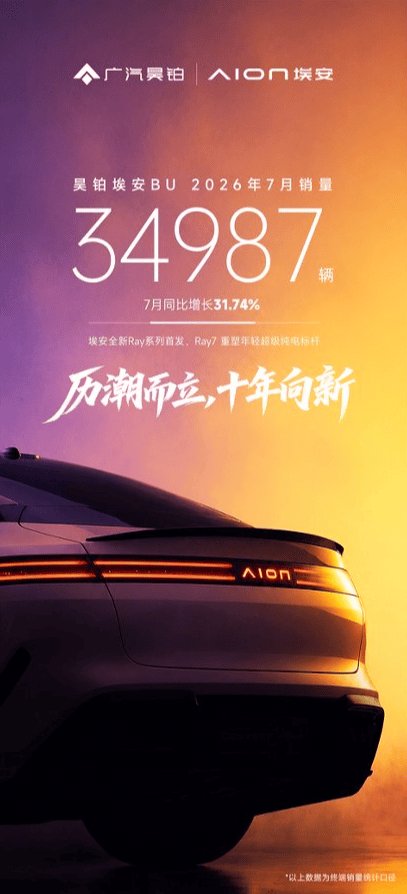
The signal behind the 81% C-end share
In the ten years of China's new energy vehicle market, at its peak there were more than 400 brands competing on the same stage. Ten years later, those still at the table and continuing to grow number roughly only one-tenth of the peak period. GAC Aion is one of them.
Against the backdrop of the industry as a whole moving from incremental expansion into a period of stock-market reshuffling, data from the China Passenger Car Association shows that from January to June, cumulative retail sales in the national passenger vehicle market fell by about 19% year on year. Hyper Aion's cumulative sales in the first half of the year reached 174,938 units, a year-on-year increase of 15%, carving out an independent growth curve.
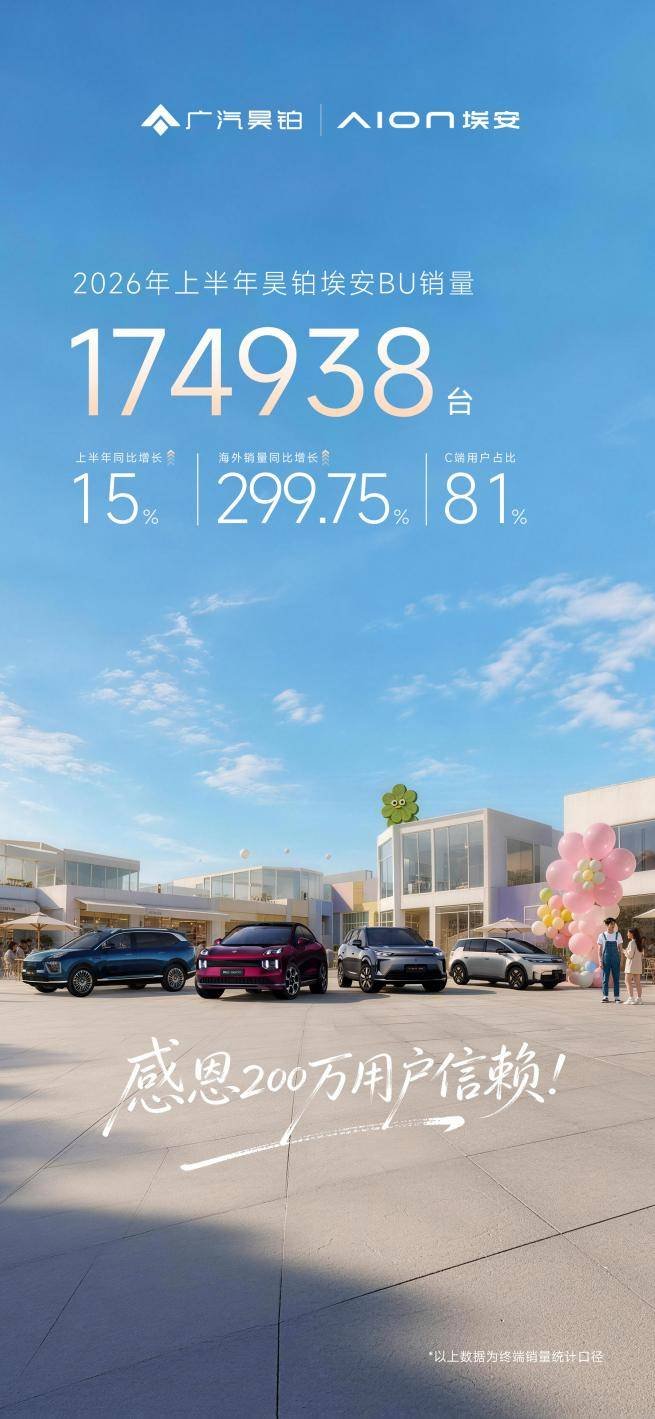
But more noteworthy than the sales figures is the change in structure.
For a long time in the past, Aion's presence in the mobility market was too strong. But in the first half of 2026, the brand's proportion of C-end users climbed to 81%, with private users becoming the core support for brand growth. The main models also shifted from the Aion Y and Aion S series to new products aimed at private families such as the Aion i60 and N60.
The i60 has stable monthly sales of over 10,000 units, with users aged 26 to 35 accounting for 42%. The N60 brings L4-equivalent lidar intelligent driving down to the 100,000-150,000 yuan price range, with young users aged 25 to 35 accounting for nearly 80%, and it captured a 73.3% share of sales in the 100,000-150,000 yuan pure electric SUV lidar intelligent driving market.
The two sets of data point to the same conclusion: Aion's growth has switched to being driven by the C-end.
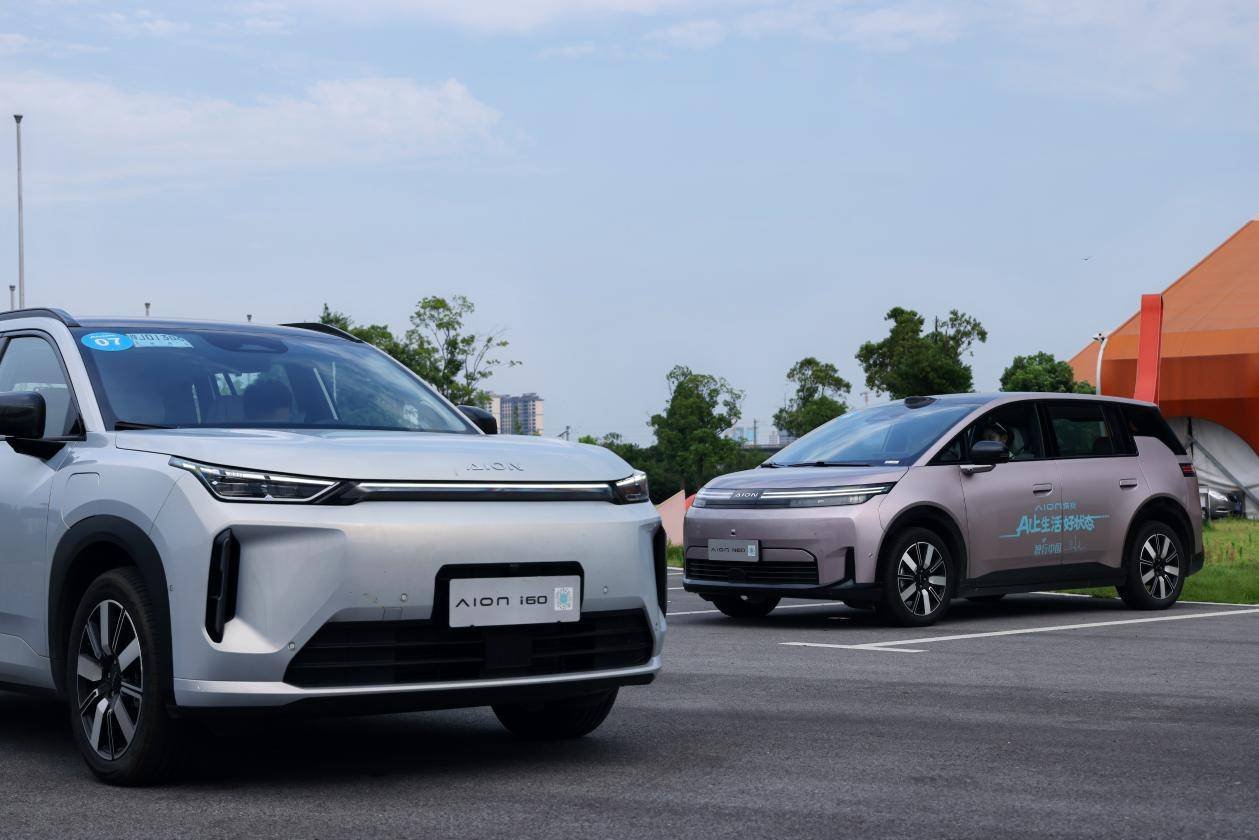
This switch was not achieved by luck with one or two models, but by a change in product definition logic—from "engineers think it's good to use" to "users think it's needed." The Hyper Aion BU, formed under GAC's "Panyu Action," was given decision-making power across the entire value chain, and the IPD system compressed the development cycle from 26 months to 18-21 months. The continuous iteration of the i60 is the best example—from added features and OTA updates to battery version adjustments, all of it advanced in response to user feedback, and it has been affectionately called by users a "raised-from-scratch hit product."
A new narrative in the tenth year
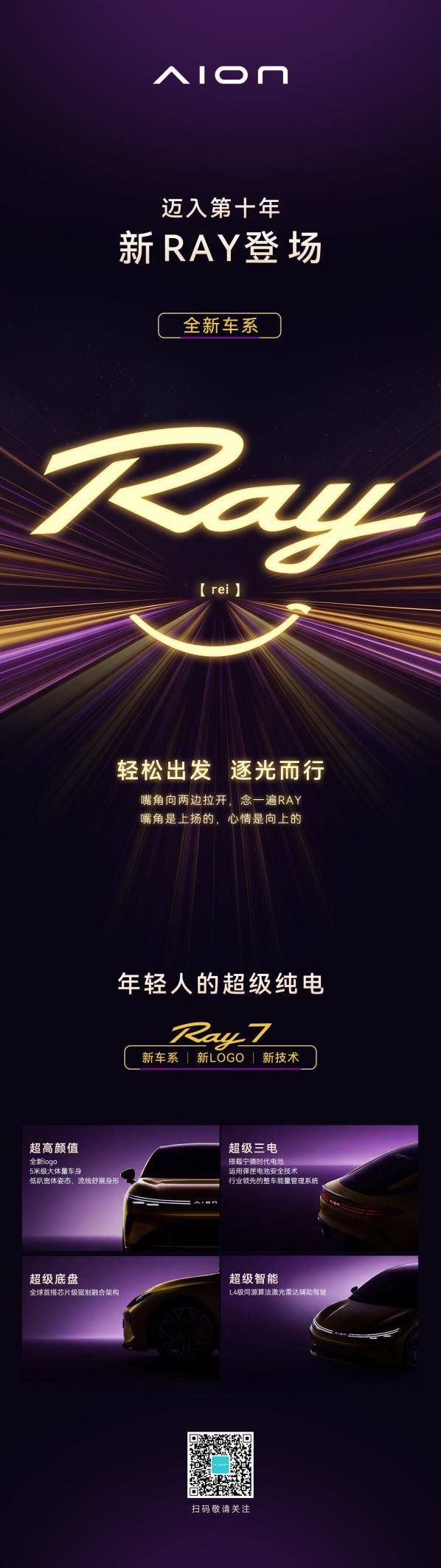
On July 28, GAC Aion entered the tenth year since the brand's founding. There was no grand celebration. Instead, there was one move: the release of a new independent vehicle series, "Ray," with the first model, Ray 7, officially unveiled.
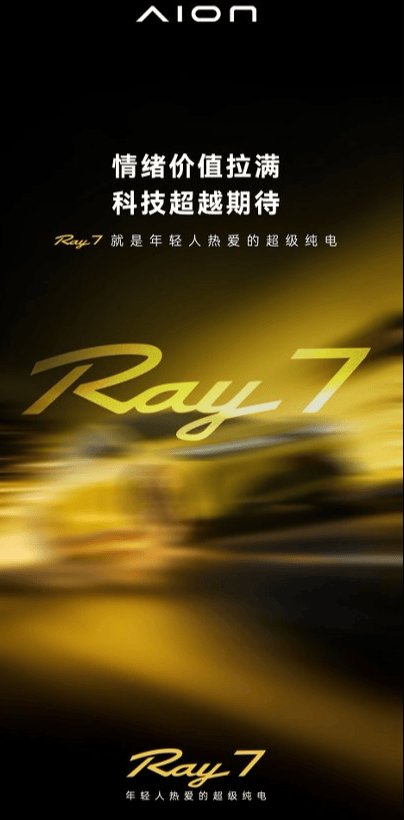
"Vehicle series" and "model"—a one-word difference, but a completely different strategic level. A vehicle series means a product matrix, a family pedigree, and a continuable independent narrative; a model is merely a single-point fill-in. GAC Aion opened its tenth year with a "vehicle series," aiming to use an independent sequence to carry the brand's new narrative.
Why is this new narrative needed?
Over the past nine years, GAC Aion's label of "building good cars for the people" has been clear enough, but brand awareness among younger customer groups has remained mid-pack in the industry. The brand has solved the problem of "being easy to use," but has not yet fully answered "why should cutting-edge young people choose Aion." Moreover, among the army of new energy vehicle buyers, the proportion of users under 30 rose from less than 20% in 2020 to nearly 40% in 2026. To continue standing firm in the second half of the new energy race, this new increment must be captured.
Ray is aimed precisely at this gap.
The Ray 7 is positioned as a mid-to-large super pure electric sedan, carrying the renewed AION logo, with an ultra-high appearance featuring a low-slung, wide-body stance, the world's first super chassis with a chip-level drive-control integration architecture, CATL batteries and Magazine Battery safety technology, and L4-level same-origin algorithm lidar-assisted driving.
It is worth noting that Ray deliberately avoids parameter involution and instead emphasizes "making complex technology underlying and adaptive, so users can use it without needing to learn." Behind this logic is clear product insight—Aion's internal user research shows that a considerable proportion of young car owners are tired of multi-layer menus and redundant functions in infotainment systems.
The essence of high-end has never been the piling up of functions, but restraint toward and respect for users' attention. What Ray aims to do is let technology return to its nature as a tool and let experience return to intuition.
The card up its sleeve for crossing cycles
Aion's ability to cross cycles does not rely on luck.
The GEP1.0 platform in 2019 solved the problem of the raised floor in oil-to-electric models; the GEP2.0 platform was launched in 2020, with the Magazine Battery installed at the same time, and both ternary lithium and lithium iron phosphate solutions passed full-pack needle puncture tests. As of now, models equipped with the Magazine Battery have exceeded 1.5 million units, with over 160 billion kilometers of safe driving. In 2024, the Quark electric drive brand was released, and in 2025, the fully self-developed intelligent driving solution was installed in vehicles. The pace is not fast, but every step lands on the point of "practicality"—technology does not pursue being first, but pursues reliability and scalability.
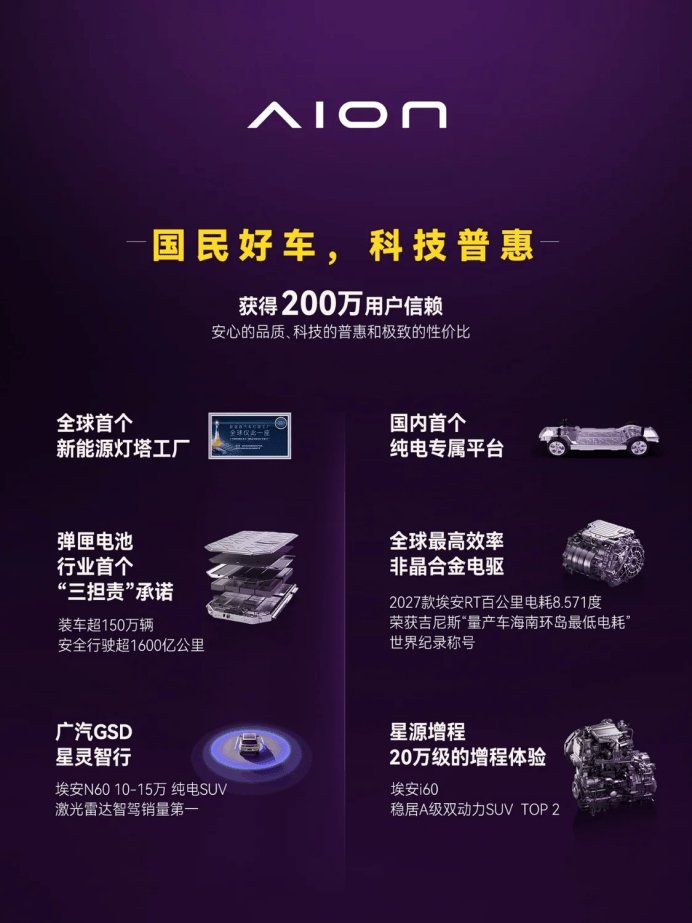
This playbook has been proven effective over the past nine years. More importantly, it sends users a clear signal: Hyper Aion will not suddenly disappear. Stable operating strength, a complete industrial chain layout, and continuously iterating product capabilities mean consumers do not need to worry about "the brand shutting down, after-sales becoming unreachable, and parts supply being cut off."
From products to services, the brand is also trying to build a closed loop. The industry-first "three responsibilities" commitment—covering all cases of three-electric spontaneous combustion, excessive battery degradation, and intelligent parking accidents; lifetime warranty for the three electric systems; and for the i60 model, an even stronger "burn one, compensate three" warranty commitment, with rules open and transparent. These actions point to the same goal: letting users buy with peace of mind and use with confidence.
In conclusion
34,987 units is July's result, 81% is proof of the C-end transformation, and the Ray vehicle series represents the direction of Hyper Aion's next stage.
From 2017 to 2026, Hyper Aion has gone through the entire process of China's new energy industry from budding to explosion to reshuffling. In an industry that constantly talks about "subversion," it chose a relatively solid path: fully mastering the pure electric platform, stabilizing self-developed technology, and generating scale effects.
Ten years later, most of the brands that once competed on the same stage are gone. Hyper Aion is still at the table, and has delivered a report card with healthy structure and steady growth.
Entering its tenth year, the Ray vehicle series is Hyper Aion's new variable. Whether it can open up the young market is still too early to conclude. But at least judging from the trajectory of the past few years, what this company excels at is continuous accumulation in the right direction, rather than chasing short-term explosive power.
The next tenth year, let's wait and see.


