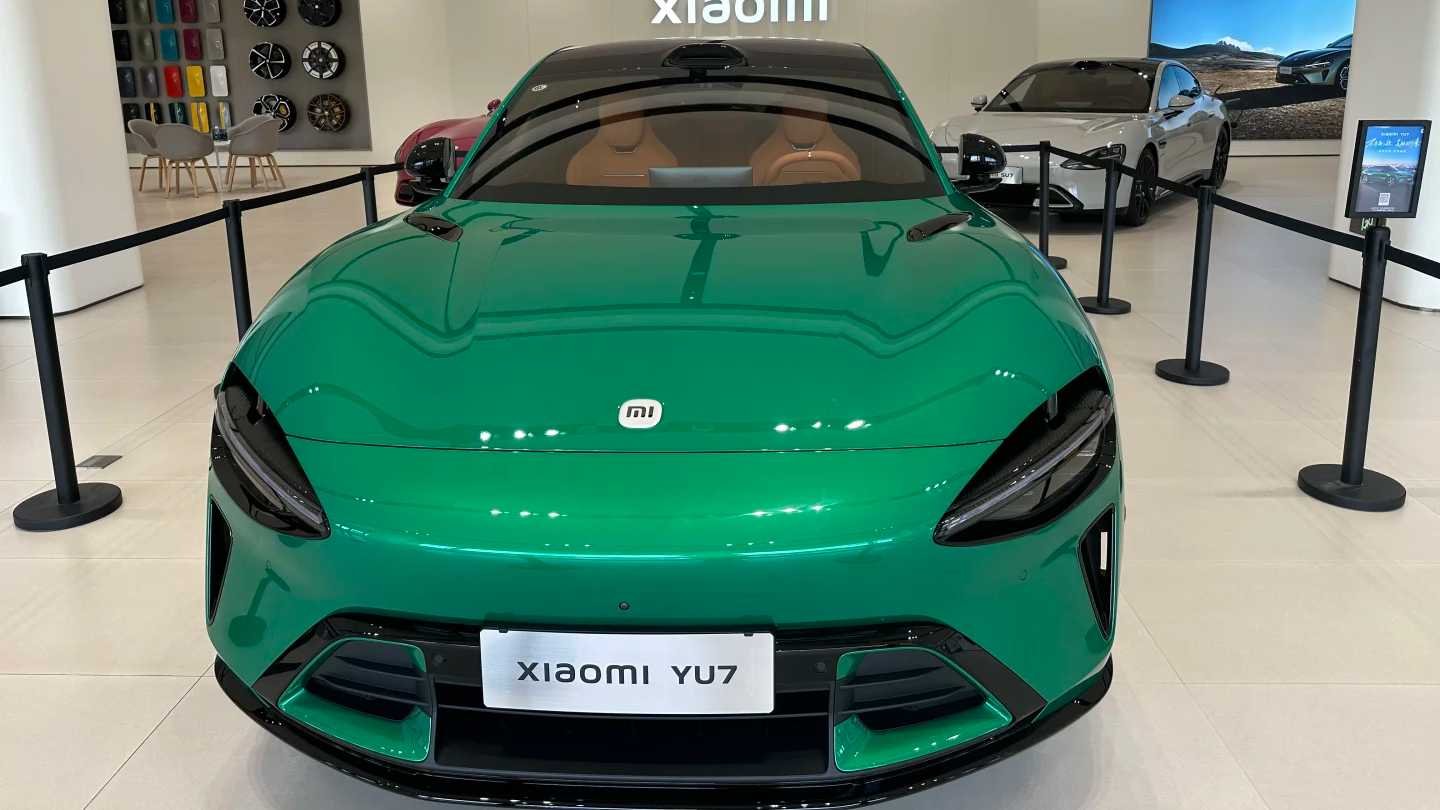
200,000 orders flooded in within 3 minutes, and within 1 hour it soared to 289,000 units, frightening Xiaomi phone executive Wang Teng into screaming on Weibo: "What? It sells more than our phones!" This scene is comparable to a supermarket egg discount day, and even elderly men and women aren't this crazy. After all, the entire BMW lineup sells only 46,000 cars a month, while the Xiaomi YU7's three-minute sales volume is enough to keep BMW busy for half a year. What makes its competitors even more sleepless is that even the first-day orders for the Tesla Model Y refreshed version were only one quarter of its sales.
Recently, we went to the store to take real photos of this "divine car" to see what charm the actual vehicle really has that makes young people place orders so crazily.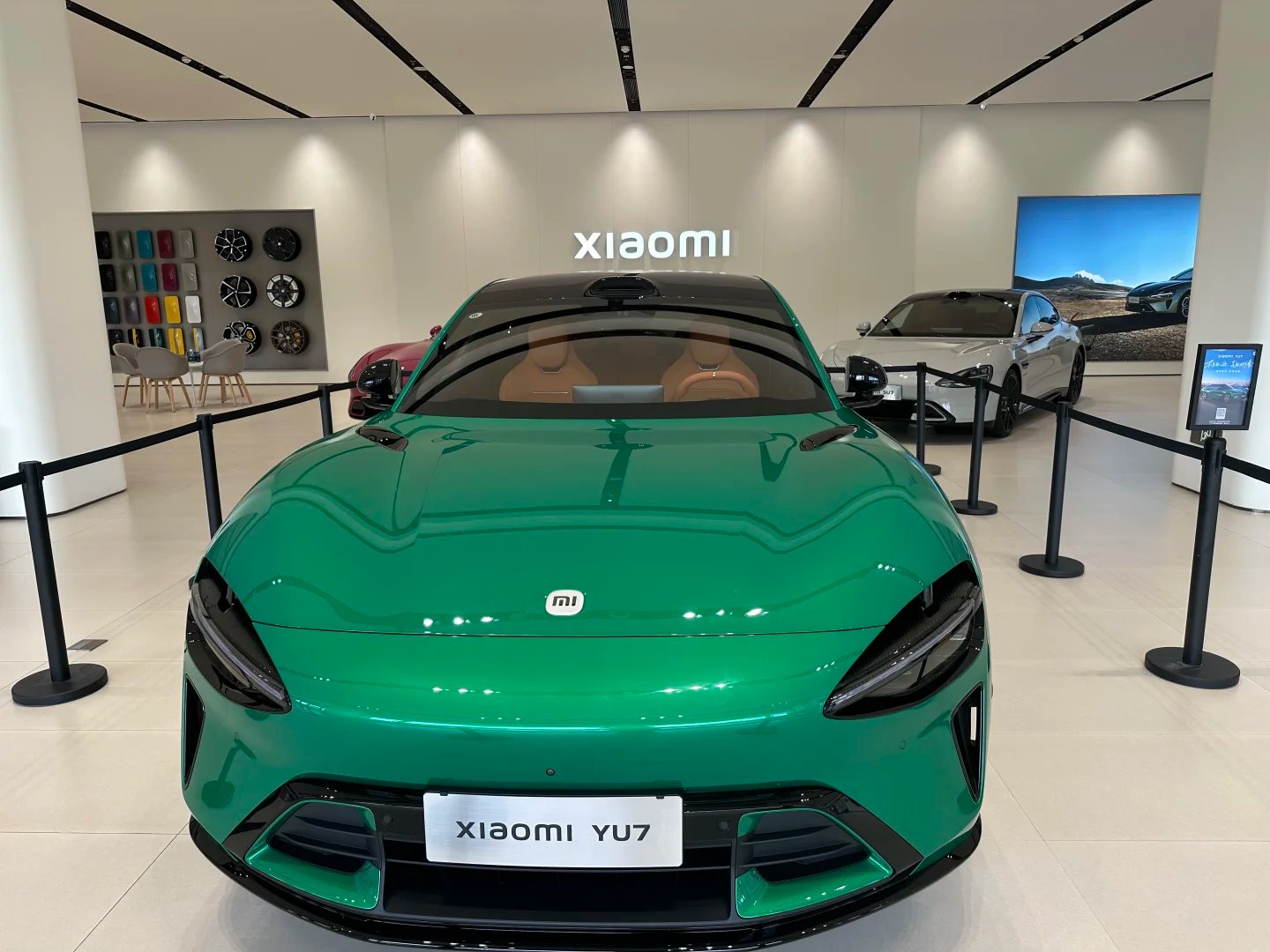
Gemstone Green paint
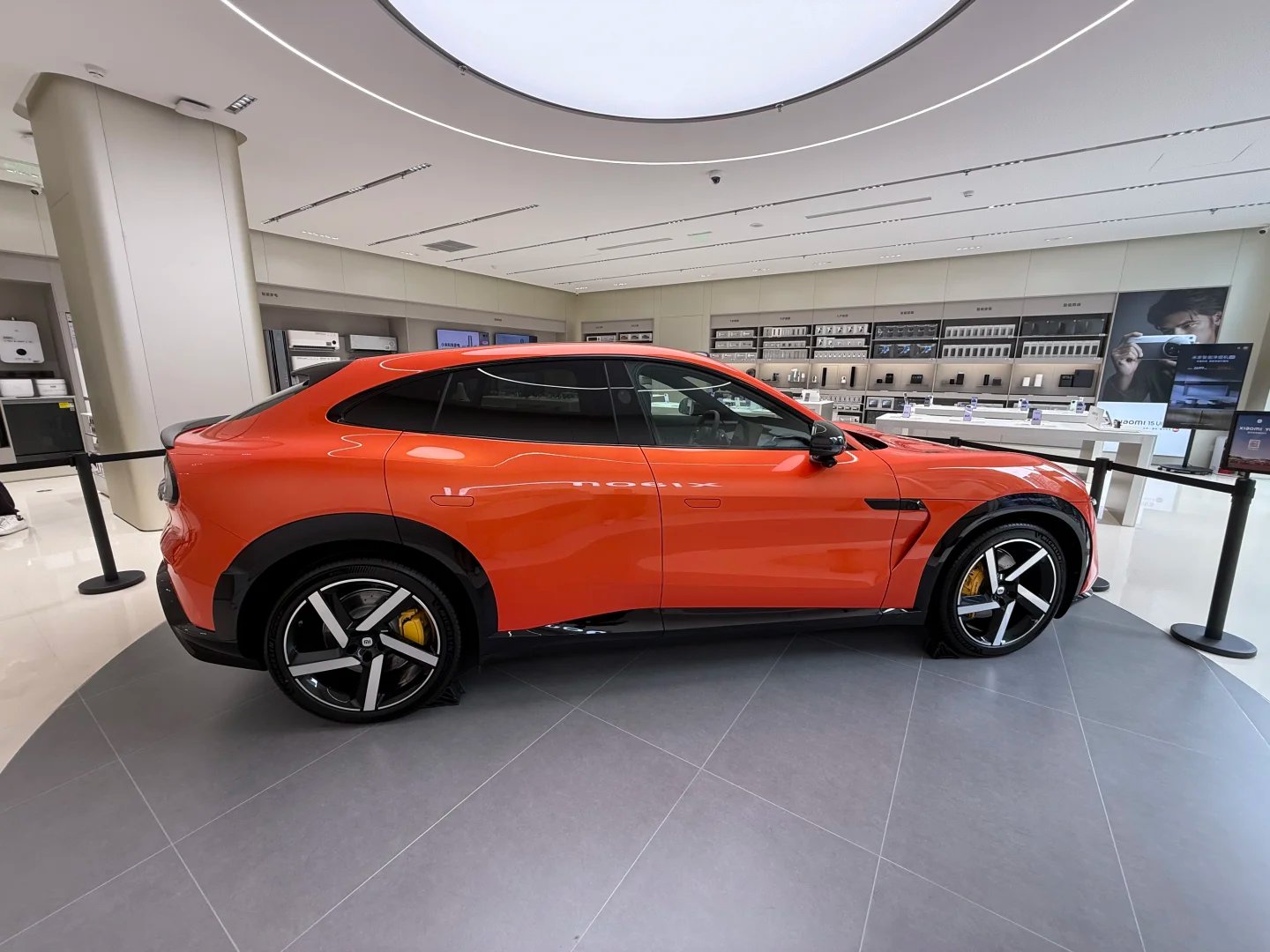
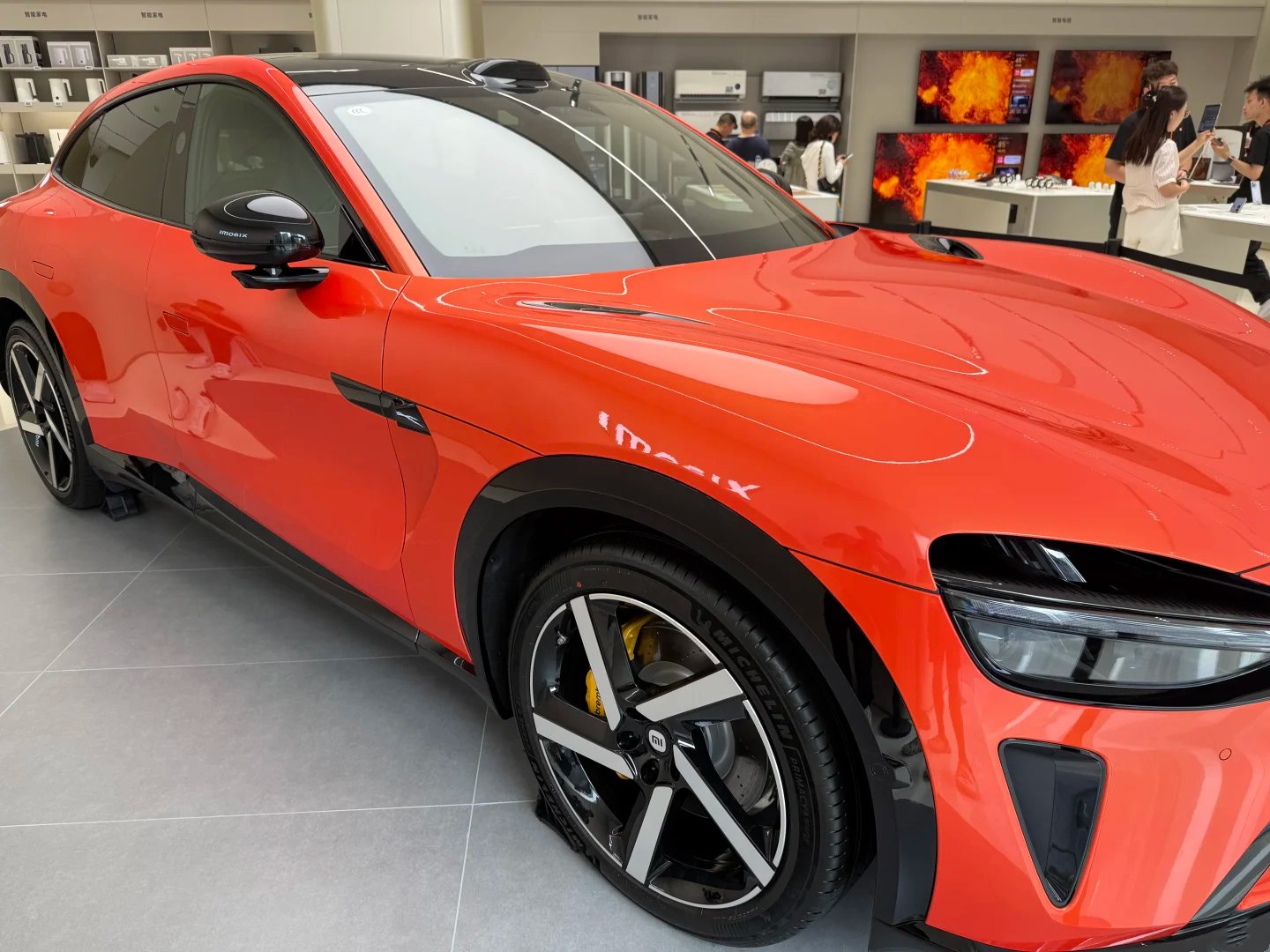
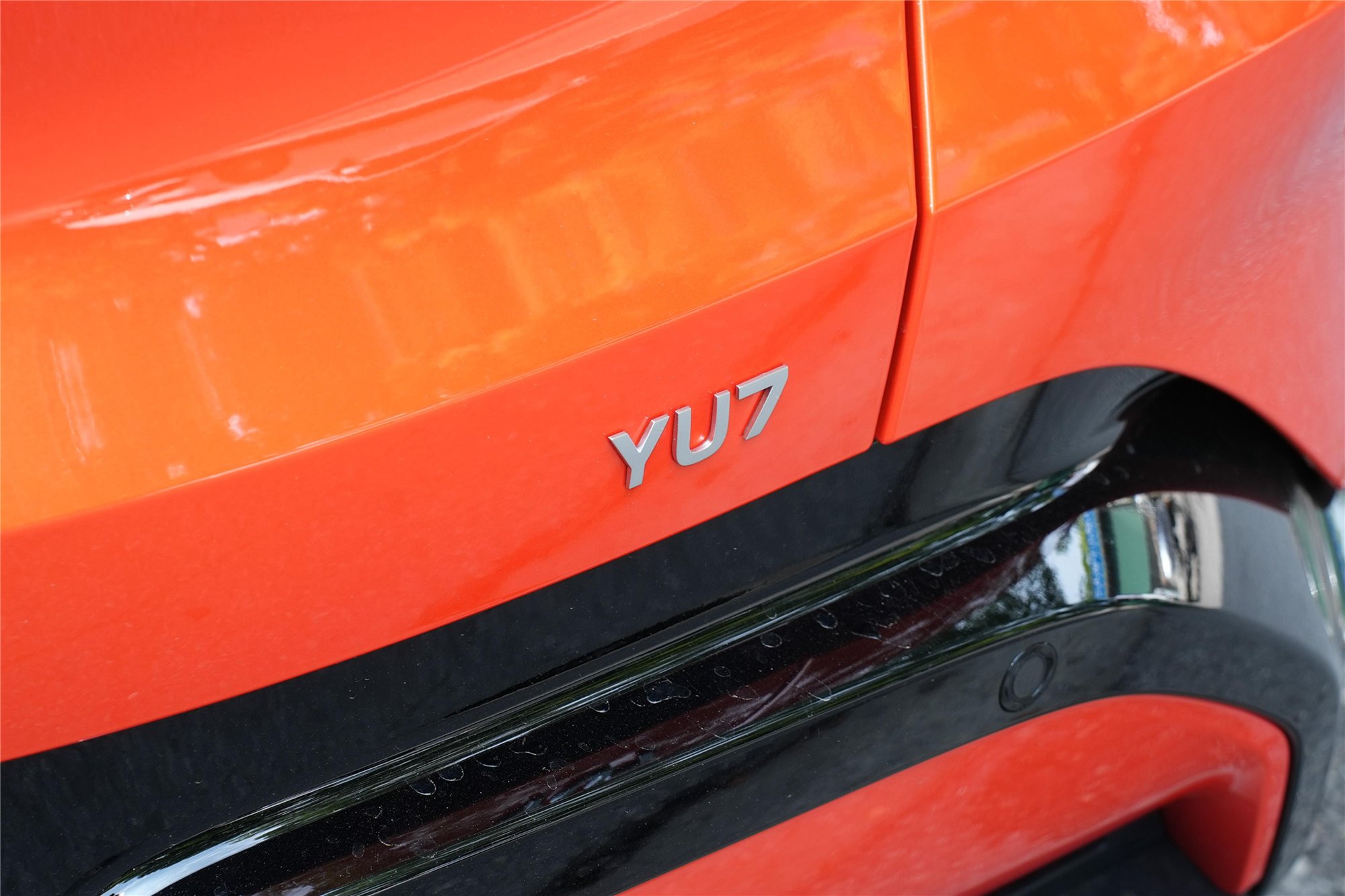
What does the actual car look like? Like "a chubby SU7 wearing a Ferrari jacket"The first glance when approaching the display car gives you the feeling that the Xiaomi SU7 has been stretched taller and fed fatter — a 4999mm body length paired with a fastback line, exactly like a fitness coach跨界 doing ballet. But look closer and you'll find it "stole" the design language of the Ferrari Purosangue: a long hood, a low-slung stance, and even the streamline from the C-pillar to the rear looks like a blood brother of an Italian supercar. Netizens joke that it's "Ferrari Mi," but Xiaomi smartly softened the muscular feel, adding an elegant arc extending from the front to the rear, making the whole car a bit less ferocious and a bit more refined.
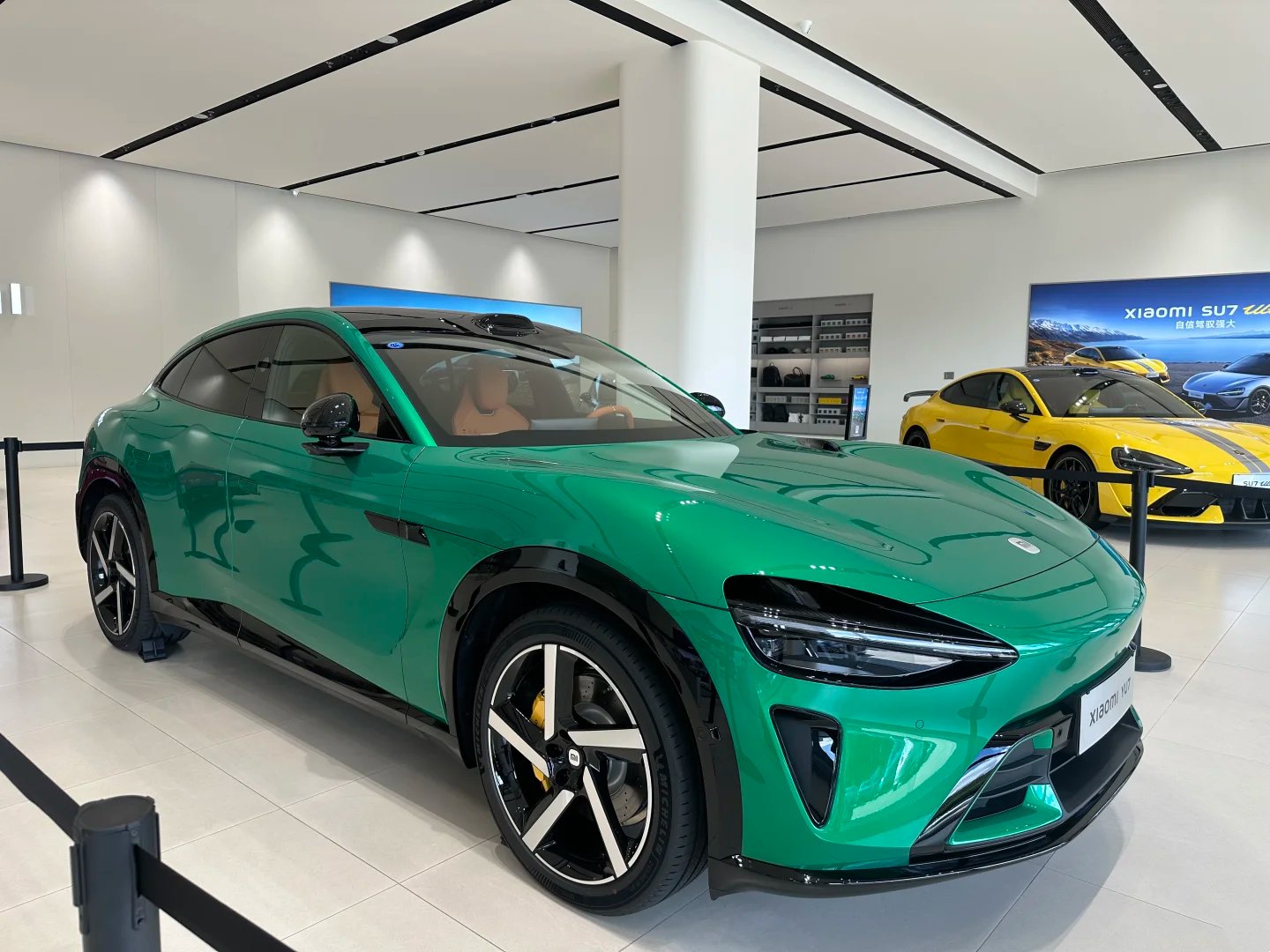
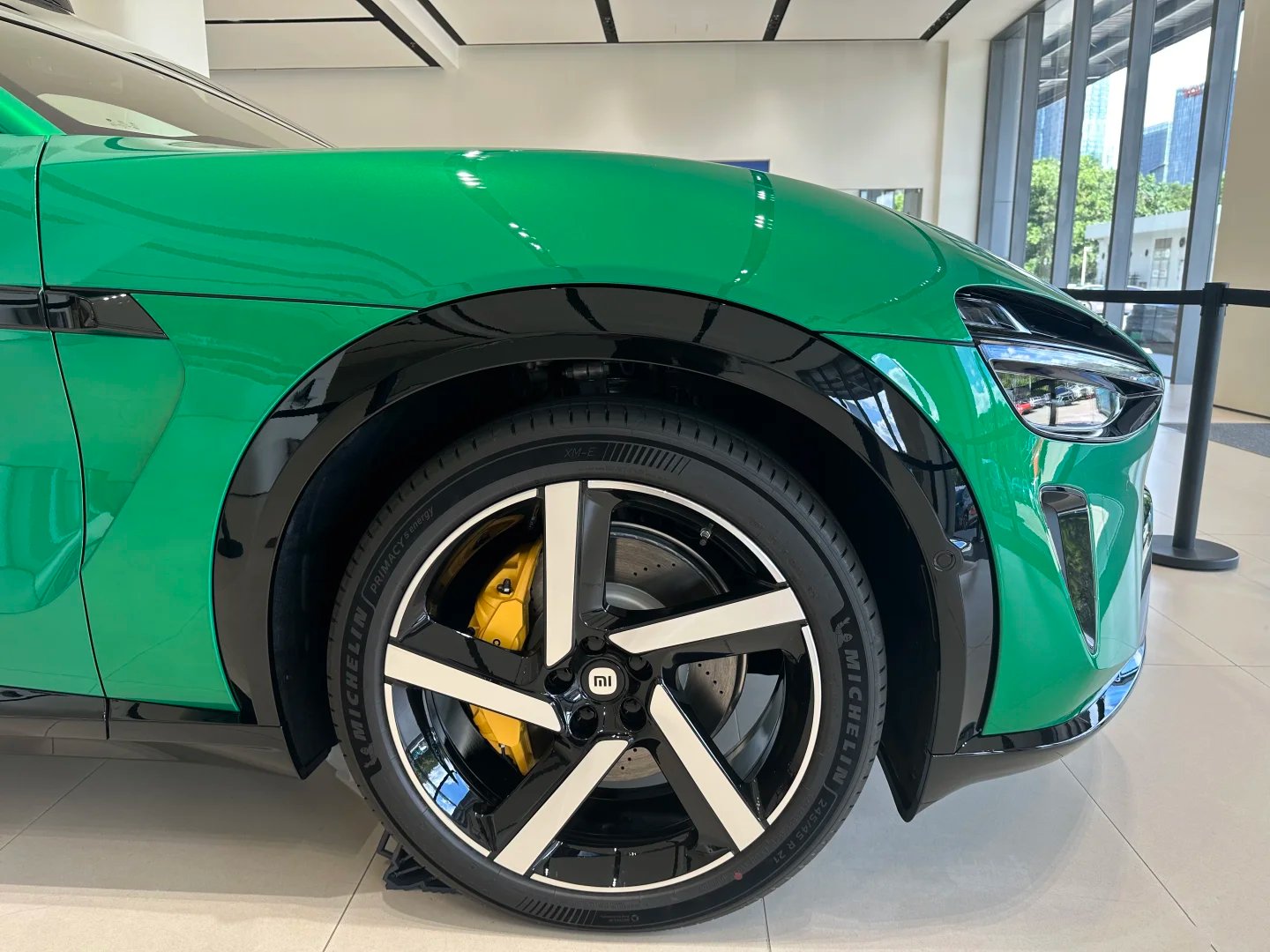
At first glance, the headlights look the same as those on the Xiaomi SU7, but a small window is secretly opened at the upper part of the lamp housing, teaming up with the hood air vents for aerodynamics. Even more impressive is the lidar: while others have a "horn" on top, the YU7 hides it into the roofline of the roof rack, looking from afar like wearing a low-key duckbill cap. The small bulges on the wheel arches are not decoration; when running, they can serve as little wind-breaking helpers. The rear plays even more tricks: a hollow spoiler stacked with a small ducktail, vividly like installing a double-layer air sandwich on the car's rear.
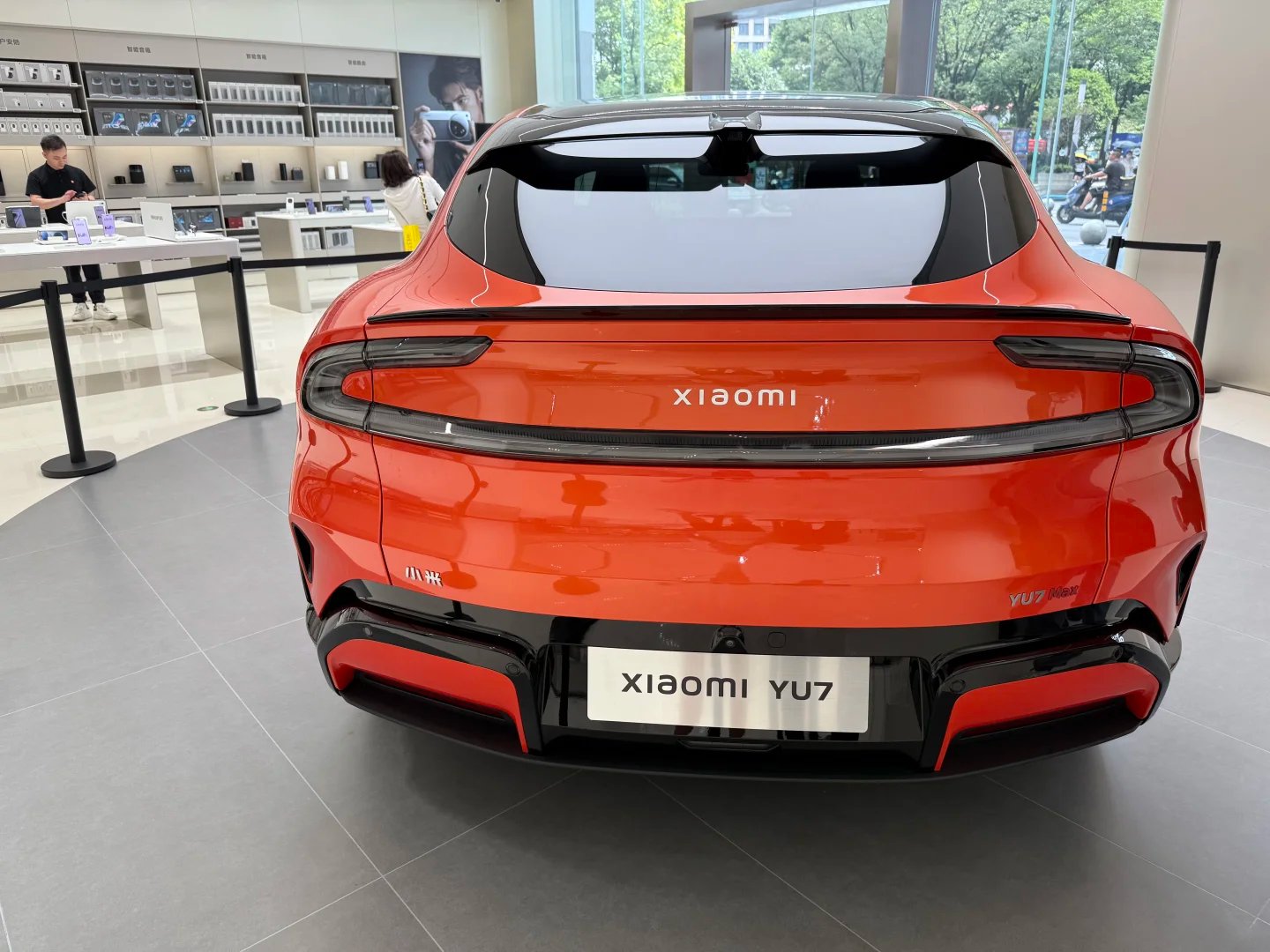
Lava Orange paint
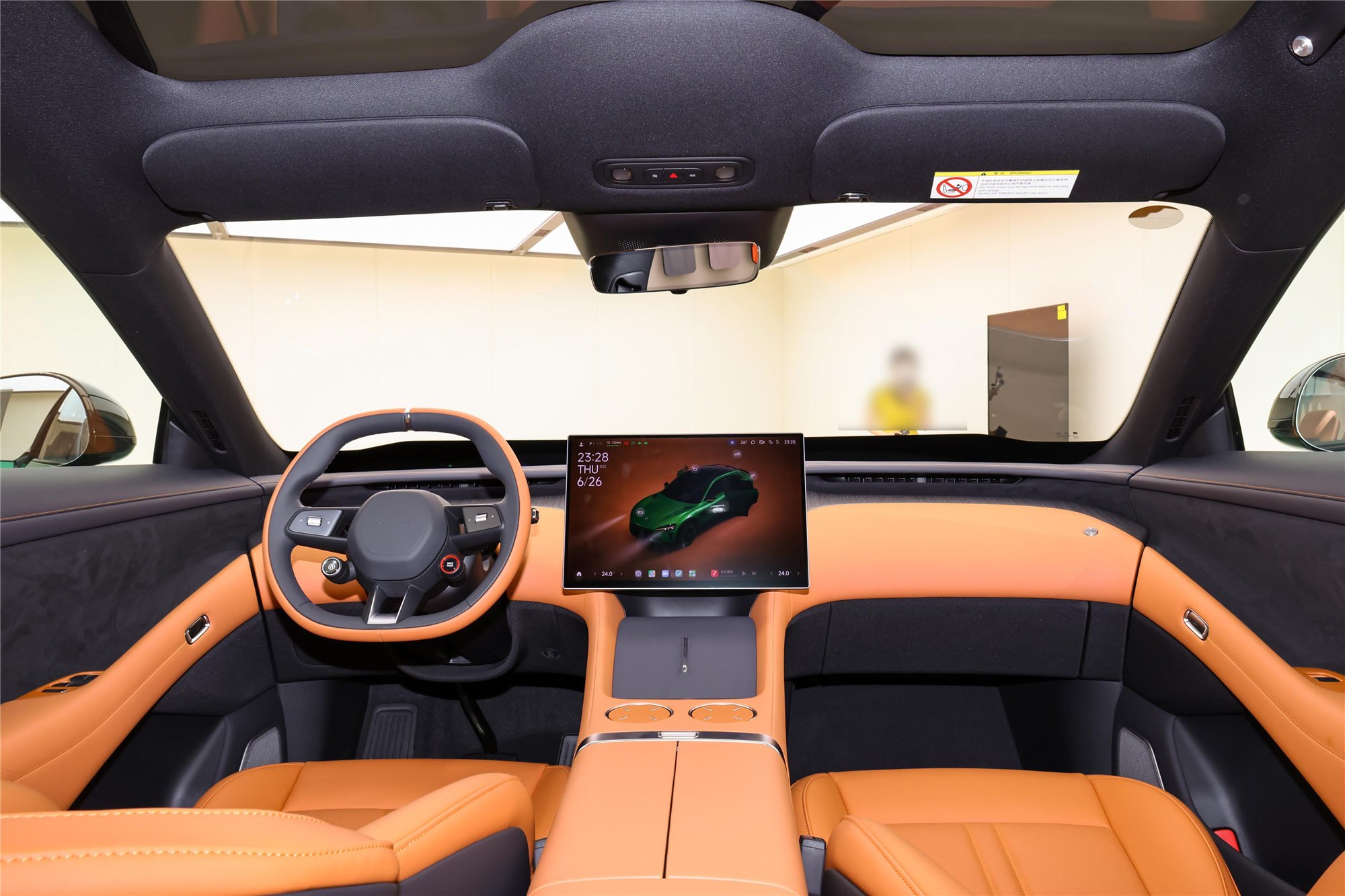
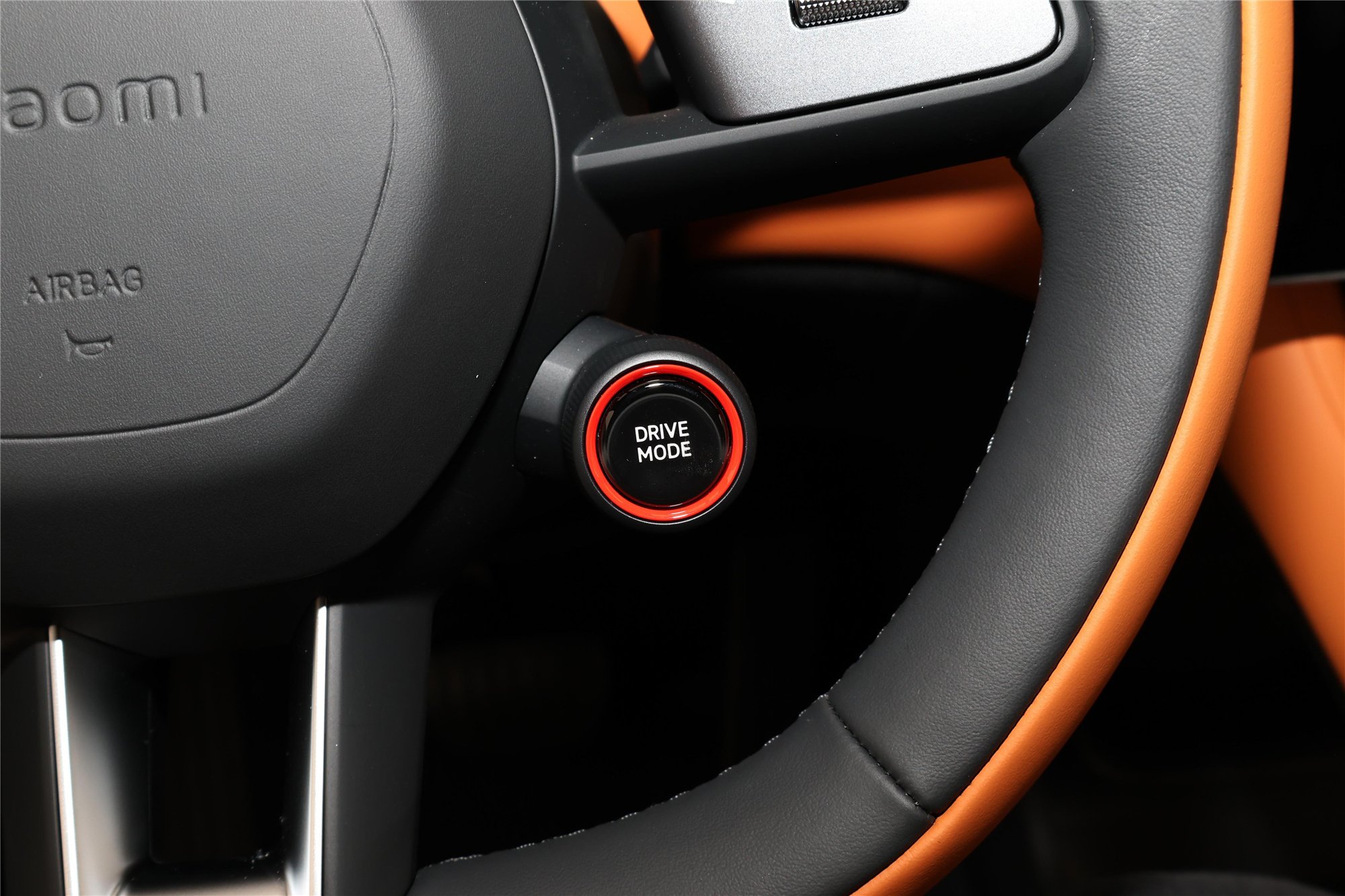
Cabin: stuffing a living room, game room, and KTV into four wheelsPull open the door and you'll suspect the Xiaomi engineers once worked part-time as magicians. The steering wheel retains the same red "Boost Mode" button as the Xiaomi SU7, but the traditional instrument panel is gone — under the lower edge of the windshield hides a 1.1-meter-wide projection band, with navigation arrows directly "stuck" onto the road. The front passenger side is even more outrageous: the blacked-out area of the windshield transforms into a Mini-LED giant screen, instantly becoming a private theater when traffic is jammed.
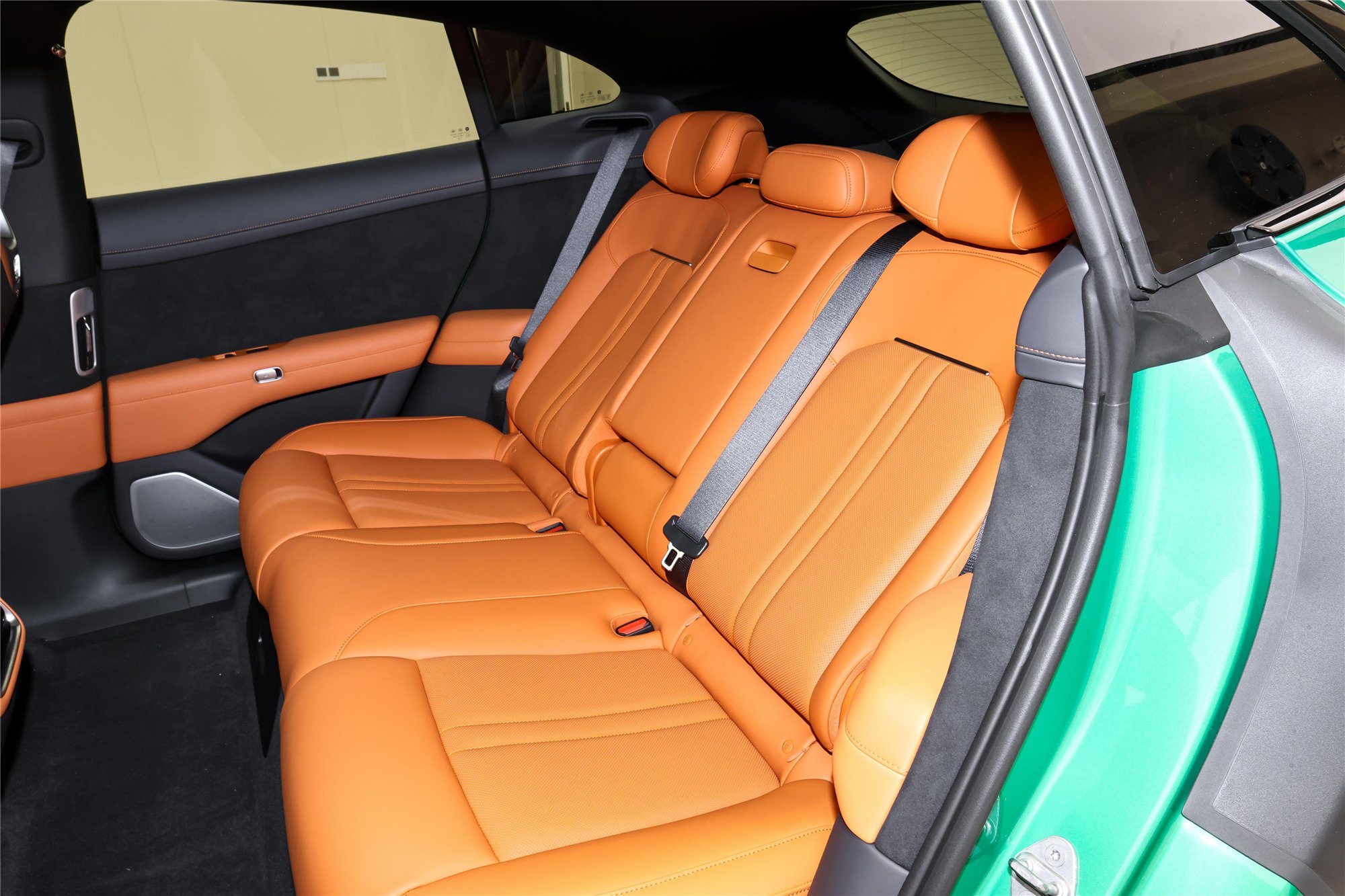
The rear row plays space magic: the front passenger seat can fully recline and combine with the rear seat into a 1.8-meter "lying-flat exclusive seat." After stuffing three 28-inch suitcases into the trunk, there is still room for camping gear, and it even reserves a threaded power interface, so a grill and projector can be plugged in to start a party.
Technology: the hibernation battery that makes Northeast buddies exclaim "so worth it"
The three-electric system hides Xiaomi's "little schemes":
Range "anti-involution," charging like drinking milk tea, intelligent driving that can "copy homework"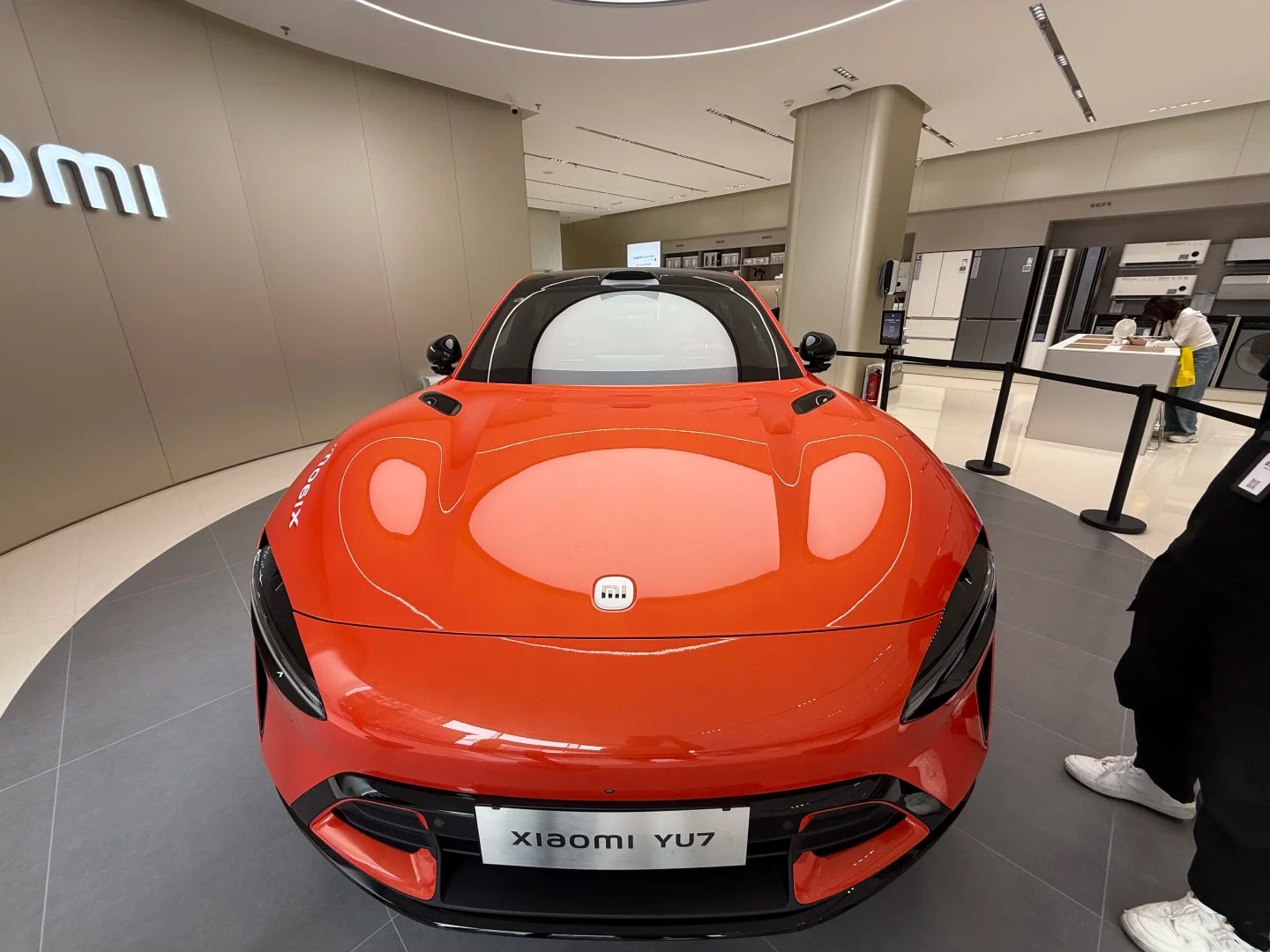
The truth behind the order explosion: young people treat the car as the "most expensive electronic toy"
The rise of the Xiaomi YU7 is like a carefully planned "open scheme":
Pricing plays psychological warfare: starting at 253,500 yuan, a full 10,000 cheaper than the Model Y, yet standard-equipped with lidar and an 800V platform. After doing the math, young people slap their thighs: "The money saved is enough to buy 200 Xiaomi phones!" The limited-time free zero-gravity seats and Lava Orange paint also firmly grasp the "bargain-hunting mentality."
Ecosystem kidnaps life: with one sentence, "Home Mode," the car automatically navigates, the robot vacuum at home starts working, and the air conditioner pre-cools. When camping, the central control screen directly controls the electric grill, and owners joke: "Driving this car is like being Tony Stark, just call Xiao Ai classmate when you need something." The reputation of 250,000 Xiaomi SU7 owners also makes young people feel that "following Lei Busi, the probability of flipping over is lower than drawing cards."
Looks are justice: surveys show that nearly half of users under 35 pay for design. The Xiaomi YU7's frameless rearview mirror, esports-style interior, and glowing logo precisely poke the young mentality that loves showing off on Moments. A female owner admitted: "Specs? I don't understand! But this car makes my legs look long in photos!"
Sweet trouble: Lei Jun may have to personally tighten screws
Behind the explosive orders hide worries:
Production capacity limit challenge: the factory currently produces 1,000 units per day, and 240,000 orders are scheduled into 2026. Netizens joke: "Order now, and by the time you get the car, your kid can already run errands"; competitors are eyeing it covetously: it's said Tesla is preparing to cut prices, and the Li L7 is upgrading to a 1,421-kilometer range, and a siege battle is about to begin.
Conclusion: the "catfish effect" in the auto industry is fermenting
The popularity of the Xiaomi YU7 proves that when a car becomes a "four-wheeled intelligent terminal," spec geeks lose to experience seekers. It offers 500,000-yuan-class configuration at a 250,000-yuan price, like a catfish stirring traditional automakers so much they can't sleep. But a car is not a phone. Can users endure the long delivery? Can quality control withstand large-scale mass production? These are Xiaomi's real tests. After all, young people are willing to line up for looks, but patience is like phone battery — it drains much faster than it charges.
Finally, a small episode: "200,000 orders flooded in within 3 minutes of launch, and within 1 hour it soared to 289,000 units." This result indeed made many competitors "envious" when they saw the Xiaomi YU7's sales performance, and a few competitors couldn't sit still and came out to question the authenticity of the data. Of course, we won't discuss this too much. You can say your views in the comments. By the way, which paint do you think looks better, Gemstone Green or Lava Orange?


