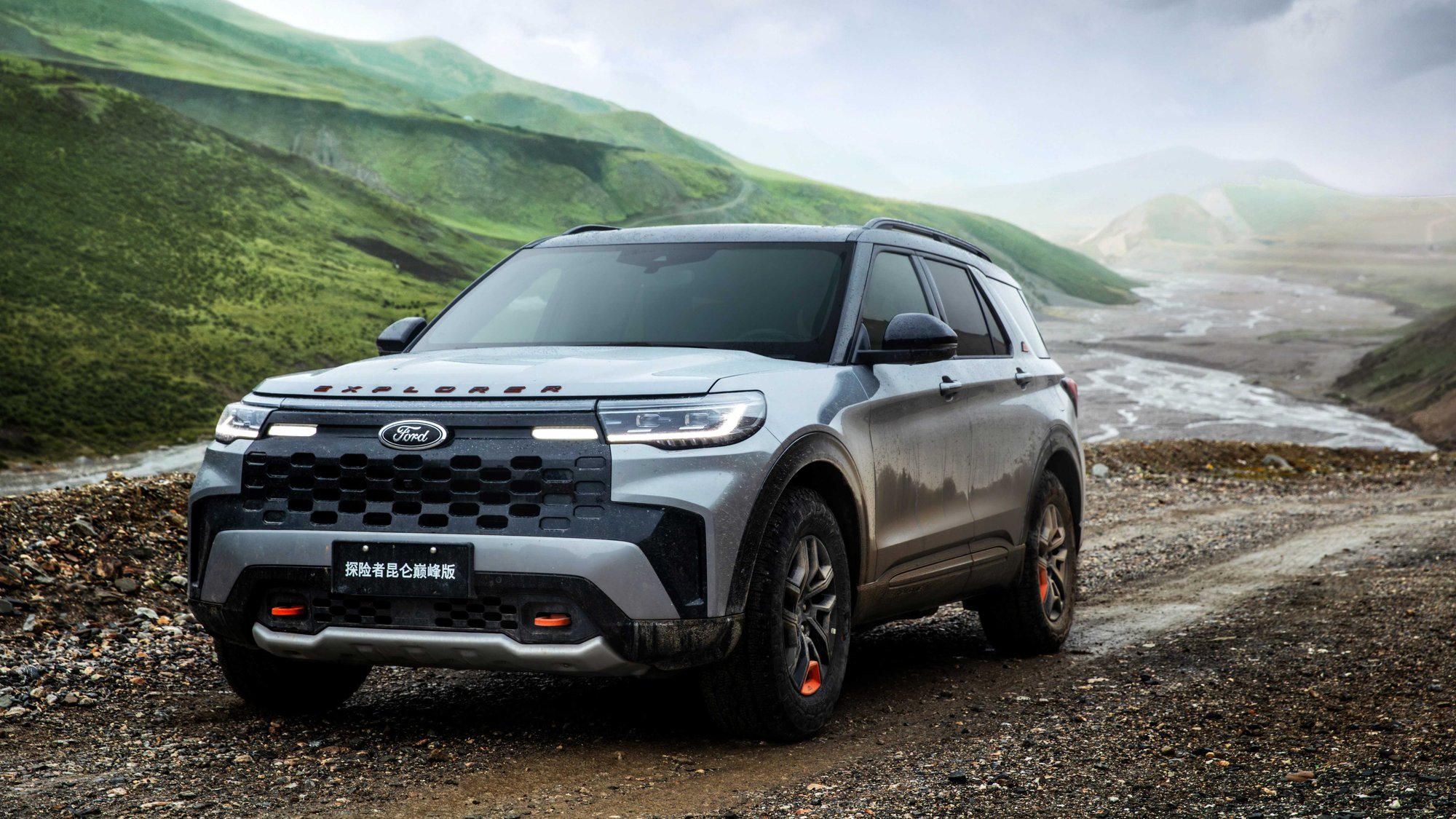
A while back, a friend vented to me, saying that buying a car these days is really a headache. With a budget of around 300,000 yuan in hand, he wanted to buy a spacious SUV to take his wife and kids out, but after looking around, he ended up even more confused. He said: "You have no idea—nowadays salespeople are all about 'fridge, TV, big sofa,' and every other word is 'lidar.' I asked whether this car has enough power to climb a slope, and what the fuel consumption is like. No one could answer." He then asked me, he'd heard that the Ford Explorer has been discounted pretty aggressively recently—what's the story? With such big discounts, is it because it can't sell?
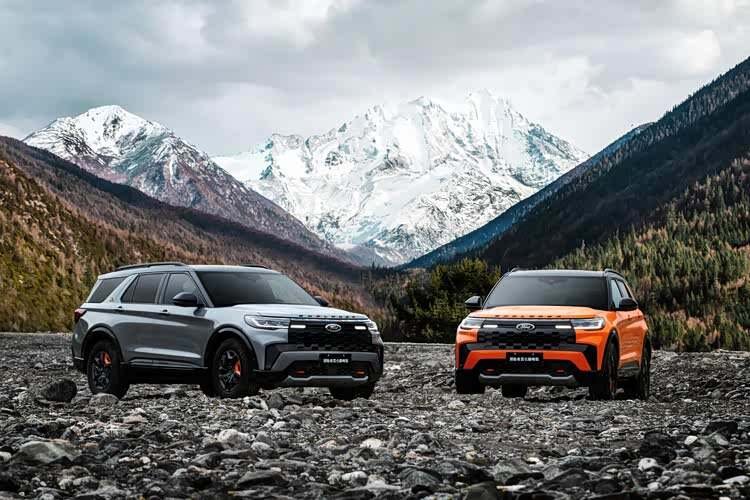
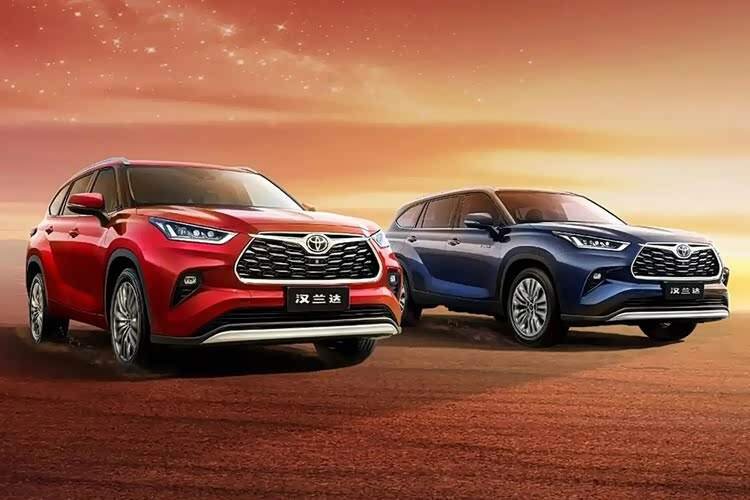
That's a very practical question. For ordinary people like us buying a car, isn't it all about being durable, having a roomy space, and feeling confident when driving? Those flashy features really aren't as practical as power that's on tap the moment you press the accelerator. Recently, Ford indeed joined this year's wave of "price wars," and in March the Explorer offered a purchase gift package worth up to 46,888 yuan, including a trade-in subsidy, 36 periods at 0 interest rate (please consult your local dealer for specific offer details), and lifetime free basic maintenance—these are hard benefits. Today let's talk about whether, with this wave of discounts, the Explorer is actually worth our money, and compared with the Highlander that everyone can't avoid considering, what strengths it has to show.
First, let's solve the first pain point: Does it feel like "driving a boat"? Is the power enough?
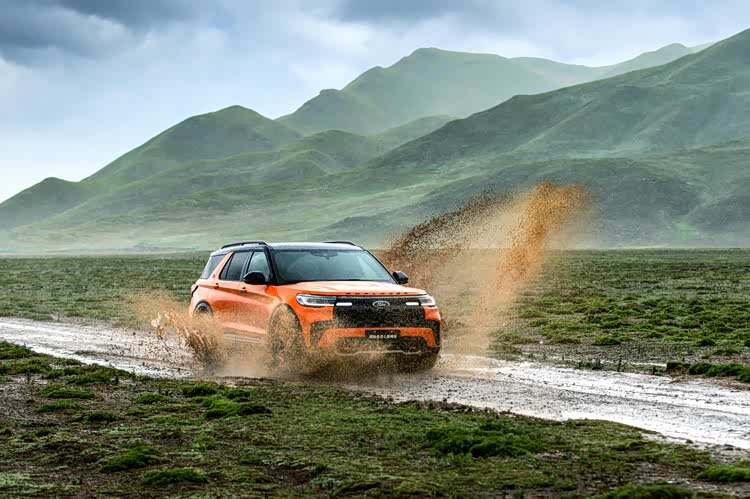
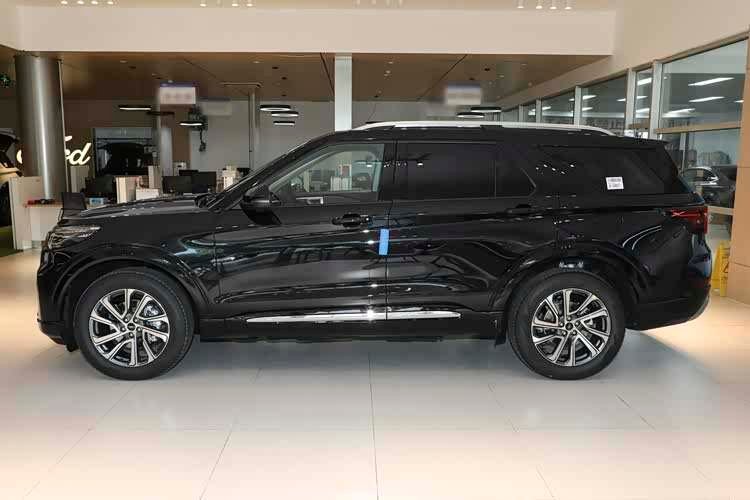
Many people worry that a big SUV over 5 meters long will feel clumsy to drive, especially when making U-turns in the city or squeezing through narrow alleys—you just don't feel confident. On this point, the Explorer's approach is indeed different. It didn't follow the trend of using a cost-saving front-wheel-drive platform; instead, the entire lineup uses a longitudinal rear-wheel-drive layout. Put it this way: this kind of thing used to be played with mostly by luxury brands. What's the direct benefit? The turning radius is only 5.9 meters. Let me translate that for everyone: for such a long vehicle, when making a U-turn on a narrow two-way single-lane road, others may need to reverse once, but you can come around in one turn of the wheel. Driving it, you won't feel like you're steering a big ship; instead, it feels quite agile, and you feel confident.
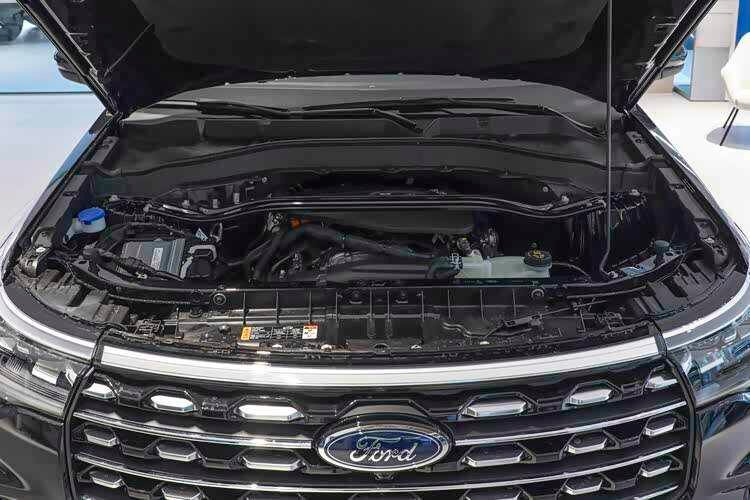
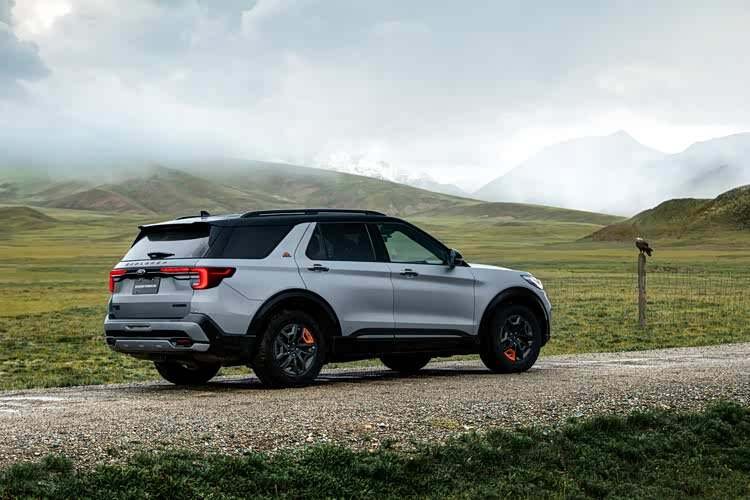
Now let's talk about power. The Explorer uses a 2.3T engine, which shares the same lineage as the Mustang, with a maximum torque of 445 N·m. You may not have a concept for this number, but the feeling when driving is "powerful." Whether starting in the city or wanting to overtake on the highway, power is available on demand under your foot—no need to stomp the accelerator all the way into the fuel tank. Especially when fully loaded with family and with the air conditioning on, climbing a steep slope, that sense of ample reserve can save you from honking several times. If you have off-road needs, you can also look at the four-wheel-drive version. The on-demand 4WD system can automatically switch between two-wheel drive and four-wheel drive according to road conditions, and in daily driving it runs in two-wheel drive, which helps control energy consumption. The key point is that this car isn't picky—92-octane gasoline is fine, and with the 81-liter large fuel tank, you don't need to worry about finding gas stations everywhere on long road trips. That sense of happiness is very real. Compared with the Highlander everyone knows best, especially its 2.5L hybrid version, the Highlander's advantages are smoothness and fuel economy, but in terms of power reserve and composure when climbing slopes, the Explorer's 2.3T rear-wheel-drive platform indeed has more confidence.
Now let's solve the second pain point: flashy configurations are useless; the real priority is that family members sit comfortably and you can carry a lot.
When we buy a car, sitting in the back row are our wife and kids, our parents. Whether the space is comfortable directly determines the mood of the whole family on the trip. The Explorer's wheelbase exceeds 3 meters (3025 mm), and the usable interior space is nearly 6 square meters. What does that feel like specifically? When a 178 cm adult sits in the second row, there's still more than two fists of legroom, and even sitting upright, their head won't touch the roof. If you choose the 6-seat version, the second row has two independent seats with an aisle in the middle, so elderly people and children can get in and out of the third row without struggling to move seats. This detail is extremely important for family users.
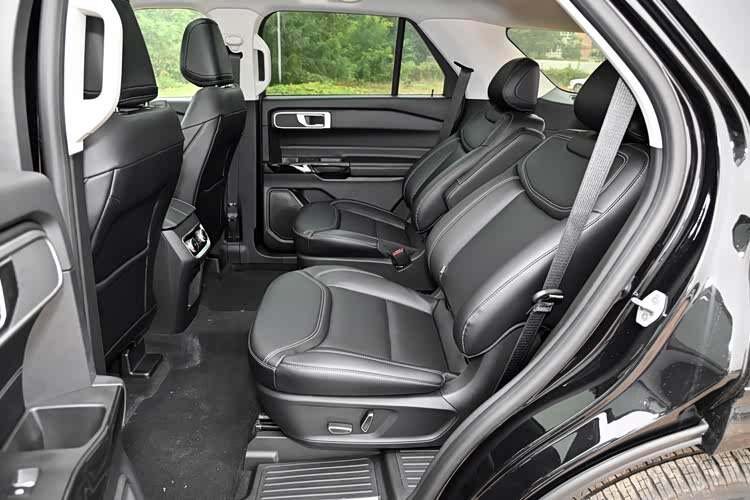
Second-row space of the 6-seat version
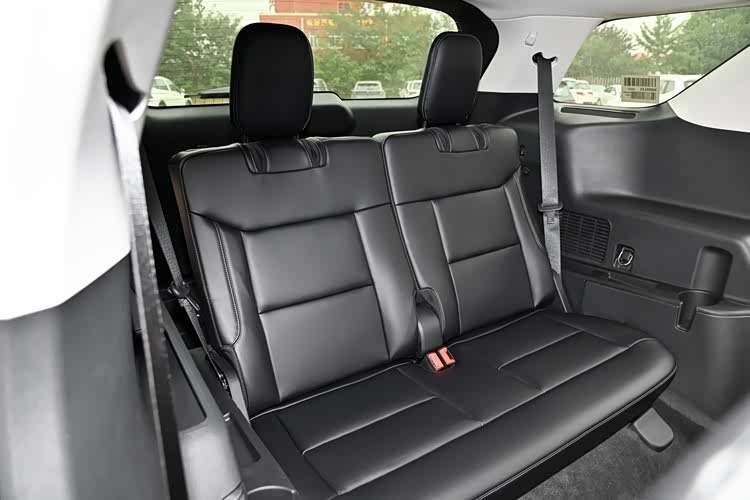
Third-row space of the 6-seat version
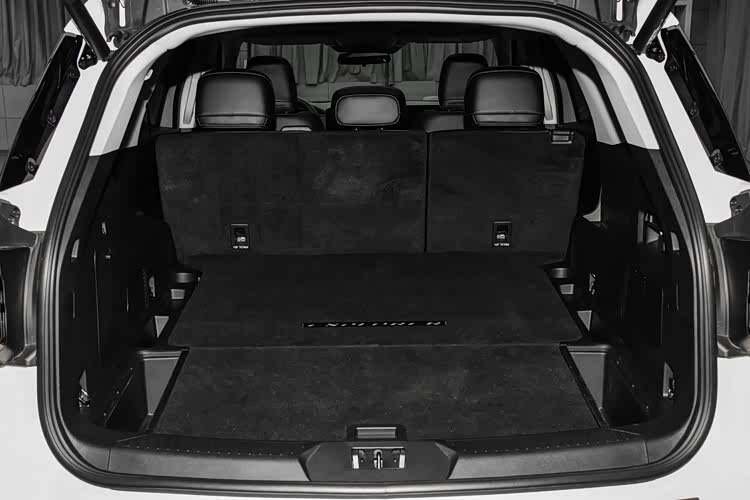
The trunk is even more of a strength for this kind of large five-seat or six-seat SUV. The trunk volume is 2487L. What does that mean? It means your child's stroller, balance bike, plus the whole family's camping tent, folding tables and chairs, and several large suitcases can all be stuffed in—no need to play Tetris. If you fold down the rear two rows of seats, it's practically a "small truck," and even moving large home appliances is no problem. By contrast, although the Highlander has high space utilization, after all it's half a class lower in size, and the third row and trunk still feel cramped when fully occupied, more like a "large five-seat" SUV with emergency seven-seat capability.
The third pain point: Does the car's "brain" keep up with the times? Is safety actually reliable?
Nowadays when buying a car, who doesn't check whether the infotainment system lags? This time the Explorer uses the Qualcomm 8155 chip, and the 27-inch central screen has good display quality and response speed—navigation, music, and videos are all smooth. While driving, if you want to adjust the air conditioning or set navigation, you don't need to look down for buttons; just say "Hello, Ford," and it will handle it for you, and it can also handle continuous conversation. This L2-level assisted driving is especially practical on highways. Turn on adaptive cruise control and lane keeping, and the car steadily stays in the middle of the lane, following the car ahead as it speeds up and slows down. After driving several hundred kilometers, you won't feel tired. In this regard, the Highlander's infotainment system has always been criticized for being a bit behind the pace. Although the new model has also been upgraded, in terms of screen size and the localized voice interaction experience, the Explorer's "American-style big screen" indeed suits the tastes of domestic consumers better.
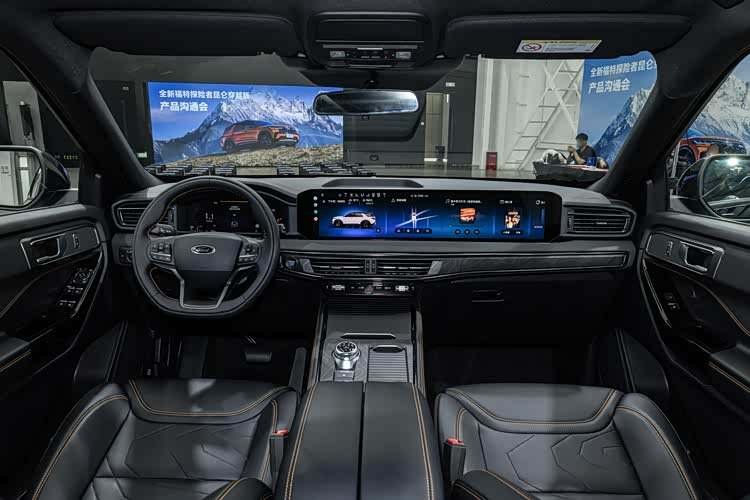
As for safety, American cars have always been willing to spend on it. More than half of the Explorer's body uses high-strength steel, especially at key positions such as the A-pillar and B-pillar, which use very high-strength cold-formed martensitic steel. Simply put, this is a "golden bell cover" bought for the whole family. The roof can withstand more than 5 times its own weight. If an extreme situation occurs, this sturdy cage can protect the family to the greatest extent possible.
The last pain point, and the most realistic one: How good is this wave of discounts actually? Does it count as a bargain?
Let's do the math. Under the current March policy, if you have an old car to trade in, you can get up to 21,500 yuan in subsidy. Add 36 periods at 0 interest rate (please consult your local dealer for specific offer details), and for friends who don't want to hand over a large sum of cash all at once, the monthly payment pressure is much lower. The most practical thing may be that lifetime free basic maintenance. Each time you go for maintenance in the future, you can save several hundred yuan, and the longer you drive, the more you save. Adding these together, the value of that 46,888 yuan comprehensive gift package is indeed not a gimmick. Although policies vary by region and you have to ask the local dealer, this at least shows that now is indeed a time when the threshold for getting an Explorer is relatively low in recent years.
Of course, no car is perfect. The Explorer's fuel consumption is definitely higher than the Highlander hybrid's. If you're stuck in city traffic, the fuel consumption number will make your heart ache. Although its interior workmanship is solid, compared with some new forces that emphasize luxury, it indeed lacks a bit of that "fine decoration" feel.
So what's the final advice?
If you're buying a car purely for city commuting, rarely drive on the highway even a few times a year, and what you value most is extreme fuel efficiency, then the Highlander Dual Engine may be more suitable for you.
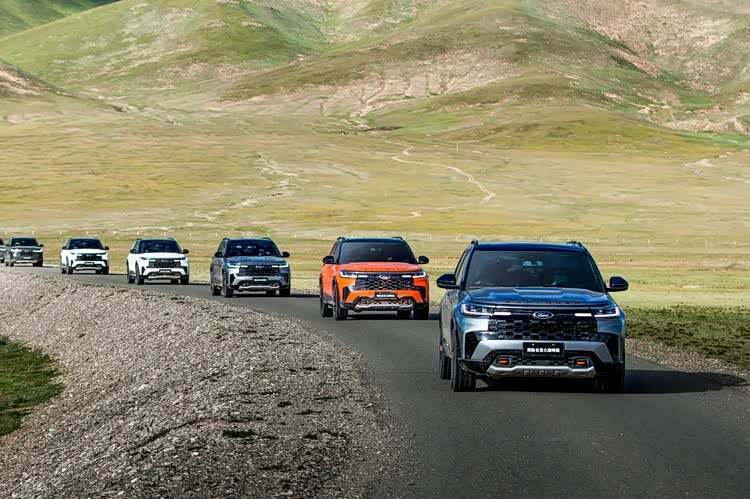
But if you're like my friend—buying a car so that on weekends you can comfortably take the whole family to a country park or go camping, or drive long distances back to your hometown during holidays, needing to fit the whole family's luggage, wanting confidence when overtaking on the highway, and also hoping to occasionally take some rough roads to see different scenery—then this discounted Explorer is indeed a very practical choice.
Don't rush to decide based on specs online. Find some time, bring your family, and go to a 4S store to drive it yourself for a lap and sit in it, imagining the trunk stuffed full of camping gear. Feel that sense of confidence when driving and the spacious comfort when sitting. After all, a car is bought for yourself and your family to use. Whether it drives smoothly and sits comfortably, your body knows best. In this wave of "price wars," the Explorer has shown sincerity. What's left is to see whether it's the "partner" that suits you.


