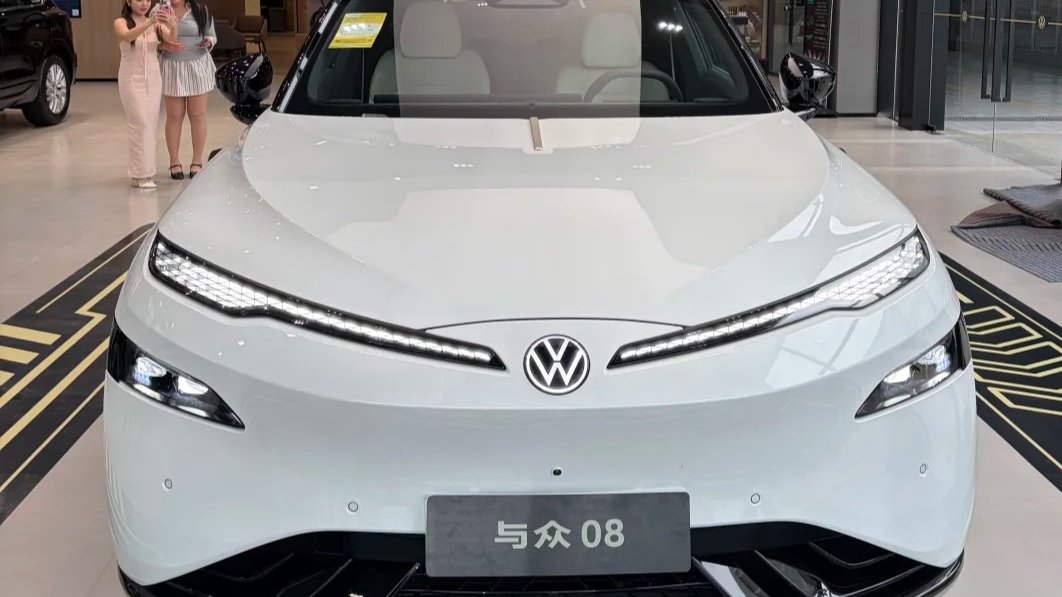
Recently, quite a few friends have been asking me about the Volkswagen ID.UNYX 08 in the comments, saying there's a lot of discussion about it online, but opinions are somewhat polarized. Some say the chassis is solid and the energy consumption is low, with that German feel when driving; others complain that the lower trims don't have a HUD and the screen isn't very large either. Coincidentally, I passed by a Volkswagen dealership with the gold logo a couple of days ago, so I went in and had a thorough experience, going from static viewing to a dynamic test drive, checking out everything I could touch and drive.
Today, without exaggerating or downplaying, I'll stand from the perspective of an ordinary consumer and break down this car's real performance and configuration logic.
Let me first talk about the basic situation of this car
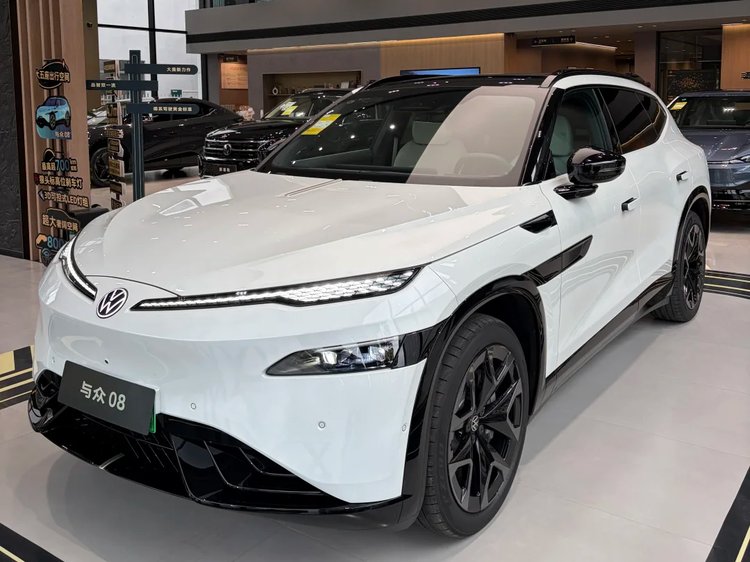
The ID.UNYX 08 is made by Volkswagen Anhui, and it's also a mass-production car from the collaboration between Volkswagen and XPeng. It launched on April 16, 2026, with three versions—Pure, Ultra, and Max, with official guide prices ranging from 229,900 to 289,900 yuan.
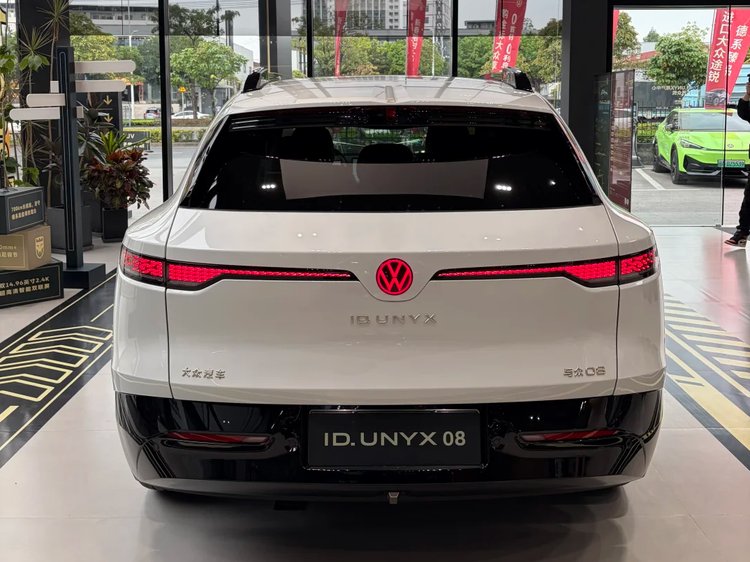
In terms of body dimensions, the length is 5000mm, width 1954mm, height 1688mm, and wheelbase 3030mm. What does that mean? It's the size of a standard mid-to-large SUV, noticeably a size larger than the Model Y. Standing next to the car, you can really feel that sense of volume, but the body proportions are quite refined, with a short front overhang and long rear overhang, and the side lines are very stretched, so it doesn't look bloated.
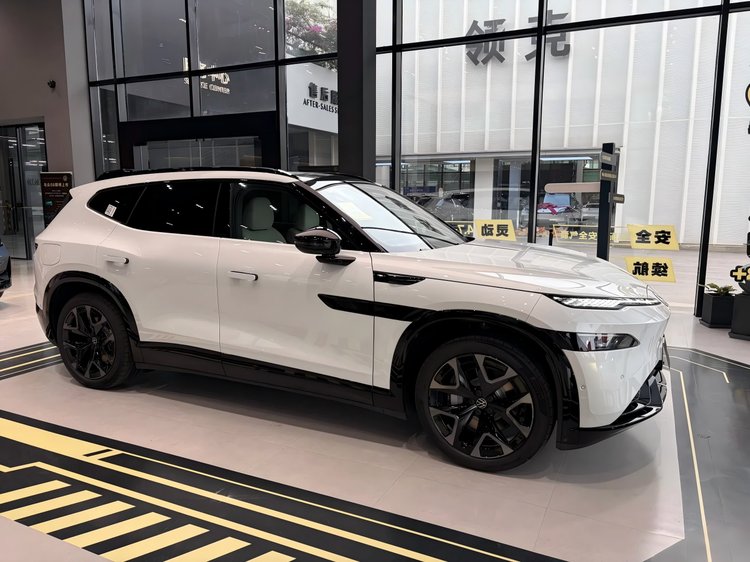
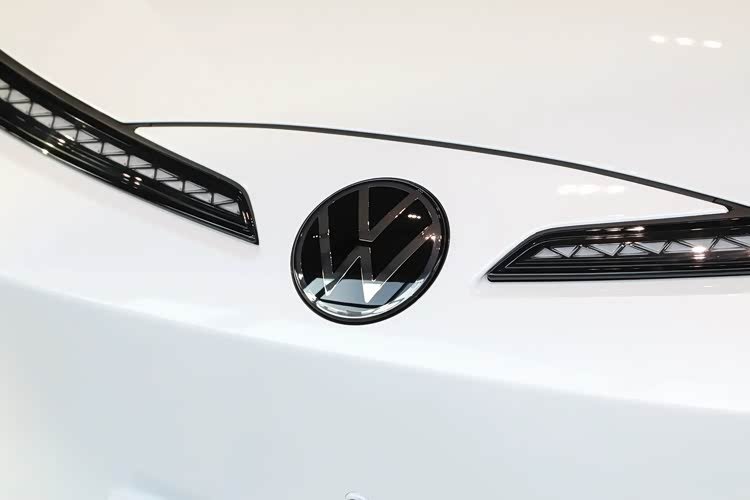
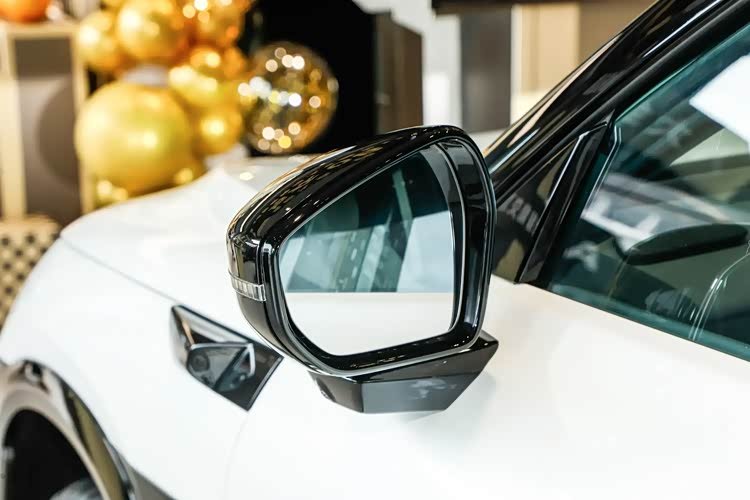
Let me mention a few exterior points that left a deeper impression on me. One is the illuminated gold Volkswagen logo at the front, which really stands out. Another is the high-mounted brake light at the rear; when lit, there's a wolf head silhouette inside, and the salesperson said it's a tribute to Volkswagen's headquarters in Wolfsburg. This kind of little design touch is indeed rare on Volkswagen cars, and it's quite likable.
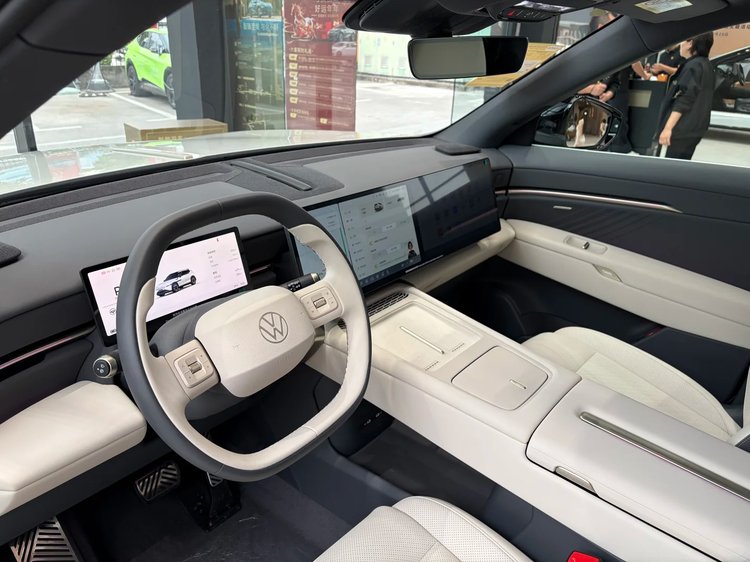
Sitting inside the car, the intuitive feeling is—this time Volkswagen's infotainment system finally isn't laggy
Friends who have driven Volkswagen ID series cars before should all know the feeling—that infotainment system responds slowly, has many menu levels, and really isn't very handy to use. But the ID.UNYX 08's "Yunqi Smart Cockpit" is completely different.
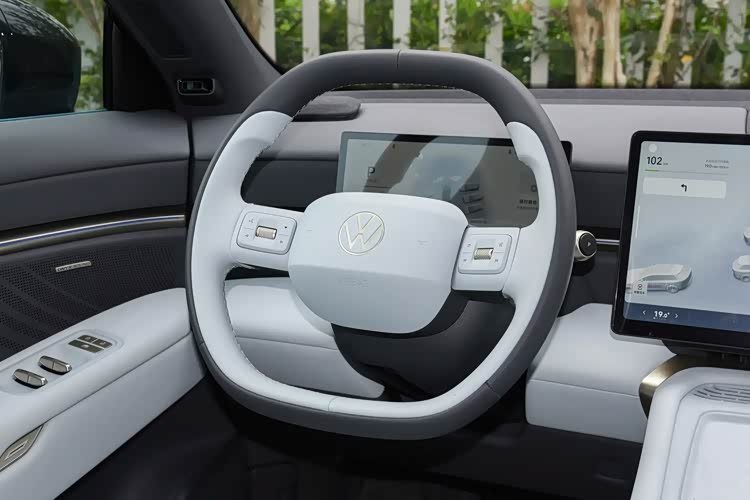
It uses the Qualcomm 8295P chip—the kind of level used in current flagship phones. In actual operation, swiping the map and switching apps basically have no wait time, and the response speed is about the same as mainstream smartphones. The center console is a 10.25-inch instrument screen plus two 14.96-inch 2.4K dual connected screens. The passenger-side screen has privacy protection technology, so the driver won't be distracted while driving.
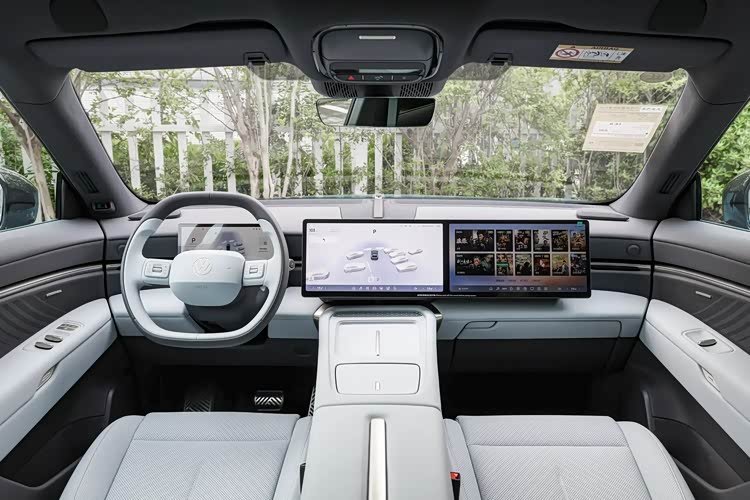
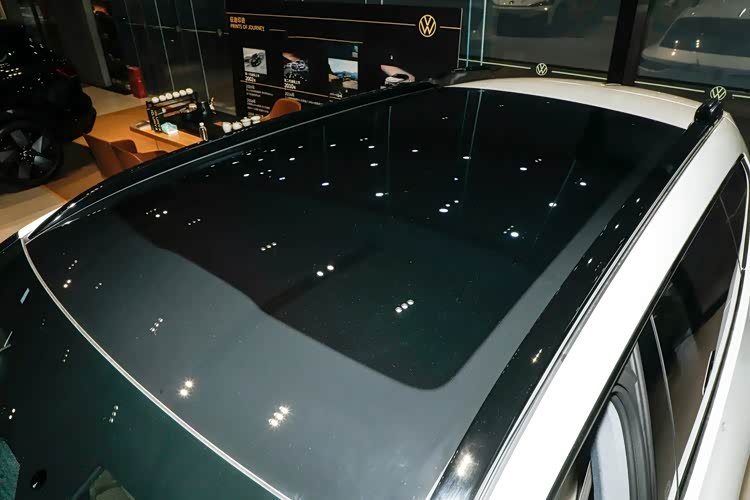
Voice control has also improved a lot. I tried it out—without shouting a fixed wake word, I just said "I feel a bit stuffy," and the system understood the meaning and automatically switched to outside air circulation and opened the sunroof. The salesperson said the backend connects to Zhipu and Baidu large models, and the comprehension ability is indeed much stronger than traditional car systems.
In terms of space, the large five-seat layout is indeed very practical
The 3030mm wheelbase is entirely given to the front and rear rows. I'm 178cm tall, and after adjusting the front seat to a suitable driving position, there was still more than two fists of legroom in the rear, and about one fist of headroom. The rear floor is completely flat, so three people won't feel cramped.
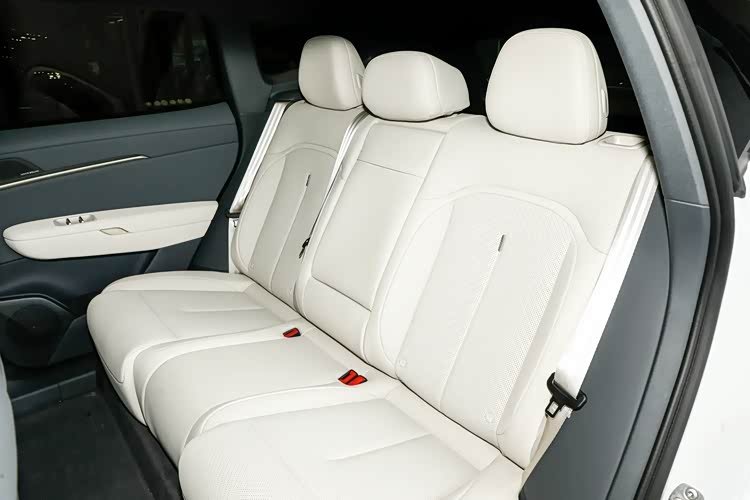
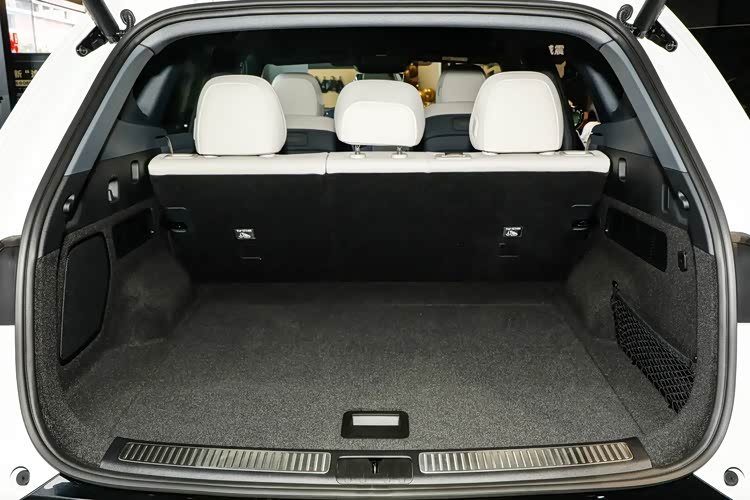
The trunk's regular volume is 766L, and it can expand to 1845L when the rear seats are folded down. Under the cover there's also a sunken storage compartment, which is convenient for miscellaneous items. 95% of the interior is covered in soft materials, and the feel is indeed quite good.
Dynamic test drive: the chassis is this car's confidence
The test drive segment was what I was looking forward to more. The salesperson took me on a stretch of city roads and a short stretch of highway.
First, the performance over bumps. The top trim is equipped with dual-chamber air suspension and DCC adaptive dampers. In actual driving over speed bumps and potholed roads, the body is very stable, without that harsh impact feeling, but rather a kind of resilient filtering. The car also has an AI preview function that can scan road conditions in advance and adjust the suspension. When driving, you feel like the car is always finding a comfortable posture, and that heavy yet agile feeling really does have a bit of a premium feel.
The entire lineup comes standard with a front double-wishbone plus rear five-link suspension structure. This configuration is indeed rare at the same price point. For brakes, the entire lineup comes standard with Brembo four-piston calipers, and in actual use the pedal feel is very solid, with braking force released very evenly, so you won't get a soft first half and then sudden lock-up in the second half.
In terms of power, what I tested was the top-trim dual-motor four-wheel-drive version, with a combined power of 370kW and 0-100 km/h in 4.9 seconds. Among electric cars, this figure isn't aggressive, but the felt experience is already fast enough. Moreover, the accelerator pedal is tuned very linearly, and it won't surge the moment you press it, which is relatively friendly for family users.
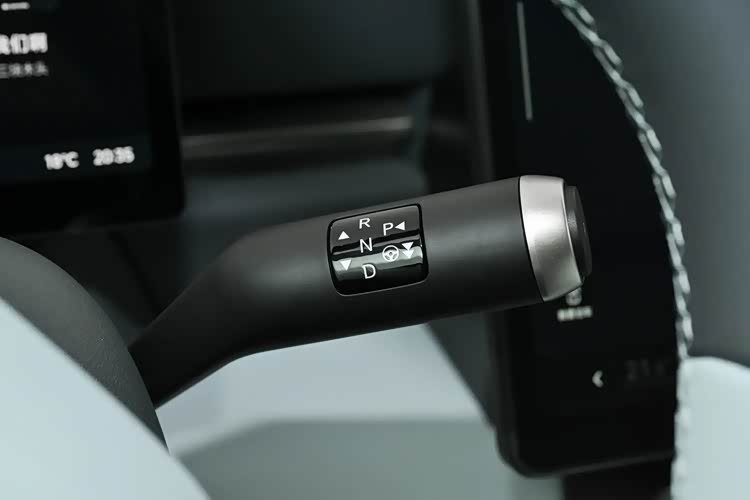
Energy consumption performance may be an advantage many people overlook
The official combined energy consumption is 14.7 kWh per 100 kilometers. I looked at some real-world test data from car owners online, and city commuting is roughly between 15.5 and 17 kWh. A media outlet ran nearly 1000 kilometers entirely on the highway with the air conditioning at full blast and measured 16.52 kWh. Someone else achieved 13.9 kWh under mixed road conditions.
Compared with other pure electric SUVs in the same class, energy consumption is generally around 16 to 18 kWh. Don't underestimate the difference of one or two kWh. Calculated at a household electricity price of 0.5 yuan per kWh, that's a difference of one or two yuan per 100 kilometers. Driving 20,000 kilometers a year, you can save several hundred yuan. And low energy consumption means the same battery capacity can go farther, and the charging frequency in daily use will also be lower.
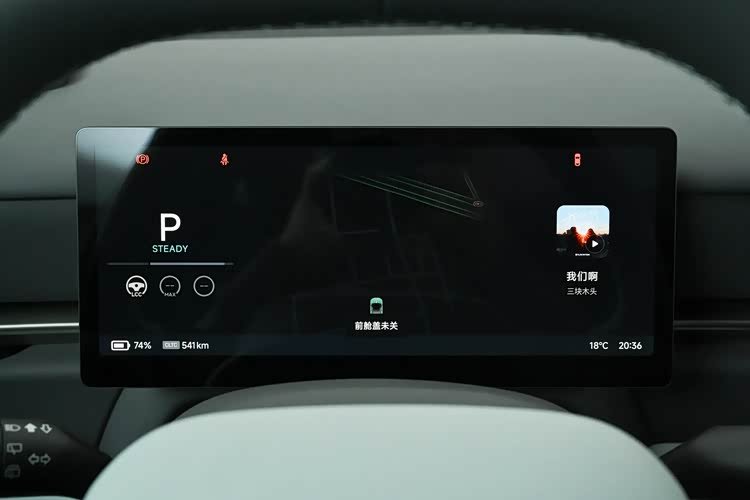
800V platform and charging efficiency
The entire lineup is built on an 800V silicon carbide high-voltage platform. The peak fast-charging power is 315kW, adding 150 kilometers of range in 5 minutes, and charging from 10% to 80% takes about 20 minutes. In the time it takes to use the restroom at a highway service area, the battery is enough to get you to the next service area.
The battery uses CATL lithium iron phosphate, offered in two capacities: 82kWh and 95kWh. In terms of CLTC range, the Pure version is 630km, the Ultra version is 730km, and the Max four-wheel-drive version is 700km.
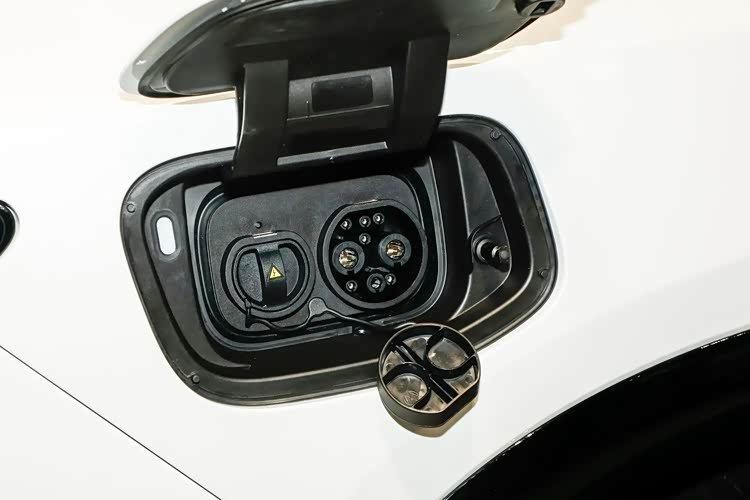
Assisted driving: XPeng's technical foundation
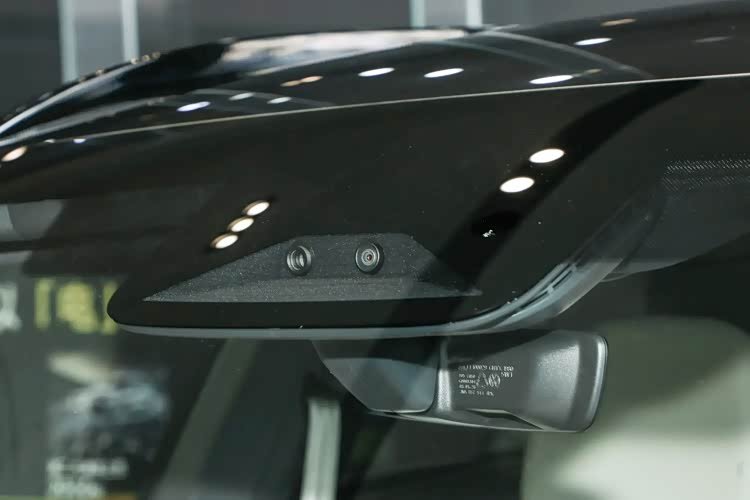
The assisted driving system uses XPeng's VLA end-to-end large model. In terms of hardware, it is equipped with two Turing chips, with total computing power of 1500TOPS. The whole vehicle has 26 perception hardware units, including 11 cameras, 3 millimeter-wave radars, and 12 ultrasonic radars.
In actual experience, the performance of highway NOA and city NOA is relatively stable, with smooth lane changes and moderate following distance. One detail is worth mentioning—during assisted driving, you can lightly turn the steering wheel to intervene at any time, and the system will cooperate with you to complete the action rather than directly exiting. This concept of "human-machine shared driving" is better for both safety and continuity of experience.
Now let me talk about the areas where there is more controversy
First, the lower trim doesn't have a HUD head-up display. This is indeed a fact. The HUD is standard on the mid and high trims, but not on the entry version. If you rely heavily on the HUD to see speed and navigation information, then you may need to consider stepping up to the mid trim.
Second, screen size. The 14.96-inch dual connected screen isn't small in its class, but it's true that some competitors have reached 15.6 inches or even larger. However, this screen's resolution is 2.4K, and the display effect is very delicate. As for screen size, I think whether it's enough or bigger depends on each person's feelings.
Third, air suspension. The top-trim Max comes standard with dual-chamber air suspension and DCC, but the Pure and Ultra require a 25,000 yuan optional package. If you particularly value chassis quality, you either go directly for the top trim or pay for the option.
Fourth, the rear cup holders don't have limiters. This small detail has indeed been mentioned by some car owners. It's not a big problem, but it shows that some trade-offs were indeed made in certain details.
What is the logic behind these trade-offs?
My personal understanding is that the ID.UNYX 08 spends more cost on the "invisible places."
The first is the chassis. The entire lineup comes standard with front double-wishbone and rear five-link, and the entire lineup comes standard with Brembo four-piston calipers. These hardware costs are not low, but ordinary consumers "can't see" them in the showroom. Only by driving can you feel the difference.
The second is the three-electric system. The entire lineup has an 800V platform and CATL batteries, which is real cost. The fact that energy consumption can reach a relatively low level in its class shows that the efficiency of the entire three-electric system is indeed good.
Then there's the assisted driving hardware. Dual Turing chips with 1500TOPS computing power are standard across the entire lineup. This means that even if you buy the entry version, the assisted driving capability is the same as the high trim. This idea of "entry trim equals high configuration" is indeed rare among traditional joint-venture brands.
Finally, the cockpit chip. Qualcomm 8295P is standard across the entire lineup. Something used every day like infotainment smoothness hasn't been discounted just because it's a lower trim.
To put it plainly, this is a product positioning choice—whether to spend cost on places you can see at a glance, like the HUD and large screens, or on the chassis, three-electric system, and chips, which are more core to daily driving. There is no absolute right or wrong between the two; it just depends on which better fits your car-usage habits.
How to choose among the three versions?
Pure version at 229,900 yuan: 630km range, basic configuration is sufficient. If you mainly commute in the city and don't care much about the HUD or air suspension, this version actually has quite high cost-effectiveness. It has the standard 800V platform, assisted driving, and chassis hardware across the lineup.
Ultra version at 249,900 yuan: for 20,000 yuan more, you get a 95kWh large battery, 730km range, and also fill in quite a few comfort configurations. If you often drive long distances, this version should be the more practical one among the three.
Max version at 289,900 yuan: the top trim, four-wheel drive, 370kW, 4.9-second acceleration, standard dual-chamber air suspension and DCC. Suitable for friends who have higher requirements for driving quality and also sufficient budget.
What kind of person is it suitable for?
If you buy a car mainly for daily commuting and family use, value usage cost and driving quality, and plan to keep it long term (more than 5 years), then the ID.UNYX 08's configuration trade-off logic is suitable for you. Solid chassis, low energy consumption, large space, and fast charging—these are advantages you can truly feel in long-term use.
But if you care a lot about "visible" configurations like the HUD and screen size, or plan to change cars within 3 years, then you may need to compare other options again.
A few final words
The overall feeling the ID.UNYX 08 gave me is—Volkswagen has indeed put aside some of its airs this time. With a starting price of 229,900 yuan, standard 800V across the lineup, standard dual Turing chips across the lineup, and standard front double-wishbone and rear five-link across the lineup, these configurations would have been unimaginable on a Volkswagen car two years ago. Currently there are still certain discounts at the dealership level, with dealer quotes starting from 209,900 yuan (for specific discount details, please consult your local dealer), further lowering the threshold to entry.
But it's not perfect either. The lower trim doesn't have a HUD, the screen isn't especially large, and the air suspension requires an optional package or stepping up to the top trim—these are all objectively existing trade-offs.
The key is just whether you can accept these trade-offs.
What do you think? Do you value "visible configurations" more, or care more about "invisible costs"? Feel free to share your views in the comments section.


