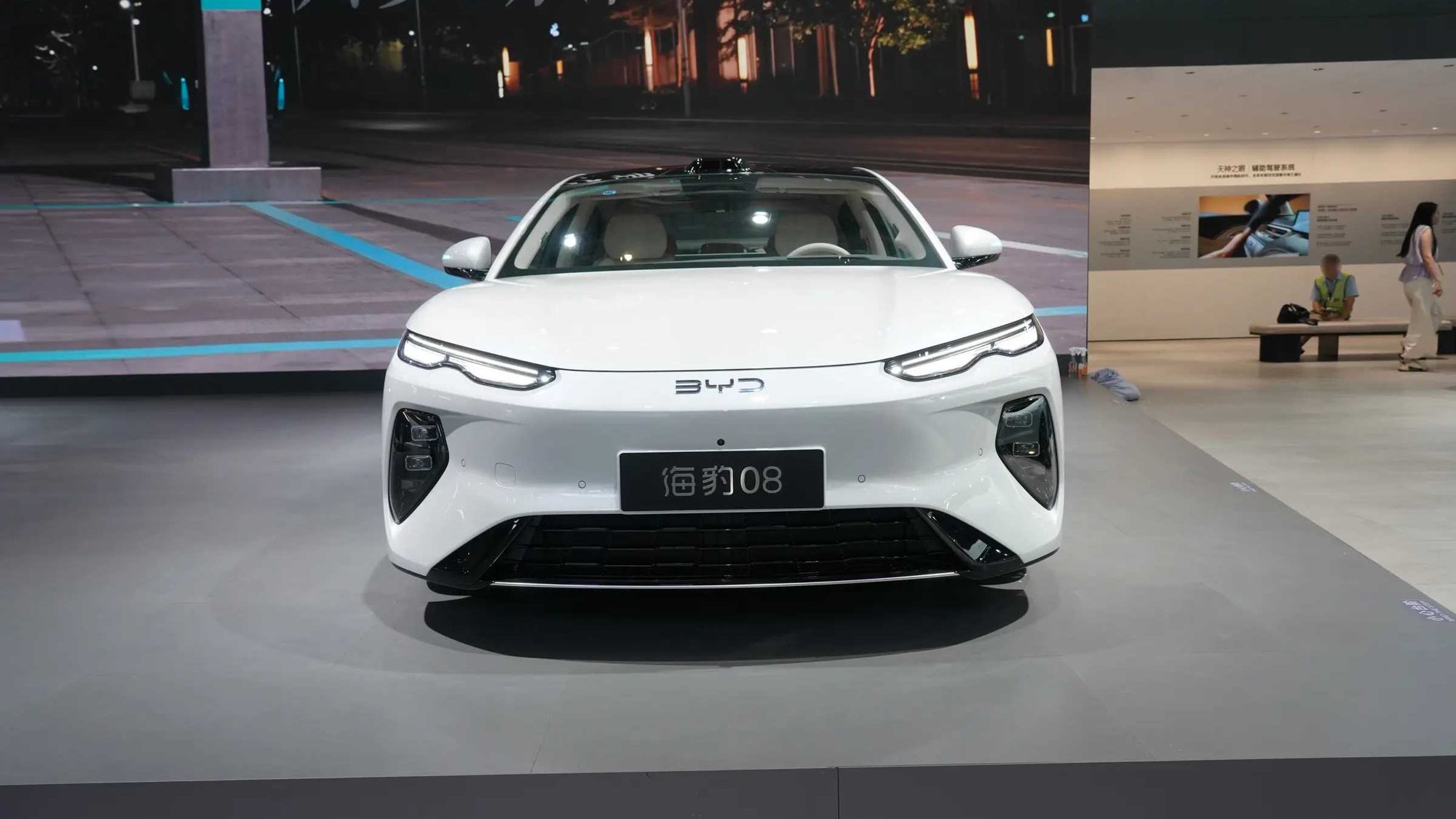
The day the Seal 08 hit the market, the moment the price came out, the comment section exploded. All the rumors circulating online before had said this car was positioned as a flagship, expected to be in the 250,000 to 300,000 range. But BYD went straight to a starting price of 196,900, at least thirty to fifty thousand lower than most people's psychological expectations.
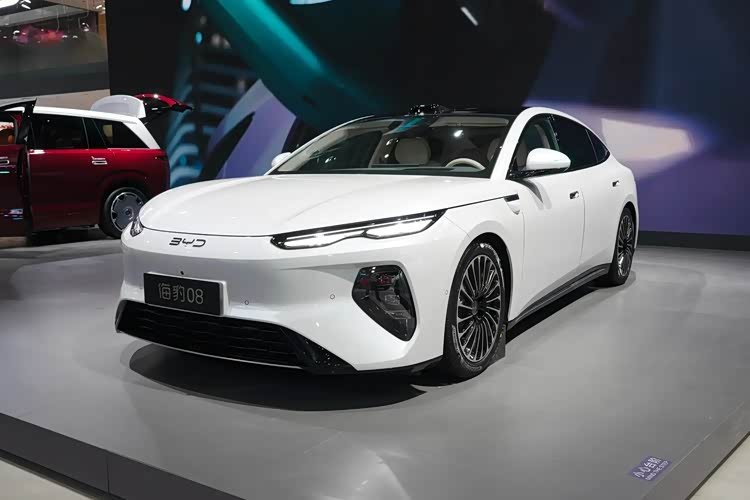
What do you get for 196,900? Rear-wheel steering standard across the entire lineup, with a turning radius of only 4.95 meters; God's Eye B assisted driving laser version standard across the entire lineup, with lidar regardless of trim level; 800V flash charging platform standard across the entire lineup, adding about 400 kilometers of range in 5 minutes. If your budget stretches up to the flagship trim, there's also the Yunian-A closed dual-chamber air suspension. If you'd told me a year ago that this spec sheet could be had for just over 200,000, I'd guess a lot of people would think I was joking.
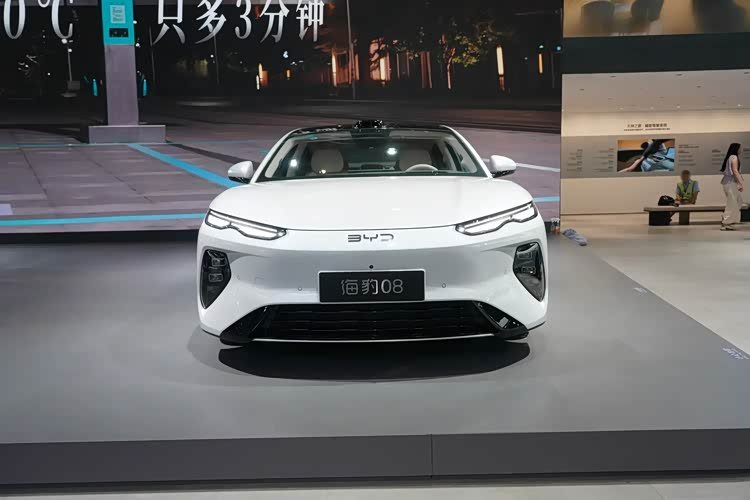
But the reaction in the comment section was especially interesting. Half the people were shouting "this price is amazing, the specs are stacked," while the other half were saying "what's the use of high specs, BYD's brand can't support this price point, for a few tens of thousands more you could get a BBA and have more face." To be honest, both voices make sense, and both have their own logic. Today let's not pile on the specs — you can find a spec sheet with a quick search anywhere — let's talk from a different angle: whether the Seal 08's product strength can actually justify this price, and when it comes to the multiple-choice question of "choose specs or choose brand," how different people should actually approach it.
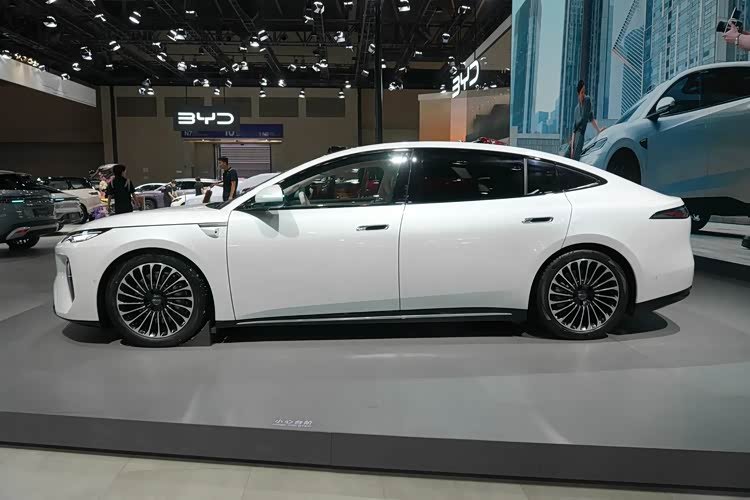
First, product strength. A lot of people probably don't have an intuitive sense of just how much the Seal 08 gives you at just over 200,000. Let me pull out the core specs, and everyone can compare them with cars at the same price point.
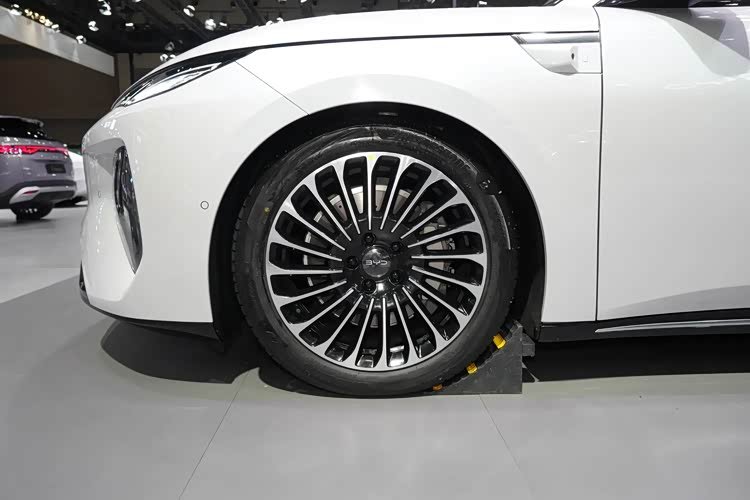
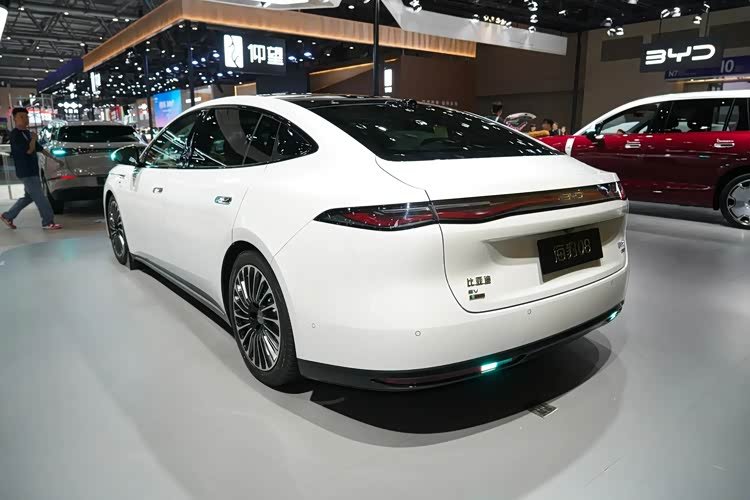
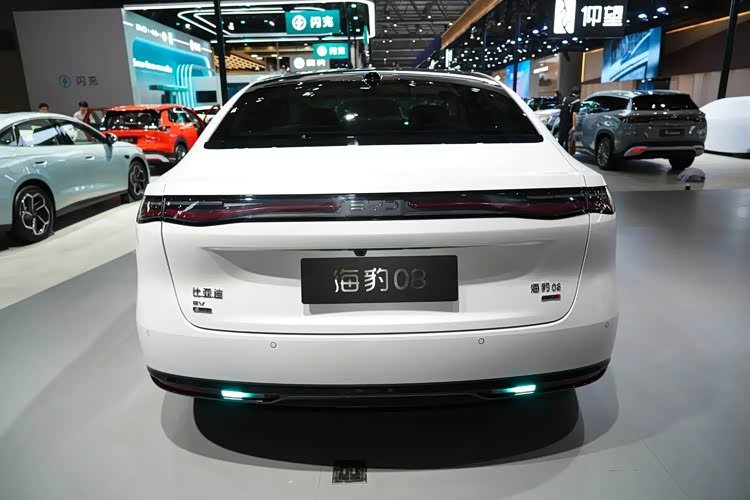
On the chassis side, rear-wheel steering is standard across the lineup, with the rear wheels able to steer plus or minus 7 degrees. You can hardly find a second car in the 200,000-class sedan segment with this feature. What core problem does it solve? The Seal 08 is 5,150 millimeters long with a wheelbase of 3,030 millimeters — this size basically goes up against the long-wheelbase BMW 5 Series and long-wheelbase Mercedes-Benz E-Class. The benefits of a big car are obvious: spacious rear seats, strong presence, but the drawbacks are also obvious — hard to park, clumsy to turn around, a pain to squeeze through narrow roads.
Rear-wheel steering directly brings this 5.1-meter big car's turning radius down to 4.95 meters. What does that mean? A 4.3-meter Golf has a turning radius of roughly just over 5 meters. In other words, this large sedan is more agile when turning around on narrow roads or maneuvering in underground garages than many compact cars. You can get through the narrow roads of an old residential compound in one turn, and you don't need to shuffle back and forth in a shopping mall garage — the improvement in experience is very intuitive.
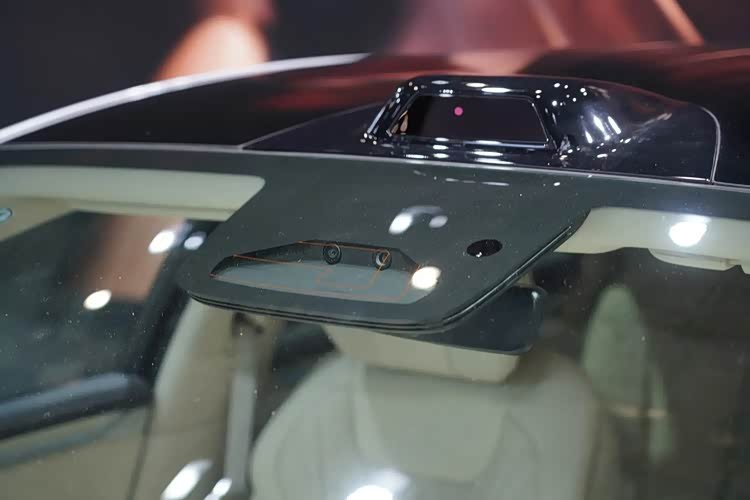
On the assisted driving side, the Seal 08 comes standard across the lineup with God's Eye B laser version, with lidar, supporting urban navigation assist and smart parking. The key point is the phrase "standard across the entire lineup" — whether you buy the 196,900 entry version or the 239,900 top trim, the assisted driving hardware is exactly the same. There's no situation where the lower trim only gets the basic version and only the higher trim gets the advanced version. And BYD has also made a commitment that's relatively rare in the industry — comprehensive backing for smart parking scenarios, and safety backing for urban navigation. Put simply, if this assisted driving system has a problem that causes an accident, the brand takes responsibility. In today's environment where many brands avoid talking about assisted driving accidents, being willing to say the word "backing" shows real confidence in their own technology.
Range and charging also deserve a separate discussion.
The Seal 08 comes standard across the lineup with a native 800V flash charging platform. At normal temperature, charging from 10% to 97% takes only 9 minutes, and in a minus 30 degree low-temperature environment it only takes 3 extra minutes. The pure electric version has a long range of 905 kilometers, while the plug-in hybrid version has 400 kilometers of pure electric range and 1,660 kilometers of combined range on a full tank and full charge.
There's a detail here that many people haven't noticed — flash charging is standard across the entire lineup, regardless of trim. Some brands make fast charging an exclusive selling point for higher trims, giving the entry version only slow charging. The Seal 08 is more generous on this point: the 196,900 entry version and the 239,900 top trim have the same charging efficiency.
For pure electric users, this charging speed combined with 905 kilometers of range means basically no need to worry about charging midway on intercity trips. If your charging conditions aren't convenient, the plug-in hybrid version is also worth a look — 400 kilometers of pure electric range for daily commuting, driving it like an EV, charging once or twice a week is enough, and for long trips you just refuel, with a combined range of 1,660 kilometers and zero anxiety.
Having covered these hard specs, let's talk about another dimension many people care about — the cabin experience.
After all, no matter how good the specs are, what you touch every day when driving is the seats, the interior, the things within reach. The Seal 08's cabin materials really put in some effort. Over 90% of the interior area is covered in soft materials, using eco-friendly materials, with very little new-car smell. The decorative panels use nacre trim from the same source as luxury goods, with every piece having a different grain. The audio is a 20-speaker Devialet system, and all four doors come standard with smart soft-close doors — a gentle push and release and they close automatically, so elderly people and children don't have to worry about getting their hands pinched when closing the door, and on rainy days you don't have to slam the door when carrying things into the car.
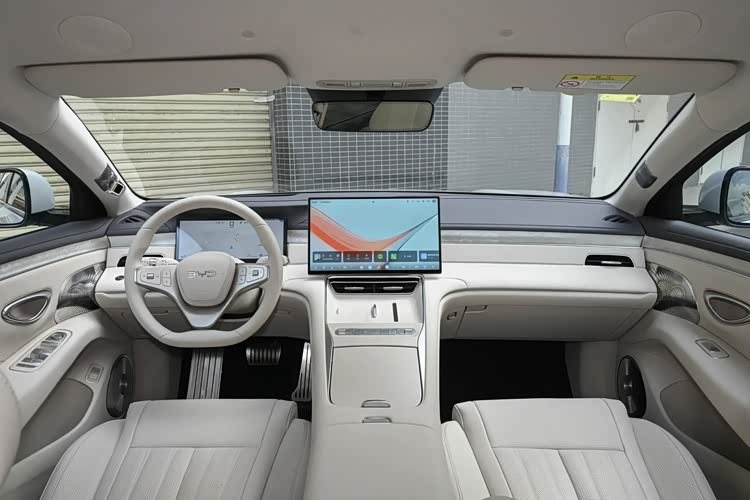
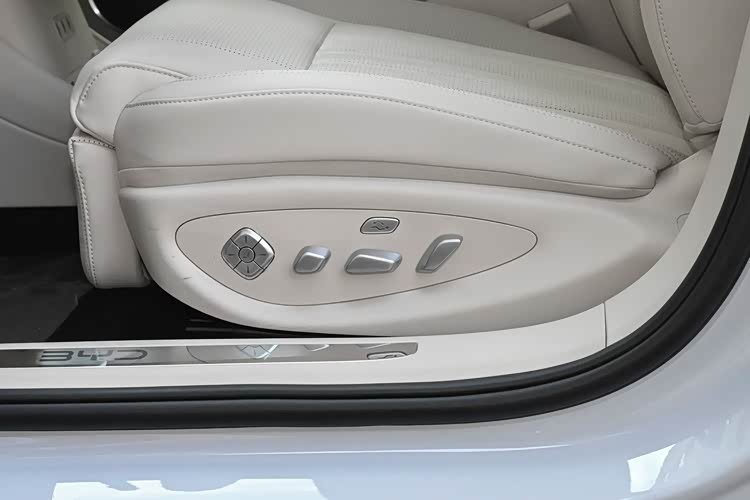
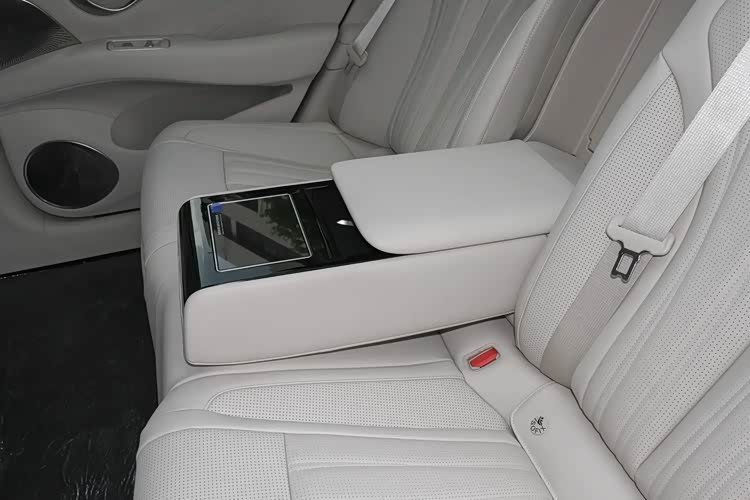
All seats throughout the car come standard with ventilation, heating, and massage — note, the whole car, not just the front row. The rear seats have power-adjustable backrests and power leg rests, and the flagship trim also has a folding small table behind the front passenger seat. The car has over 40 storage spaces designed throughout — the door panels have umbrella slots with drainage holes, there's a hidden automotive-grade tissue box, the rear has a ski pass-through for long items like fishing rods and tents, and the pure electric version adds a 160-liter power frunk. Each of these things on its own isn't earth-shattering, but put together, at the 196,900 price point, it's genuinely quite rare.
OK, now back to that controversy — "BYD's brand can't support this price point, for a few tens of thousands more you could get a BBA." Does this view actually hold up? I think it needs to be looked at on two levels.
On the first level, if you care especially about brand recognition in social situations when buying a car — for example, if you frequently need business entertainment, if clients judge your strength by what car you drive, or if you simply feel that driving a joint-venture luxury brand gives you more face — then BBA does have irreplaceable value. The Mercedes three-pointed star, the BMW blue-and-white badge — their social attributes in business settings are something BYD currently can't provide. This must be acknowledged; brand heritage isn't something that can be caught up with through one or two cars.
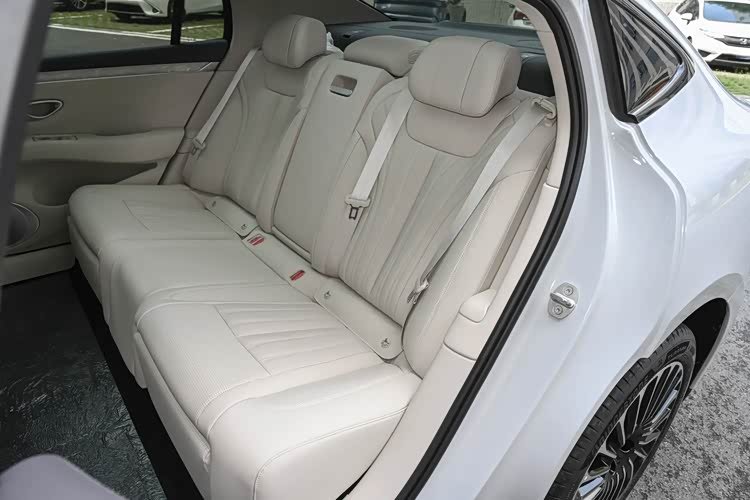
But on the second level, if you're buying a car mainly for family use — daily commuting, picking up and dropping off kids, taking the family out on weekends, occasionally doing a long drive — then you need to ask yourself: how much are you willing to pay for brand premium? A BBA mid-to-large sedan around 300,000 — air suspension is optional, advanced assisted driving features are optional or only available on the top trim, seat ventilation and heating aren't standard on many models, and rear power leg rests and small tables are even rarer. But these features, the Seal 08 gives you all of them in the 196,900 to 239,900 range, and many are standard across the lineup with no need to pay extra for options.
The few tens of thousands in between buys you the social attribute that comes with a car badge. If you think this social attribute is useful to you, then that money is well spent; if you usually just drive for family errands and this social attribute isn't that important to you, then saving that money buys you a configuration experience you can genuinely feel every day.
So the essence of this multiple-choice question isn't "who's better or worse," but "where do you spend your money." It's like buying a phone — some people are willing to spend over ten thousand on an iPhone because of the brand and ecosystem; others think domestic flagships have higher specs and more practical prices. Neither choice is wrong; it depends on your own needs and priorities.
There's also an angle many people haven't thought of — resale value. Traditional luxury brands have high resale value; that's a fact. But the resale value logic for new energy vehicles is a bit different from fuel cars. After three years, a BBA fuel car is indeed worth more than a same-priced used new energy car, but the thirty to fifty thousand in brand premium you paid at the moment of purchase — can you get all of it back when you sell? Most likely not. So rather than agonizing over selling for a few thousand more after three years, think about your daily driving experience during those three years — are the seats comfortable, are the features sufficient, is charging convenient — these are the things you truly feel every day.
Finally, let me share my own view.
The Seal 08's pricing this time is indeed ruthless — starting at 196,900 and giving you rear-wheel steering, lidar-assisted driving, flash charging, and all these core features, without pulling the "entry version is stripped bare, you need the high trim to experience the good stuff" trick. From a product strength perspective, it genuinely offers a configuration density in the 200,000 class that exceeds this price point. But on the brand power side, BYD is indeed still in the process of building recognition in the 200,000-class sedan market — many people's impression of BYD is still stuck at the hundred-thousand-something family car stage, and jumping straight to a mid-to-large flagship sedan takes time to digest.
A car, in the end, has no absolute good or bad — only whether it suits your own use scenario. If your budget is around 200,000, mainly for family use, and you value configuration experience and daily convenience, the Seal 08 is indeed worth going to a store to experience in person. If you have many business needs and brand recognition matters a lot to you, traditional luxury brands are still a safe choice.
I'd suggest friends who are torn go test drive both sides — sit in the Seal 08's rear seat and feel the space and leg rests, then go to a BBA store and compare the spec sheets — many times, what your body feels and the spec sheet comparison are more useful than hearing others say ten thousand words. What do you all think? Regarding the Seal 08's pricing, is configuration more important or brand more important? Let's chat in the comments.


