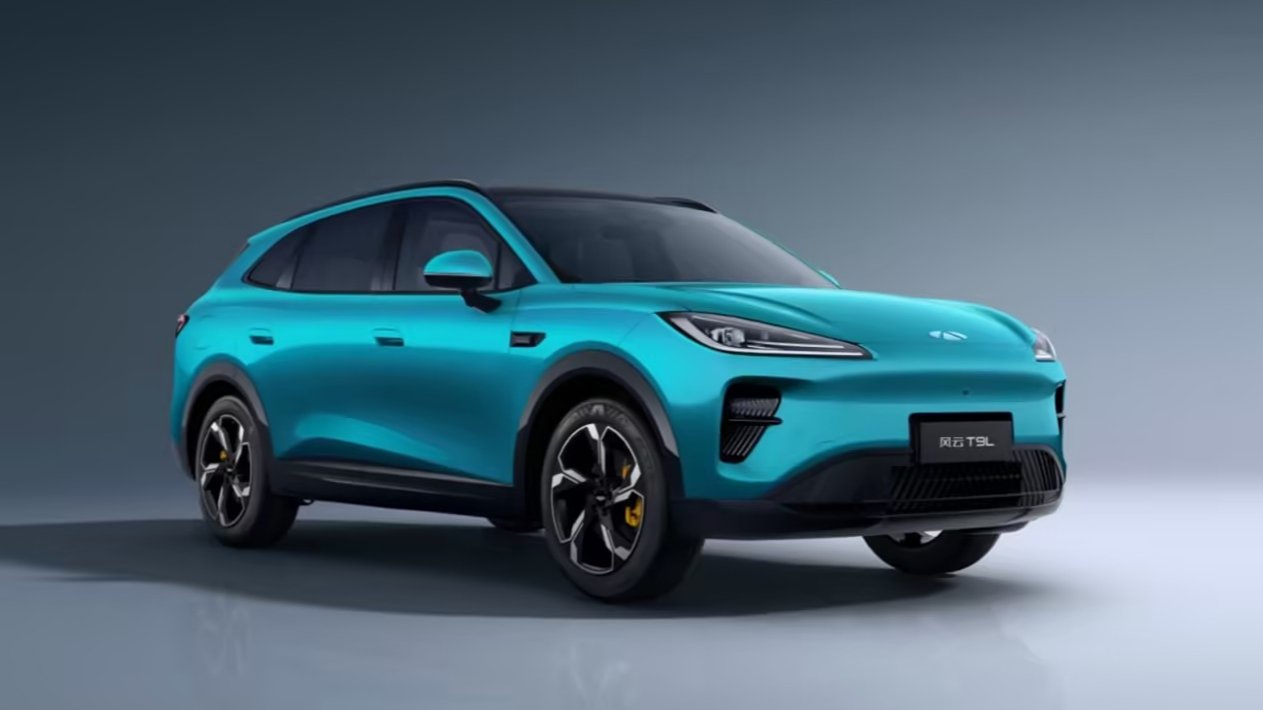
On March 25, Chery's "New Fengyun, Riding the Wind Upward" Fengyun Night and Fengyun T9L presale launch event was held in Wuhu. As an important anchor of Chery's new energy strategy, the Fengyun brand brought the large five-seat SUV Fengyun T9L, with a presale price starting at 139,900 yuan. It did not stop its narrative at familiar competitions such as "larger parameters, faster acceleration," but instead used four keywords—"Big, Beautiful, Super, Enjoy"—to try to establish a new value benchmark in the 200,000-yuan-class family SUV market.
Today's China new energy SUV market is being pushed to the extreme by homogenization: range, 0-100 acceleration, screen size, chip models—everyone chases one another, yet the gaps are increasingly difficult for ordinary families to truly perceive. Fengyun T9L's approach feels more like choosing a different question to answer—rather than continuing to compete over single-point metrics, it is better to break down, complete, and balance the real needs of family users across different scenarios, letting "easy to use" prevail over "good-looking data."
Space is Fengyun T9L's most intuitive bargaining chip. Its length, width, and height are 4870mm/1930mm/1710mm, with a wheelbase of 2920mm, dimensions that can be considered imposing within its class. Officially cited second-row legroom is 1037mm, knee room is 211mm, and the trunk's regular volume is 573L, expandable to 1597L when the second row is folded. The purpose of this combination is clear: on a B-segment body positioning, deliver a riding and loading experience close to C-segment, turning a family's "can sit, can load, can lie down" into a perceptible advantage.
What is more interesting is how the cabin handles "comfort for all occupants." The front row features dual zero-gravity seats, with both driver and passenger seats supporting 16-way power adjustment and offering ventilation, heating, and massage; the second row is not treated as a "make-do zone" either, and is likewise given power adjustment plus ventilation and heating. Both front and rear rows also support a "big bed mode," enabling a flat-lying space of over 1.8 meters. What it conveys is not "piling on luxury," but "equal experience": when a family travels, comfort should not favor only the driver's seat or the first row.

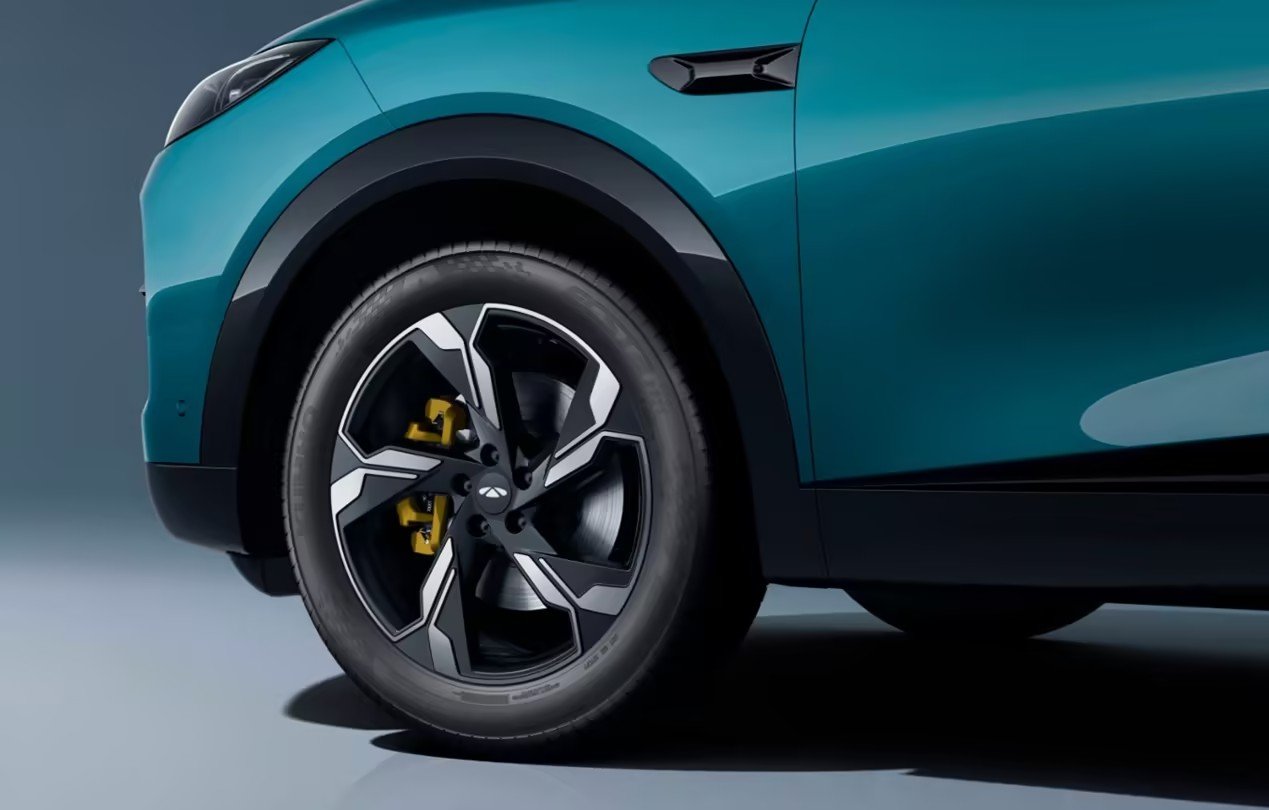
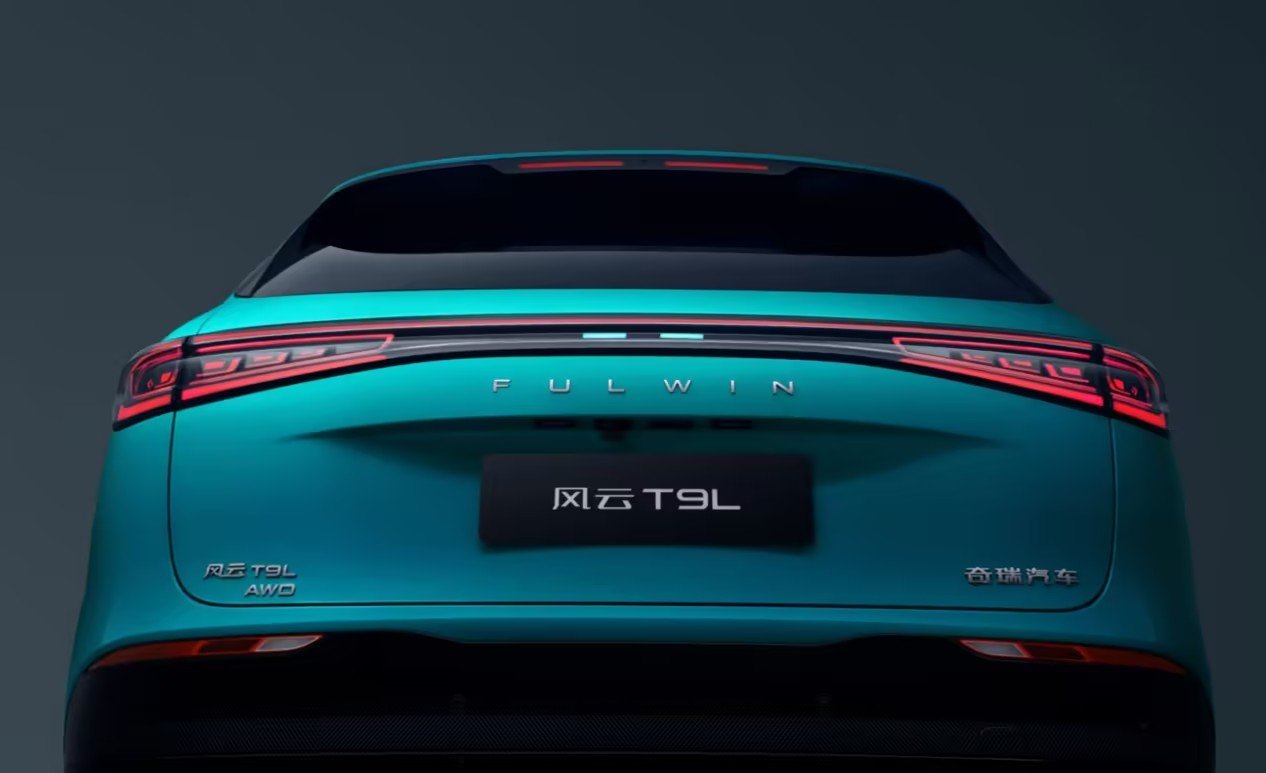
In design, Fengyun T9L attempts to build recognition through original Eastern aesthetics. It proposes the "Eastern Book Rhyme" design language, created by a team led by a former Mercedes-Benz design director, with an average age of about 30, extracting visual symbols from ink-wash calligraphy: dot-ink headlights, silver-hook waistline, mountain-shadow layered mirrors, and ink-wash long-rainbow taillights, forming a relatively complete vocabulary system. In terms of color, it jointly developed the exclusive "Mingsha Cui" body color with the Dunhuang Academy, adopting an 8-layer paint process, targeted liquid metal technology, and double-layer nano-ceramic clear coat, and claims a gloss retention rate of up to 85% over 15 years. For the interior, three color schemes—Warm Glow Golden Orange, Ink-Wash Clear Blue, and Aurora Purple Realm—are extracted from celebrated paintings, allowing "Eastern imagery" to go beyond the exterior and extend into the cabin space most frequently touched in daily life. For the Fengyun brand, this is also a proactive correction to shed the image of "only talking about technology, not understanding design." Whether it can be recognized by the market will ultimately have to be decided by consumers' aesthetic vote.
In terms of power, it continues Chery's strength in its "engineering foundation." Fengyun T9L is equipped with the Kunpeng Super Energy Electric Hybrid CDM6.0 system, fully self-developed, with core components including a 1.5T hybrid-specific engine and DHT260 hybrid transmission. The engine has a thermal efficiency of 45.79% and has won a "China Heart" Top Ten Engine award; the DHT260 transmission has a measured peak speed of 26,407rpm and a maximum mechanical efficiency of 98.5%. In terms of data performance, the system's combined power is 550kW, 0-100 acceleration is in the 5-second class, fuel consumption at low battery is 3.9L/100km, and combined range exceeds 2,000km. The official side also backed this up with a measured range test of 2,037km round trip from Wuhu to Beijing, covering multiple road conditions such as highways, national roads, and urban roads. The key point here is not how "fierce" any single data point is, but that it attempts to simultaneously satisfy the two ends hardest for family cars to balance: being economical and being fast—using software-hardware coordination to turn "choose one of two" into "want them all."

In its intelligent strategy, Fengyun T9L takes the route of "hardware redundancy + experience democratization." The cabin uses a 3nm automotive-grade chip, with CPU computing power of 280K DMIPS and NPU computing power of 54 TOPS, and the official side emphasizes that its performance exceeds mainstream 8295 chips. The logic of redundancy is to take a ten-year cycle into account: infotainment smoothness should not be "peak at purchase, laggy two years later," while also leaving enough margin for full-vehicle domain OTA.
In intelligent driving, Fengyun T9L will be equipped with the Falcon 700 advanced driver assistance system, adopting a one-stage end-to-end neural network architecture, paired with the Journey 6P chip with 560TOPS of computing power; the perception hardware includes 1 lidar, 3 millimeter-wave radars, 11 high-definition cameras, and 12 ultrasonic radars, with the goal of achieving map-free full-domain coverage across cities, highways, county towns, rural areas, and other full scenarios, and claiming end-to-end latency of no more than 160ms. The "experience equality" it emphasizes is essentially advancing the popularization of advanced intelligent configurations in the 200,000-yuan price band—whether it can become a true competitive advantage depends on whether users truly feel "more relaxed and more assured" in daily commuting and long-distance travel.
The backdrop for Fengyun T9L's debut is a clear acceleration in Chery's new energy pace. In 2025, Chery Group's new energy sales exceeded 900,000 units, a year-on-year increase of 55%, and since November 2025 its wholesale sales have ranked among the top three in China's new energy vehicle industry; the Fengyun brand's sales growth in 2025 exceeded 63.6% year on year, Fengyun A9L deliveries exceeded 10,000 for four consecutive months, and Fengyun T11 remained firmly in the TOP3 of the extended-range large SUV market. At the brand level, Chery swept five independent-brand first places in J.D. Power's annual assessment: new vehicle quality, sales service satisfaction, after-sales service satisfaction, product appeal index, and vehicle dependability study; a cumulative 64 models have received global five-star safety ratings, the highest number among Chinese brands.
Returning to the product and strategy level, the Fengyun brand has already laid out the board: from A0-class to mid-to-large, from sedans to SUVs, from hybrids to pure electrics, with a three-year plan to launch 12 all-new products. As a core model among them, Fengyun T9L's task is not only to "sell well," but also to establish Fengyun's recognition in the 200,000-yuan-class SUV market.
The signals it sends are also very clear: first, Chinese brands are shifting from competing over single-point metrics to systematically responding to full-scenario family needs, and "Big, Beautiful, Super, Enjoy" feels more like a solution set than a parameter list; second, original design is becoming an important entry point for differentiation, and the Dunhuang collaboration and Eastern Book Rhyme are an attempt to move from "following" to "forming one's own system"; third, full-stack self-development is becoming a competitive barrier, and self-developed and self-controlled capabilities such as Kunpeng CDM6.0, Falcon 700, and Lingxi Smart Cabin 2.0 determine cost, iteration, and the right to define; fourth, whether "luxury equality" can hold up in the long term ultimately depends on scale effects and supply chain control—when zero-gravity seats, 23-speaker audio, and 3nm chips are brought down to a price starting at 139,900 yuan, the appeal is strong, but it also tests system capabilities even more.
Overall, the launch of Fengyun T9L is both a key addition to the Fengyun product matrix and a more concrete implementation of "technology equality and luxury equality." Whether it can break through in the fiercely competitive new energy SUV market will ultimately still come back to the simplest judgment: in real car-use scenarios, are family users willing to pay for this kind of "full-scenario, more balanced, more original" value.


