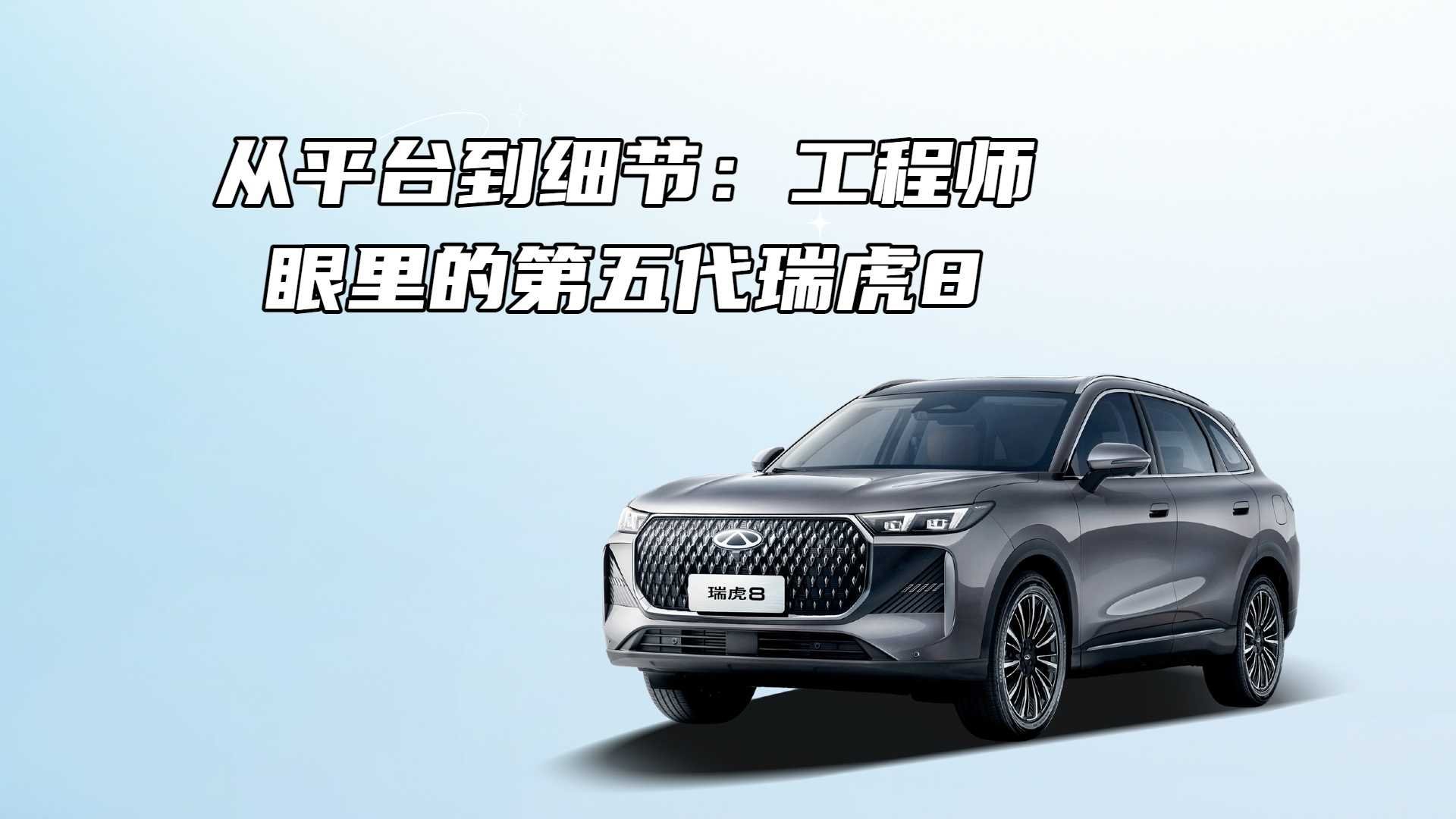
In marketing terms, the fifth-generation Tiggo 8 is a family SUV with "all-new design, upgraded dimensions, and refreshed intelligence."
But if you shift your perspective from the show floor to the proving ground and pilot workshop, the car's real changes are more reflected in the platform, body structure, and overall vehicle calibration logic.

From an engineer's standpoint, this generation of the Tiggo 8 can be seen as the superposition of three things:
a high-intensity "mid-cycle transformation" of the existing platform;
re-modeling for family usage scenarios;
and a technical consolidation of the "last few generations of products" in the combustion era.
1. Body engineering behind dimensions and proportions
Let's put the data out first:
Body dimensions: 4749×1880×1710 mm
Wheelbase: 2825 mm
This set of dimensions explains two things:
First, the vehicle as a whole still has the proportions of a standard mid-size SUV.
A wheelbase of 2825 mm falls into a very delicate range—enough to support second-row legroom, while not making the turning radius and vehicle weight too unattractive. From a structural perspective, this wheelbase can also control the length of the longitudinal beams and reduce the body's sense of "twisting and pulling" under aggressive conditions.
Second, the engineers made a compromise among "space/stiffness/cost."
For a family SUV in the 100,000-yuan class, stretching the vehicle length beyond 4.8 meters can easily produce a set of impressive promotional numbers, but what follows is a systematic recalculation of torsional rigidity, bending stiffness, and rear-body vibration modes—that would no longer be the workload of a "mid-cycle facelift."
So it can be seen that the strategy of the fifth-generation Tiggo 8 is:
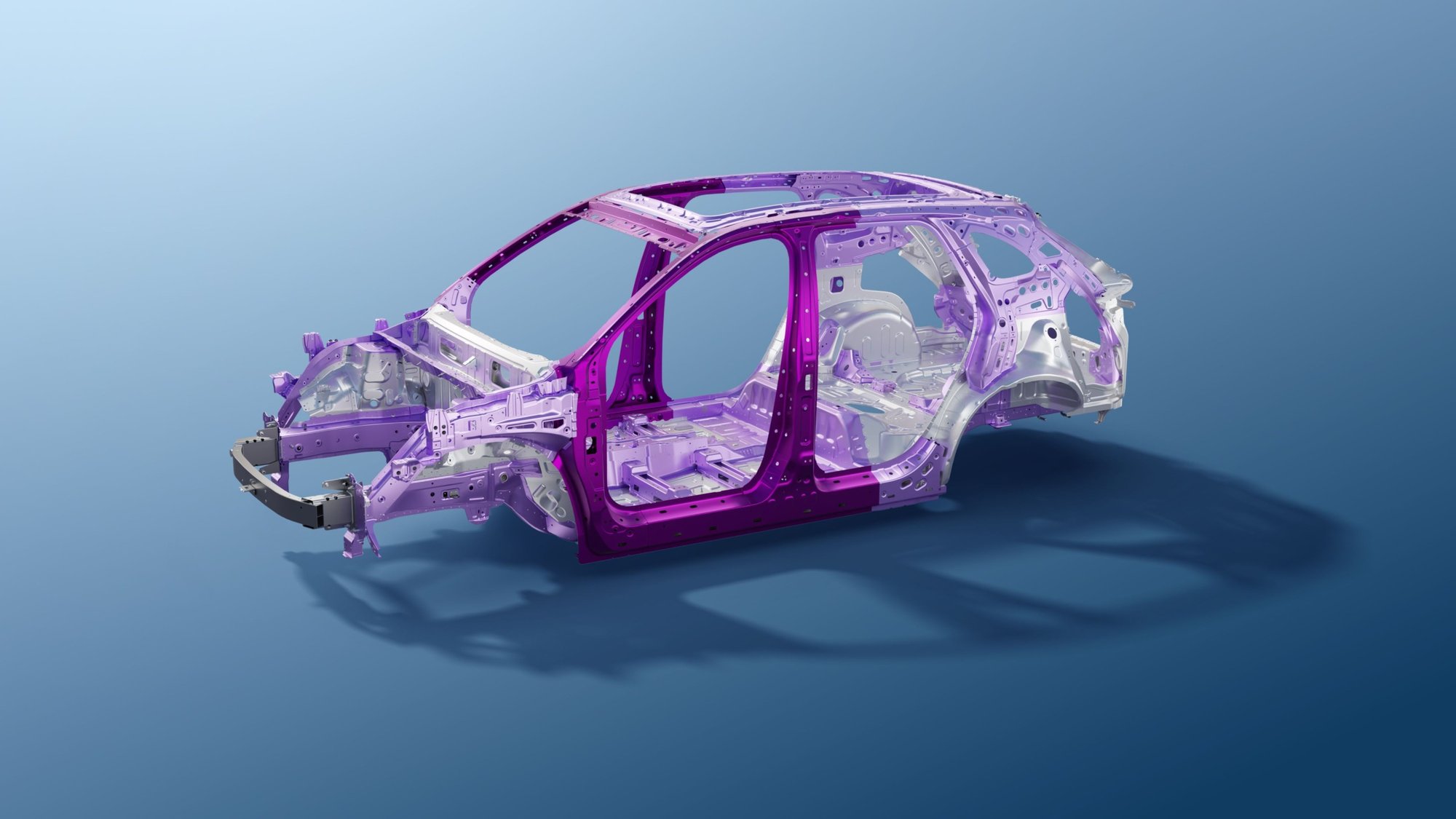
on the basis of the original platform, through local structural reinforcement + body-in-white material optimization, to strengthen the parts users can truly perceive, such as:
the proportion of local high-strength steel in the B-pillars and rocker beams;
the connection structure between the suspension towers and the longitudinal beams;
the arrangement of reinforcements in the tailgate opening area.
This is also a fairly typical approach for a mid-cycle transformation: do not overturn everything, but squeeze structural efficiency higher.
2. Two front fascias, not just a styling issue
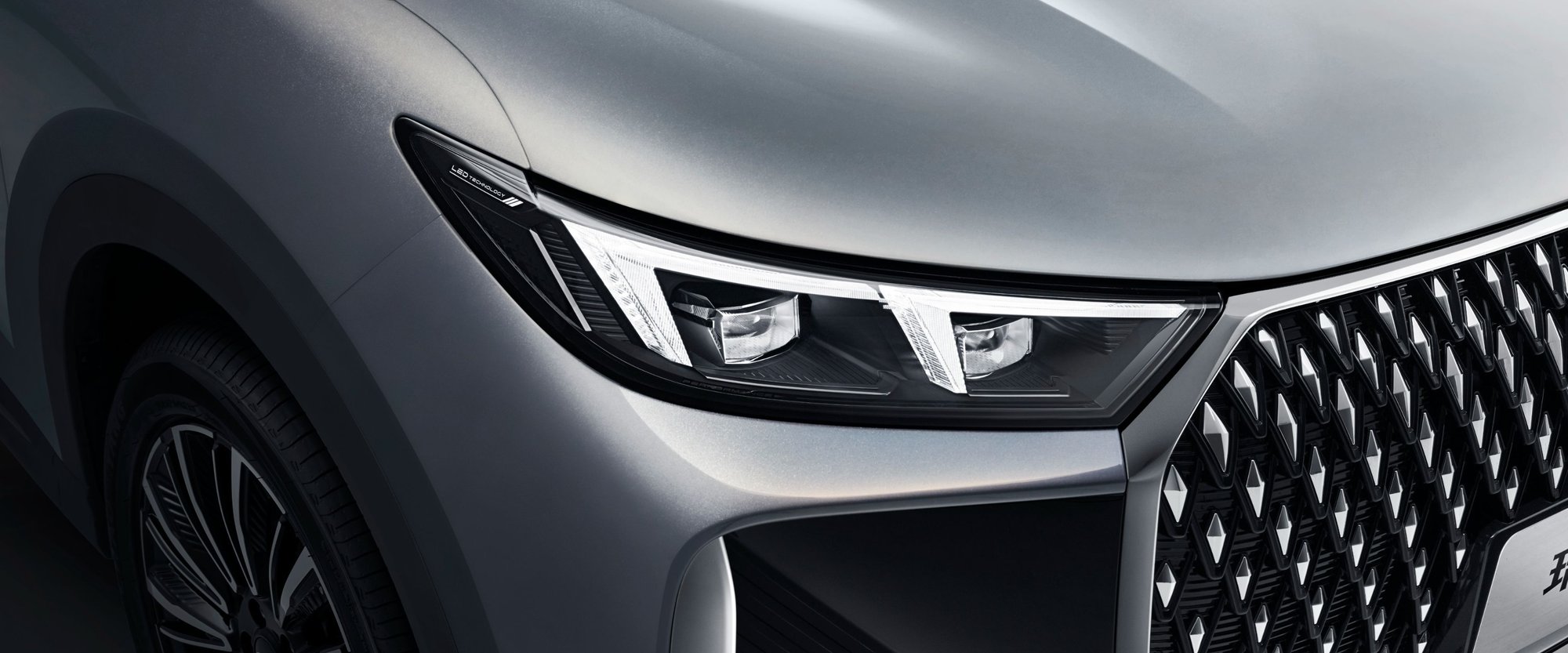
This generation offers two front fascias:
one with a more sedate polygonal grille + dot-matrix chrome;
one with a more aggressive honeycomb grille.
From a styling perspective, this is a selling point prepared for the marketing department.
From an engineering perspective, what it involves is cooling airflow and aerodynamic drag management.
The opening area and structure of the front grille directly affect:
the frontal area of the radiator, water tank, and intercooler;
the pressure loss of the overall engine bay ducting;
the vehicle's drag coefficient under high-speed conditions.
For engineers to make two front fascias, it is impossible to change only a few decorative lines. A more reasonable approach is, after the styling is frozen, to use CFD simulation to evaluate the differences in cooling capacity and aerodynamic drag among different grille versions, and then through:
local adjustment of internal guide plates and duct covers;
differences in the lower grille opening ratio;
calibration of active grille shutters (if equipped);
bring the performance of different front fascias back into the target range.
To users, this work is all "invisible," but when you are on a long downhill in summer or driving at high speed fully loaded with the air conditioning on, the engine not throwing a fit is exactly this pile of invisible work providing the safety margin.
3. Side and rear: the "quiet upgrade" of stiffness and NVH
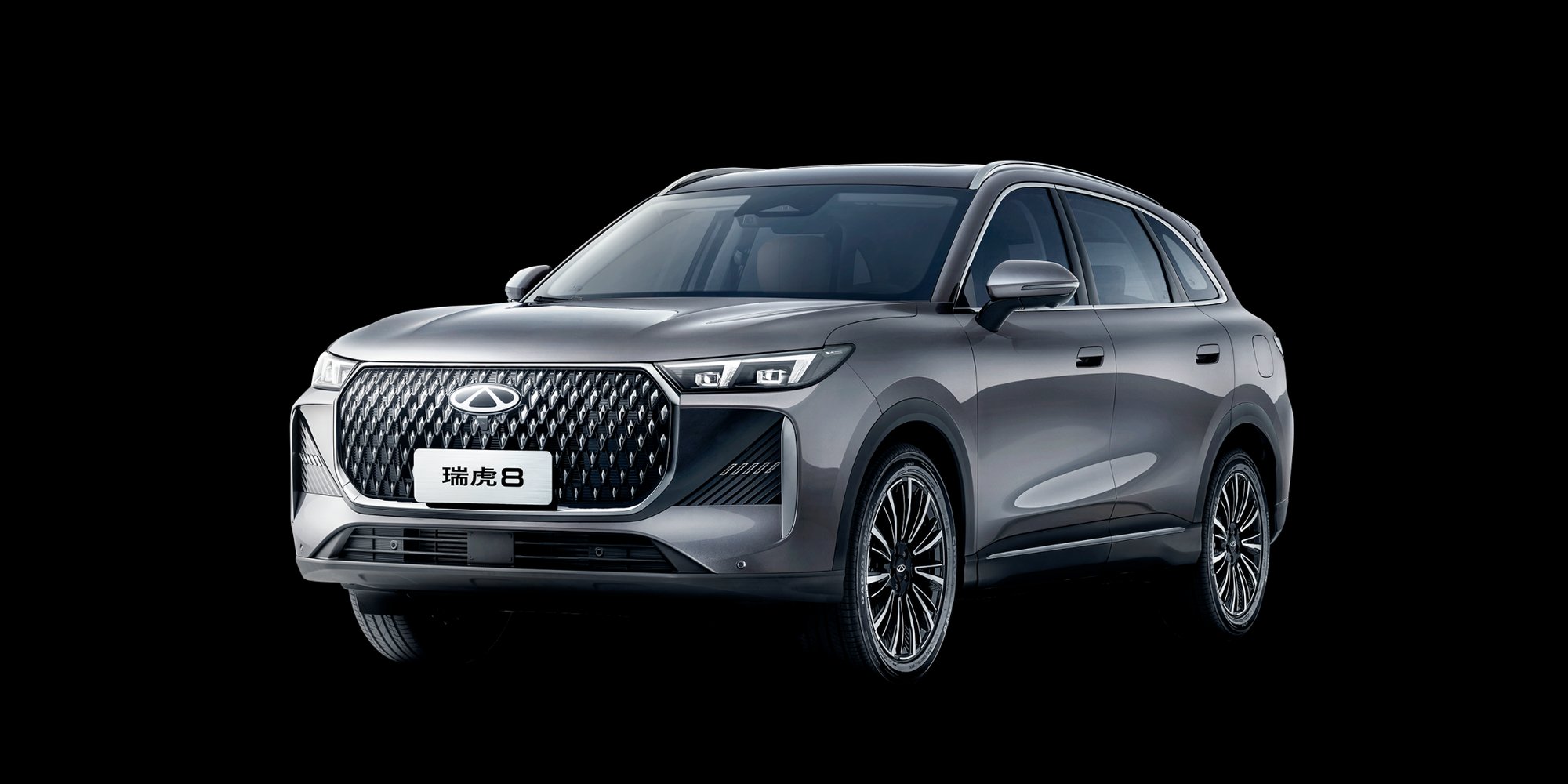
The straight body-side lines and slightly flared wheel arches are actually friendly designs from an engineering perspective—
straight character lines facilitate outer panel forming and tolerance control;
slightly bulging fenders reserve space for tire steering and jounce, avoiding interference under extreme compression conditions.
The through-type taillight at the rear looks like a "design trend," but in reality it also imposes requirements on sheet metal openings, stamping processes, and tailgate stiffness:
a long light bar usually means a longer opening in the tailgate or rear panel;
to prevent excessive deformation of the tailgate under bumps and closing impact, reinforcements need to be added inside the tailgate, or higher-strength materials need to be used in the hinge area.
Such optimization is hard for users to see on a specification sheet, but after a car has been driven for three to five years, the reason the tailgate does not rattle or feel loose is precisely because these efforts were spent early on structure and NVH.
4. 1.6TGDI + 7DCT: calibration is the key to the experience
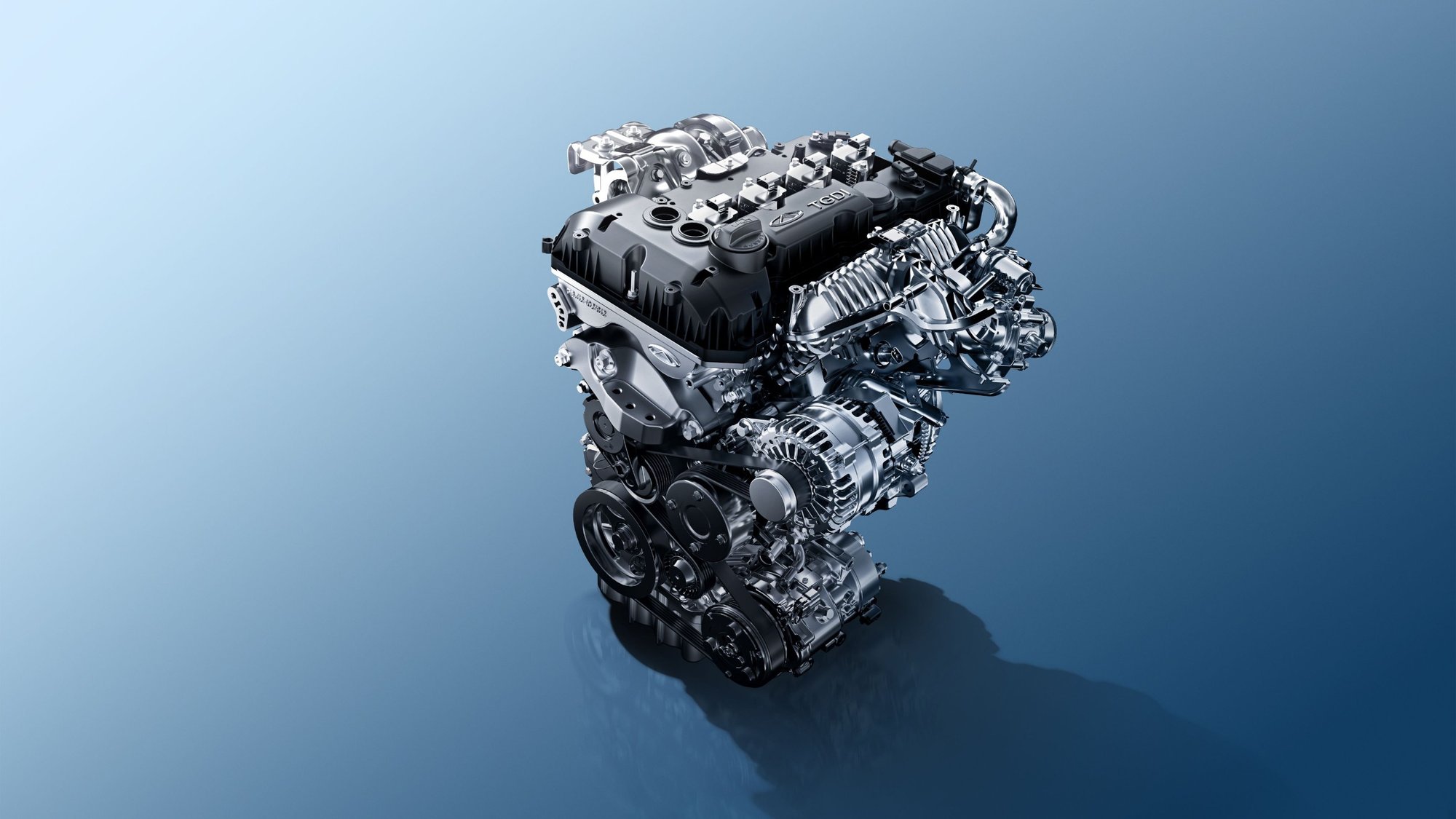
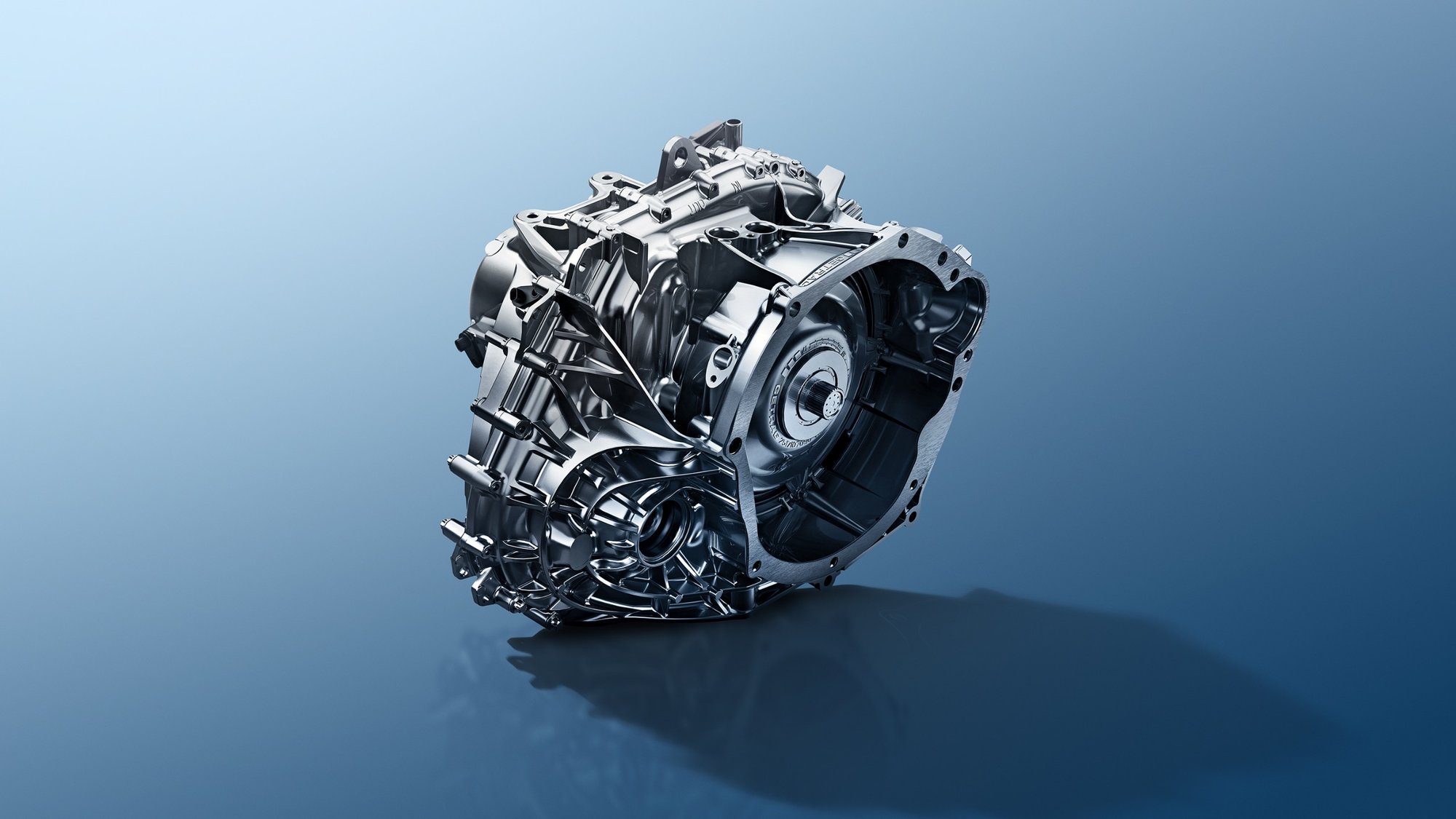
In terms of power, the fifth-generation Tiggo 8 uses the familiar Kunpeng 1.6TGDI engine, with a maximum power of 147 kW and peak torque of 310 N·m, matched to a 7-speed wet dual-clutch transmission.
From an engineer's perspective, the highlight of this powertrain is not "pretty parameters," but that it is a highly mature system with reusable calibration results. This means:
cold and hot start-stop, shift logic, and throttle response all have extensive real-vehicle calibration experience from previous generations;
torque coordination between the engine and transmission, and shift shock control, also have existing baseline calibrations that can be inherited.
In other words, the fifth-generation Tiggo 8 does not need to start from scratch to figure out "how to make this powertrain drive smoothly,"
the engineering team can devote more resources to:
smoothness of 1-2-3 gear shifts in low-speed urban following conditions;
downshift logic during high-speed cruising and mid-range re-acceleration;
transmission oil temperature management in hill-climbing/full-load scenarios.
For users, the numbers can translate into very concrete feelings:
in traffic, when shifting from 1st to 2nd and from 2nd to 1st, jerking and dragging are less likely to occur;
when overtaking at high speed, the transmission can promptly downshift from a high gear to the appropriate range, rather than "hesitating";
during long uphill drives or high-temperature conditions, the transmission will not frequently protect itself and lock gears due to overheating.
These experiences are not on the promotional pages, but they are all things the engineering department will write into KPIs down to one decimal place.
5. Chassis orientation: "load-bearing capability" based on family comfort
Although the official materials do not write the chassis structure as a major selling point, judging from the conventional layout of SUVs in this class, front MacPherson + rear multi-link is basically a reasonable inference.
Chassis tuning for a family SUV usually has to find a balance among three goals:
initial comfort: whether small bumps are filtered cleanly, and whether manhole covers and fine broken speed bumps hit the seats directly;
roll control: whether body roll is effectively suppressed during high-speed lane changes at full load;
load-bearing capability: when carrying the whole family and luggage on a long trip, the rear does not "sag."
The body dimensions of this generation of the fifth-generation Tiggo 8 have already reached more than 4.7 meters. From an engineering perspective, the suspension's spring stiffness and damper damping cannot be set like those of a small or compact SUV by "riding the limit of comfort." Instead, what replaces it is a typically mid-size family-car setting:
softer at low speed, absorbing fine road undulations;
at medium and high speed, through stabilizer bars and damping calibration, keeping roll within a psychologically comfortable range for occupants.
Coupled with a 2825 mm wheelbase, when the vehicle passes over continuous undulating roads, the phase difference between the front and rear axles is controlled in a relatively appropriate rhythm—you will not feel the body "nodding + tail-wagging" front to rear. This is the natural advantage of the chassis layout of a mid-to-large vehicle.
6. Interior, electrical architecture, and software: the invisible complexity
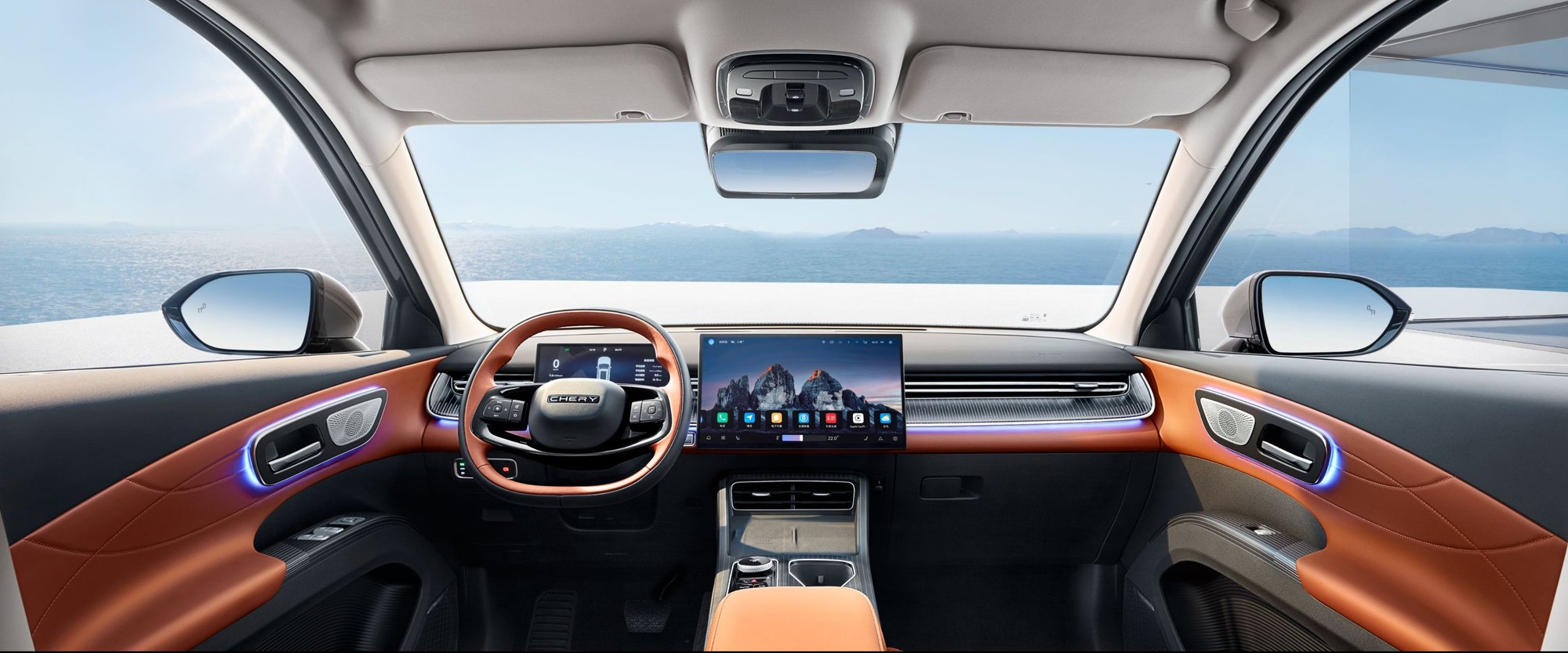
Two interior layouts, one with a horizontal dual-screen setup and one with a vertical large screen, mean from an electrical engineering perspective that the domain controllers and wiring harness layout behind them must be compatible with two front-cabin layouts.
For engineers, the difficulty is not "one more screen," but:
how to support two layouts without substantially increasing harness length and connector count;
how to ensure that under different screen solutions, both EMC (electromagnetic compatibility) and heat dissipation can pass validation;
how the software stack of voice, navigation, and smartphone connectivity maintains consistent response speed across the two UI layouts.
Especially now that voice interaction and smart cockpit experience are emphasized, this means:
there will be multiple microphone arrays in the cabin, requiring echo cancellation and noise suppression;
the vehicle's CAN/LIN and even Ethernet architecture must reserve bandwidth for subsequent OTA upgrades and feature expansion.
For users, all this work comes down to one simple feeling:
"It can hear you when you speak, it can keep up when you tap the screen, and two years later an upgrade will not make it lag like a PowerPoint slideshow."
But from an engineering perspective, this is the result of a large amount of simulation, test vehicles, and staring at logs late at night.

7. Engineering priorities from the perspective of a family car
If the fifth-generation Tiggo 8 is treated as an engineering project rather than a marketing product, its priority ranking would probably be like this:
Structure and durability: a mature platform, with guaranteed body stiffness and fatigue life. This is the foundation of all subsequent experiences;
Space and comfort: dimensions, seat layout, and chassis tuning directly correspond to family usage scenarios;
Powertrain calibration and thermal management: ensuring it will not fall short under real Chinese road conditions (congestion, high temperature, long slopes);
NVH optimization: making this car still quiet and tight after three to five years of use;
Smart cockpit and interaction: within budget, bringing the combustion-vehicle experience as close as possible to that of new energy vehicles.
Therefore, from an engineer's perspective, the fifth-generation Tiggo 8 is not meant to "show off muscles" on any single technical point, but rather, under limited cost and platform constraints, to make a mid-size SUV aimed at ordinary families as "balanced" as possible.
It has no dazzling track lap times, nor exaggerated electric-drive parameters, but every change made in the "underlying" areas of structure, safety, powertrain calibration, NVH, and electrical architecture will ultimately settle into a conclusion that looks very simple—
You can drive this car with peace of mind for many years.


