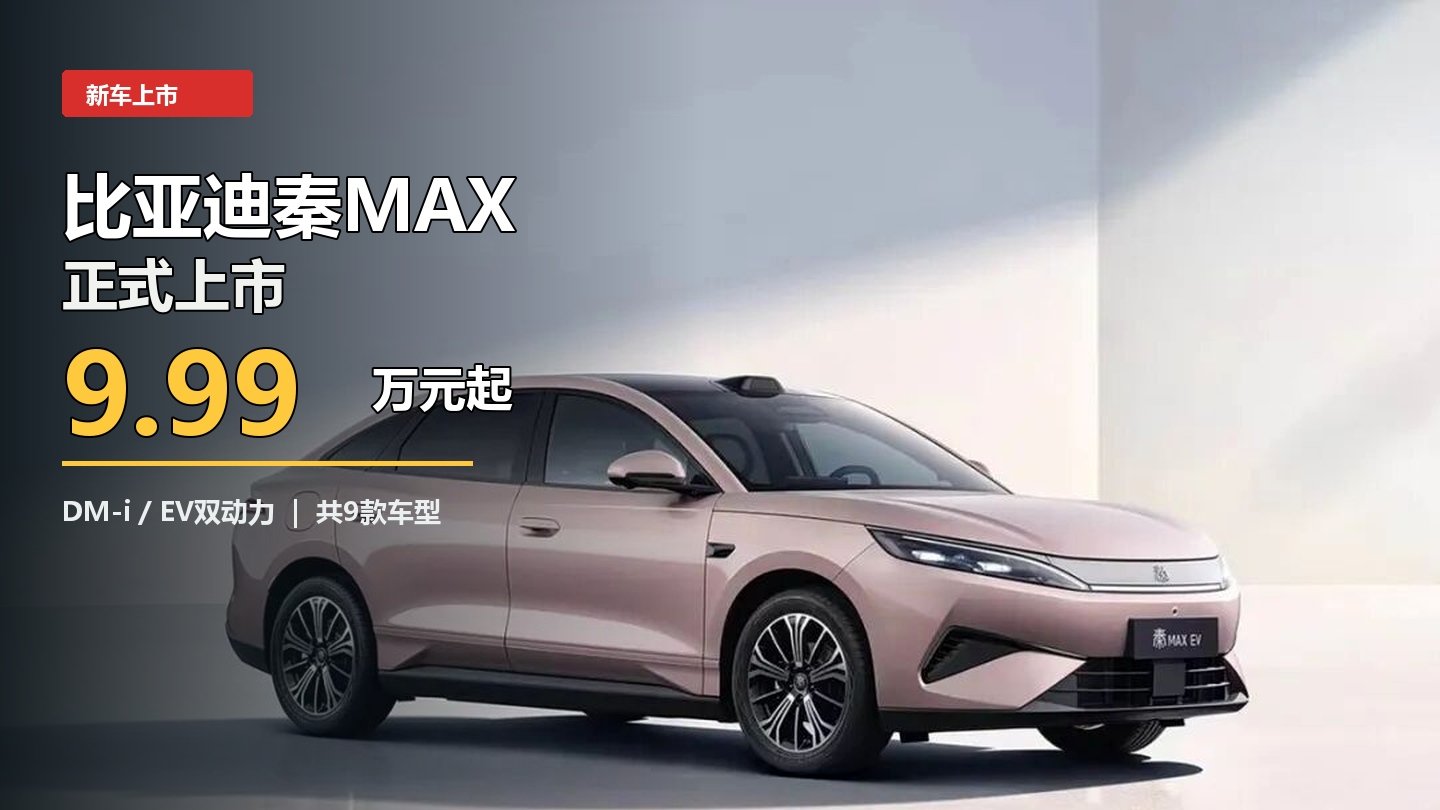
On August 13, the BYD Qin MAX was officially launched. The new car offers two powertrain options simultaneously, DM-i plug-in hybrid and EV pure electric, with a total of 9 models and an official guide price of 99,900 to 143,900 yuan. The four DM-i models are priced at 99,900 to 129,900 yuan, while the five pure electric versions are priced at 109,900 to 143,900 yuan. The Qin MAX is not a simple lengthened version of the Qin L: it extends the body length to 4866mm, raises the wheelbase to 2820mm, and brings 230/320km plug-in hybrid electric range, 530/630km pure electric range, rear-wheel drive, flash charging, and lidar-assisted driving into the mainstream family sedan price band. What is truly worth discussing is not just "buying a B-segment car for 99,900 yuan," but the completely different ways of using the car behind dual powertrains and nine versions.
The 99,900-yuan DM-i first solves commuting costs and long-distance anxiety
The Qin MAX DM-i uses a plug-in hybrid system composed of a 1.5L engine and a 175kW drive motor, offering two CLTC pure electric range options of 230km and 320km. Among them, the 230KM Leading Edition is priced at 99,900 yuan, already enough to cover several days of commuting for most users; the 320km version further extends the pure electric usage radius of the plug-in hybrid car. The officially announced maximum combined range with a full tank and full charge is 2,370km, with fuel consumption of 2.59L/100km when the battery is depleted.
The value of this set of parameters is not in challenging extreme numbers, but in changing the division of labor in car use: when fixed charging conditions are available, it can be driven as an electric car for daily use; for intercity travel and long trips during holidays, there is no need to plan the itinerary around charging stations. For families with multiple long trips each year and unstable charging conditions at home, DM-i remains the safer answer for the Qin MAX.
The pure electric version not only adds range, but also brings rear-wheel drive and faster charging
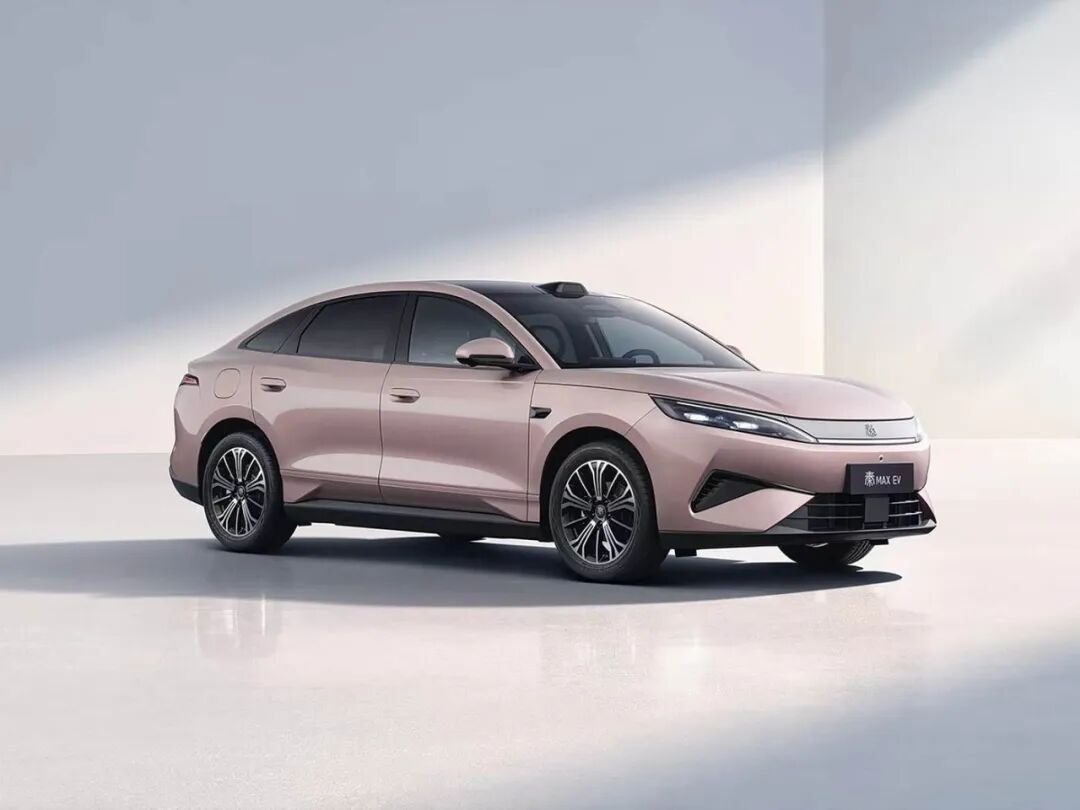
The Qin MAX EV offers two CLTC range options of 530km and 630km, adopting a rear-mounted motor and rear-wheel drive. The 120kW version serves daily efficiency, while the 240kW high-power version has peak torque exceeding 400N·m and enters the 5-second range for 0-100km/h acceleration. The 52.868kWh and 64.315kWh second-generation Blade Batteries correspond to different range versions.
Charging is the key point that sets this car apart from conventional family pure electric sedans. According to official figures, charging from 10% to 70% takes about 5 minutes, and from 10% to 97% takes about 9 minutes. What users really need to pay attention to is whether commonly used routes can reliably access high-power charging facilities; if home charging is convenient and charging along urban and highway routes is mature, the rear-wheel-drive experience and low usage cost of the EV version are more attractive.
A 4866mm body length is not the point; how the 2820mm wheelbase translates into space is
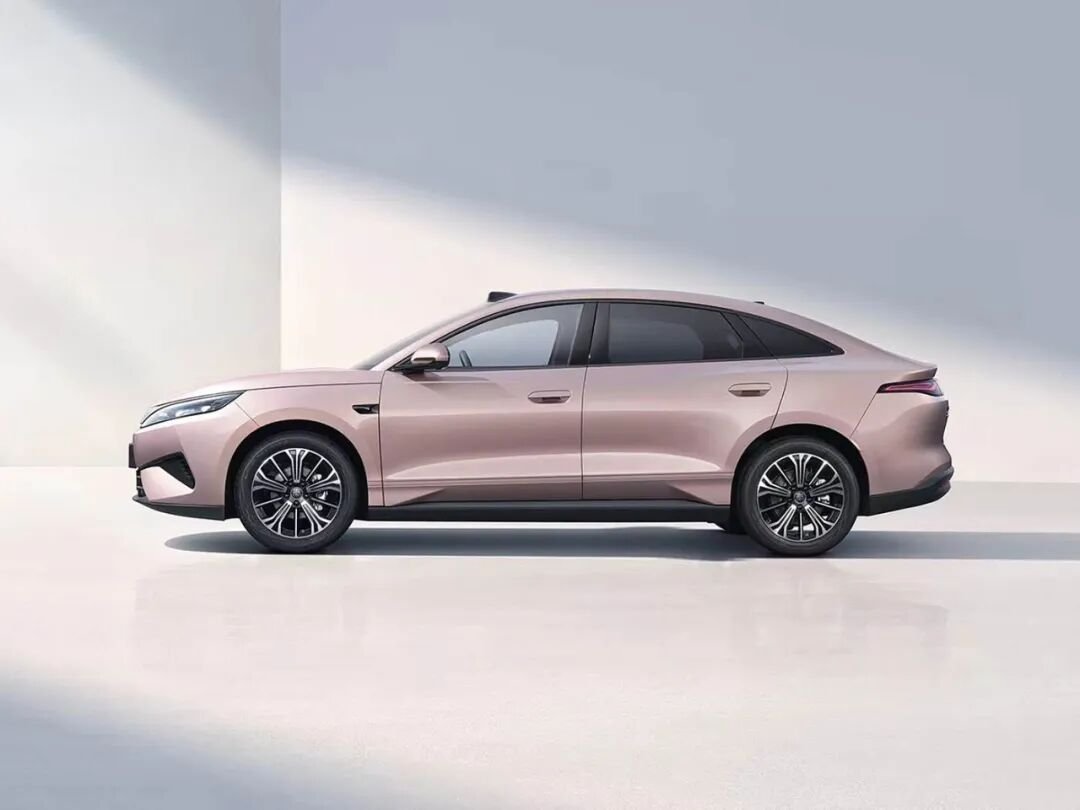
The Qin MAX measures 4866/1880/1495mm in length, width, and height, with a wheelbase of 2820mm. Compared with the Qin L, its body length and wheelbase are further increased, but it does not use an exaggerated body width to gain visual bulk, making it friendlier for urban parking spaces and narrow roads. The body adopts a fastback profile, and the rear headroom still needs to be experienced in person based on the height of family members.
The whole car has 27 storage spaces, the trunk has a regular volume of 523L, and the rear seats can be folded down to expand it to 1450L; the EV version also has a 115L front trunk. For strollers, camping gear, and luggage for multiple people, these quantifiable loading capabilities determine whether a family sedan is easy to use more than screen size does.
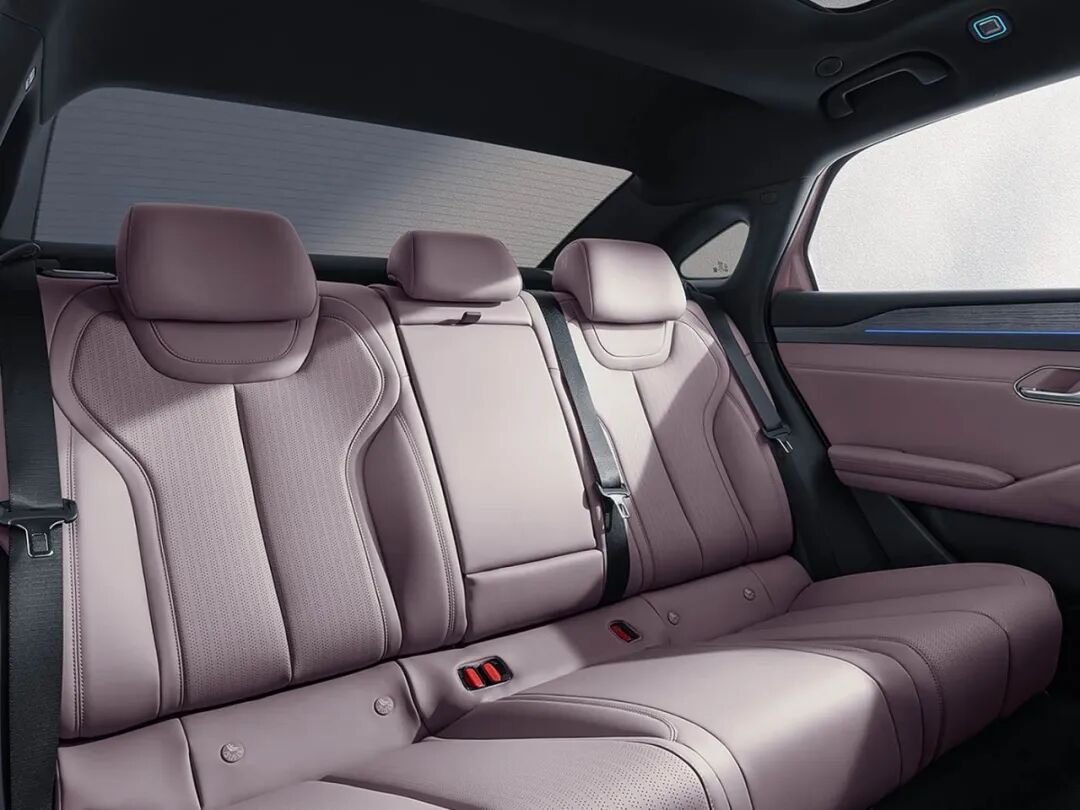
The cabin is younger, but the high-frequency experience depends on version coverage
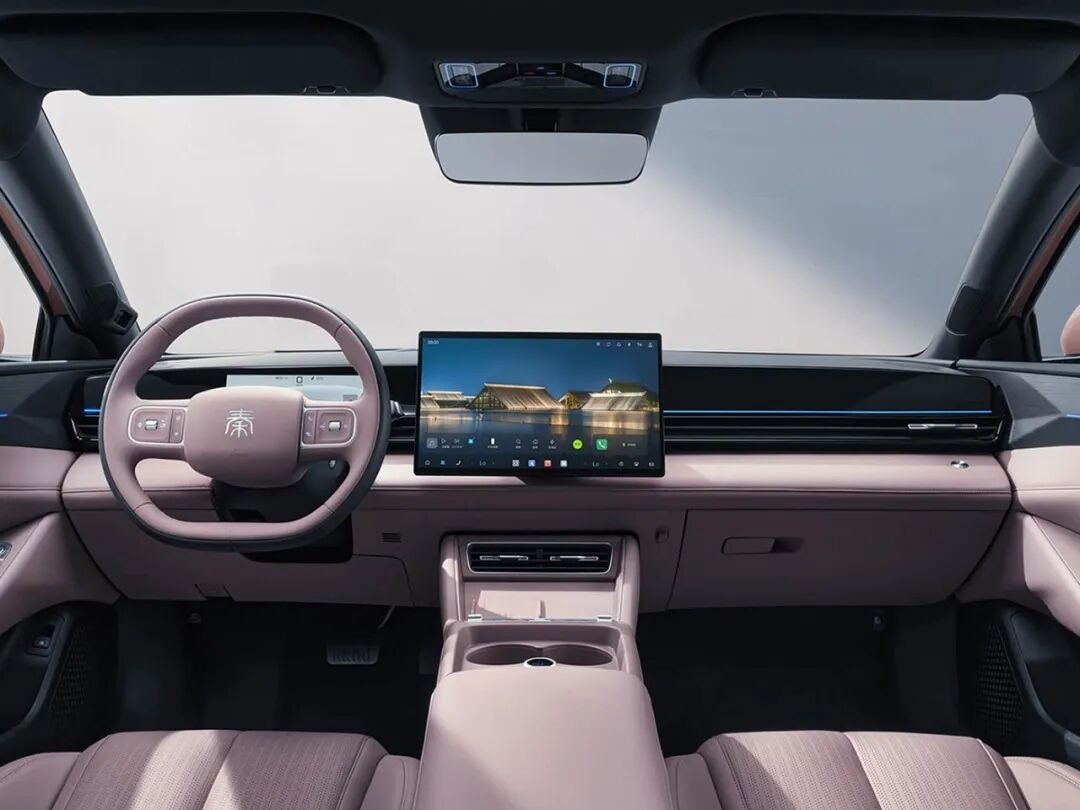
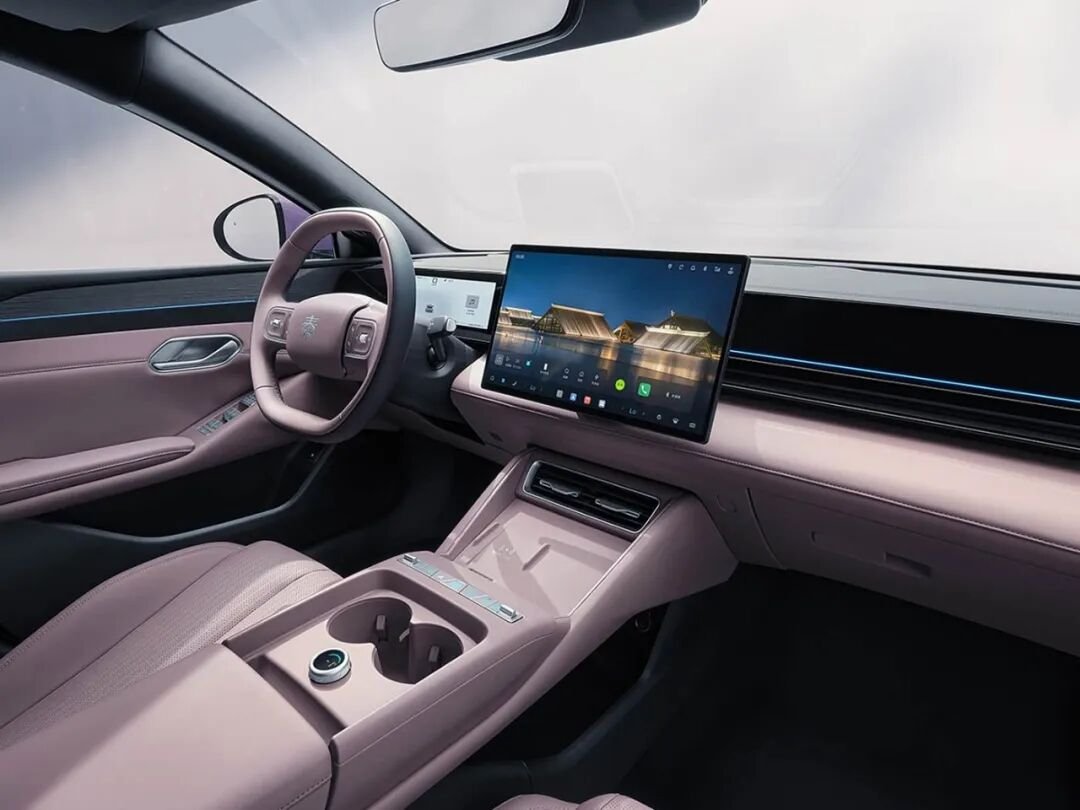
The Qin MAX adopts a two-spoke steering wheel, an electronic column shifter, and a floating central control screen. The Dawn Purple interior uses large areas of soft materials and light-color matching to weaken the dullness of traditional family sedans. Higher-end models offer the DiLink 150 cabin, a 15.6-inch central control screen, AR-HUD, and an in-car heating and cooling box.
When looking at configurations, priority should be given to confirming four high-frequency functions: seat ventilation and heating, panoramic cameras, HUD, and the infotainment chip. They are used every day, and their value is usually higher than ambient lighting or low-frequency entertainment features. The light-colored interior looks excellent, but families with children or pets should also inspect on site how difficult it is to keep the seats, door panels, and center armrest clean and stain-resistant.
With front MacPherson and rear five-link suspension, the Qin MAX begins to take driving quality seriously
The Qin MAX adopts front MacPherson and rear five-link independent suspension, with some higher-end models equipped with Cloud辇-C. For a family sedan, the significance of a five-link rear suspension is not to create a "performance car" label, but to leave a higher upper limit for body control and rear-seat comfort during continuous undulations, speed bumps, and high-speed lane changes. The rear-wheel-drive layout of the pure electric version also makes the division of labor between the front and rear axles clearer.
God's Eye B is optional, but the 12,000 yuan should be spent on high-frequency scenarios
Some versions of the Qin MAX can add the God's Eye B lidar version for 12,000 yuan, covering urban navigation, highway navigation, and parking assistance. For users with long daily commutes, frequent elevated and highway driving, and complex parking environments, this system can turn budget into high-frequency convenience; if annual mileage is low and roads are simple, the value of the option drops significantly.
The standard for judging assisted driving should not just be "whether there is lidar." Test following, cut-in handling, ramp merging, lane selection, and narrow-space parking, and observe whether prompts are clear and whether takeovers are natural. Hardware is the basis of capability, but system maturity and usage boundaries determine whether it is truly easy to use.
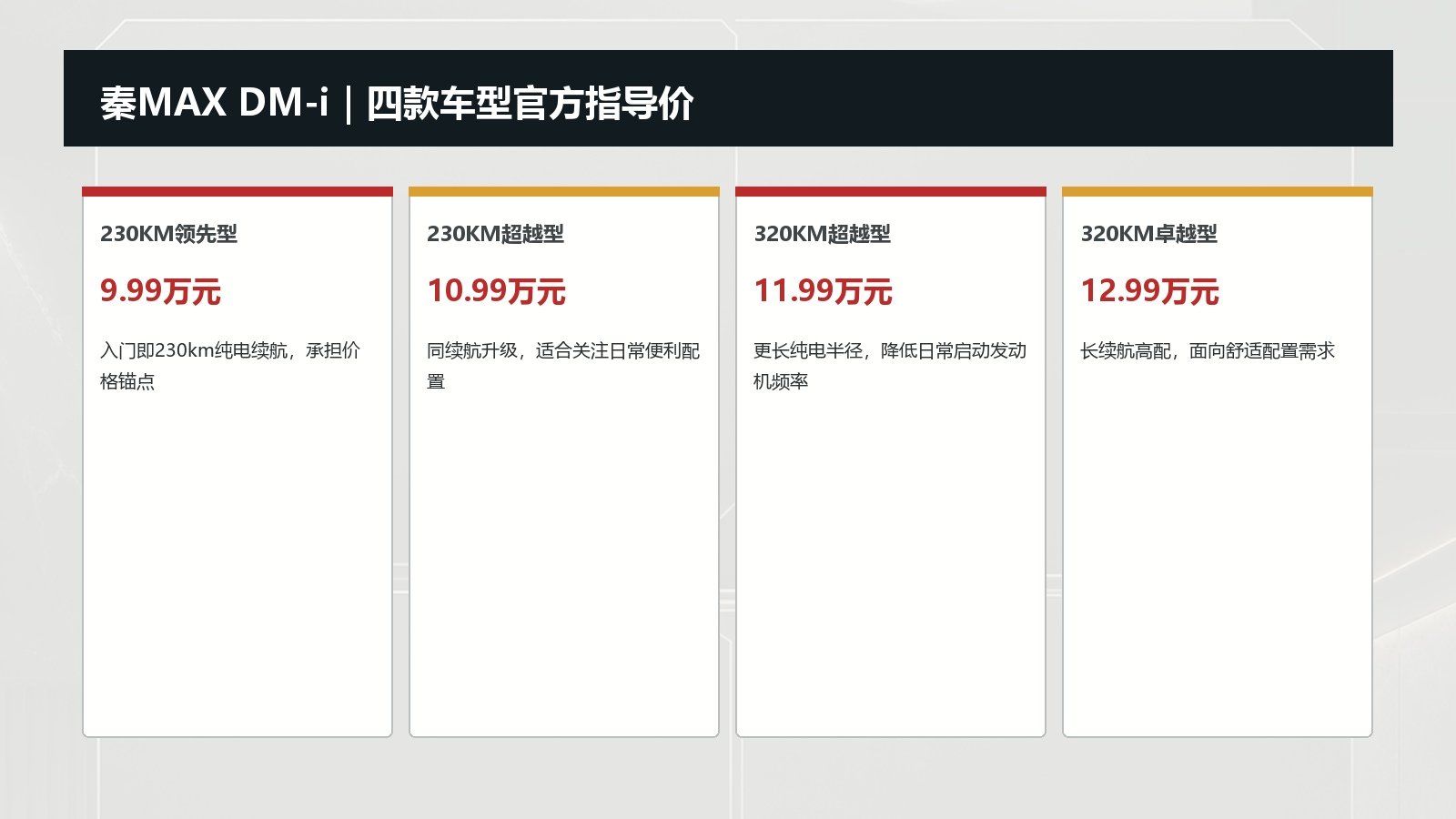
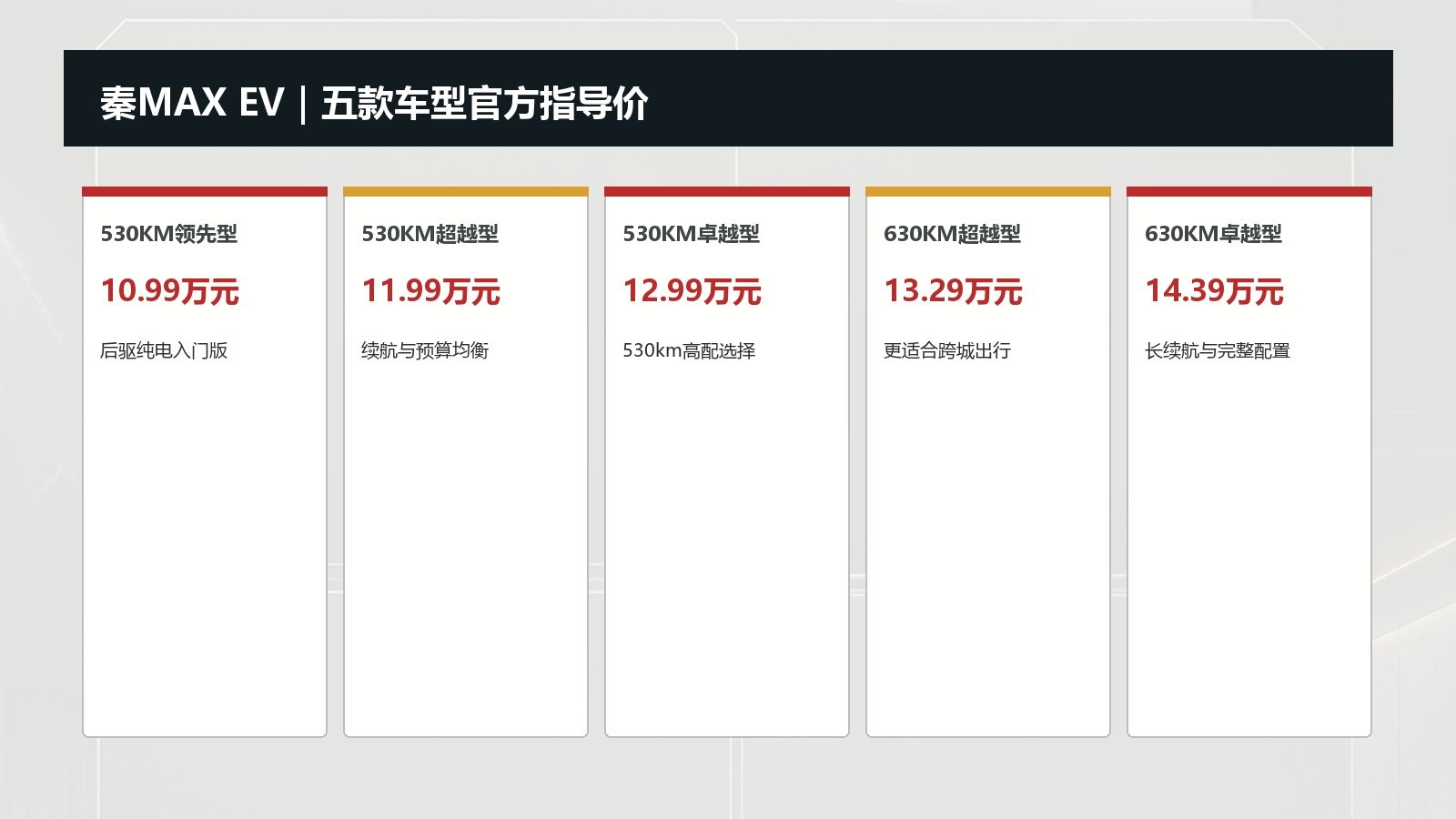
How to choose among the nine versions: first decide the energy type, then the range, and finally comfort and intelligent driving
For DM-i, the 99,900-yuan 230KM Leading Edition combines price and long pure electric range most directly, suitable for families with strict budgets and regular commuting; the 109,900-yuan 230KM Beyond Edition is suitable for mainstream users who want added comfort and convenience features. If daily mileage is longer or you want to further reduce refueling frequency, then look at the 119,900-yuan 320KM Beyond Edition and the 129,900-yuan 320KM Excellence Edition.
For EV, the 109,900-yuan 530KM Leading Edition serves to lower the threshold; the 119,900-yuan 530KM Beyond Edition is more suitable for users who value both budget and daily functions. For frequent intercity travel and no convenient charging-on-demand conditions, focus on comparing the 132,900-yuan 630KM Beyond Edition; the 143,900-yuan 630KM Excellence Edition is suitable for those who need both long range and complete comfort features.
The most lethal thing about the Qin MAX is not a single low price, but that users in the 99,900 to 143,900 yuan range can all find a corresponding version between plug-in hybrid and pure electric. The ordering logic should remain simple: if charging is unstable and there are many long trips, prioritize DM-i; if home charging is stable and urban commuting is frequent, prioritize EV; for lidar and high-level comfort features, pay only for real high-frequency needs.


