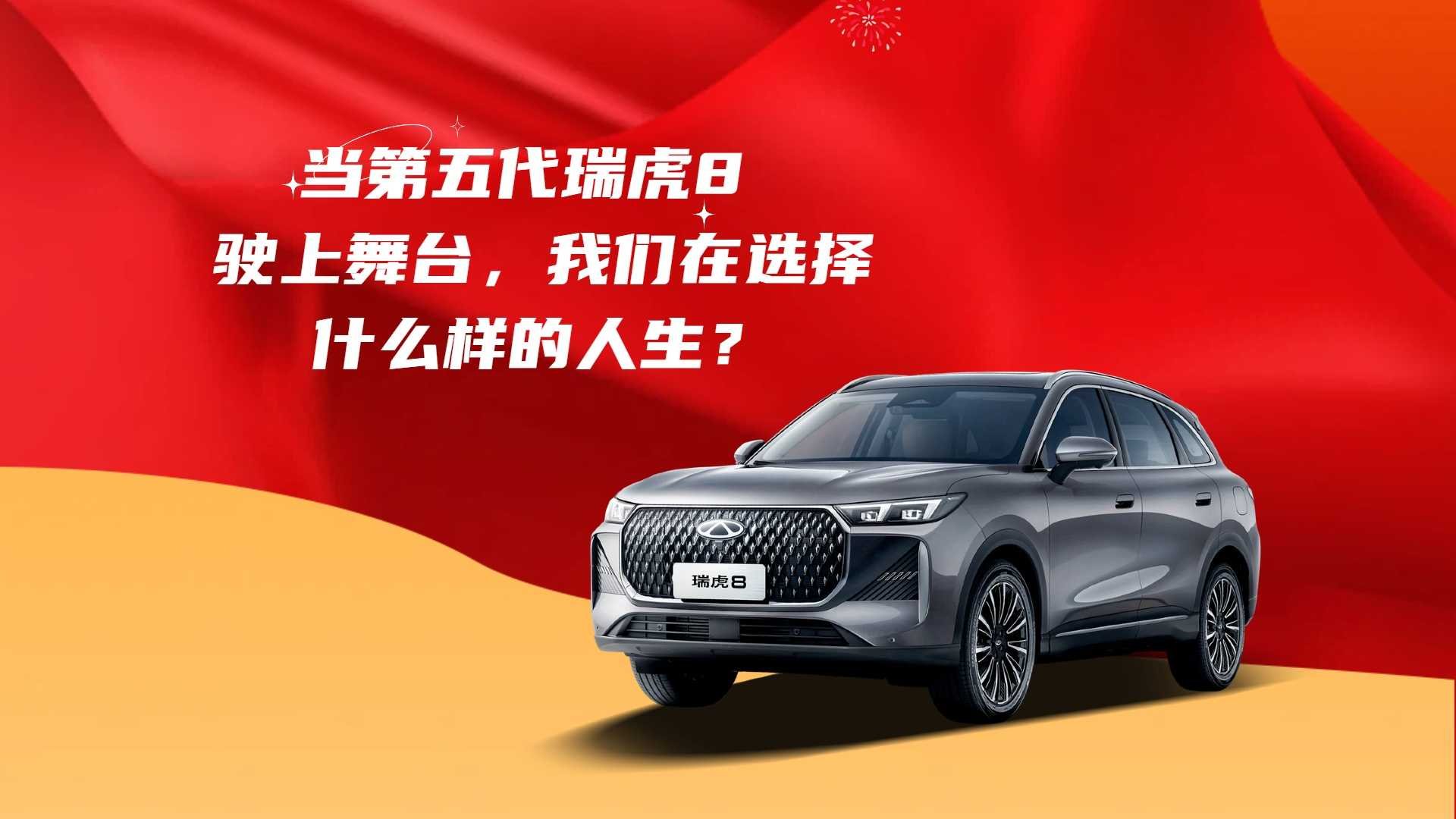
On November 10, the fifth-generation Tiggo 8 was officially launched.
4 models, with an official guide price of 99,900–129,900 yuan, and a limited-time early-bird price of 92,900–122,900 yuan—a set of numbers that looks very "rational," as if it were merely a formulaic calculation between product planning and market competitors.
But when each car finally reaches its user, it is actually answering the same question:
In this rapidly changing era, what kind of life do we actually want to live?

I. Price: Not "Cheap," but the Starting Point of Choice
A starting price of 92,900 yuan, viewed together with a body length of 4,749 mm and a wheelbase of 2,825 mm, conjures a familiar image—
a typical Chinese family: two elderly parents, two adults, one child, and a trunk packed to the brim.
From a product perspective, this is a calculation Chery has made very clearly:
the Comfort trim pushes the threshold below 100,000 yuan, making it "within reach" for young people who have just started a family;
the Luxury, Prestige, and Flagship trims then progressively layer on features, covering different consumer tiers.
But from the user's perspective, behind the price is actually a bet on the next few years—
you are willing to exchange part of your monthly income for a mid-size SUV that can fit the whole family and shuttle between the city and the highway, rather than buying one more wealth-management product or taking one more trip to some faraway place.
A car has never been an isolated consumer good.
When you decide "this is the one," it basically also sets the tone for the rhythm of your life over the next few years: commuting, school pickups, outings—days stitched together by circle after circle of wheel tracks.
II. Space: The Way a Family Is Caught by the World
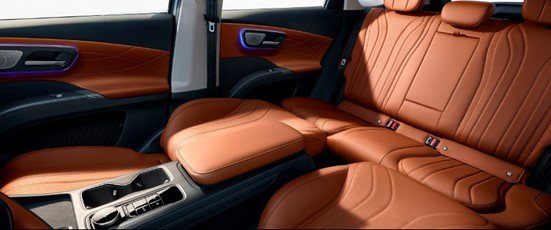
The body dimensions of 4,749/1,880/1,710 mm, a wheelbase of 2,825 mm, paired with relatively straight body lines—no fastback, no exaggerated rear taper.
This is not a car meant to "steal the show" on a WeChat Moments cover, but a car in service of "good enough to be genuinely useful."
Space, on the surface, is about parameters like rear legroom and trunk depth;
looked at more deeply, it determines how a family is caught by this world:
when the child is small, can the safety seat, stroller, and messy toys just be tossed in and off you go;
as parents grow older, will the door opening and seating posture make them feel "this car is quite good, it doesn't strain your back";
on the occasional spontaneous road trip, will tents, luggage, and a barbecue grill make you back out in advance because "it won't all fit."
Many people think they are just buying a "slightly bigger car";
looking back a few years later, you'll realize you actually bought your whole family more "chances to go out together."
What really matters is not how many seats it has, but how many times they carried "us being together."
III. Exterior and Interior: How We Are Seen by Others
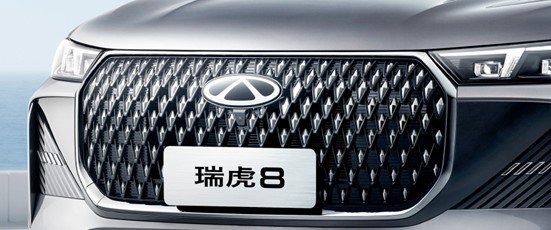
The fifth-generation Tiggo 8 offers two front fascias this time:
one is a composed polygonal grille with dot-matrix chrome, more family-oriented and mature;
the other is a more aggressive honeycomb mesh, sharper, catering to young people.
When driving on the street, few people will remember your engine parameters, but they will remember this "face."
What it represents is: to what extent are you willing to declare your attitude to this world—
"don't be too showy, just be respectable," or "I just want a bit of presence."
The interior follows a similar logic.
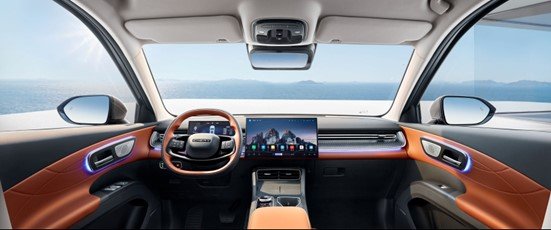
A horizontal twin-screen setup speaks of a sense of "order": information laid out in a row, taken in at a glance;
a vertical large screen is more like a phone or tablet, focusing attention on the central axis.
Some people seek stability of environment in a car, with everything laid out like habits formed over decades;
others hope to continue their digital lifestyle in the car, with voice control, navigation, and phone-car connectivity as handy as scrolling short videos.
The same Tiggo 8, with two interior approaches, accommodates both types of people.
How a car is seen by others is, in fact, behind how we want others to see us.
Sometimes what you choose is not a color scheme, but a narrative of "who I am."
IV. The "Hesitation" of the Fuel Era: The Pull Between Rationality and Uncertainty
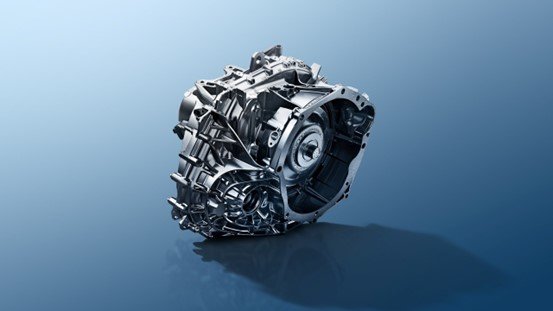
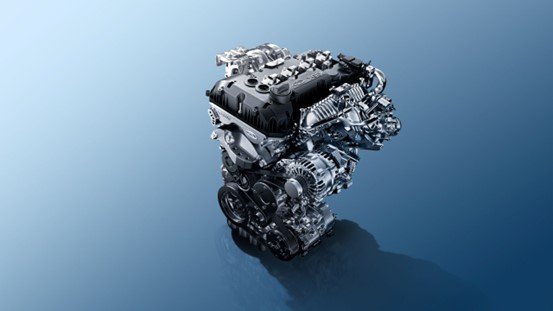
Today, with plug-in hybrids and pure EVs everywhere, the fifth-generation Tiggo 8 still insists on a 1.6TGDI turbocharged engine across the lineup, paired with a 7-speed wet dual-clutch transmission.
From a technical standpoint, it is mature, stable, and its power parameters are more than enough for daily use;
from the mood of the times, it carries a slight flavor of a "contrarian."
Many people preparing to replace their cars now have a string of question marks in their minds:
Should I just go straight to a plug-in hybrid in one step?
Will EV charging and resale value drag me down?
If I still buy a fuel car, am I falling behind?
The Tiggo 8's choice to stay in the fuel camp is essentially saying one thing to that large group of people still hesitating:
"You have the right to go a little slower."
This is quite important.
The wave of technology rolls forward, but the pace of life does not necessarily have to follow the speed of that wave.
Some people rush to experience the latest intelligent driving and high-voltage fast charging—no problem;
others should also be allowed to choose a traditional powertrain that has been repeatedly verified, and get through this stage of their life with lower psychological cost.
In this sense, the fifth-generation Tiggo 8 is not just "another new car,"
but more like offering a relatively gentle transition path for car consumption among contemporary Chinese families—
neither obviously conservative nor forcefully radical.
V. Car and Person: The Decision Is Always Behind the Steering Wheel
On the surface, the Tiggo 8 is persuading you with its equipment list and price list;
in reality, the person who makes the final decision is always only one—
the self sitting behind the steering wheel.
You are willing to give up a little driving pleasure for more space;
you are willing to compromise part of your "personal preferences" for your family's comfort;
you are willing, in the face of the new-energy trend, to first make a "steady choice" at your own pace.
What is a car?
Functionally, it is a tool to get from point A to point B;
in terms of life, it is the way you leave traces in this city.
Taillights on the elevated expressway, the lightbox at a gas station at dawn, the long lines at a holiday service area—
a certain car once belonged to you, and once carried you through a certain stretch of life.
The fifth-generation Tiggo 8 will not change the world, but it may change the life trajectories of a small group of people:
letting some families own a decent mid-size SUV for the first time,
adding to some children's childhood memories a few scenes of "loading up the luggage and heading out to play,"
and giving some people who do not yet want to deal with new energy a car to "live these next few years well first."
Buying a car itself is not romantic,
but who sits in the car with you, where you have gone, how many times you have argued and made up—
these details will slowly turn an ordinary fifth-generation Tiggo 8 into part of your life story.
And all these choices begin from the moment you sign your name in a 4S store on some day.
In that moment, on the surface you bought a car,
but in fact, you sent your future self an invitation that says "anywhere is fine."


