Looking at a car from an engineer's perspective, you first look at the platform and boundary conditions.
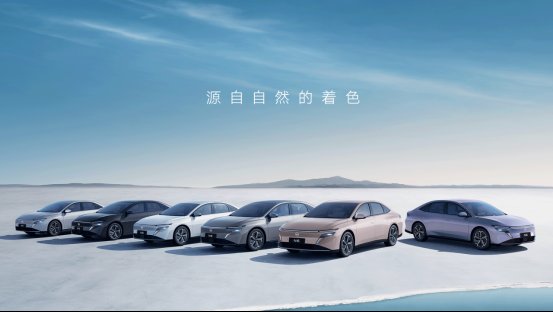
The N6 is the first plug-in hybrid sedan under the Tianyan architecture and shares the same technology lineage as the N7, which means several things:
This body/chassis platform was originally designed with "electric-drive priority" to reserve layout space (battery, wiring routing, electrical/electronic architecture).
The N6 needs to be controlled within the 100,000–120,000 yuan cost range, so it is impossible to "start a completely new furnace" on the mechanical structure; instead, it is more about adapting the existing platform for plug-in hybrid use and optimizing calibration.
For the engineering team, the brief is very clear:
under the joint-venture cost framework, pull the triangle of "energy consumption/comfort/reliability" as close as possible to a balanced point, rather than stacking parameters.
II. Body & Space: The dimensions are very "generous"; from an engineering standpoint, they played all the cards
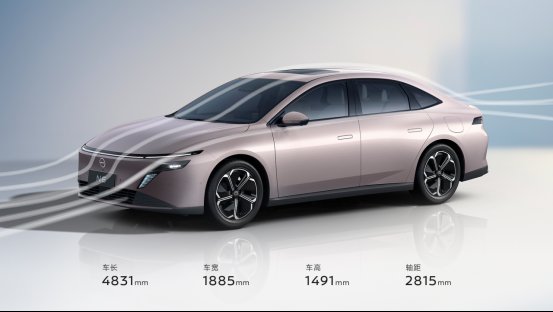
Dimensions: 4831×1885×1491/1494mm, wheelbase 2815mm.
From a structural engineering perspective, this set of numbers has several implications:
4831mm body length + 2815mm wheelbase, for a family sedan mainly positioned in the 100,000-yuan class, is clearly "a class above."
1885mm body width is good for lateral comfort and cornering roll control, but it also places higher demands on body stiffness and suspension calibration.
Fastback short rear end + hidden door handles:
Advantages: both aerodynamics and visual center of gravity are more favorable, helping energy consumption.
Engineering challenges:
The fastback will compress rear headroom, which needs to be compensated through seating angle, cushion length, and roofliner shaping.
Hidden door handles must ensure reliability and actuation force control under low-temperature icing, dust, and mud conditions, which puts pressure on both structural design and waterproofing design.
Judging from these configurations, the engineering team clearly treated the body, "stance," and aerodynamics as part of energy consumption management, rather than as pure design language. This is a point that deserves some recognition from an engineering standpoint.
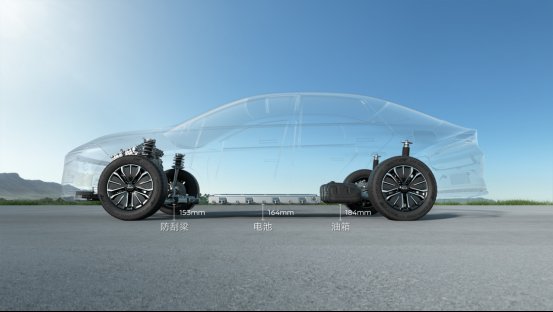
III. Powertrain: 1.5L + 155kW motor + 21.1kWh battery, the logic is very clear
First, lay out the key parameters:
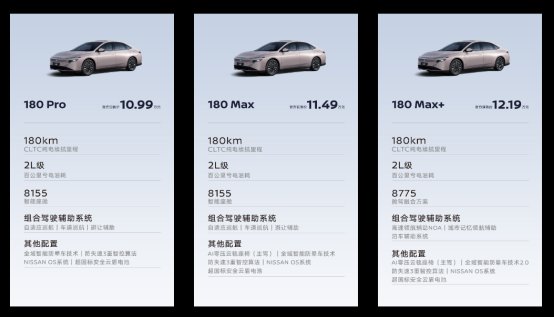
Engine: 1.5L, maximum power 75kW
Drive motor: maximum power 155kW
Battery: 21.1kWh
Pure electric range: 180km (standard across the lineup)
Fuel consumption at low state of charge: 2.79L/100km (official value)
1. Why use a 1.5L + a relatively high-power motor?
From an engineering perspective, there are several logics behind this pairing:
1.5L naturally aspirated engine
High maturity, controllable cost, and thermal efficiency can reach a relatively high level (usually using Atkinson cycle/high compression ratio + EGR, etc.).
Under a plug-in hybrid architecture, the engine operates in the high-efficiency speed range most of the time, and instantaneous power demand is not great, so 75kW is enough.
155kW drive motor
What truly governs the "driving feel" is the motor; 155kW is already on the high side for a family sedan.
Acceleration, lane changes, and overtaking in urban conditions can almost all be completed independently by the motor, making the driving experience closer to that of a pure EV.
Engineering trade-off: the motor is the main force, the engine supplements energy efficiently
This is a typical "electric-drive-dominant" plug-in hybrid approach,
meaning vehicle calibration will lean more toward:
"use as much electricity as possible, and have the engine appear as much as possible in the high-efficiency zone."
2. Is a 21.1kWh battery + 180km range reasonable?
A quick calculation:
21.1 ÷ 180 ≈ 0.117 kWh/km
That is, about 11.7kWh/100km electricity consumption under the official test cycle
This is a fairly competitive number among plug-in hybrid sedans, but note:
this is the value under standard conditions,
and in real urban congestion + winter air conditioning, it may fall in the 13–16kWh/100km range.
From an engineering perspective, this set of numbers shows:
body aerodynamics, tire rolling resistance, and vehicle calibration are all making way for electricity consumption;
a 21.1kWh battery is no small burden on cost, mass, and space. The fact that the engineering team dared to make "180km standard across the lineup" shows that this battery solution was fixed as the project's "core USP" from the very beginning, rather than added later.
In other words:
the N6 is not "a plug-in hybrid version made along the way"; rather, from project inception it was decided that this car would live on electric drive and energy consumption.
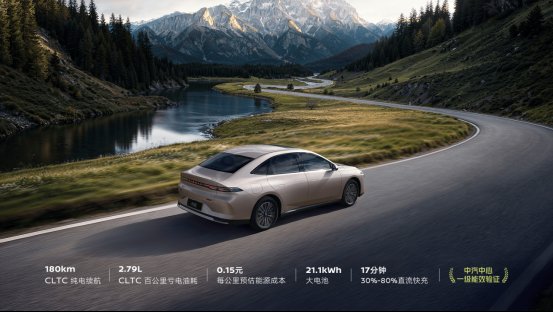
IV. Energy consumption and thermal management: the engineering meaning behind 2.79L low-state-of-charge fuel consumption
The official figure is 2.79L fuel consumption per 100km at low state of charge. How should this be understood from an engineering perspective?
"Low state of charge" ≠ "no charge"
In engineering terms, low-state-of-charge conditions usually mean SOC is in a relatively low but controllable range (for example, 20–30%).
The system will still allow a certain proportion of motor participation in driving, only with more energy provided by the engine.
To achieve 2.79L, it usually requires:
the engine to operate in the high-efficiency range for long periods (for example, near 35–40% thermal efficiency).
A reasonable energy management strategy between the motor and engine:
engine output does not directly follow the accelerator, but is "buffered" by the motor.
Acceleration is mainly handled by the motor, while the engine participates more during steady-state cruising.
At the thermal management level (although the official materials do not detail it, engineering-wise it is almost certainly done):
the cooling circuits of the battery, motor, power modules, and engine will have some degree of thermal coupling:
In winter: use engine waste heat to warm the battery and cabin, improving efficiency.
In summer: coordinate with the air conditioning system through cooling circuits to lower battery temperature, avoiding degradation and protection intervention.
Users cannot see these things, but as long as the engineering target says "low fuel consumption at low state of charge," thermal management is a major topic that cannot be avoided.
V. Chassis and driving: dimensions provide space, calibration determines character
Driving conclusions cannot be drawn from parameters alone, but some engineering inference can be made:
1885mm body width + 2815mm wheelbase: this is a foundation with the potential to be made "stable."
Plug-in hybrid + large battery will inevitably bring increased vehicle weight,
and engineers need to match spring stiffness, damper damping, anti-roll bars, etc.,
to find a balance between "comfortable family use" and "EV-like launch punch."
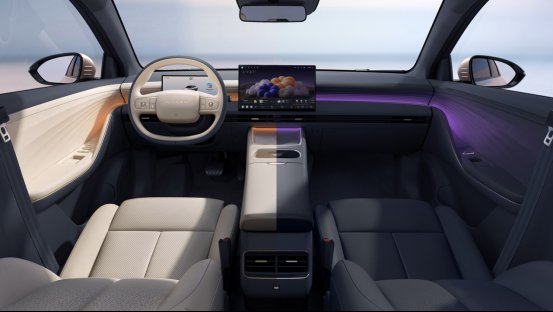
Column shifter + open center tunnel is also beneficial for ergonomics:
more storage space can be freed up below the center console, improving daily convenience;
the driver's right leg has more natural room to move, reducing fatigue on long trips.
In terms of NVH, plug-in hybrids inherently have both advantages and difficulties:
Advantages:
good low-speed quietness in pure electric mode;
the engine does not appear frequently in urban conditions.
Difficulties:
the sense of intervention, vibration, and abrupt noise changes caused by frequent engine start-stop
need to be smoothed out through engine mounts, active control, and calibration that softens speed rise.
If the N6 can make engine intervention "inaudible and imperceptible," then at the engineering level this car truly lives up to the "joint-venture plug-in hybrid" label.
VI. A brief summary from an engineering perspective: this car's "hard targets" and "soft trade-offs"
Looking at the N6 from the perspective of an engineer doing complete vehicle projects, I would conclude this:
On hard targets:
body dimensions and wheelbase provide ample space potential;
motor power, 21.1kWh battery, and 180km pure electric range are quite "thrilling" at this price point;
2.79L fuel consumption at low state of charge, if the production car's real-world measurement can approach the official figure, would be a genuine achievement for the engineering team.
On soft trade-offs, users should have psychological expectations:
a large battery + plug-in hybrid structure will definitely bring a rise in vehicle weight, and high-speed fuel consumption cannot possibly be as "dreamy" as the promotional language;
the fastback shape and sloping rear will involve some space sacrifice (especially rear headroom and the vertical height of the trunk);
system complexity is higher than that of a pure combustion vehicle, so long-term use requires one more consideration for maintenance and parts replacement costs.
If I had to summarize the N6 from an engineering perspective in one sentence:
This is a joint-venture plug-in hybrid family sedan that, under a very clearly defined cost boundary, maximizes both "electric drive efficiency" and "family comfort" as much as possible. It does not pursue extreme performance or play tricks; it is more of a "tool car + EV experience combined" optimized for real commuting scenarios.


