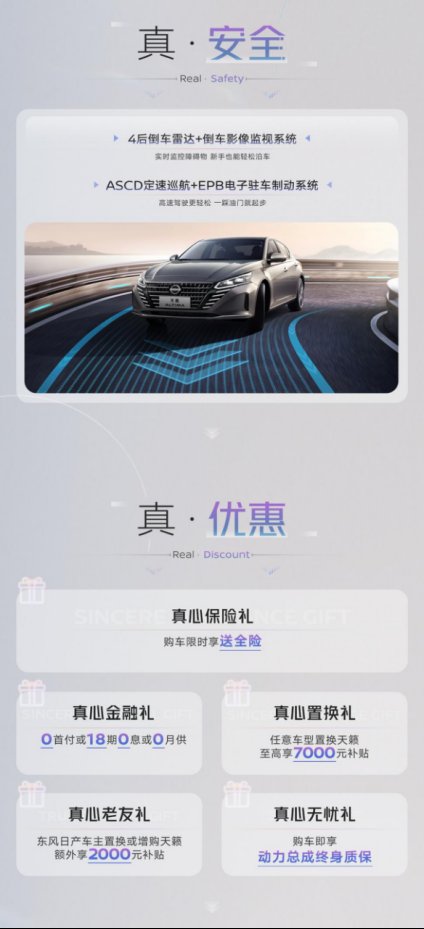
On the opening day of the 2025 Guangzhou Auto Show, the Dongfeng Nissan Teana·HarmonyOS Cockpit was officially launched, with 4 models, an official guide price of 139,900-167,900 yuan, a limited-time launch price of 129,900-157,900 yuan, and up to 40,000 yuan in limited-time car purchase benefits.
This car has two keywords: fuel-powered mid-size sedan, HarmonyOS Cockpit 5. At a time when competitors all use "intelligence = new energy," it chose to put the trendiest infotainment system into a traditional 2.0T mid-size sedan.
The official naming is not overly convoluted; the entire lineup simply adds a "HarmonyOS Cockpit" configuration tier on top of the existing Teana lineup. The official guide price is 139,900-167,900 yuan, corresponding to a limited-time price of 129,900-157,900 yuan, all with a 2.0T VC-Turbo + CVT powertrain.
From a trend perspective, a starting price in the low 130,000s, plus trade-in subsidies, pulls a mid-size car equipped with HarmonyOS Cockpit 5 and HUAWEI SOUND into the budget range originally occupied by joint-venture compact cars. For users who value intelligent experience but are unwilling to go new energy, this is highly compelling.
2. Exterior: A more "electrified" face, but fundamentally still the same relaxed Teana
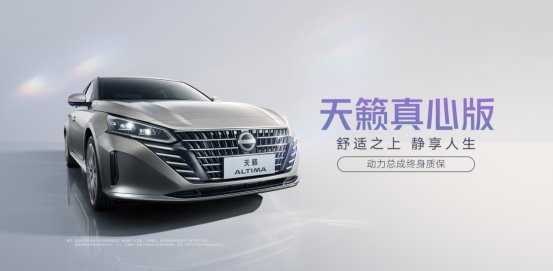
The Teana·HarmonyOS Cockpit adopts the latest-generation V-Motion family design language. The "V"-shaped opening on the front face is noticeably larger, and the integrated wing-style grille paired with a continuous LED light strip widens the visual focus horizontally, making it look more like an "electrified mid-size sedan" rather than a traditional business-oriented Teana.
Body dimensions: 4,920×1,850×1,447 mm, wheelbase 2,825 mm. Overall, it still has the typical proportions of a mid-size car, and rear legroom still gives it a strong voice in its class.
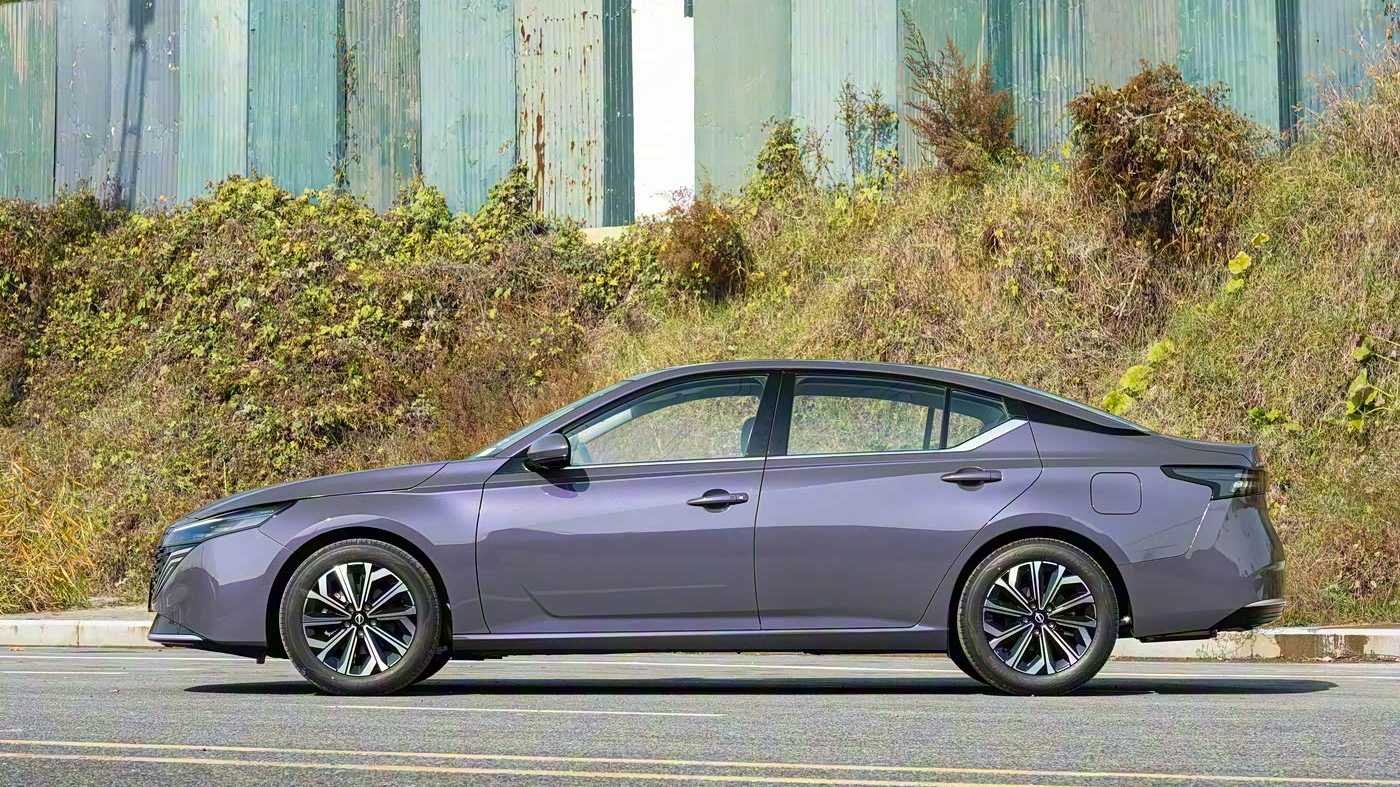
Side profile: A more sculpted waistline paired with all-new 19-inch multi-spoke wheels gives it a slightly more "youthful" sporty feel than the current Teana. Especially with dark paint plus large wheels, the style has already moved toward a sporty mid-size sedan.
Rear: The integrated taillight has the NISSAN emblem embedded in the center, and 11 gem-like light elements on each side further elevate the sense of refinement. This combination of "dot-style highlights + continuous light strip" clearly takes cues from new energy vehicles.
In one sentence: The visual language is moving toward "new-force aesthetics," but the underlying proportions are still those of the Teana with its relaxed stance.
3. From "big sofa" to "HarmonyOS Cockpit 5": Fuel cars are also starting to talk about "intelligent comfort 2.0"
In the past, when people mentioned the Teana, they thought of "big sofa, good sound insulation, soft suspension" — this is the typical "physical comfort 1.0." The Teana·HarmonyOS Cockpit directly pulls the conversation to "intelligent comfort 2.0."
1. HarmonyOS Cockpit 5 + 15.6-inch in-car smart screen
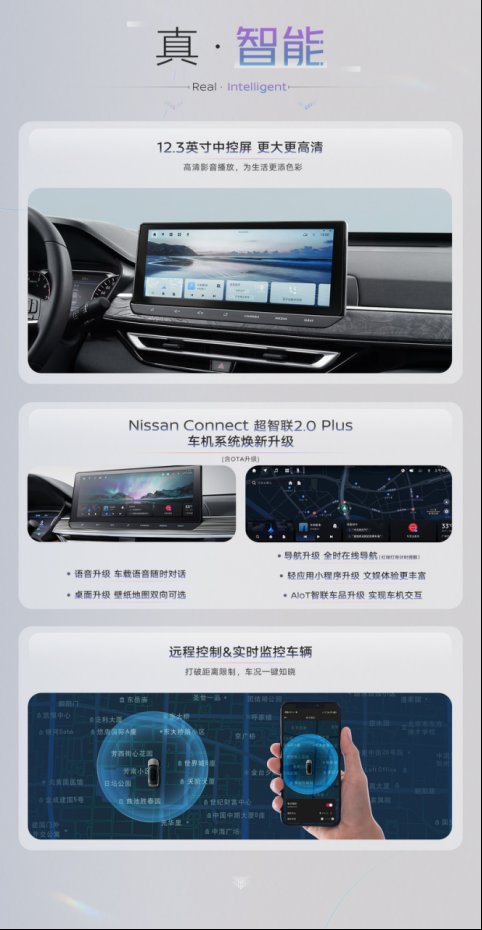
The new car is equipped with a 15.6-inch HUAWEI in-car smart screen, running the latest HarmonySpace 5 and MoLA architecture:
48 native HarmonyOS apps on board: navigation, music, video, and office applications can all be used directly in their in-car versions, no longer relying on phone screen mirroring.
Seamless cross-device transfer: Videos you were watching on your phone and documents you had open can be "continued watching and continued working on" in the car, which is very friendly to business users who frequently visit clients and travel.
AI voice assistant: With 4-zone partitioned recognition, front and rear rows can each speak their own commands without fighting over the microphone; plus fun features like "smile snapshots," balancing practicality and social appeal.
To put it in an editor's tone: The infotainment logic of this Teana is no longer about "catching up with the times," but about being on par with leading new energy brands.
2. HUAWEI SOUND + elevating star-ring scatterer
In terms of audio, the Teana·HarmonyOS Cockpit comes standard across the lineup with HUAWEI SOUND, 17 high-fidelity speakers + an elevating star-ring scatterer, allowing sound to spread 180° through the cabin. The official promotional focus is that "every seat is the C position."
If you are used to driving alone and occasionally listening to jazz and podcasts at night, this audio system will be a major bonus for the Teana — it is the kind of feature that "you may not realize is useful until you try it, and once you get used to it, you can't go back to ordinary audio."
3. Ambient lighting + soft-touch upholstery, completing both what you can see and what you can touch
256-color intelligent interactive ambient lighting can be adjusted by voice/touch and responds with dedicated lighting effects for different seats;
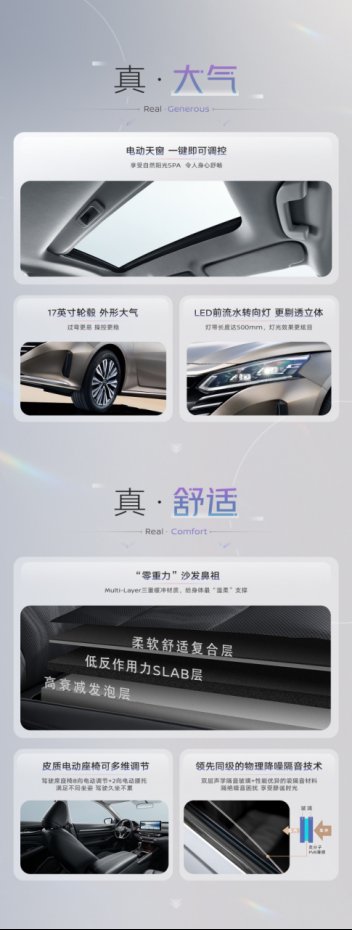
The interior overall adopts low-saturation color schemes, with more than 90% of touchable surfaces covered in soft material, moving toward "light luxury" from both visual and tactile perspectives.
This combination is not rare, but on a joint-venture mid-size car starting at just over 120,000 yuan, it still has a bit of a "class-above" flavor.
4. Powertrain: Still the same 2.0T VC-Turbo, but the intelligent cockpit makes the "old card" more worth looking at
The powertrain continues with Dongfeng Nissan's familiar 2.0T VC-Turbo variable compression ratio engine, with a maximum power of 243 hp and peak torque of 371 N·m, matched to a CVT continuously variable transmission.
We are all familiar with the characteristics of this powertrain:
For daily urban commuting, the CVT keeps engine speed relatively low, with smoothness as the first priority;
When the accelerator is pressed deeply, the 2.0T has sufficient power reserve, and high-speed overtaking is not at all lacking against same-class 1.5T/2.0T rivals;
Variable compression ratio technology strikes a compromise between fuel consumption and performance, which is very friendly for people who drive on highways and take long business trips.
From an editor's perspective, the Teana·HarmonyOS Cockpit did not cut the budget on powertrain, but while maintaining the original reliable major components, it spent the money on the intelligent cockpit and experience. This is a relatively pragmatic upgrade path.
5. Looking at this car in 2025, whose "anxiety" is it trying to solve?
In 2025, as new energy penetration continues to rise, the anxiety of traditional joint-venture mid-size cars is very clear:
Traditional advantages such as space, comfort, and quality are being caught up little by little by self-owned brands after price cuts;
Intelligent cockpits and intelligent driving have long lagged behind, and young users feel that "getting in the car is like going back five years."
The Teana·HarmonyOS Cockpit does two things:
Bringing HarmonyOS Cockpit 5 down to the 120,000-yuan-class fuel vehicle
The Huawei ecosystem originally appeared more often in 300,000-yuan-class new energy models, and now it directly strikes at the main battlefield of joint-venture fuel vehicles.
For users who "do not want to change their car-use logic in the short term, do not want to consider charging, but also want to experience the HarmonyOS ecosystem," the Teana offers a compromise option.
Using the idea of "same intelligence for oil and electricity" to give fuel vehicles another breath
At the automaker level, the strategy of "oil and electricity advancing together, oil and electricity with equal intelligence" is already being emphasized, and the assumption that "fuel vehicles are naturally more backward than new energy" is no longer accepted.
If one must use a summarizing sentence:
The Teana·HarmonyOS Cockpit is not trying to persuade you to give up new energy, but wants to tell some people: even if you still insist on fuel, a mid-size car does not have to concede on intelligence.
6. Editor's summary: Who is it suitable for?
You care more about stability, peace of mind, and not wanting the hassle of refueling/charging, but you are unwilling to tolerate "an old infotainment system disconnected from the smartphone era";
Your budget is 130,000-160,000 yuan, and you were already looking at joint-venture mid-size cars such as the Camry, Accord, Magotan, and Passat;
You frequently drive on highways/take long business trips and have requirements for NVH, seat comfort, and audio atmosphere;
You have a favorable impression of the Huawei ecosystem, and your other devices at home already run HarmonyOS/Huawei systems.
Then the Teana·HarmonyOS Cockpit is indeed worth a serious test drive at a 4S store:
First sit in the car, close the door, connect your phone, and then decide whether this car is worth 129,900 yuan.


