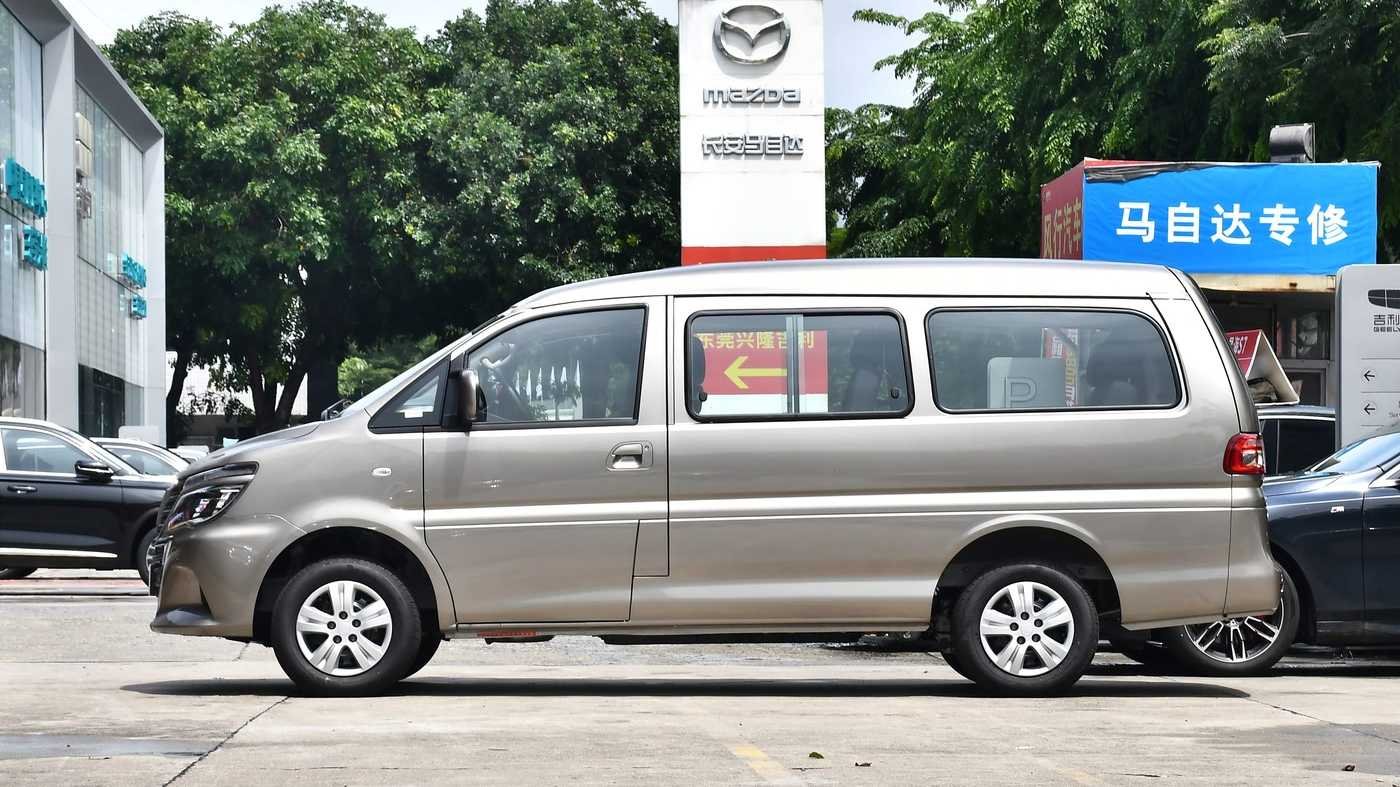
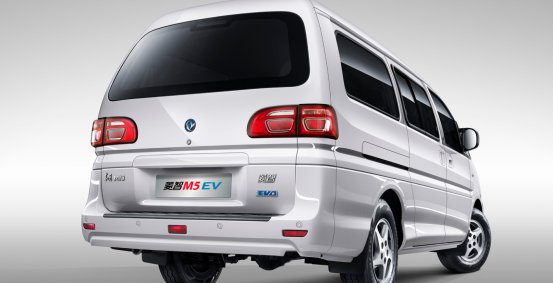
Currently on sale is the latest generation, officially named "Lingzhi New Energy," but the platform and body form are still those of the Lingzhi M5EV:
420km pure electric city transport version (5/7 seats)
Guide price: 109,800 yuan (5 seats), 113,500 yuan (7 seats)
Rear permanent magnet synchronous motor: 70kW / 175N·m
Battery: 64.4kWh lithium iron phosphate, CLTC range 420km, supports fast charging (fast charging about 0.5–0.58h, slow charging about 12h)
460-kilometer pure electric basic version (7/9 seats, leaning toward passenger transport/passenger service)
Guide price: 157,900 yuan (7 seats), 159,900 yuan (9 seats)
Rear permanent magnet synchronous motor: 150kW / 340N·m (data from the 460km passenger version/standard version configuration, powertrain carried over)
Battery: approximately 67kWh-class LFP battery, CLTC 460km, also supports fast charging.
Roof and roof
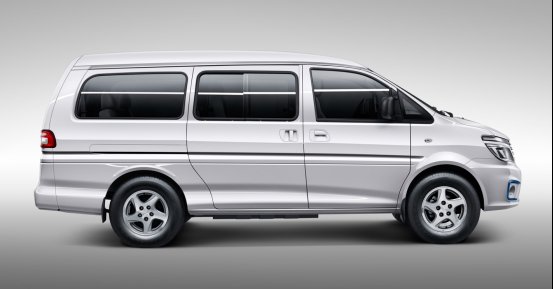
Body structure: mid-size MPV, length about 5.14m, width 1.72m, height close to 2.0m, wheelbase 3000mm
Drive type: rear-mounted single motor, rear-wheel drive
Suspension: front double wishbone torsion bar spring independent suspension + rear spring non-independent suspension
This is a typical electric mid-size MPV with "load-bearing suspension + rear drive + front double wishbone + rear leaf springs," emphasizing load capacity and structural reliability, not the limits of comfort.
2. Electric drive assembly: two options, 70kW and 150kW
2.1 420km city transport version: 70kW / 175N·m
Rear permanent magnet synchronous motor, maximum power 70kW, torque 175N·m, paired with a single-speed reducer.
Official top speed is about 120 km/h, clearly calibrated for urban and suburban operating conditions rather than long high-speed cruising.
Engineering judgment:
Based on a 3000mm wheelbase + the drag and mass of a 5/7-seat MPV, 70kW is:
City empty load/half load: sufficient, and initial acceleration and low- to medium-speed re-acceleration will not feel sluggish.
Full load + high speed (110–120km/h): it can run, but re-acceleration and overtaking on long slopes will be rather "zen," and the driver needs to have mental expectations.
The advantages are: lower motor cost, relatively easier control of thermal calibration, and it is more suitable for use scenarios such as city transport, ride-hailing carpooling, and commuter pick-up and drop-off, which involve "intermittent starts and stops but low average speed."
2.2 460km basic version: 150kW / 340N·m
The 460-kilometer version carries over the high-power motor of the M5EV long-range/passenger version: 150kW, 340N·m, also rear-mounted rear drive.
Judgment:
For a fully loaded 7/9-seat MPV, this power is already close to the dynamic feel of an ordinary hybrid or fuel 2.0T-class vehicle.
It is beneficial for:
Reserve power during high-speed cruising (hill climbing, re-acceleration).
Thermal management margin for mountainous/long-slope sections (motor heat load under the same operating conditions).
The cost: the entire electric drive and high-voltage system are more expensive, pushing the vehicle price higher; under extreme conditions, consumption will also be higher, making it more suitable for heavy-load passenger transport and intercity operation scenarios.
If you are in passenger transport, ride-hailing, or airport/station shuttle services, the 460 system's power is the best match; if it is light-load city transport plus residential use, the 420 motor is fully adequate and more economical.
3. Three-electric matching: the choice of 64.4kWh / 67kWh LFP battery
3.1 Battery specifications and range
420-kilometer city transport version:
Battery capacity 64.4kWh, lithium iron phosphate, supports fast charging 0.5–0.58 hours, slow charging about 12 hours.
460-kilometer version:
The official pages do not hard-code the specific capacity on every page, but various media outlets and official documents all mention the use of an approximately 67kWh LFP battery pack, CLTC 460km.
Note:
The following is an estimate, not official parameters.
420km / 64.4kWh → theoretical CLTC consumption ≈ 15.3kWh/100km.
Actual operation specifics:
City + ring roads, half load, air conditioning on in winter: 18–20kWh/100km is fairly reasonable.
Driving 200 kilometers a day uses about 36-40 kWh; at 0.8 yuan/kWh, the daily electricity cost is about 30 yuan.
Compared with a traditional 2.0L/2.0T fuel MPV, real fuel consumption is 10–12L/100km; at 7.5 yuan/L:
200 kilometers, about 150–180 yuan in fuel cost per day.
A rough calculation shows that an electric vehicle can save about 100 yuan per 200 kilometers compared with a fuel vehicle, and at 50,000 kilometers a year, that is an operating cost difference on the order of 25,000 yuan (ignoring warranty).
This is also the confidence behind Lingzhi New Energy daring to push the price into the 100,000-160,000 yuan range: the upfront cost is slightly higher, but the TCO advantage under operation is very obvious.
3.2 BMS and thermal management (inferred)
The official details have not been disclosed, but judging from vehicles in the same class and this price range, it is most likely:
Liquid-cooled battery pack + electric heating, supporting common DC fast-charging power ranges.
There is no complex heat pump air-conditioning integrated thermal management (cost and development complexity do not fit this class positioning), and it is more of a traditional solution favoring reliability and easy maintenance.
The advantages are simple structure and high reliability; the disadvantage is that in extremely cold environments, performance and efficiency are not as maximized as passenger cars equipped with heat pump systems.
4. Structure and chassis: typical light bus-style structure, load-bearing priority
4.1 Structure and dimensions
Load-bearing body + 3000mm wheelbase, vehicle length about 5145mm, width 1720mm, height 1990–2000mm.
Front suspension: double wishbone torsion bar spring independent suspension;
Rear suspension: spring non-independent suspension;
Body structure: load-bearing body, rear drive.
This combination is very typical—most light bus/city transport vehicle series are suited to it, for a simple reason:
Leaf springs have a high limit
Front double wishbone controls tire camber
It is better under full load and long suspension travel conditions, front wheel camber changes are controllable, which helps stability and tire fatigue control.
If, from an "engineer's" perspective, I were to support operating customers in choosing a vehicle, it would be in one sentence:
 5. Matching of operating conditions
 ✖ The vehicle price rises noticeably, and although the configuration is better, for users who "only drive in the city and are cost-sensitive," the ROI must be carefully calculated.


