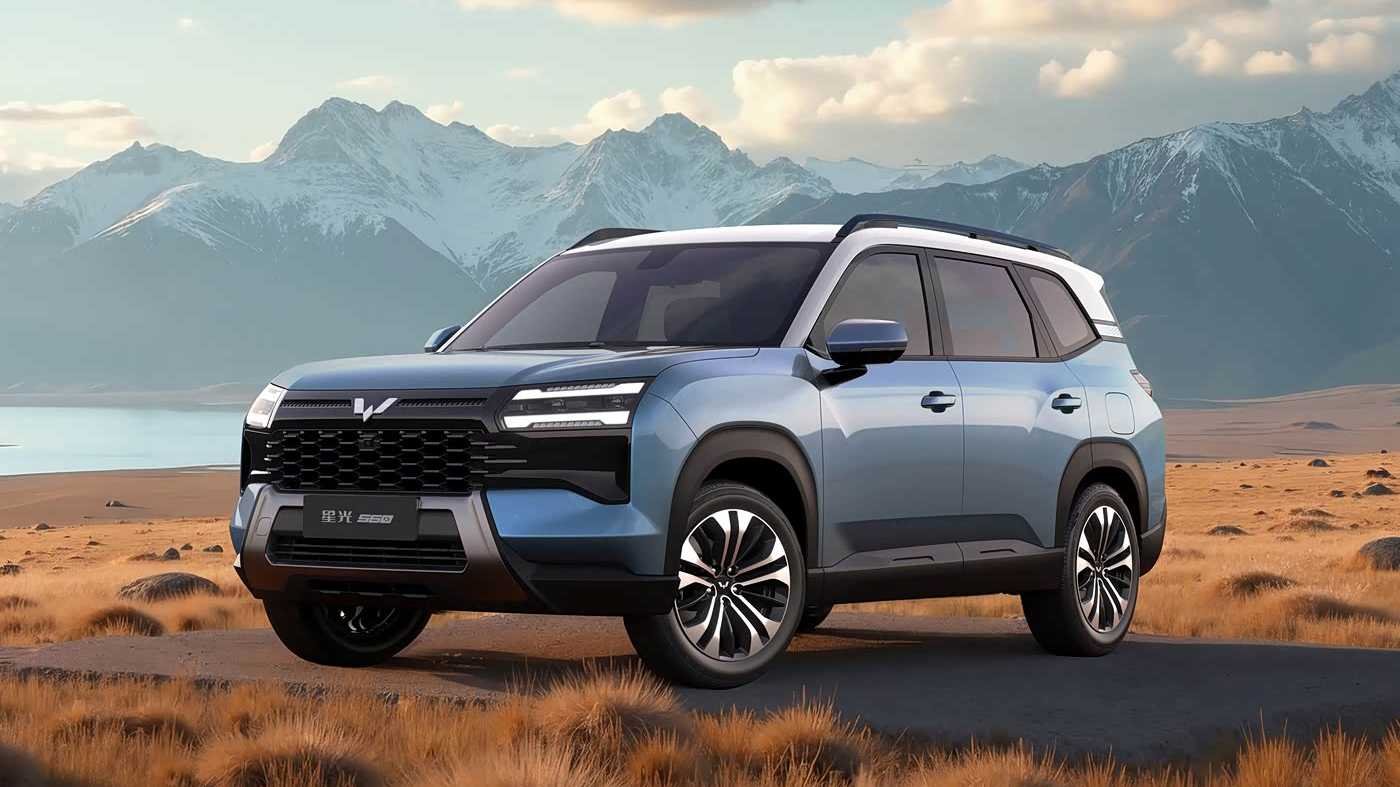
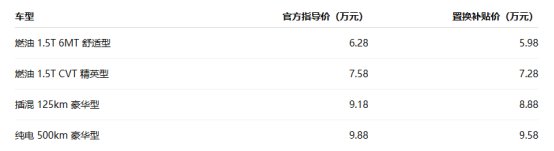
On January 15, the Wuling Starlight 560 was officially launched. The new vehicle is offered in 4 models, with an official guide price of 62,800–98,800 yuan and a trade-in subsidy price of 59,800–95,800 yuan; customers who place an order immediately can enjoy the "Success Upon Arrival Gift." The powertrain system offers three technical routes: gasoline, plug-in hybrid, and pure electric, covering people with different refueling/charging conditions and vehicle usage intensity.
1) Models and prices (including trade-in subsidy prices)
The product strategy of the Starlight 560 is not to "stack one extreme item," but to use three powertrains to match the three variables of "energy/refueling and charging conditions/cost structure" in layers.
2) Vehicle engineering: dimensions, styling, and scenario-based hardware
Body dimensions and platform space
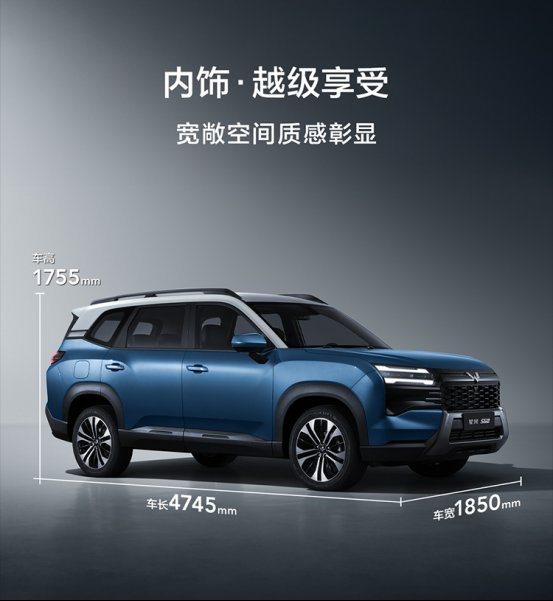
Length × width × height: 4745 / 1850 / 1755 (1770) mm
Wheelbase: 2810 mm
From the dimension data, it does not have the proportions of a typical short "urban SUV": the wheelbase-to-length ratio leans toward space efficiency, while the vehicle height provides more generous headroom and loading posture (friendly for the elderly/children getting in and out, with an advantage in usable trunk height).
Exterior structure and functional components
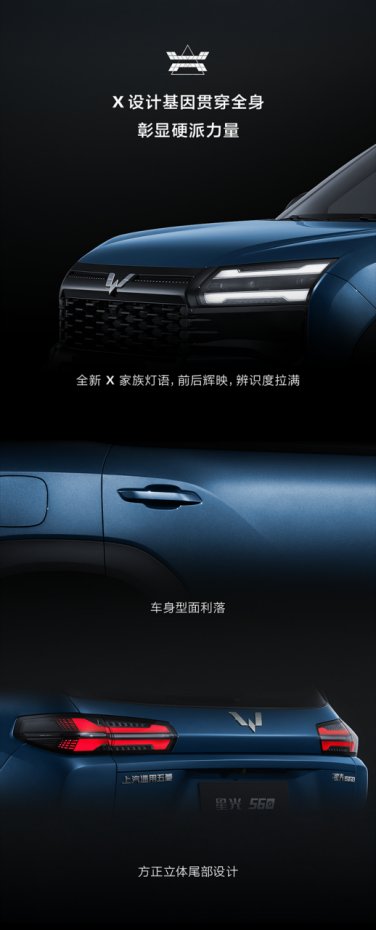
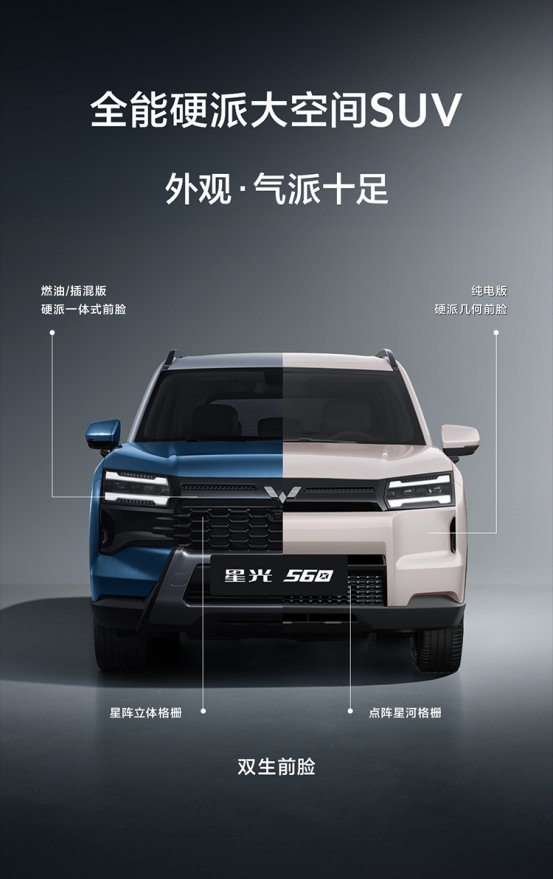
Split-type light clusters arranged in parallel: the focus is on recognizable light signature and styling consistency
Large black grille: strong visual impact, and in practice it also helps express heat dissipation opening area (different powertrains have different thermal management requirements, but the exterior must be compatible)
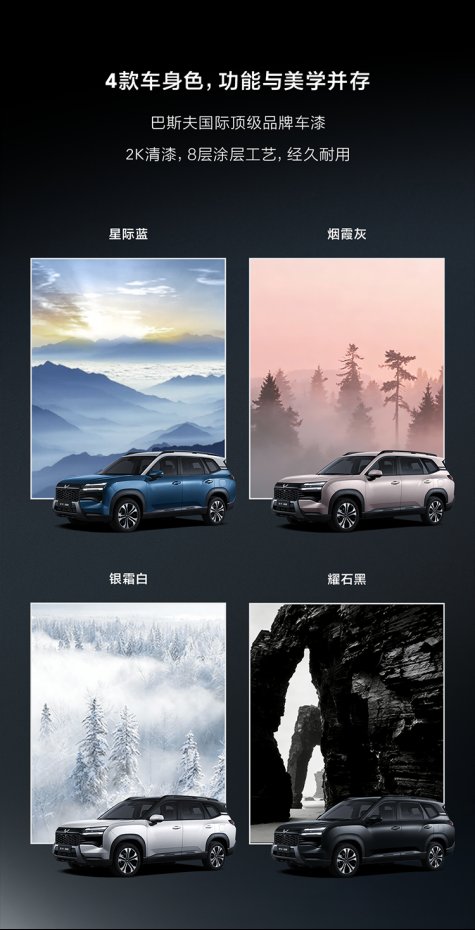
Roof rack, two-tone body, D-pillar trim: typical "scenario-based exterior components," whose core purpose is to expand the usability narrative of camping/loading/commuting, rather than being purely decorative
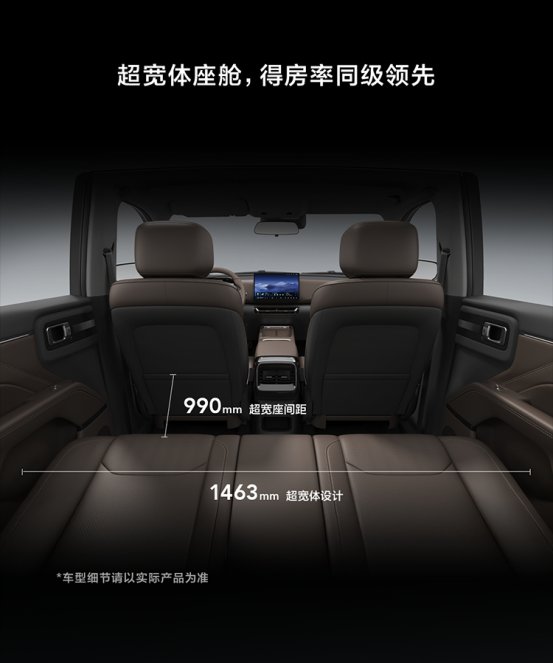
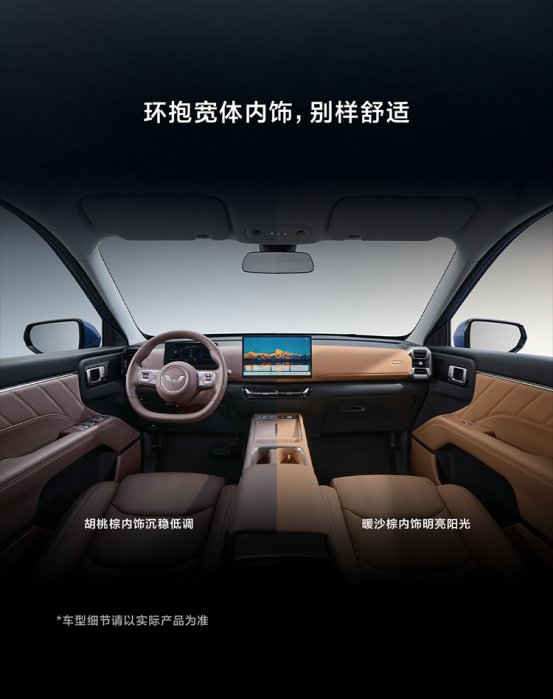
3) Cabin and human-machine interface: the control chain should be "short," and the learning cost should be "low"
Information display and interaction
Floating central control screen + full LCD instrument cluster
Two-spoke multi-function steering wheel
The driver's "information → decision → action" chain
The combination of floating screen + LCD instrument cluster has the advantage of "clear display area and adjustable layout," but the disadvantage is that it places higher demands on the vehicle system's response speed and interaction logic (otherwise it creates a situation where "you can see it but it is not easy to use").
Materials and equipment
Leather wrapping on center console/seats/door panels: improves tactile feel and stain resistance
Wireless charging: a "high-frequency essential item," but the experience depends on charging power, heat dissipation, and the anti-slip structure of the phone holder (for this point, it is recommended to look at real-car details and reviews later)
4) Powertrain: three routes in parallel, the key is your refueling/charging conditions and driving conditions
A. Gasoline version: 1.5T + 6MT/CVT (cost and adaptability first)
Engine: LC4 series 1.5T
Maximum power: 130 kW
Transmission: 6MT / CVT
Interpretation:
6MT version: simple structure, stable transmission efficiency, suitable for people who are budget-sensitive, face complex road conditions, and have requirements for durability/maintainability
CVT version: more oriented toward comfort in urban conditions, with the logic of "letting the transmission handle shift shock itself," suitable for users with a high proportion of commuting
The 1.5T 130 kW is an output that is "sufficient and slightly abundant," matching this vehicle's size and load expectations. The key lies in whether low- and medium-speed torque and thermal management are done carefully (later, real-world fuel consumption and high-temperature conditions need to be examined)
B. Plug-in hybrid version: Lingxi Powertrain 3.0 (efficiency and full-scenario coverage)
Technology: Lingxi Powertrain 3.0
CLTC pure electric range: 125 km
WLTC combined range: 1100 km
Interpretation:
The advantage of a plug-in hybrid is not "good-looking parameters," but the energy management strategy:
City: prioritize electricity, reducing the frequency of engine intervention (friendlier for NVH and vehicle cost)
Highway/long distance: the engine enters its efficient range to maintain battery level and output
For users, the value of this system lies in "minimizing the uncertainty of refueling/charging": if you have charging conditions at home, you can save more; if not, it can still run long distances like a gasoline car.
C. Pure electric version: 100 kW motor + 60 kWh battery (low cost and consistent experience)
Motor maximum power: 100 kW
Battery: 60 kWh Shenlian battery
CLTC range: 500 km
Interpretation:
The core of the pure electric version's experience is three things:
1) Electricity consumption (vehicle weight, drag coefficient, tires, and heat pump/air conditioning strategy determine your real range)
2) Charging speed (fast-charging rate, charging curve, temperature control preheating logic)
3) Winter/high-temperature degradation (battery thermal management and the vehicle's heat pump system, if present, will significantly affect usable winter range)
100 kW is "sufficient output" for an SUV of this class, leaning more toward smoothness and efficiency rather than a performance orientation.
"Purchase decision tree": do not obsess over parameters, first see which type of usage condition you are in
① Do you have stable charging conditions? (At least one available at home/work)
Yes → prioritize looking at pure electric 500 km or plug-in hybrid 125 km
No → directly look at gasoline (choose 6MT or CVT according to driving preference)
② Is your daily one-way commute ≤50 km?
Yes → plug-in hybrid 125 km can cover most daily pure electric operation, with obvious cost and NVH benefits
No → for pure electric, it depends on whether you can accept the charging frequency; otherwise plug-in hybrid is more stable
③ Do you often drive fully loaded/on highways/intercity?
Often → plug-in hybrid is better suited to "long-distance conditions," while gasoline wins on widespread refueling availability
Occasionally → pure electric is acceptable, but you must accept winter and high-speed range fluctuations
6) Summary
The core of the Starlight 560 is not a single performance parameter, but using the same body platform to "engineer and implement" three powertrain systems, letting users infer the optimal solution from their refueling/charging conditions and driving conditions:
Gasoline solves "accessibility and maintenance cost"
Plug-in hybrid solves "efficiency and full-scenario coverage"
Pure electric solves "daily cost and experience consistency"


