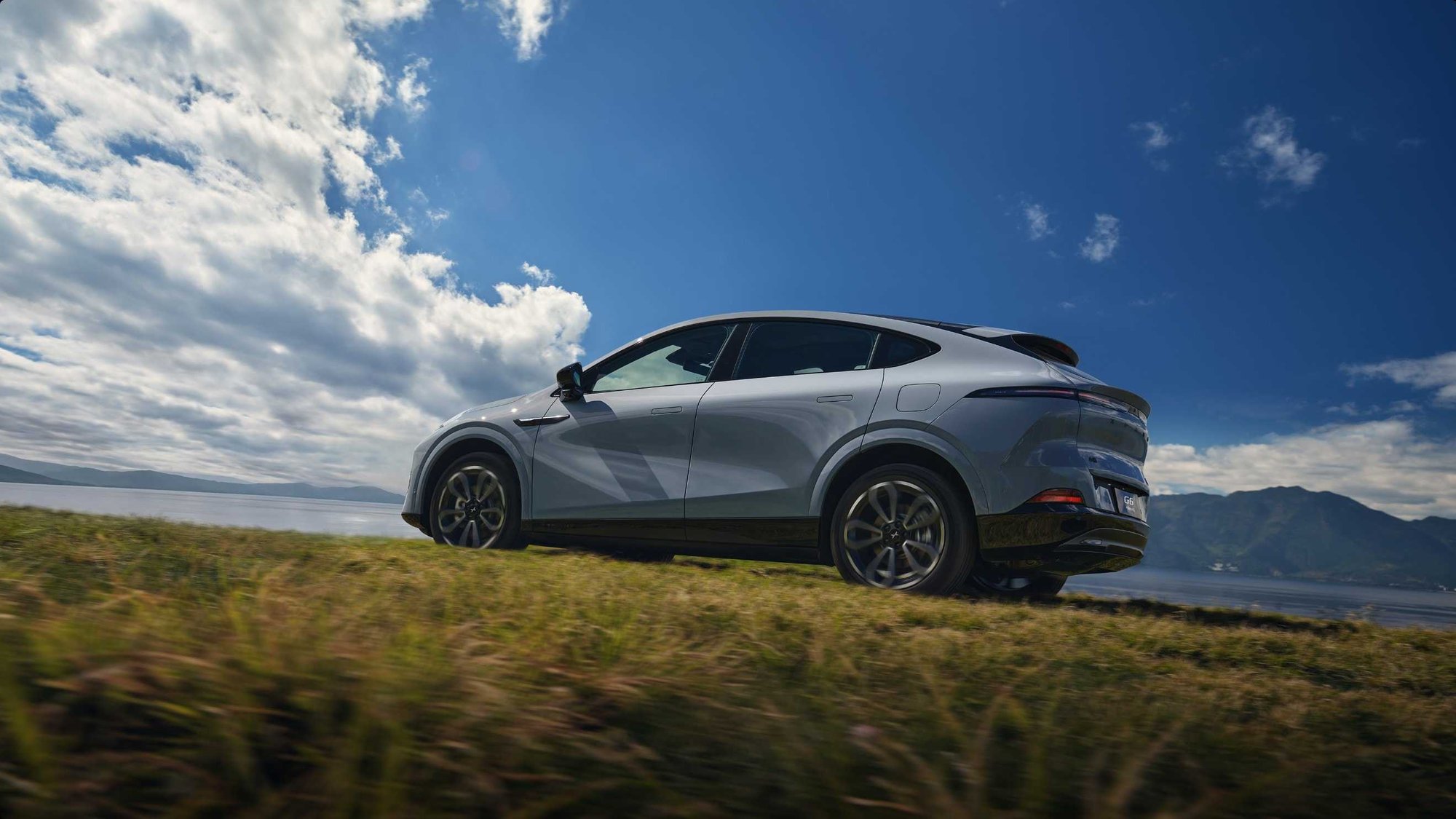
On March 6, XPeng announced the official launch of the XPeng G6 Super Extended Range. The new vehicle is offered in three versions, among which the 1704 Max is priced at 186,800 yuan, the Ultra SE adds 12,000 yuan on top of the 1704 Max, and the Ultra adds 20,000 yuan. Looking at the specs on paper, this is a mid-size SUV with 430 km of pure electric range, 1,704 km of combined range, the second-generation VLA, and 2,250 TOPS of effective computing power.
But understanding it merely as a new car with "longer range and higher configuration" is not enough.
Because today's cars are no longer just a means of transport that takes people from point A to point B. They have begun to carry more: the exhaustion of commuting, the responsibilities of family, the urge to travel far, anxiety about efficiency, and an ordinary person's desire for "certainty" in real life.
And the XPeng G6 Super Extended Range is essentially a car that tries to absorb these uncertainties on behalf of its user.
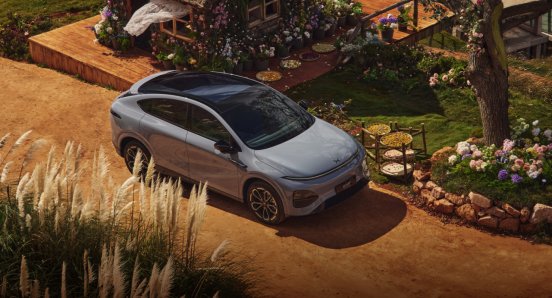
Why do people need an extended-range vehicle
For a long time, discussions about cars tended to be confrontational.
Fuel cars versus electric cars, performance versus energy efficiency, reason versus emotion, and technology and life were often split apart.
But most people in reality do not actually live in such a black-and-white world.
They want the quiet, brisk, low-cost daily experience of a pure electric car, yet they do not want to pay for range anxiety on long trips; they want to embrace technological progress, yet they do not want to become the ones bearing the burden of technological experimentation; they want life to be more efficient, and they also hope that this efficiency does not come at the cost of a sense of security.
From this perspective, extended range is not a compromise; it is more like an honesty suited to a transitional period.
It acknowledges the complexity of reality, acknowledges that infrastructure is not perfect, and acknowledges that people's life scenarios are themselves diverse and changing.
And the XPeng G6 Super Extended Range is precisely a product built on this realist logic.
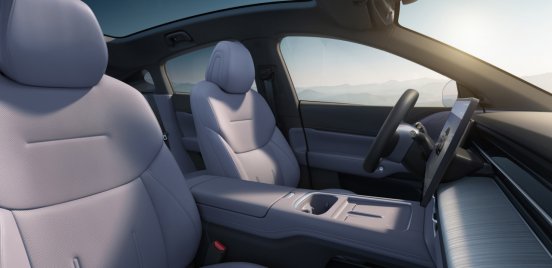
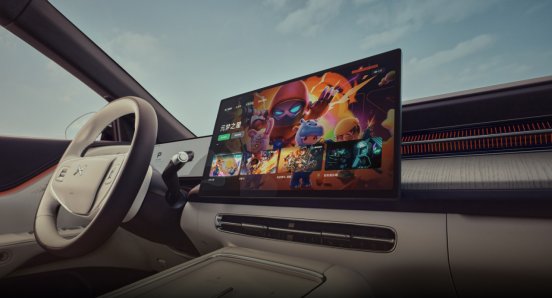
The meaning of 430 km of pure electric range is not a number, but a sense of quiet in life
Many people's first reaction upon seeing 430 km of pure electric range is, "That's a pretty big number."
But what truly deserves discussion is not the number itself, but what it means.
It means that for most urban users, this car can live like a true pure electric car most of the time.
Going to work, picking up the kids, buying groceries, short commutes, weekend trips to the city outskirts—these scenes that make up the main body of life no longer require frequently calling on that 1.5T engine. As a result, the most precious thing about a car appears: a sense of quiet.
The quiet here is not just quiet at the NVH level.
It is, more importantly, the quiet of life being disturbed less.
You do not have to keep staring at the range number, do not have to frequently calculate your recharging radius, and do not have to ask yourself every time plans change at the last minute: is there still enough to drive.
The best state of technology has never been to make people constantly aware of its existence, but to let people naturally forget it.
That is where the meaning of 430 km of pure electric range lies.
1,704 km of combined range is a respect for distant places
At the same time, the XPeng G6 Super Extended Range also offers 1,704 km of combined range.
The most moving thing about this figure is not how exaggerated it is, but that it acknowledges one thing:
people ultimately will not stay forever in the everyday.
No matter how routine life is, there will still be sudden long journeys.
No matter how rational the consumption, there will still be moments when one wants to set off.
The reason cars exist has never been only to serve order, but also to serve impulse; not only to serve responsibility, but also to serve freedom.
So the value of combined range is not just about refueling a few fewer times or charging a few fewer times, but about giving a person a little more composure when facing a last-minute decision.
You can go farther, change your route at the last minute, and not have to plan everything so precisely.
This kind of confidence is, in the end, a kind of freedom.
And a truly mature product does not just talk about freedom, but turns freedom into a perceivable real-world experience.
800V + 5C fast charging is not showing off, but taking back time
The new car adopts an 800V + 5C high-voltage platform, and the official claim is that 12 minutes of charging can add 314 km of range.
Many times, the industry likes to present fast charging as a technological arms race, as if the bigger the number, the more advanced it is.
But from the user's side, the essence of fast charging is actually very simple:
it is helping people take back time.
The most real need adults have for a car may not be how fast it accelerates from 0 to 100 km/h, nor how big the screen is.
More often, it is the hope of not wasting time.
Do not consume too much patience at gas stations and charging stations, do not let recharging become an "extra item" in life's schedule, and do not let a trip become long and drawn out because of waiting.
So what is truly advanced about a high-voltage platform is not that it demonstrates technological capability, but that it minimizes how much technology occupies people.
When recharging becomes faster and smoother, people's attention can return to life itself.
2,250 TOPS and the second-generation VLA are not about making the car smarter, but about making people make fewer mistakes
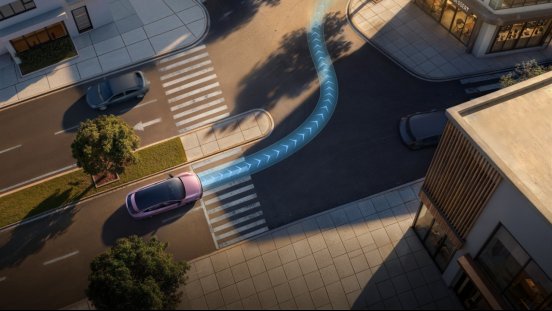
The XPeng G6 Super Extended Range is equipped with the second-generation VLA, with effective computing power reaching 2,250 TOPS.
At the same time, the new car also emphasizes capabilities such as stable driving after a blowout at 180 km/h, snow and ice AES support up to 130 km/h, and AEB maximum stopping speed of 130 km/h.
When many people talk about intelligent driving today, they most easily fall into a misconception:
they always want to ask whether the car can drive for them.
But the more fundamental question is actually:
can it, when I make a mistake, hesitate, am tired, or get distracted, block risk as much as possible in front of me.
Because people are not machines.
People get tired, make misjudgments, and react one second late in complex environments.
So the truly valuable part of intelligence is not showing off that "machines are better than people," but acknowledging human limitations and then using technology to leave people more room.
Safety has never been the opposite of speed.
Safety is not offending life, is a buffer against mistakes, and is whether the system is willing to do a little more for people when danger occurs.
If the automotive industry in the past solved "whether people can go faster," then today's new cars should solve "whether people can still be steadily caught in a more complex world."
The design has not changed much, because maturity does not always need to be loud
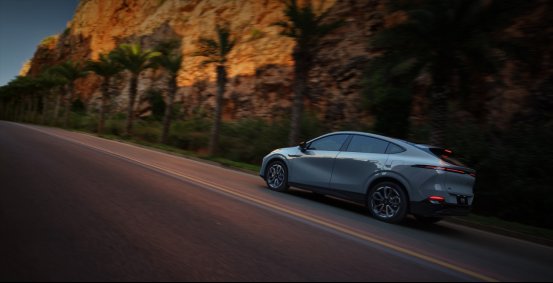
In terms of styling, the XPeng G6 Super Extended Range remains overall consistent with the pure electric version.
The front face still features the Galaxy Light Wing through-light, the side retains the fastback stance and hidden door handles, and the rear adds the POWER X badge. The body dimensions are 4,771/1,920/1,650 mm, with a wheelbase of 2,890 mm, and the vehicle length has increased by 13 mm compared with the pure electric version.
This is actually quite interesting.
In an era fond of using exaggerated changes to create freshness, XPeng did not deliberately turn the extended-range version into a completely different car this time.
Behind this is precisely a kind of maturity:
truly valuable changes do not always have to prove themselves through the strongest visual differences.
Many times, a good product upgrade is not "redefining everything," but letting what has already proven effective continue to hold, and then slowly filling in the places that were not perfect enough before.
This is a kind of restraint, and also a kind of plain wisdom in engineering thinking.
The value of the chassis is that it lets a car not only run, but run properly
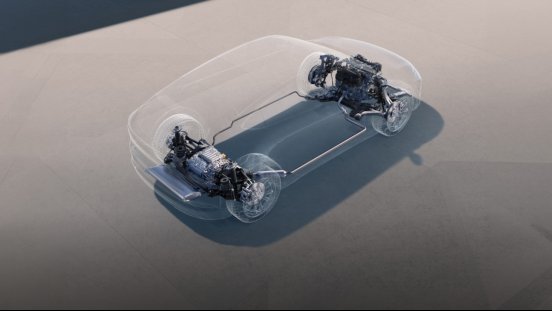
The XPeng G6 Super Extended Range is equipped with the Taiji AI chassis, adopting front double wishbone and rear five-link independent suspension, and is fitted with a Taiji hydraulic bushing matrix, while also standardizing DCC.
The chassis is often not the part most likely to go viral at a launch event, but it is closest to a car's "personality."
The screen and chip determine how advanced it looks, while the chassis determines whether it actually drives like a mature car.
For family users, the so-called sense of premium has never been an abstract word.
It may be a little less abrupt when going over speed bumps, a little more stable when changing lanes at high speed, and the people in the car being less exhausted after a stretch of rough roads.
In the final analysis, the chassis is not about making the specs look good, but about making the relationship between people and the car more comfortable.
If intelligence is helping people reduce the cost of judgment, then the chassis is helping people reduce the physical cost.
A truly good family SUV ultimately has to return to this kind of plain experience.
In the end: at the end of technology, there are still people
The launch of the XPeng G6 Super Extended Range looks on the surface like a new car release, but in fact it also reflects an increasingly clear trend in today's auto industry:
consumers are no longer satisfied with excellence in a single dimension.
What they want is not only range, not only intelligence, not only chassis, and not only price.
What they want is a car that can enter real life, understand real life, and reduce as much as possible the friction of real life.


