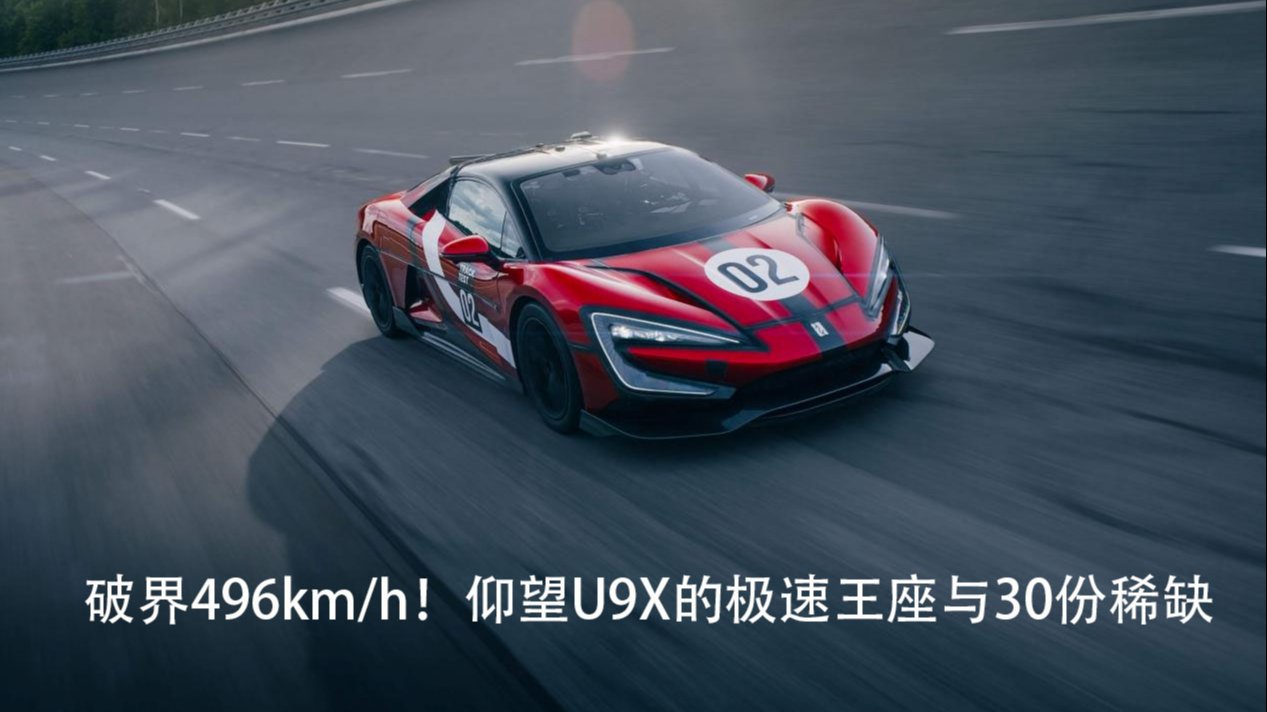
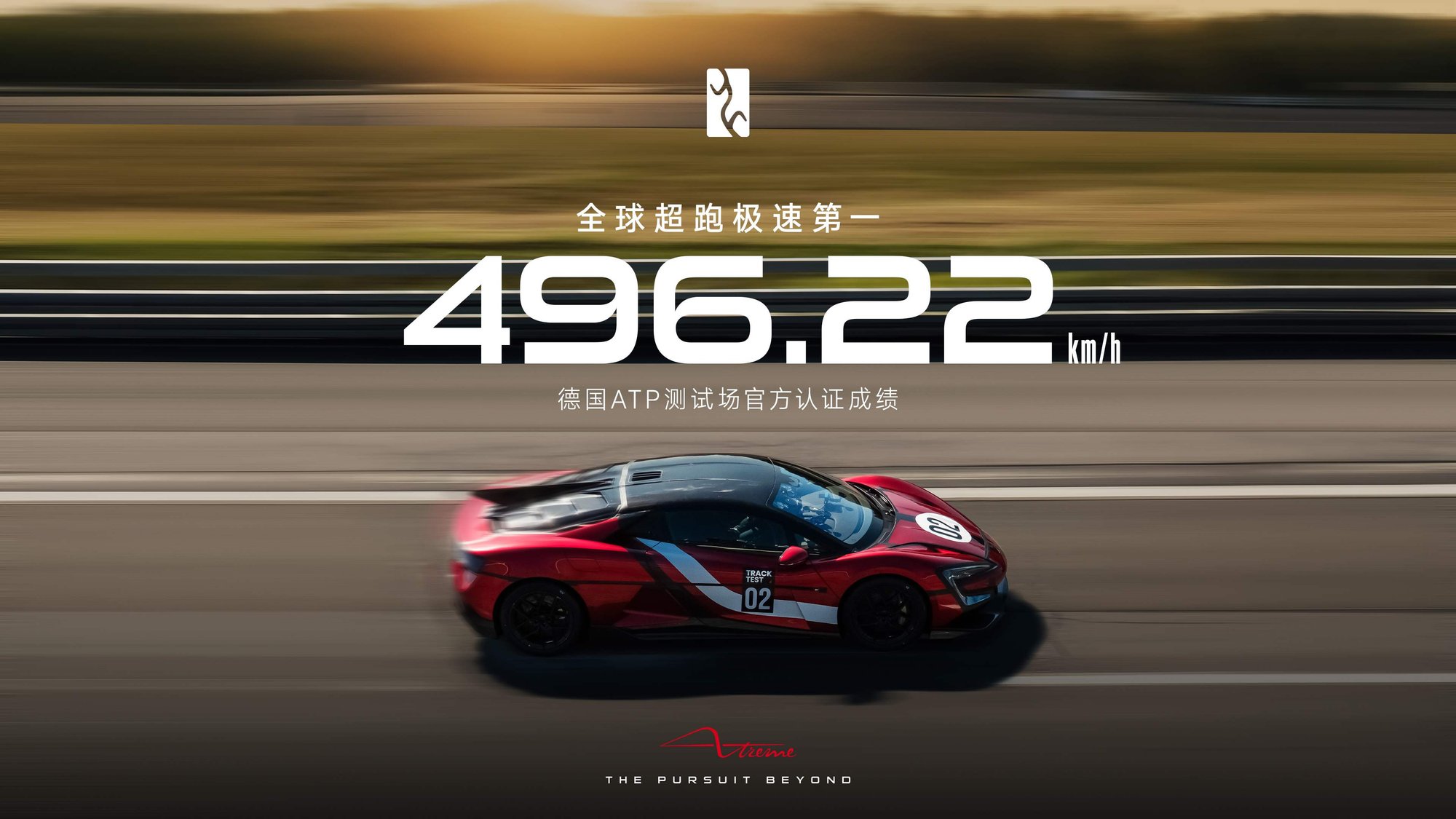
In the century-long history of the automotive industry, "top speed" has always been the ultimate yardstick for measuring the strength of top-tier supercars. And this time, the one standing at the pinnacle of the world is a pure electric supercar from China—the Yangwang U9 Xtreme.
Its name derives from the English word "extreme," meaning limit and ultimate, while the "X" further symbolizes the unknown and boundaries. The Yangwang U9X was born with the mission of "breaking boundaries." When a car roars past at 496.22 km/h, what it writes is not just a statistic, but the turn of an era. With only 30 units worldwide and each one supporting a unique customization scheme, it has already become a legend before launch.
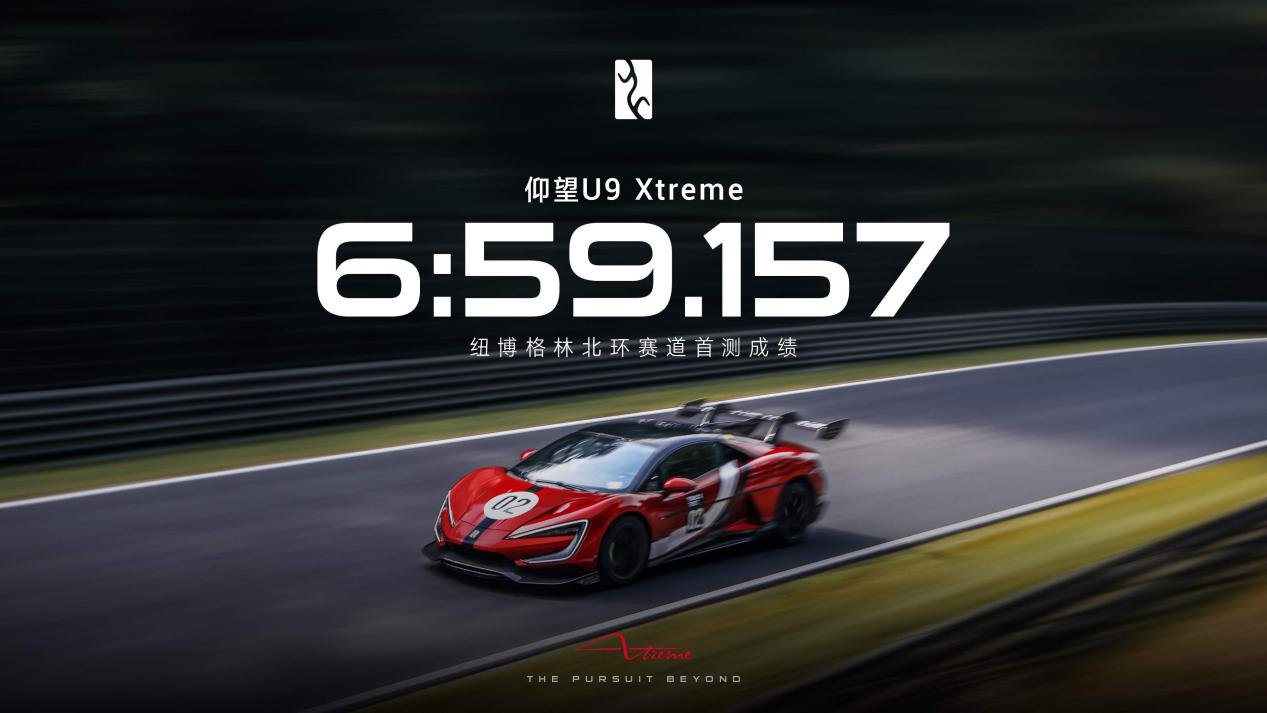
Not long ago, at Germany's Nürburgring Nordschleife, known as the "Green Hell," it achieved an astonishing lap time of 6 minutes 59.157 seconds on its very first timed test. With both top speed and lap time mastered, the U9X demonstrates through action what an "all-around performance monster" really is. Even more worth interpreting is the complete engineering philosophy behind it that is entirely oriented toward track scenarios. It is not a simple "upgrade" based on the original U9, but a thorough track-focused reconstruction across multiple dimensions including the high-voltage architecture, electric drive system, thermal management, braking, and even tires.
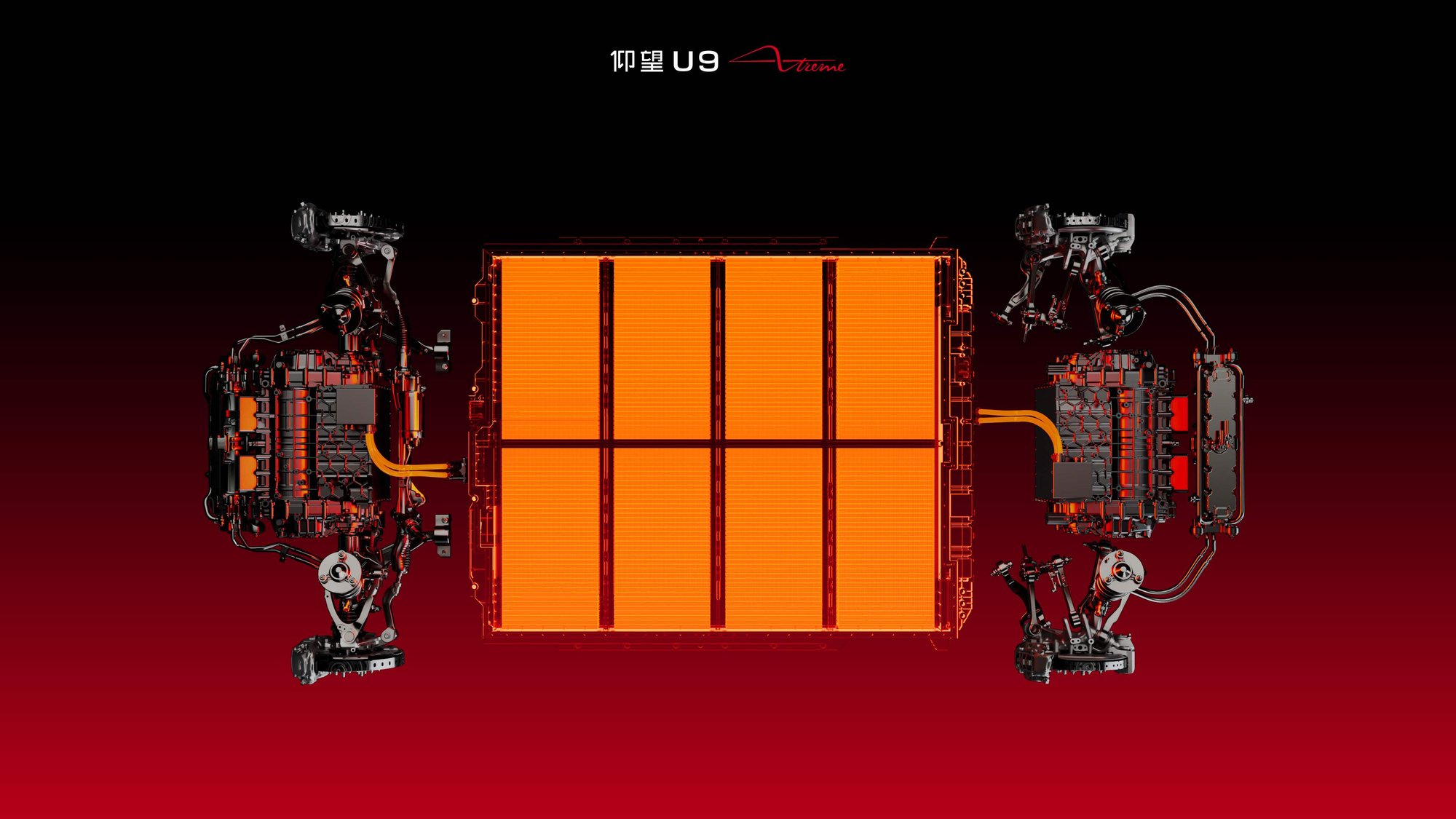
High-voltage platform and motors: not just fast, but sustainably fast
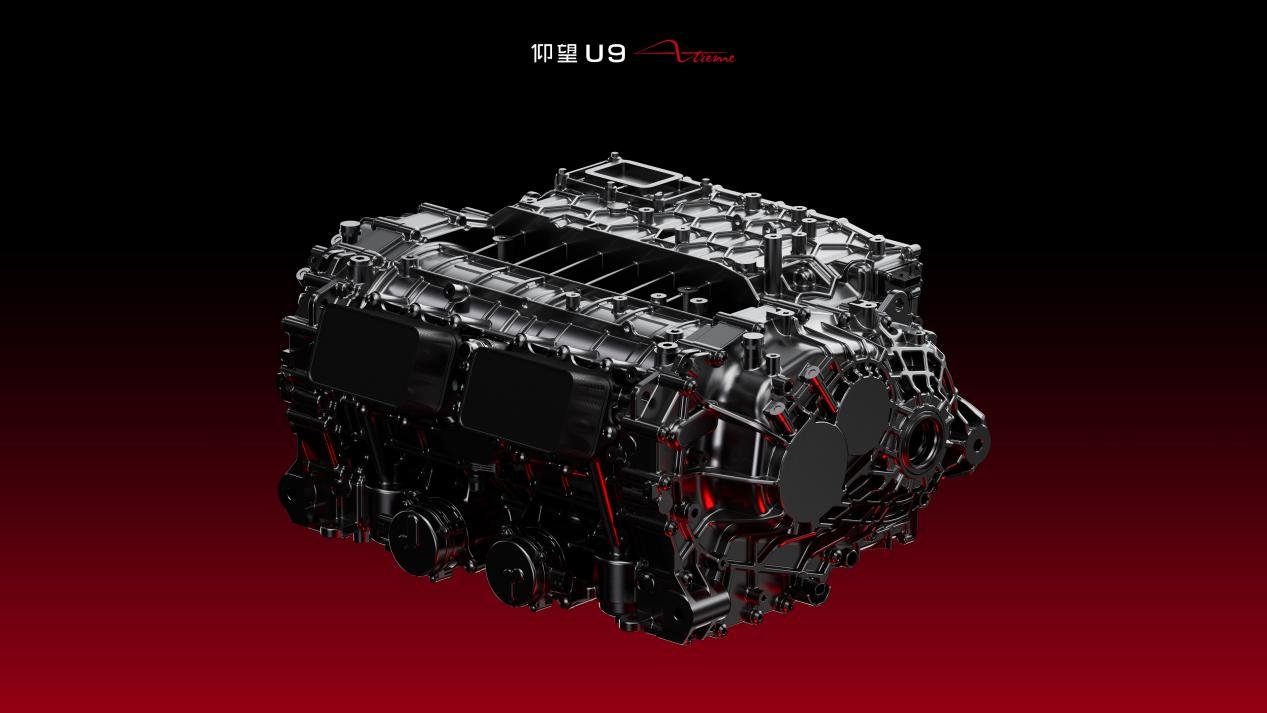
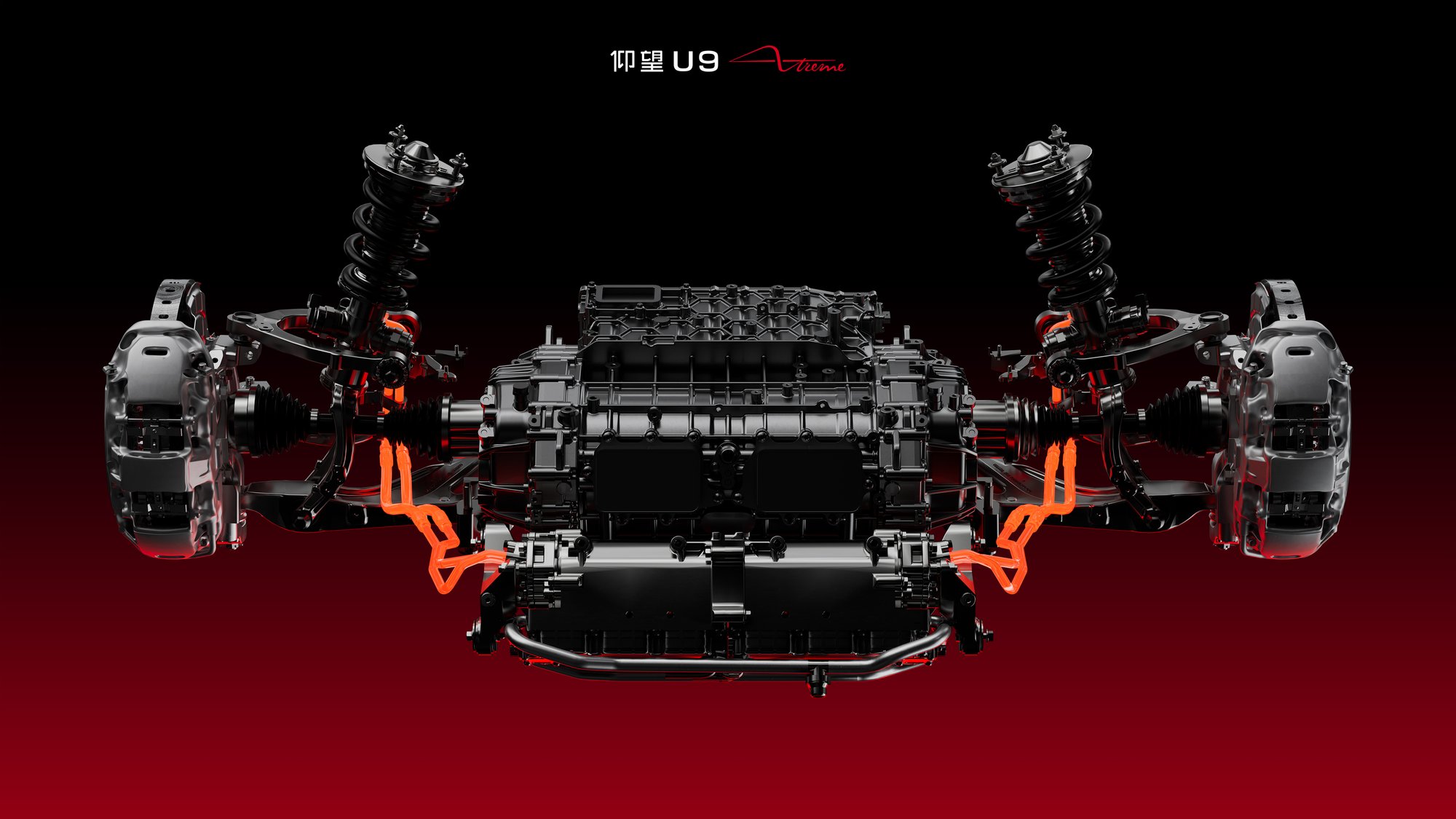
The 1200V ultra-high-voltage platform carried by the U9X is not merely an increase in voltage numbers. It means thinner wiring harnesses, lower heat generation, and higher efficiency, especially energy stability under continuous high-load output. Combined with four-motor independent drive, the 30,000 rpm speed is backed by aviation-grade materials and precision craftsmanship—such as high-strength aviation aluminum housings, high-speed bearings, and a 970MPa rotor. The vehicle's combined output exceeds 3000Ps, with a power-to-weight ratio of up to 1217 Ps/t. These seemingly dull terms are in fact the core guarantees of sustainable and controllable top speed.
Thermal management: the invisible "racer-grade strategy"
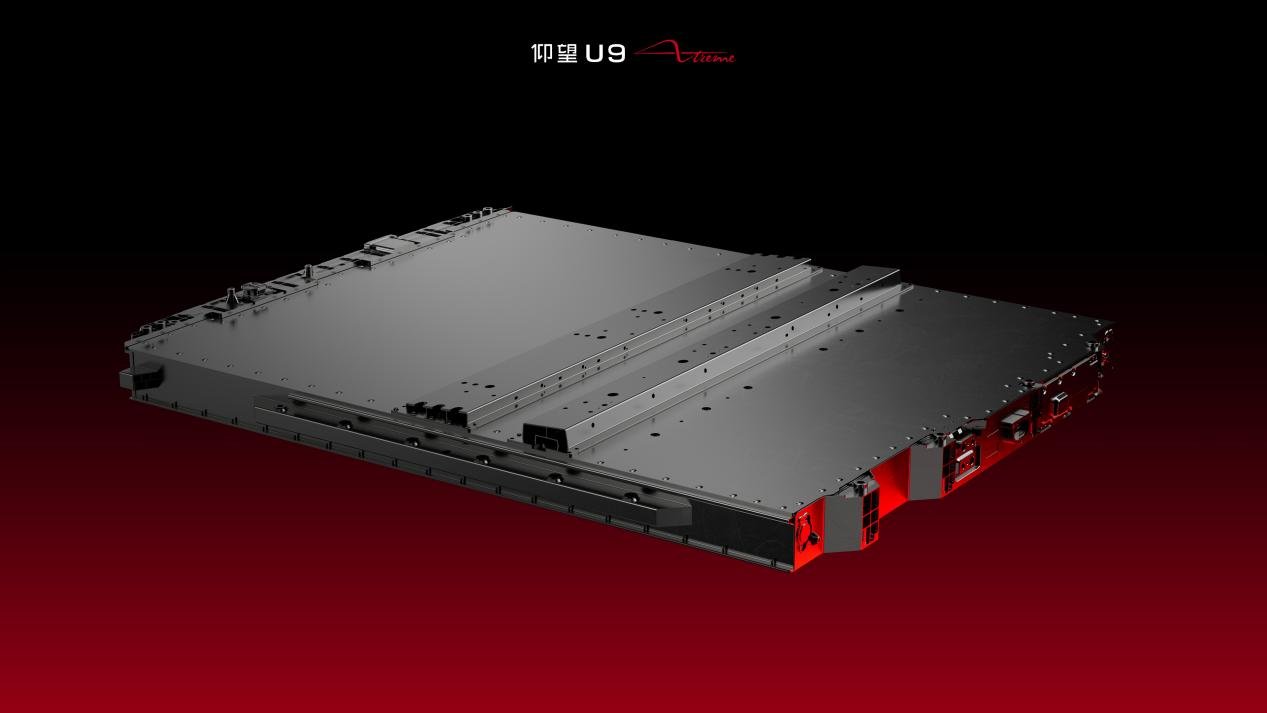
What top speed fears most is thermal fade. For the first time in a supercar, the U9X introduces a "three-dimensional motor cooling + high-flow oil pump" system, increasing total cooling power by 133%. More importantly, its track-grade blade battery, by optimizing cells and internal resistance and combining with a new dual-layer cooling structure, achieves an ultra-high discharge rate of 30C and extreme heat dissipation efficiency. This is not only about the result of one lap, but also means it can still maintain performance output without dropping off during multi-lap track driving.
Braking and tires: the final insurance for ultimate handling
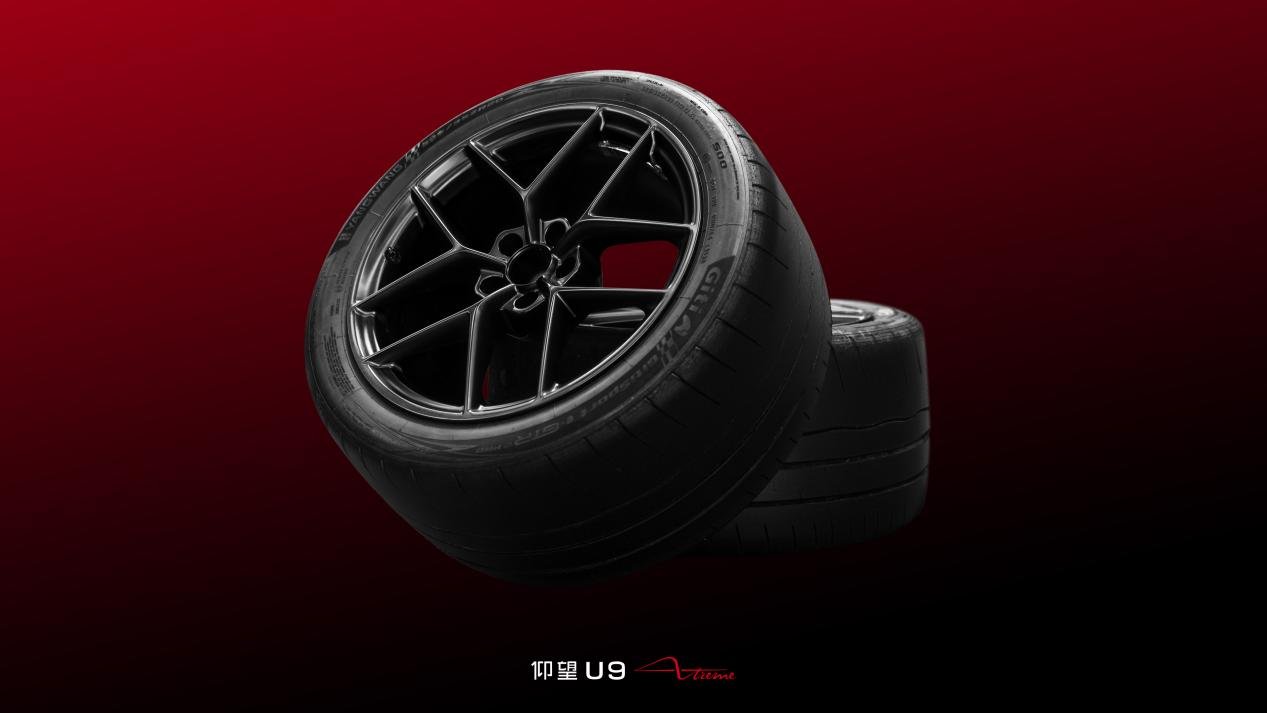
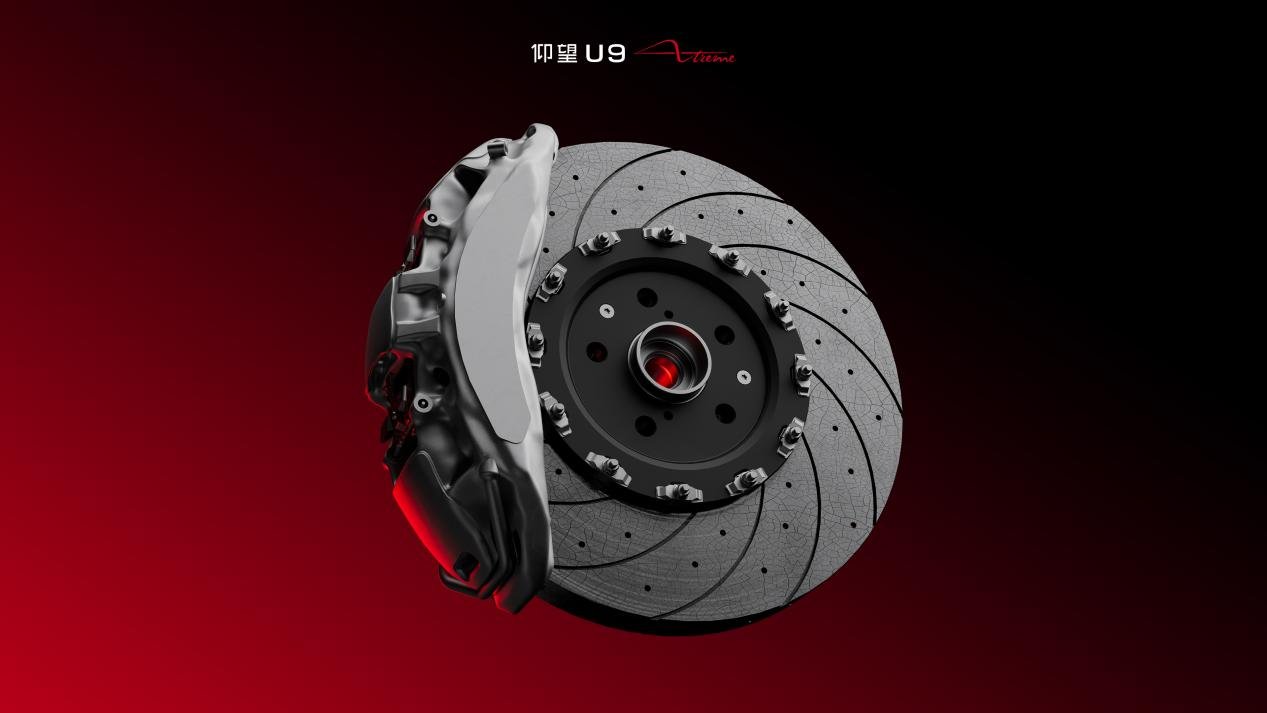
The U9X does not use the traditional braking system of ordinary supercars, but is newly equipped with titanium alloy carbon-ceramic brakes. Titanium alloy calipers are not only lighter, but their low thermal conductivity also eliminates the risk of brake fluid boiling. Paired with the massive data results based on the 2024 Nürburgring and top-speed tests, and the GitiSport e·GTR² ᴾᴿᴼ tire jointly developed with Giti—using aramid fiber, the material used in body armor—it successfully breaks through the 500 km/h centrifugal resistance limit. All of this is to maintain composed braking and cornering even at high speed.
System control: software-hardware collaboration is true redundancy
The real lead of the U9X lies in the fact that it does not simply stack hardware, but through the underlying architecture of e⁴ + DiSus-X, achieves deep integration of motors, braking, suspension, and body control. On a complex track like the Nürburgring, the system can adjust torque distribution, electric braking participation, and body pitch attitude in real time, thereby reducing mechanical braking load and improving corner-exit efficiency. This model of "algorithms defining performance" is the true advantage of new-energy supercars against traditional supercars.
From being unseen to being unsurpassed
The emergence of the Yangwang U9X symbolizes that the high-end breakthrough of China's automotive industry has moved from "catching up" into the "leading" stage. What it displays is not only a top-speed figure, but a complete set of systemic capabilities with technological discourse power. From batteries to motors, from heat dissipation to intelligent control, from materials to underlying architecture—BYD's full-stack in-house development in these core areas has finally erupted in concentrated form on this one car.
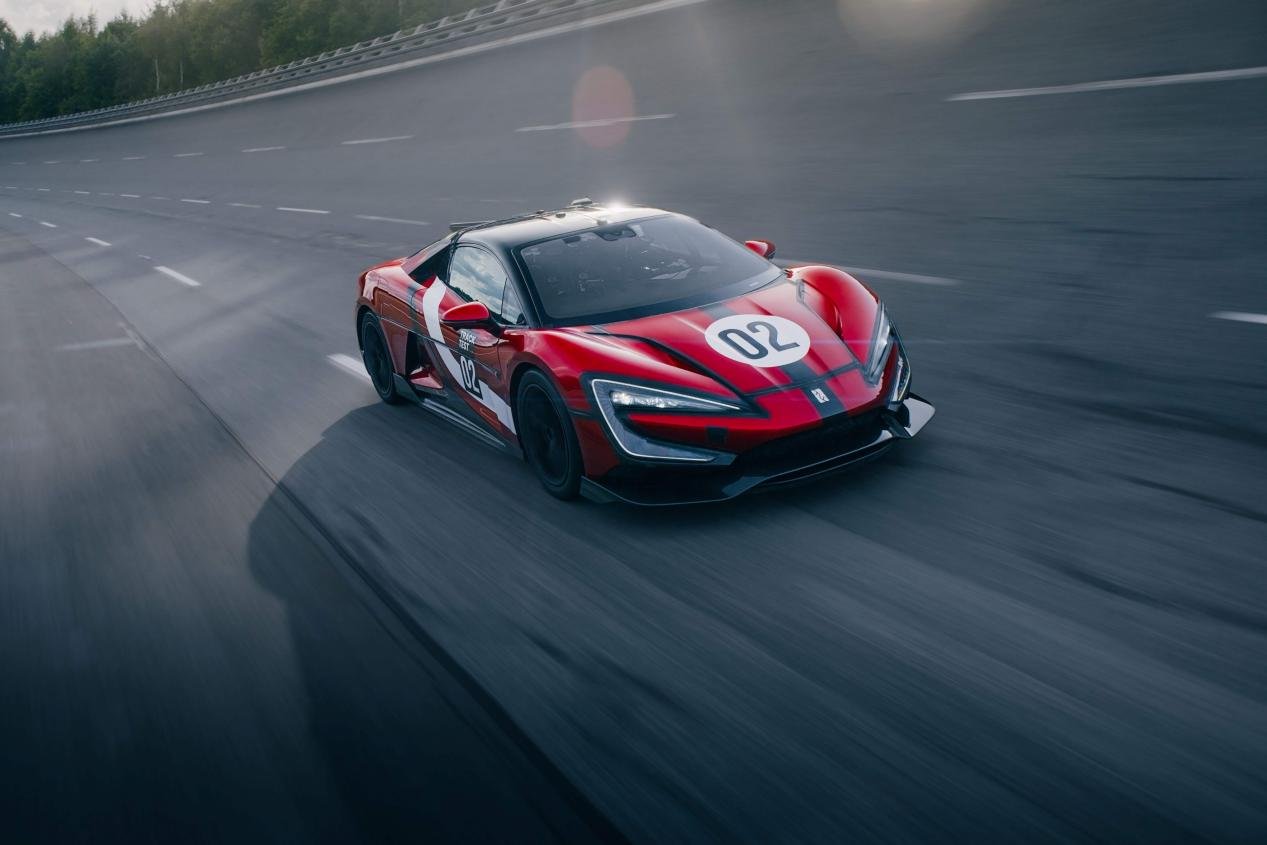
It can be said that the U9X is a "technology calling card" and also a signal: Chinese brands are no longer confined to cost-effectiveness or the family market, but have the strength to compete head-on with international luxury houses in the field of top-tier performance. Electric is only the starting point; top speed has no endpoint either.


