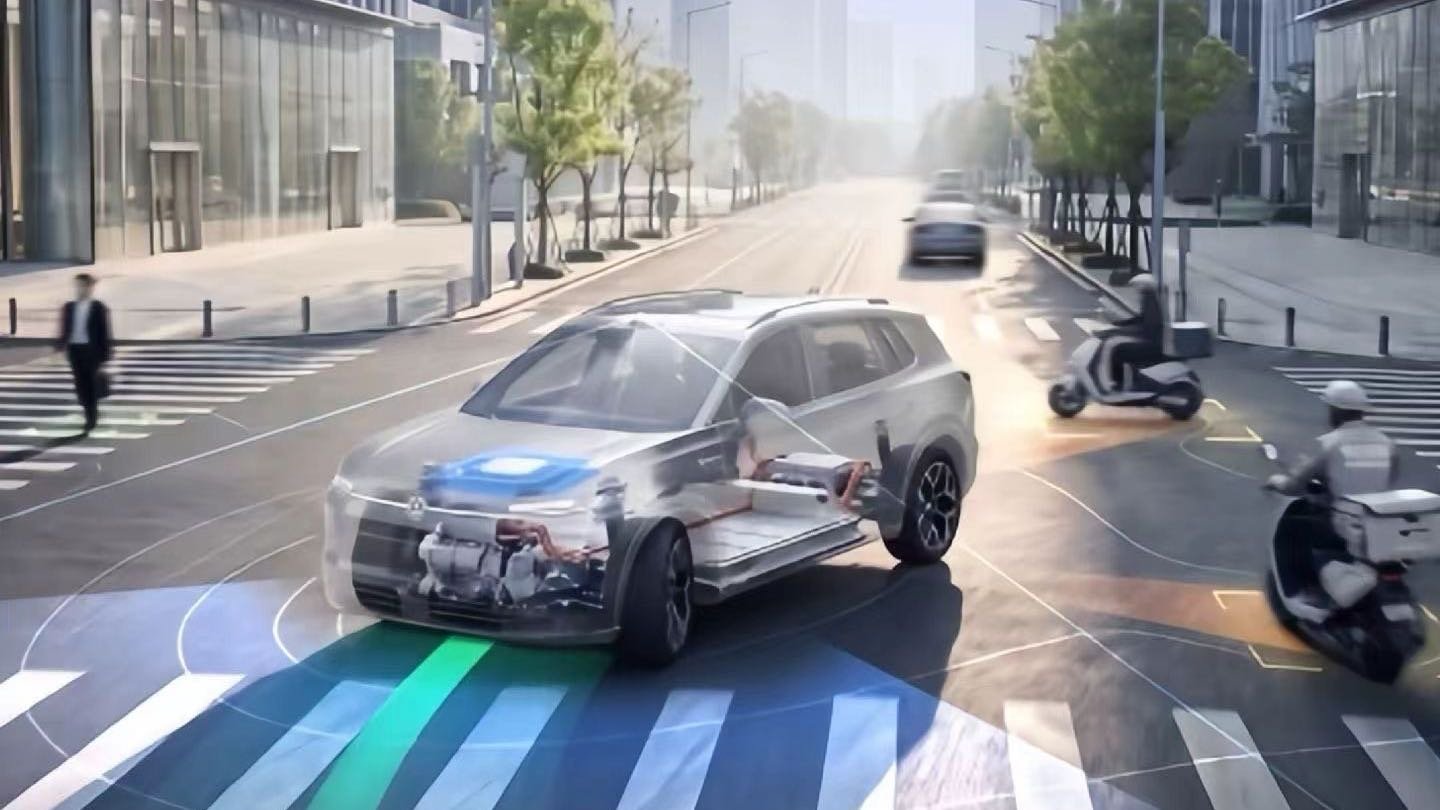
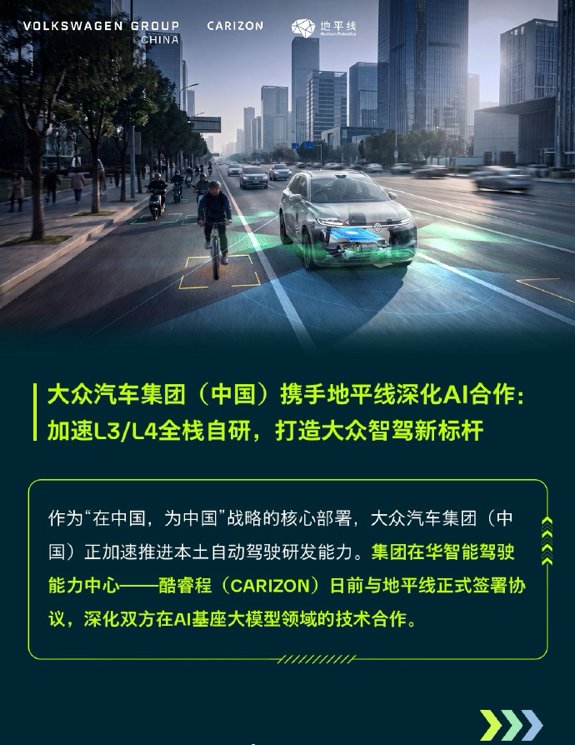
On July 22, Volkswagen Group (China) and Horizon Robotics officially announced that the two parties will further deepen their technological cooperation in the field of AI foundation models, accelerating the independent R&D process of L3 and L4 autonomous driving technology.
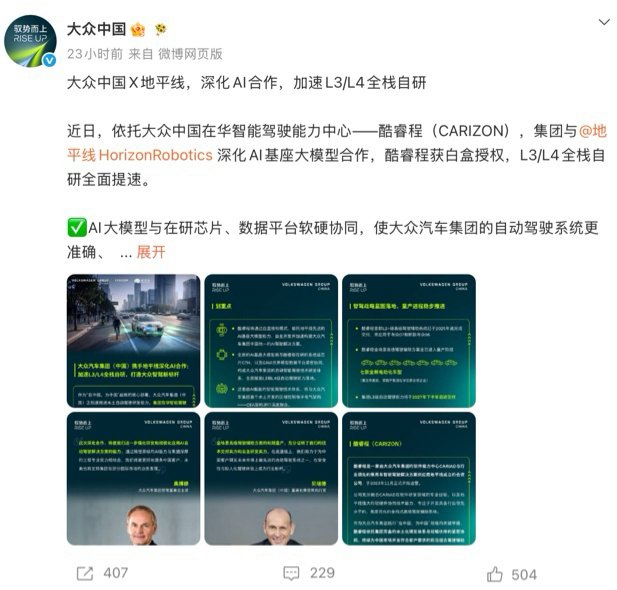
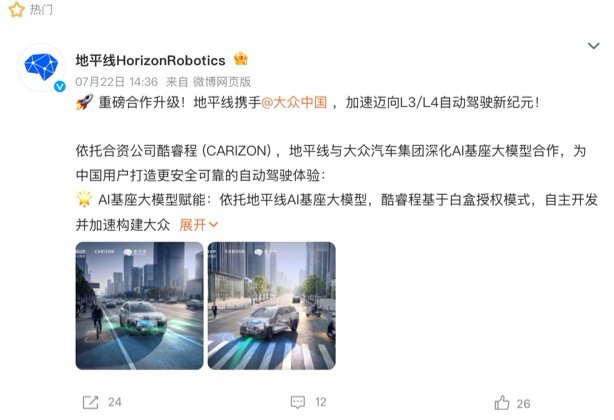
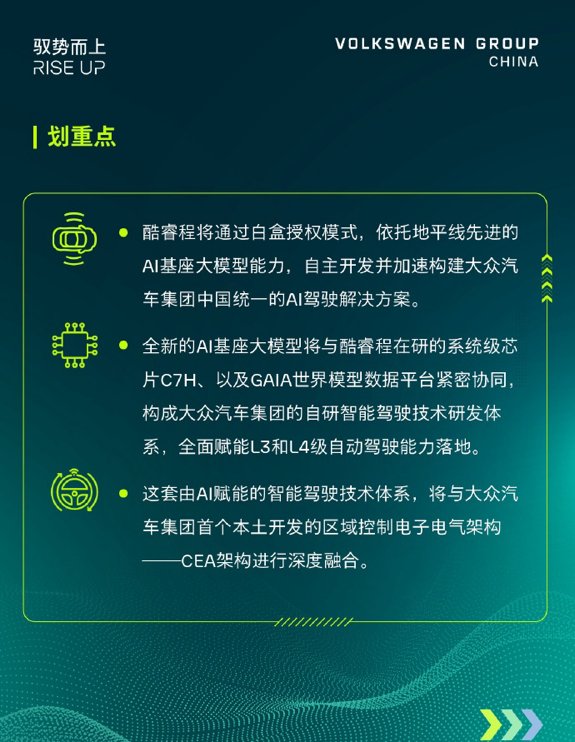
The two parties will collaborate through CARIZON, the joint venture between Volkswagen's software technology company CARIAD and Horizon Robotics. CARIZON will adopt a "white-box licensing" model, leveraging Horizon Robotics' advanced AI foundation model capabilities to independently develop and build a unified AI driving solution for Volkswagen Group (China).
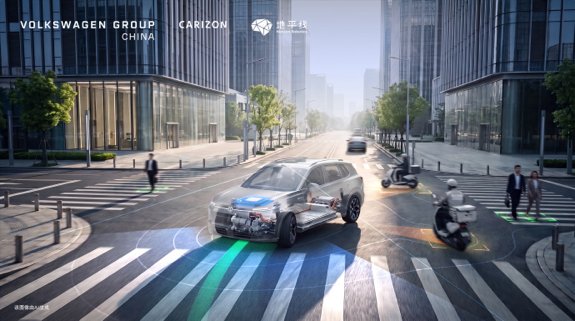
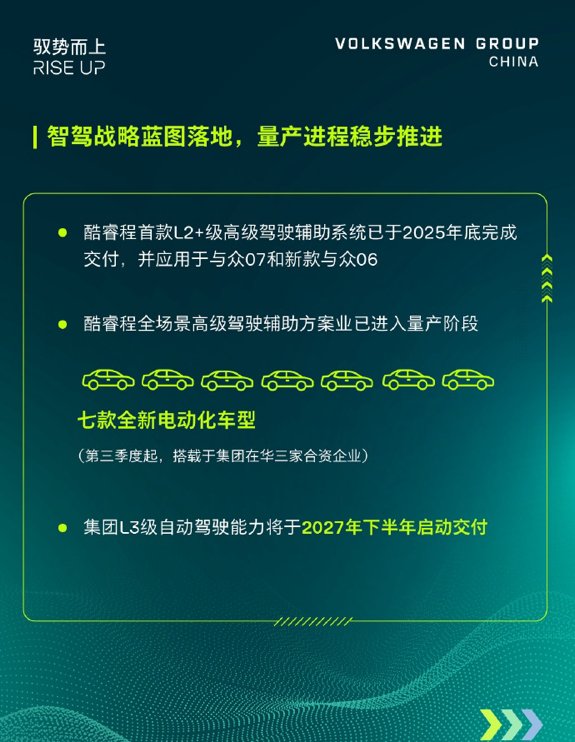
The all-new AI foundation model will work closely with CARIZON's in-development system-on-chip C7H and the GAIA world model data platform, forming Volkswagen Group's self-developed intelligent driving technology R&D system. Volkswagen Group's first L3 autonomous driving solution is expected to begin deliveries as early as the second half of 2027.
Meanwhile, CARIZON's self-developed full-scenario advanced driver assistance solution has entered the mass production stage and will be progressively installed in seven all-new electrified models across Volkswagen's three joint ventures in China starting in the third quarter of this year, and will gradually expand to a broader range of CEA architecture products starting next year.
Rapid Comment:
This is a key step for Volkswagen in China as it shifts from "buying ready-made solutions" to "building a self-developed intelligent driving system." L3 now has a clear timetable, and the mass production solution is also being implemented as planned. How joint venture automakers can make up for their shortcomings in intelligentization—Volkswagen's approach is worth watching.


