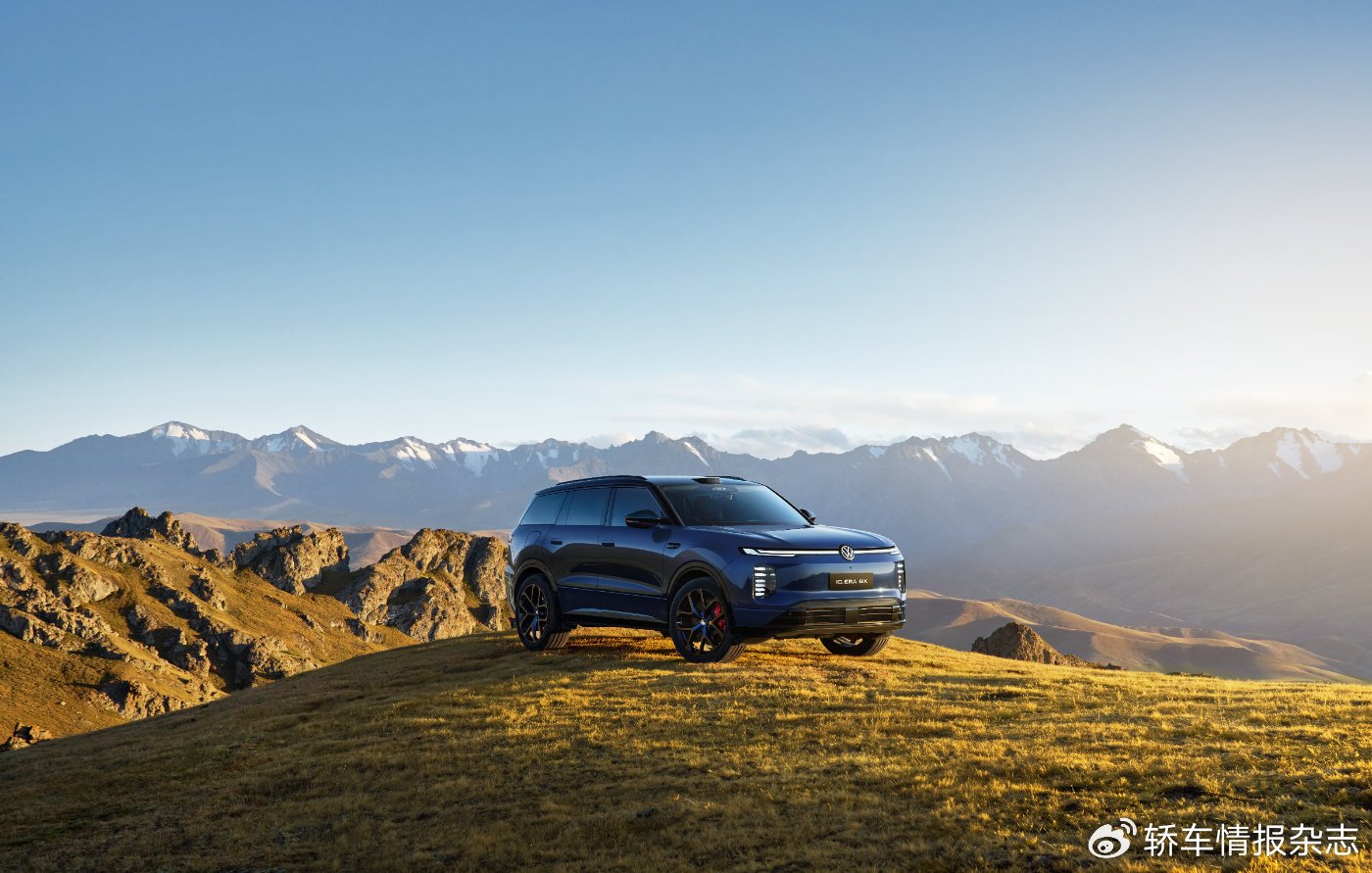
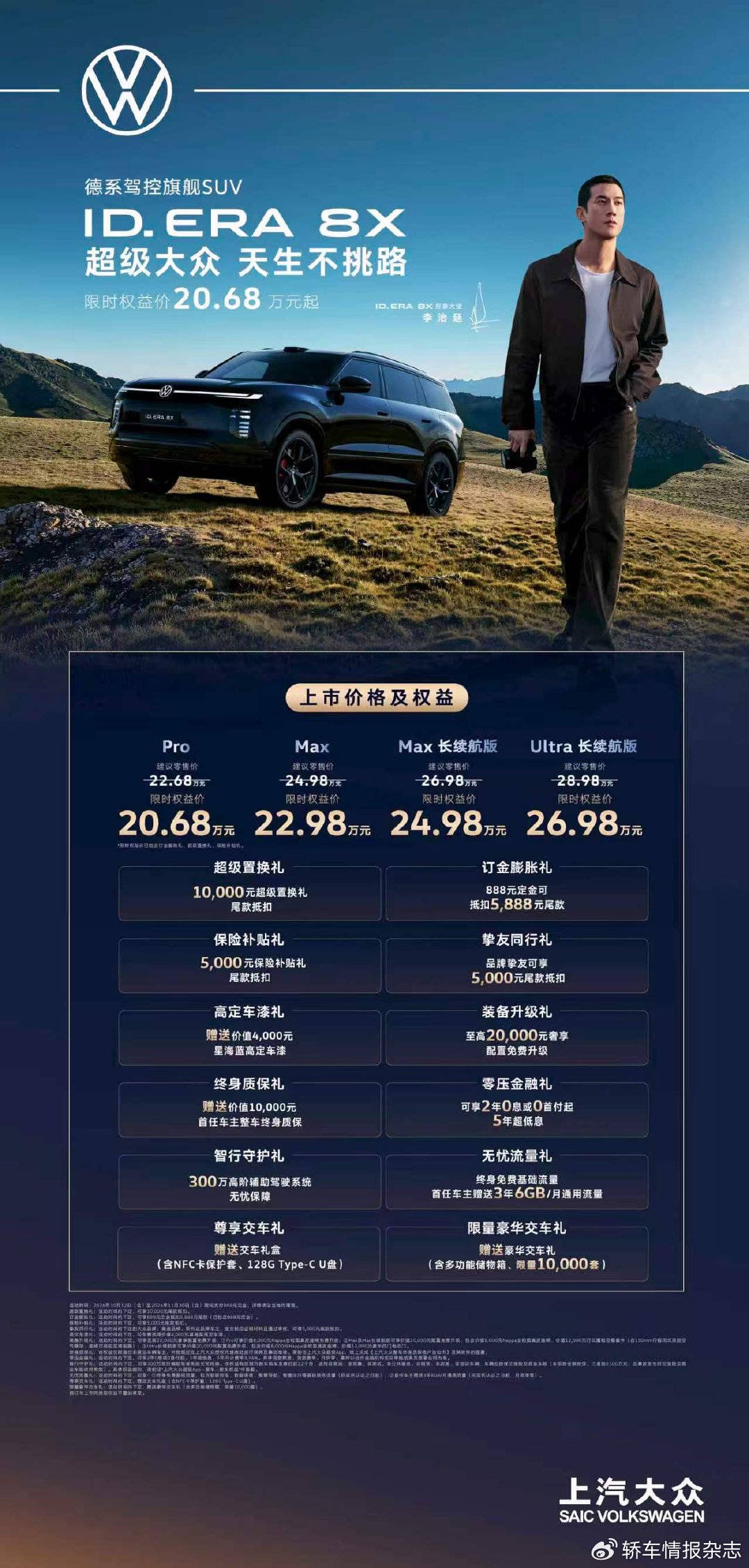
As the domestic new energy SUV market falls into a competitive landscape of stacked configurations and parameter involution, SAIC VolkswagenID. ERA 8X officially made its debut in Chengdu, entering the market with a limited-time benefit price starting at 206,800 yuan. This large five-seat extended-range SUV, positioned as a German-engineered driving flagship, breaks away from the conventional playbook of simply competing on range and screen count. Leveraging Volkswagen's mature engineering system, it makes chassis handling, vehicle safety, and standard high-level intelligent driving across all trims its core breakthrough points, allowing the industry to once again see the technical accumulation and product thinking of traditional joint venture automakers in the new energy sector.
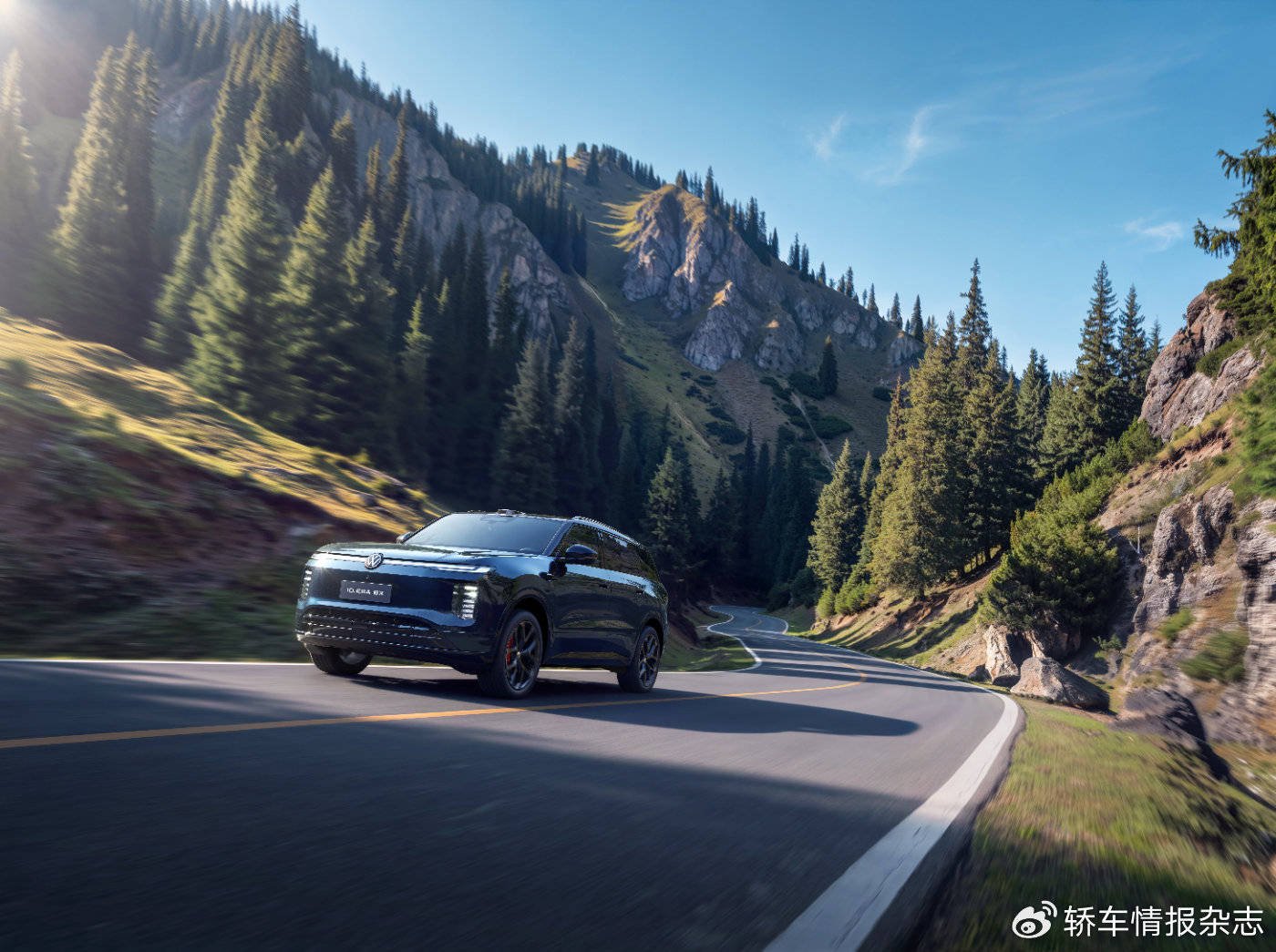
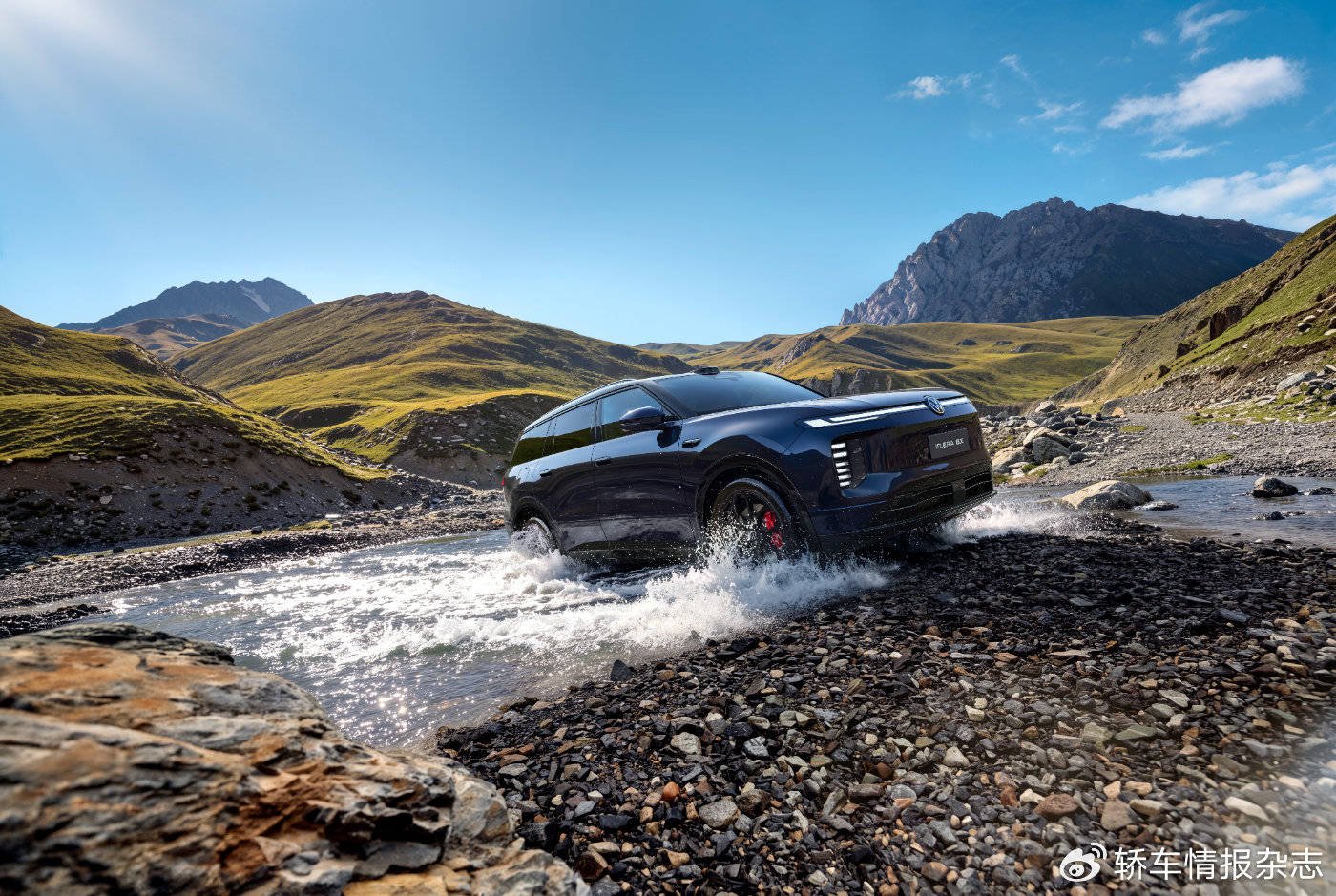
The large five-seat segment has long been a fiercely contested battleground in China's new energy market, with numerous new products launching in clusters. Many products rely on a single eye-catching feature to quickly attract attention, but overall vehicle tuning, long-term reliability, and safety validation under complex conditions often become weak points. The ID. ERA 8X's product proposition of "born to handle any road" essentially targets the real and diverse travel scenarios of Chinese users: urban commuting, long highway trips, complex rural roads, and family outings. It no longer optimizes for a single usage environment, which is also the most typical embodiment of German car-making philosophy.
Standard equipment across all trims breaks industry conventions, redefining the "entry-level, high-spec" standard
Currently, many models on the market set core high-end features such as LiDAR, high-level intelligent driving, and air suspension as top-trim options, raising the threshold for user experience. The most impactful strategy of the ID. ERA 8X is its approach of offering a fully loaded configuration across all trims. Core hardware including front double-wishbone + rear five-link suspension, Continental all-aluminum four-piston calipers, Momenta R7 world model intelligent driving, 192-line LiDAR, and 800V high-voltage fast charging is all made standard across the entire lineup.
The market significance of this strategy is obvious: consumers no longer need to be forced into purchasing the top trim for core capabilities. The four models form a tiered product matrix, with differences between the base commuting version and the top luxury version concentrated in battery capacity, all-wheel drive, and rear-seat luxury comfort equipment, while core driving, safety, and intelligent capabilities are all retained. Combined with launch-period benefits of up to 20,000 yuan in free upgrades, features such as air suspension, Nappa leather, and electric doors can be added at no cost, further enhancing product value. Based on pre-sale order feedback, orders for Max and above trims account for over 80%, indicating that market users are willing to pay for hardcore engineering capabilities like chassis, all-wheel drive, and long range, rather than simply chasing superficial cabin entertainment features.
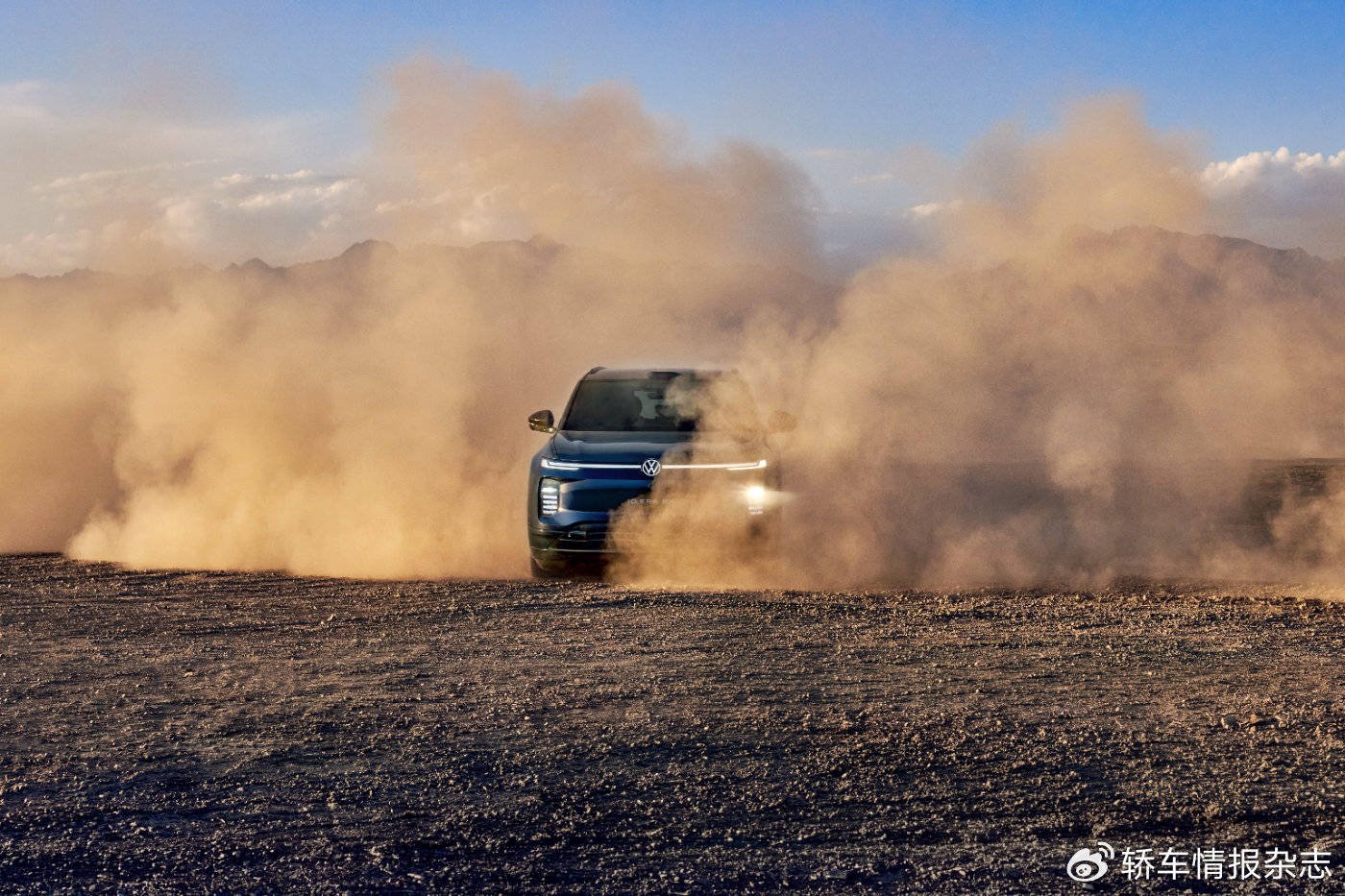
Live battery jump-and-impact test: Safety validation is not marketing theater, it's an engineering bottom line
The most industry-watched moment of this launch event was the industry's first live-streamed battery jump-and-impact test. Among the safety promotions of many new energy vehicles, battery nail penetration and bottom impact tests have become relatively common, but the scenario of consecutive jumps and landings followed by impact with raised obstacles on the road surface is closer to the undercarriage risk users are likely to encounter when driving in the wild or on rough roads. SAIC Volkswagen's choice to publicly livestream this rigorous test is backed by a complete validation system: tens of thousands of hours of bench durability testing, millions of kilometers of road testing, extreme environment validation through two winters and two summers, combined with Volkswagen's global 8,000 engineering standards. It also proposes five major development principles, rejecting rush-built cars, minimum-compliance cars, and spec-stuffed cars.
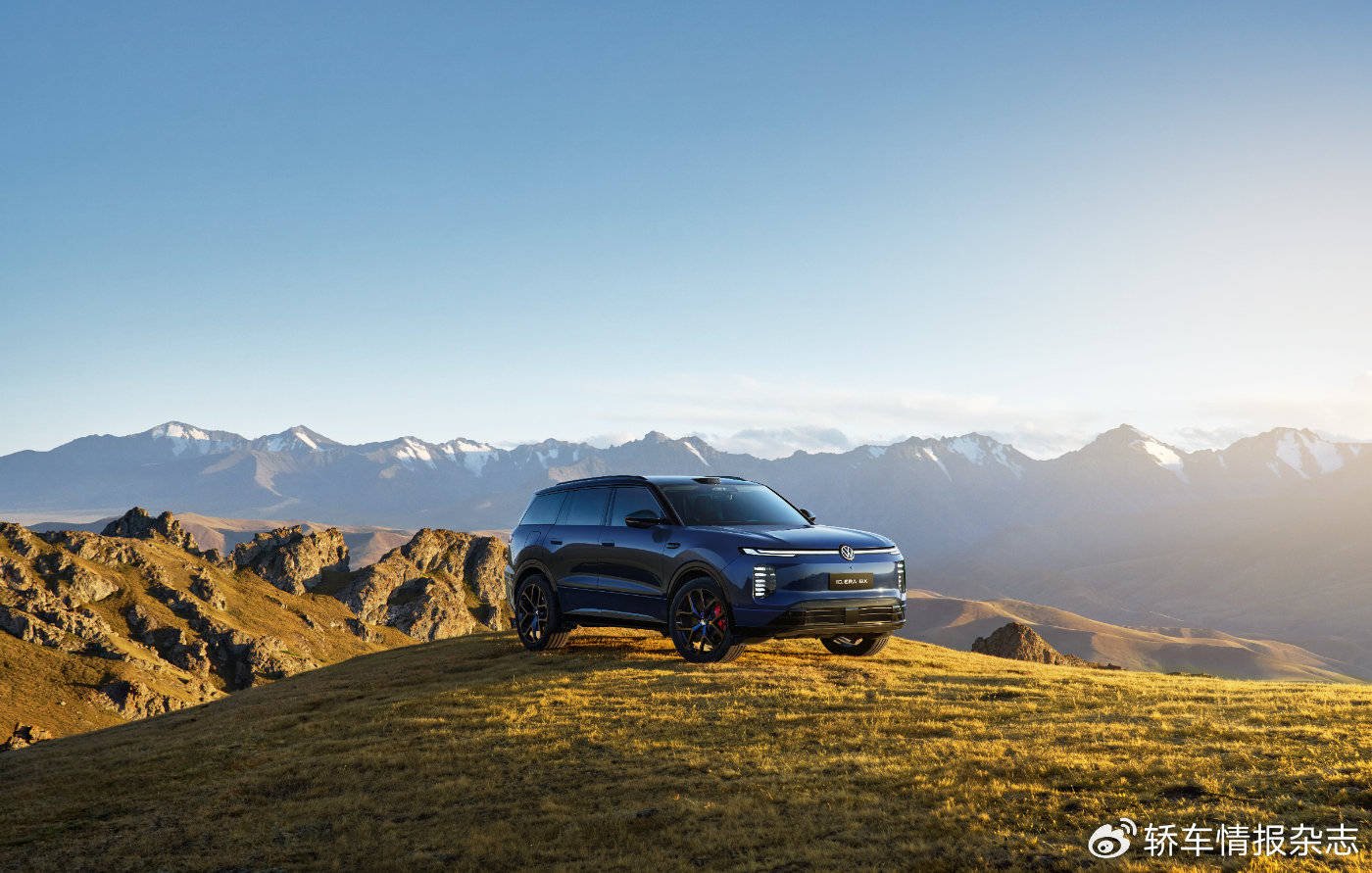
Looking at the broader industry environment, many automakers simplify certain long-term durability and extreme-condition validation steps to accelerate their launch pace. SAIC Volkswagen, however, chooses to front-load validation and publicly present extreme safety tests, sending a signal: the safety of new energy vehicles cannot merely meet minimum regulatory requirements. Battery protection, body structure, and post-rollover escape assurance must all cover every potential danger scenario for users. This is also the quality mindset accumulated over time by established automakers.
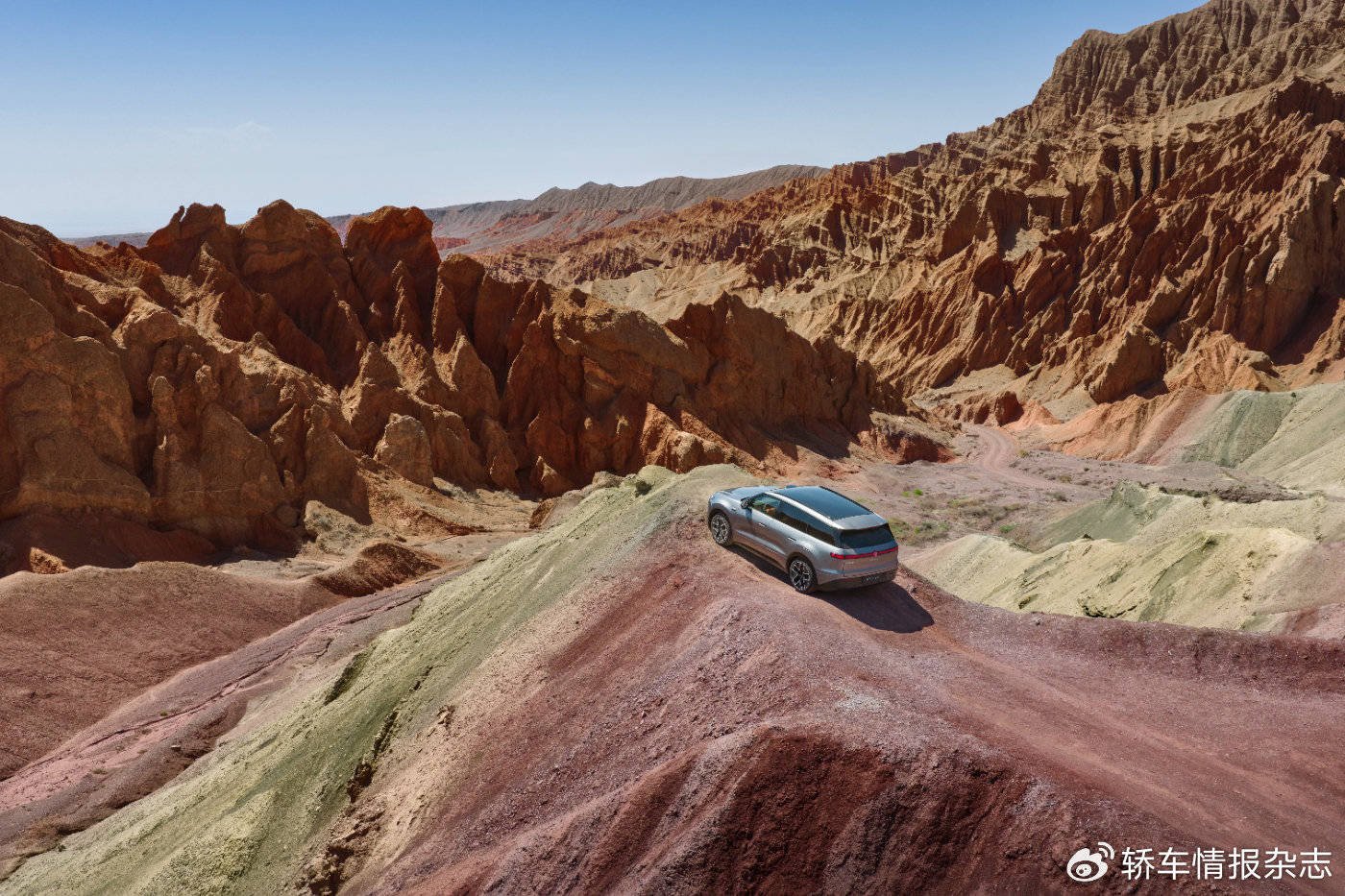
Driving dynamics as the foundation, extended-range power opens a solution balancing performance and long-distance travel
The ID. ERA 8X's "handling master" label comes primarily from its Xingyun intelligent chassis system, with dual-chamber air suspension paired with magic carpet preview, specifically tuned for domestic road conditions, solving the common problems of many air suspension models being poorly adapted, stable at high speed but lacking comfort on broken road surfaces. The EA211 golden range extender is the ballast of the entire powertrain system, developed on an engine platform with tens of millions of units in service, validated by the market over the long term, with high thermal efficiency and support for 92-octane gasoline, reducing users' long-distance travel costs.
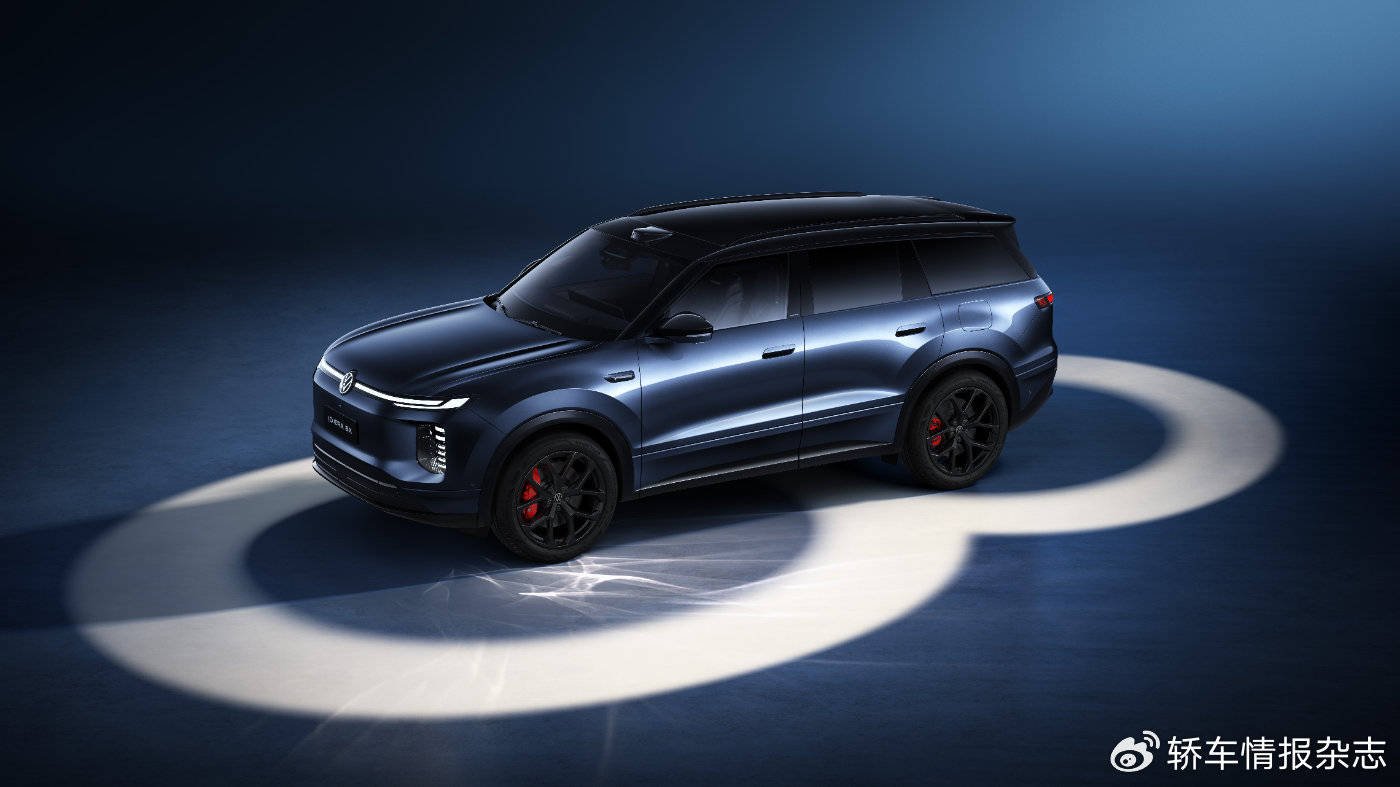
The extended-range approach itself is very well suited to China's complex travel needs: daily commuting on electricity for low-cost travel, and long-distance travel relying on the range extender to eliminate range anxiety. The long-range version achieves a combined range exceeding 1,602 km, paired with 800V high-voltage fast charging and external discharge functionality, perfectly matching the current trend of family long-distance road trips and camping, accommodating both daily urban use and long-distance travel scenarios.
Intelligent driving and cabin synergy, balancing smart technology with family practicality
In the intelligent domain, the ID. ERA 8X chooses to equip all trims with Momenta R7 world model Xingyun intelligent assisted driving, with high-level intelligent driving no longer serving as an exclusive top-trim selling point. The world model intelligent driving solution is optimized for China's complex road conditions—narrow road passing, three-point turns, roundabout navigation, and other scenarios are high-frequency challenges encountered on urban and township roads in China. D2D parking-to-parking navigation assistance connects the entire chain of driving and parking, further lowering the threshold for using high-level intelligent driving.
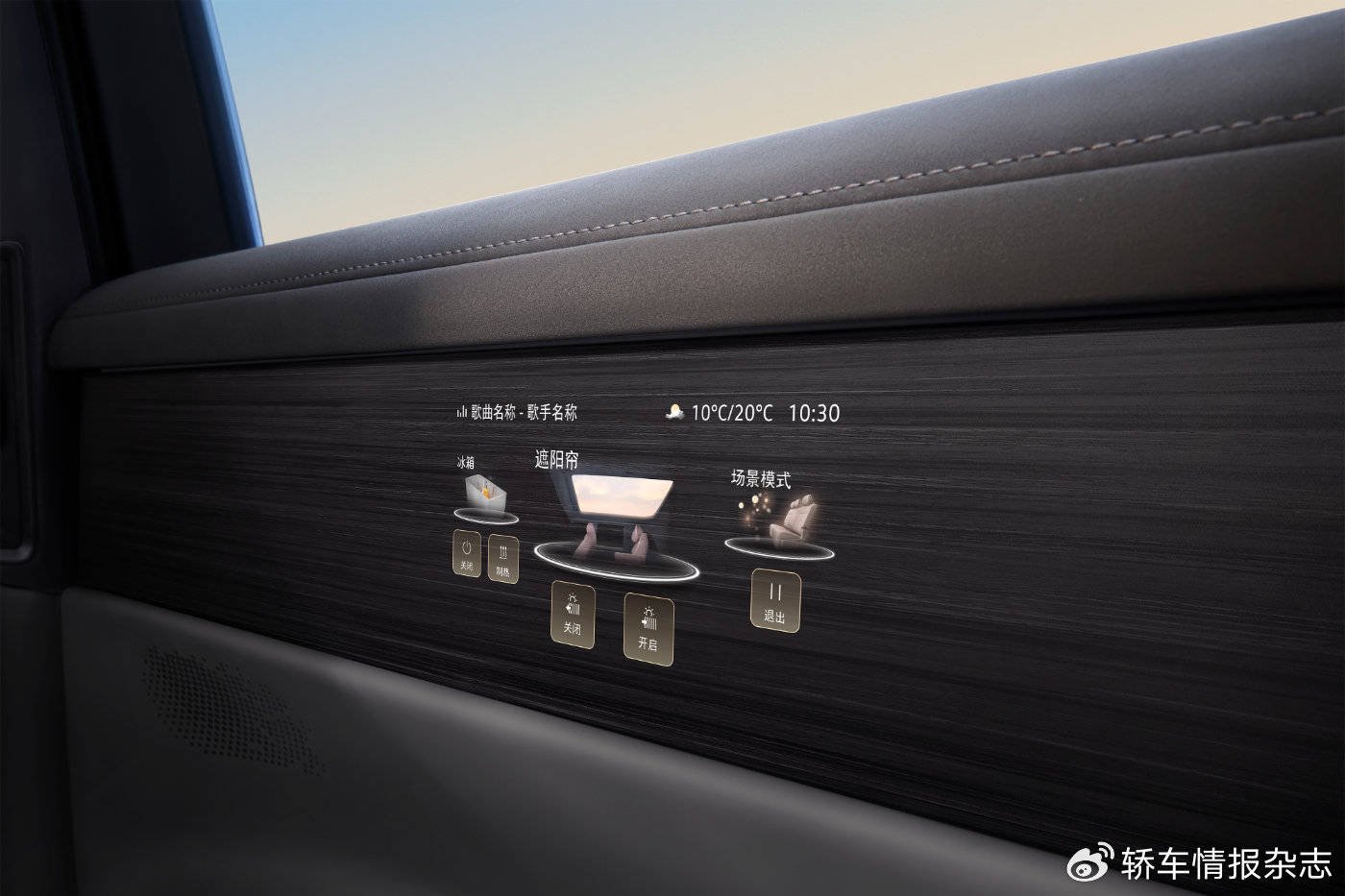
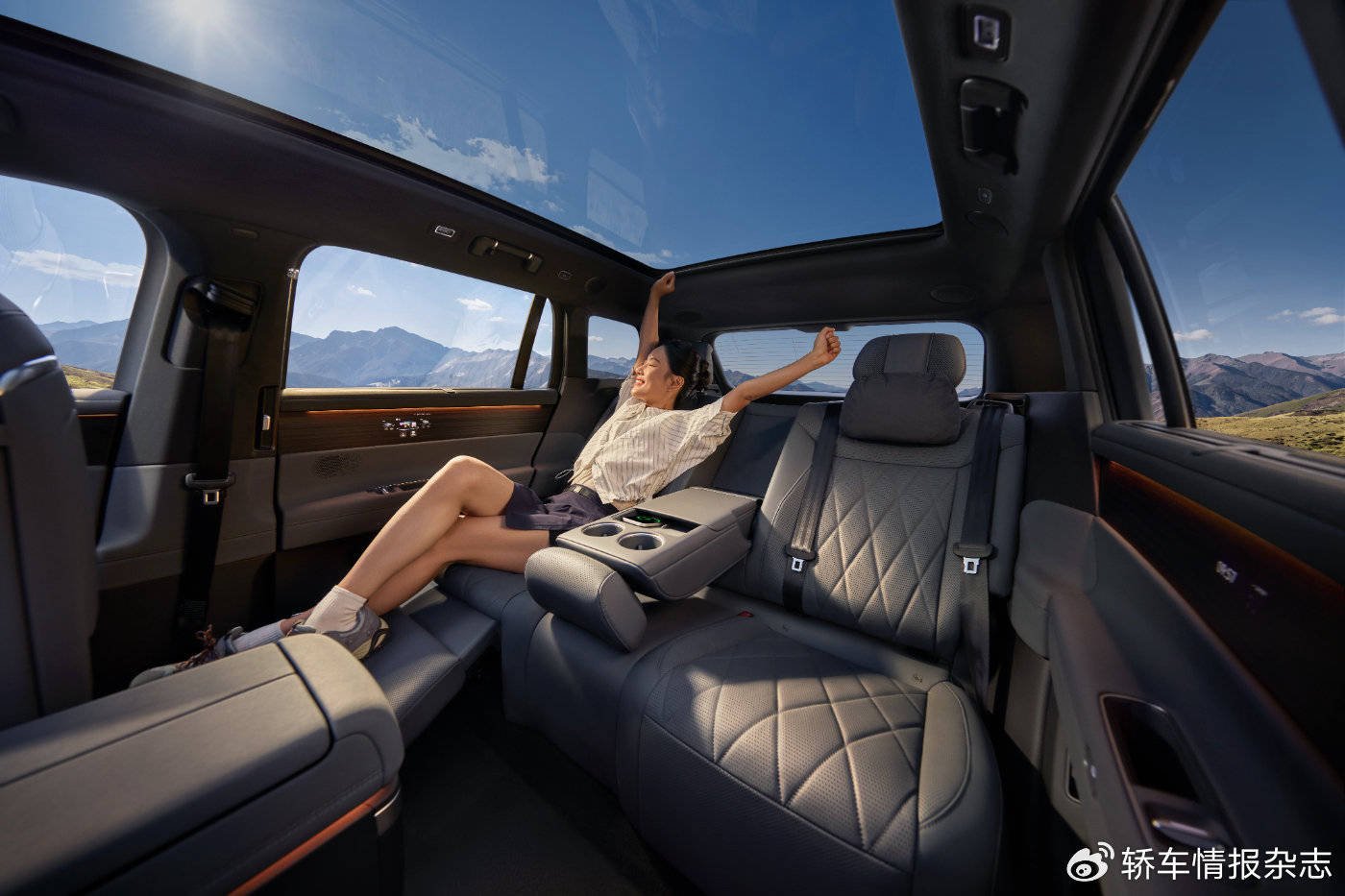
At the cabin level, it does not blindly pursue exaggerated large-screen stacking, but instead creates the Yunqi smart cabin, focusing on the advantages of the large five-seat space while also considering rear-seat passenger experience. Details such as the Smart Surface magic screen, heating and cooling refrigerator, mother-and-baby-grade cabin design, and extra-large door opening angle show that a great deal of consideration was given to family users during product development. Intelligence and comfort go hand in hand, with technology configurations serving drivers and passengers rather than simply serving as promotional selling points.
ID. ERA family matrix continues to gain momentum
As the ID. ERA 8X debuts as the family's flagship SUV, the official announcement was also made that the ID. ERA 5X will launch on November 12, targeting younger consumer groups, marking the simultaneous advancement of two product routes within the ID. ERA family. SAIC Volkswagen, relying on 42 years of localized manufacturing experience, is completing its new energy product transformation—no longer simply replicating overseas models, but developing forward based on domestic user needs.
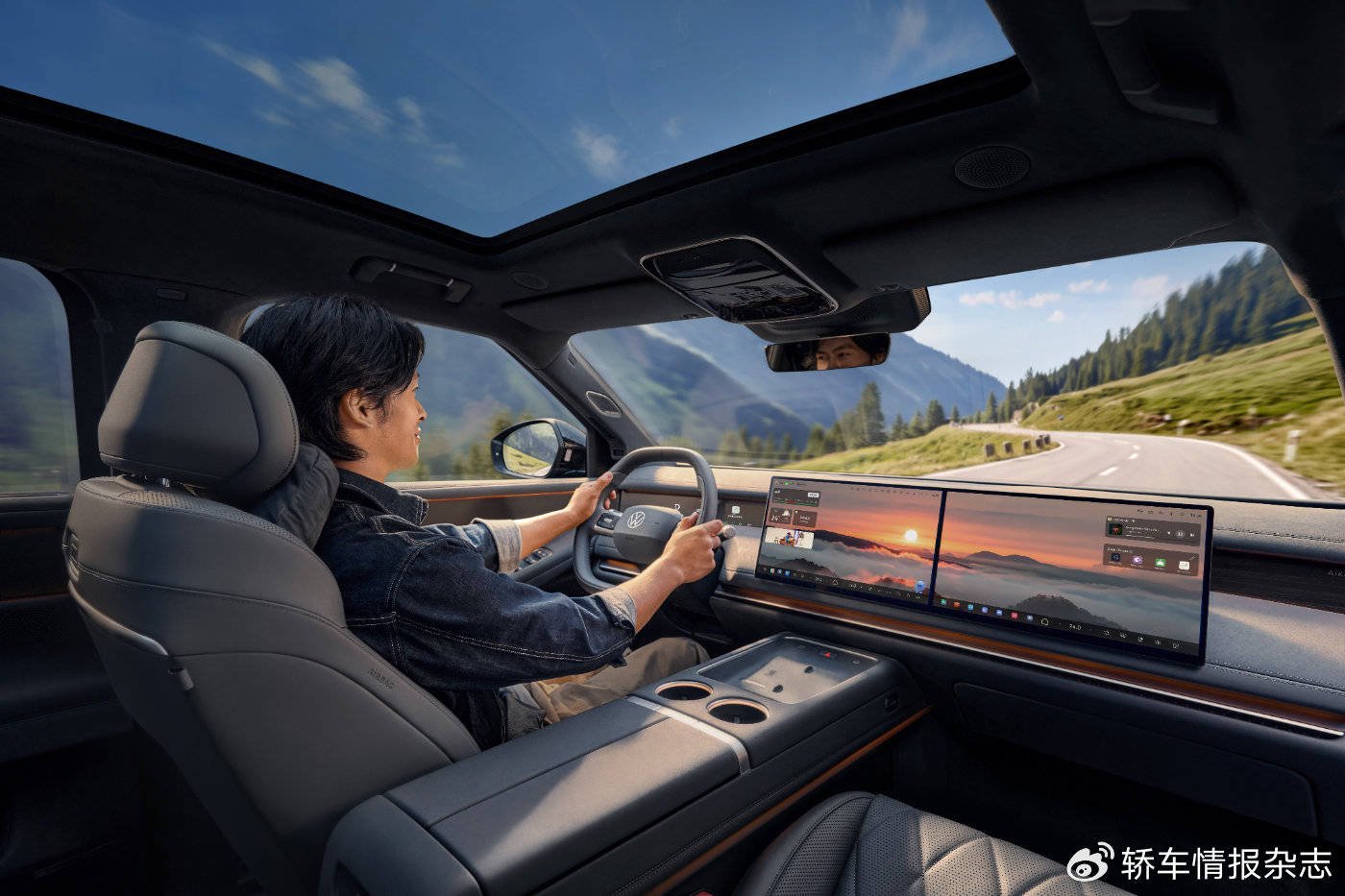
The launch of the ID. ERA 8X brings a completely new approach to the fiercely competitive large five-seat new energy SUV market: an excellent electric vehicle product is a balanced engineering achievement across chassis, safety, powertrain, intelligence, and cabin, rather than a competition over a single parameter. The subsequent market performance of this model will also serve as a litmus test, examining whether consumers are willing to pay for balanced, solid overall vehicle engineering strength.


