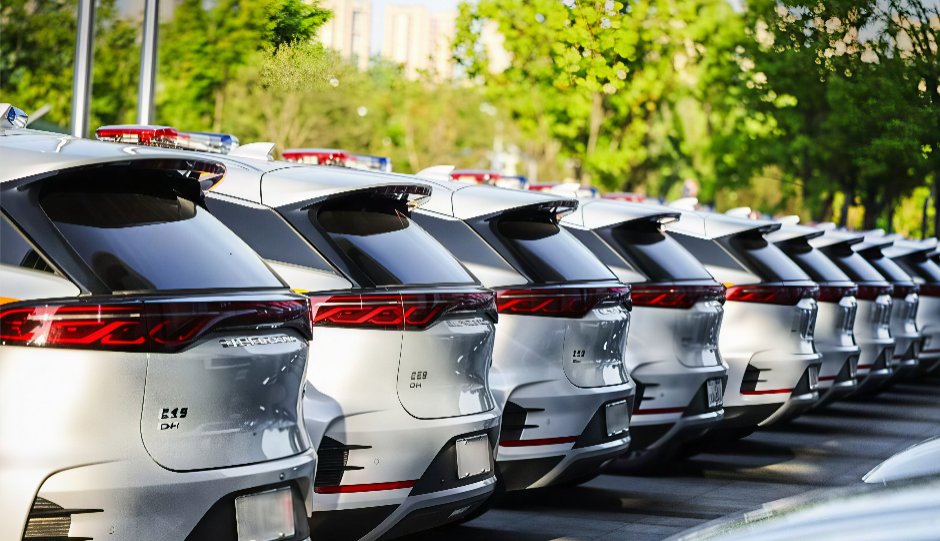
If you look carefully at the news over the past year, you will notice an interesting change: from the streets of Europe to government compounds in Southeast Asia, and to police fleets in Latin American countries, more and more BYD vehicles are replacing the joint-venture-brand official cars we have been familiar with for decades.
And the official vehicle market has never been an easy territory to pry open. It tests not only the product, but also a brand's technological strength, system capabilities, and national trust.
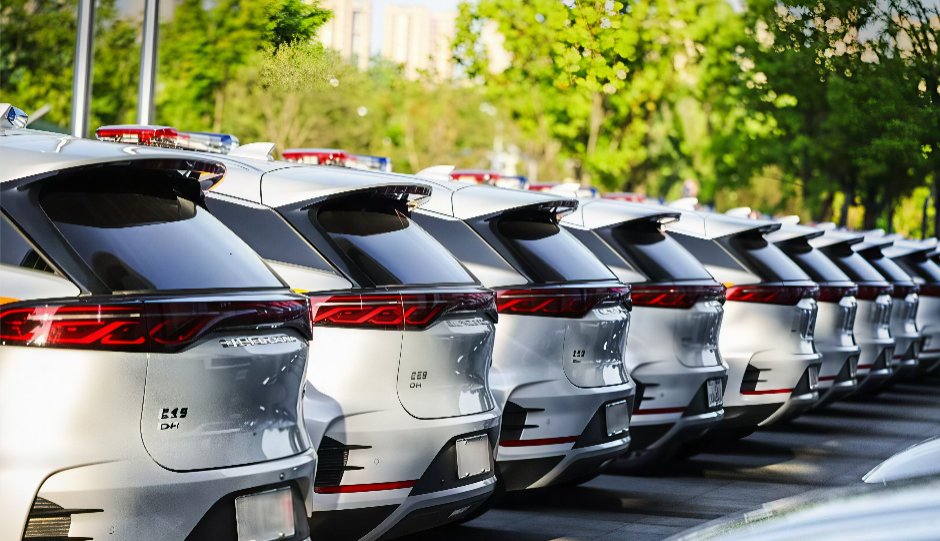
In the first half of 2026, BYD's overseas sales of passenger vehicles and pickups reached nearly 790,000 units, up 67.9% year on year, with business covering more than 120 countries and regions worldwide. On top of this rapidly growing global base, an even more noteworthy signal is that BYD's official vehicle business is entering a new stage of "blooming in multiple places" simultaneously at home and abroad.
Observing BYD's overseas official vehicle layout, one can see a clear "ladder of trust."
At the very top is trust at the level of heads of state. The Presidential Administration of Uzbekistan selected BYD as its official vehicle, and not long ago awarded the BYD team a national "Order of Friendship," with a presidential decree personally signed by the president. This is a rare endorsement for China's auto industry, given in the form of a national honor by another country's head of state; in Brazil, President Lula's official car is also a BYD. A head of state's vehicle is never a simple consumer decision; it is an extension of industrial diplomacy.
The middle layer is the police car, the toughest "litmus test." Police cars represent an extreme scenario among official vehicles: prolonged idling, duty in extreme weather, sudden pursuits, and 24-hour standby, placing近乎苛刻 requirements on battery safety, power response, and chassis stability. In April this year, the Islamabad Police in Pakistan's capital procured nearly 100 BYD electric vehicles, and the prime minister personally attended the delivery ceremony; in Mexico, models such as the BYD SHARK, Seal, Yuan UP, Dolphin, and Destroyer 05 have entered the local police force at scale; in September this year, BYD delivered 8 Dolphins to the Muntinlupa police in the Philippines as urban patrol cars.
Even more indicative of the trend is the breakthrough in Europe. Europe's vehicle access standards, emissions regulations, and government procurement thresholds have always been the strictest in the world, yet today Yuan PLUS police patrol cars have appeared on the streets of Hungary, and Austria has included BYD models in its sequence of vehicles for foreign affairs receptions. The scale may not be large, but the significance of this "access permit" far exceeds the numbers themselves.
BYD's ability to open up a position in the official vehicle track does not rely on luck, but on two solid moats.
The first is the "head-on" strength of its technological foundation. The implementation of BYD's Blade Battery and flash charging technology, DM-i hybrid technology, and God's Eye advanced driver assistance, among other technologies, gives its products, from 100,000 yuan to over 1 million yuan, sufficient technical reserves to match government needs at different levels.
The second is system capability across the full category range. Official vehicles are not a single-model market; they represent a full-spectrum demand ranging from A00-class small patrol cars, to B-class executive sedans, to C-class/D-class reception vehicles, to police pickups, MPVs, and even sanitation and special-operation vehicles. Among global automakers, only BYD can currently bring this entire product matrix into the new energy era while also landing after-sales and charging support in different countries. From this perspective, competition in official vehicles ultimately comes down not to a single "hit model," but to the completeness of the entire industrial system.
Looking back at history, the global official vehicle market was indeed dominated by joint-venture brands for a long period, and behind this were objective reasons related to the stage of industrial development. But today, more than 160 countries worldwide have proposed carbon neutrality goals, and BYD happens to be riding the rhythm of this round of global government electrification. It is transforming from a "product supplier" into a "partner for public electrification solutions." From vehicle delivery, charging infrastructure, to after-sales networks and localized operations, the entire chain is going global together. This kind of deep binding is long-term trust that short-term orders cannot buy.
The global say in the official vehicle market used to lie with the West, with fuel vehicles, and with joint ventures. Now, it is shifting eastward, toward new energy, and toward Chinese brands. This road is still long, but the direction has already been written on every car driving out of the country.


