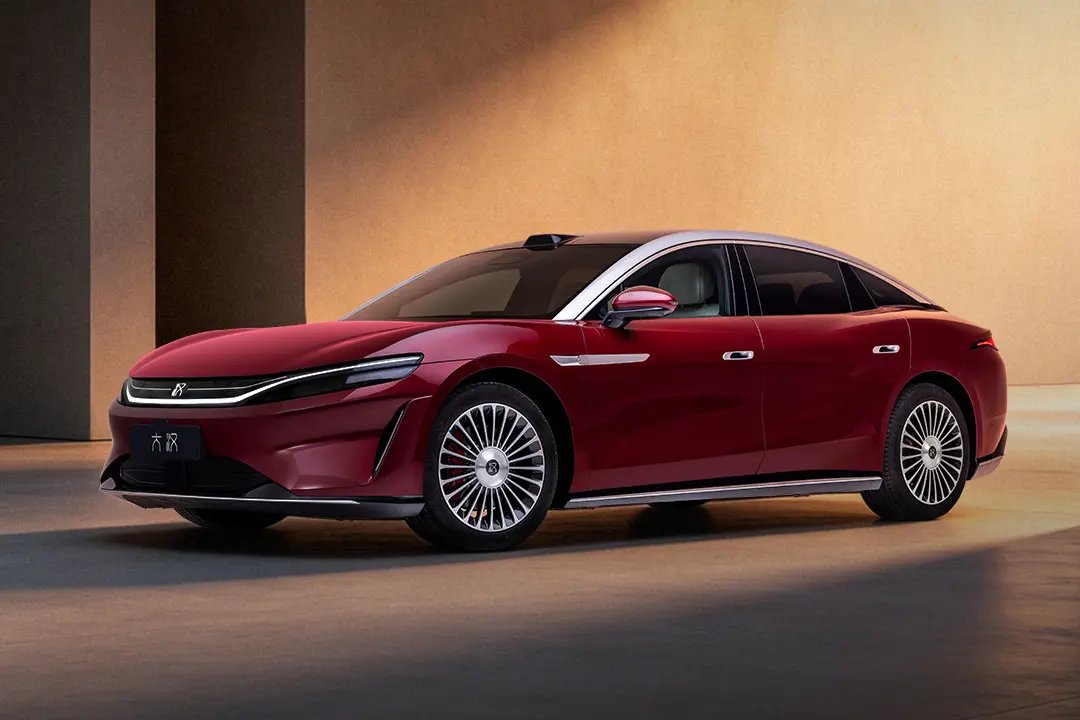
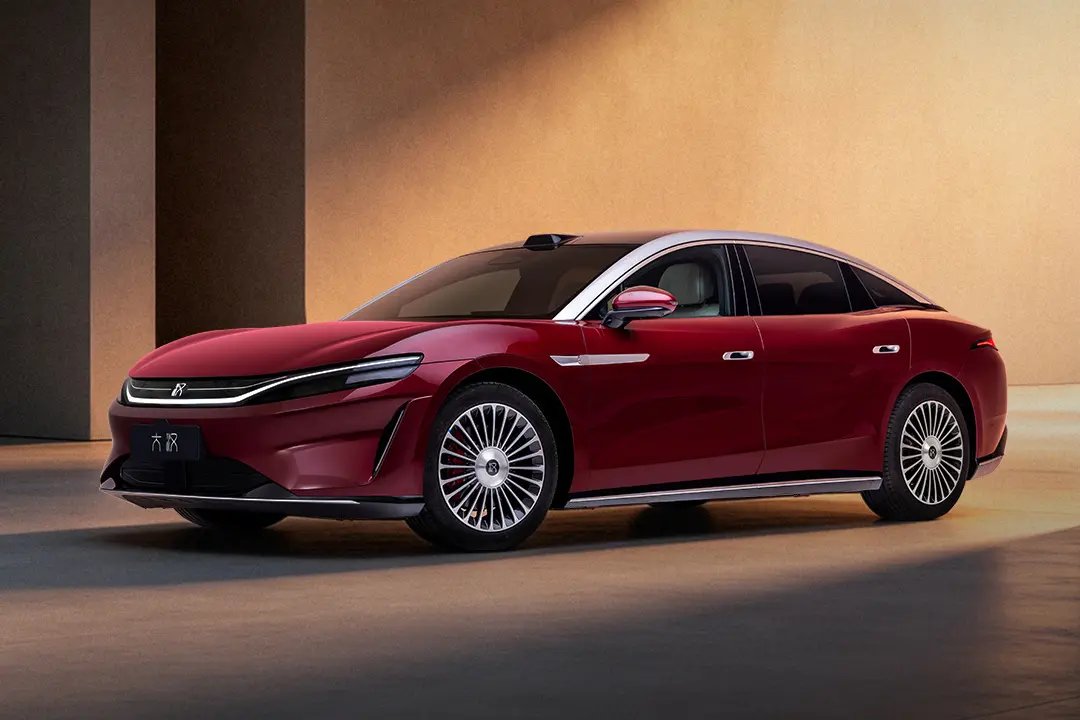
BYD Dynasty Network's all-new large pure electric sedan, the Han EV, has officially launched. The new car is offered in three configuration versions, with official pricing ranging from 235,900 to 275,900 yuan. Compared with the previously announced presale prices, the official launch prices have been lowered, with the largest reduction reaching 14,000 yuan. At the same time, the brand also offers trade-in related policies: existing BYD owners can receive a 10,000 yuan trade-in subsidy when purchasing a new car.
The three models launched this time are divided into two rear-wheel-drive versions and one four-wheel-drive version. The two rear-wheel-drive models achieve a CLTC range of 1,008 kilometers, while the four-wheel-drive version has a CLTC range of 880 kilometers. From the model planning, it is not difficult to see that the new car is positioned to target the large luxury pure electric sedan market. The official lineup includes 44 self-developed technologies, and 15 core features are made standard across the entire lineup, no longer adopting a configuration strategy that splits high and low trims.
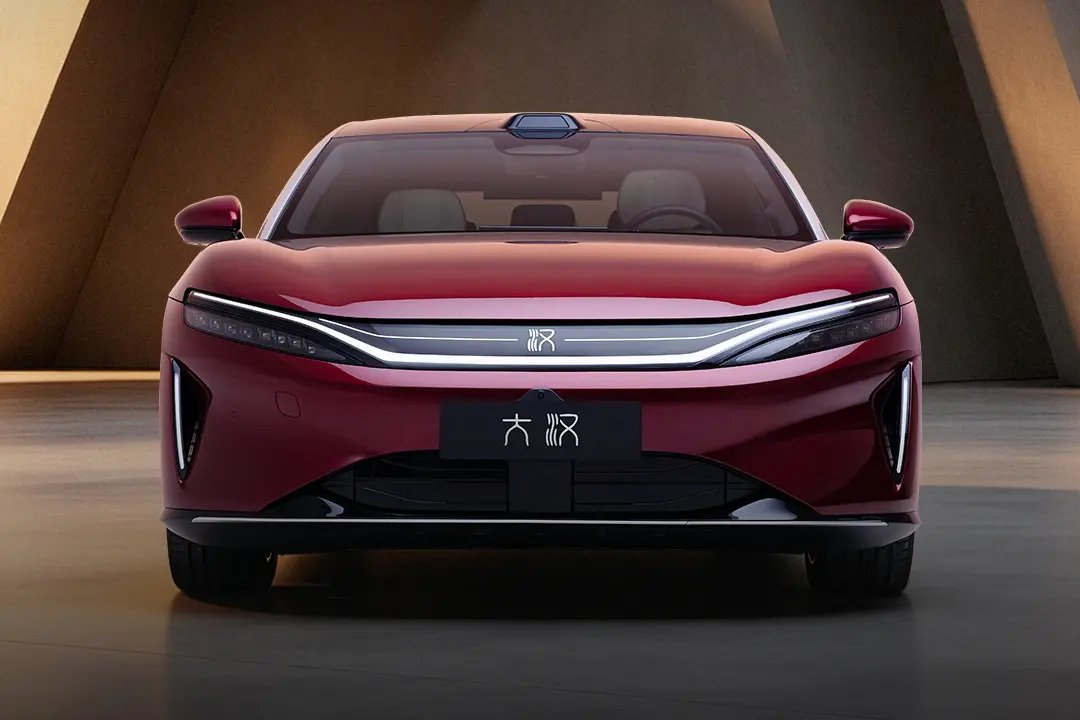
The exterior continues the design approach of the Dynasty series. The most striking element of the front face is a 2.41-meter-long integrated daytime running light, using a continuous light band design without breakpoints, officially named "Flying Eaves Break Dawn," with a Chinese character badge retained in the center. At the rear is the family-style Chinese knot taillight, which is highly recognizable. The vehicle's dimensions reach 5256/1999/1510 mm, with a wheelbase of 3130 mm, making the body larger than the standard-wheelbase version of the Mercedes-Benz S-Class. However, extensive aerodynamic optimization has been carried out, achieving a drag coefficient of 0.197, which is a good level among large sedans.
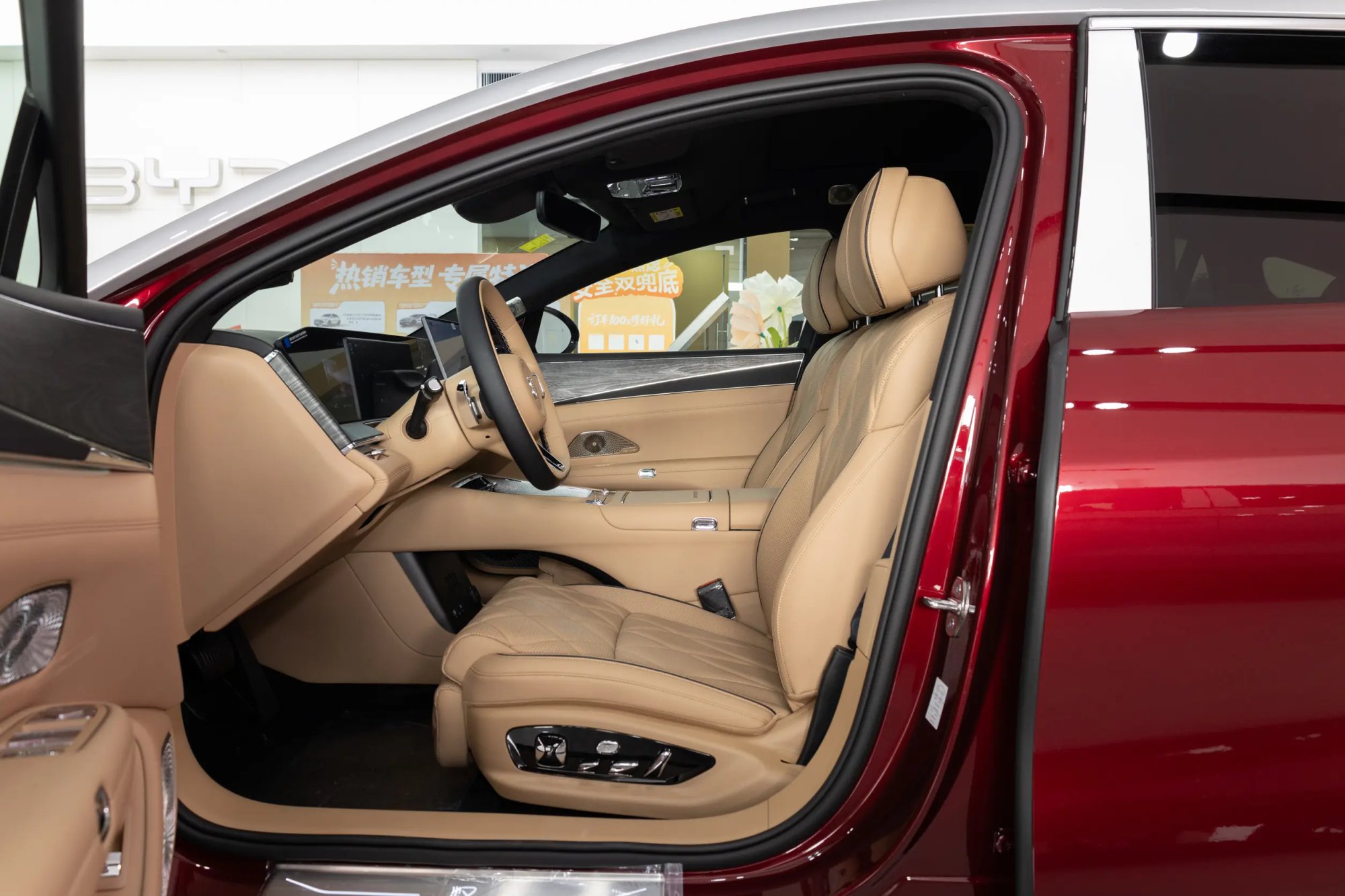
Interior space is a key highlight of this large car. The official cabin space utilization rate is 90.8%. Simply put, with the external body dimensions fixed, the usable space inside the cabin is maximized as much as possible. Both front seats are zero-gravity structures and are equipped with ventilation, heating, and massage functions. Higher-trim models use NAPPA genuine leather in the interior, paired with suede-like headliner, large soft-touch door panels, and white ash real wood trim, creating a more business-oriented cabin texture. Taking a passenger 1.8 meters tall as an example, rear legroom is plentiful, making it easy to cross one's legs. The rear seatback supports 12-degree angle adjustment and is also equipped with a thigh support and a right-rear footrest. The seating experience in the right-rear position leans more toward a boss-seat positioning.
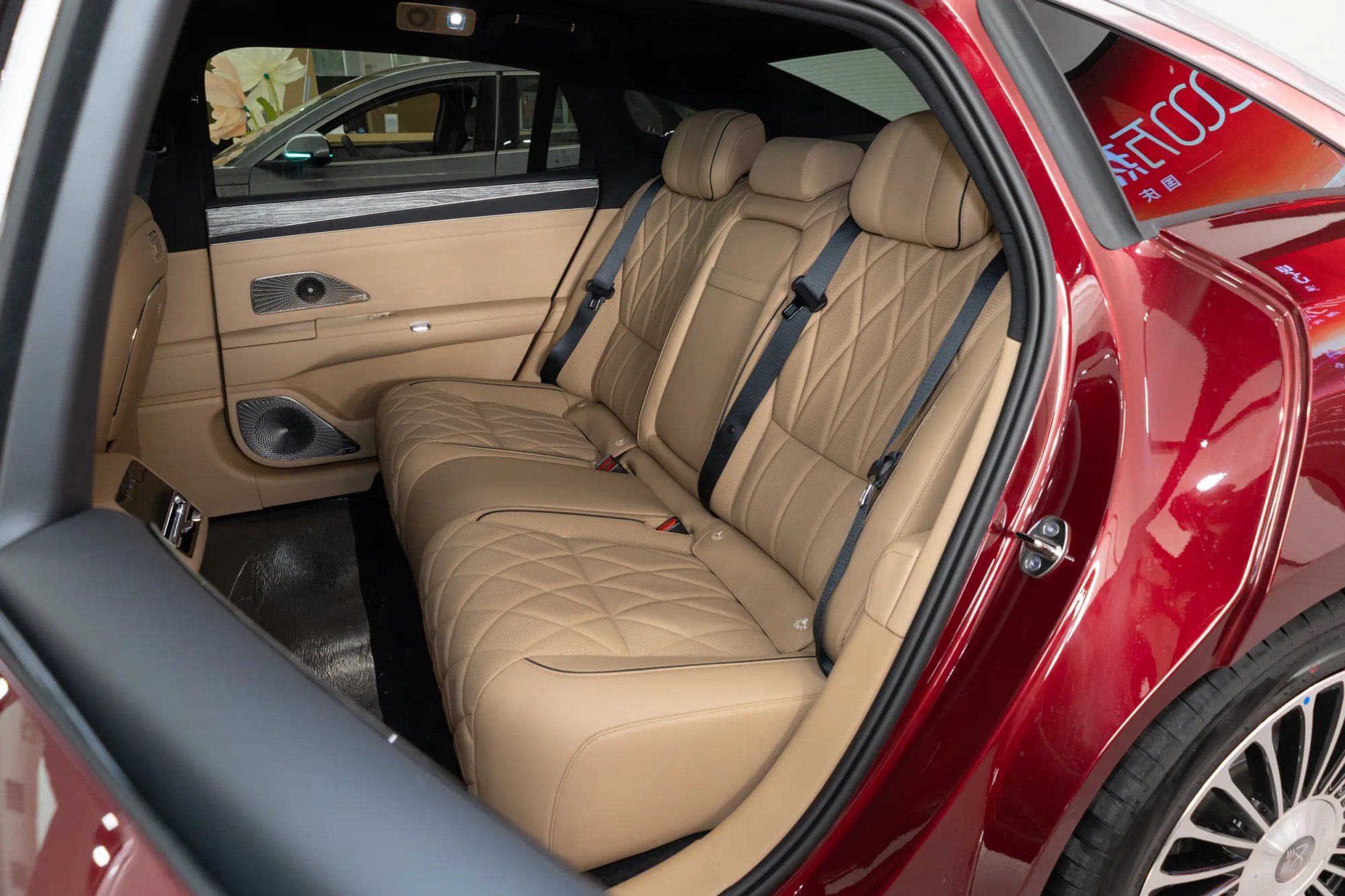
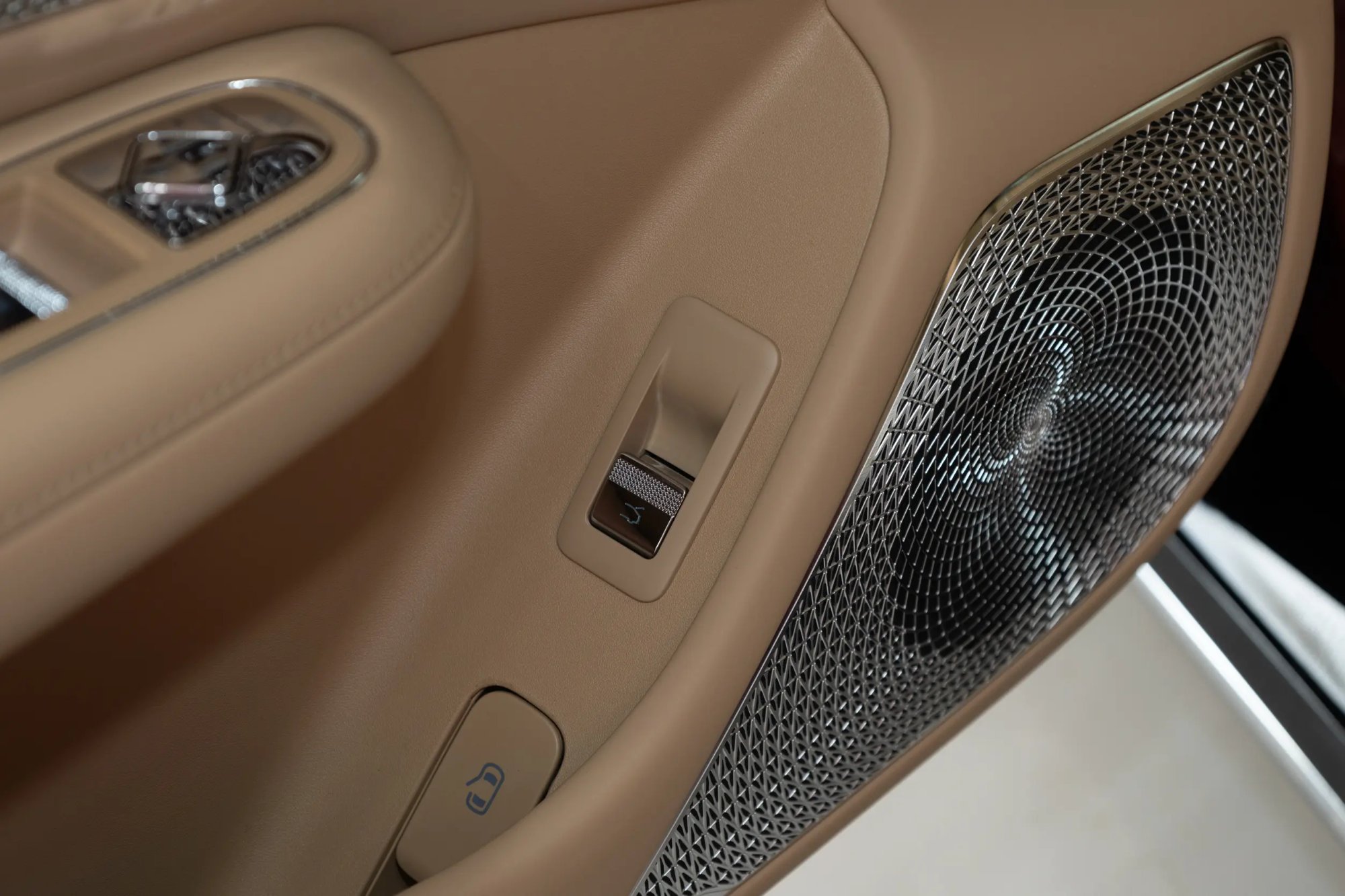
The rear row also has a rather distinctive feature: black PDLC adjustable glass, which takes only 1 second to switch from transparent to fully opaque, making it convenient for rear passengers to adjust their privacy status at any time. The car is also equipped with a privacy glovebox that supports password opening, convenient for storing important personal items. The audio system uses Devialet, with 31 speakers arranged throughout the vehicle, including 8 headrest speakers, and a total amplifier power of 2320W. It can achieve independent sound playback in three zones: driver, front passenger, and rear row, so passengers in different positions can listen to their own audio content without interfering with one another.
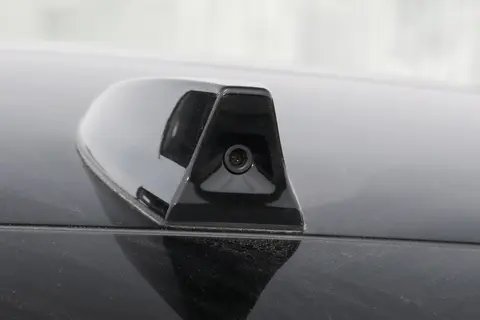
The intelligent driving hardware does not differentiate between high and low versions. The entire lineup is equipped with the God's Eye B lidar solution, with hardware including one lidar, 11 cameras, and 12 ultrasonic radars. This system covers urban road navigation, highway and expressway navigation, as well as multi-scenario automatic parking. The manufacturer also provides safety backup solutions for urban navigation and intelligent parking functions. The cabin is equipped with the AI agent Didi Xia, supporting multimodal natural language interaction. In addition, features such as facial recognition, phone vehicle key, car-home interconnection, and AR-HUD head-up display are also onboard.
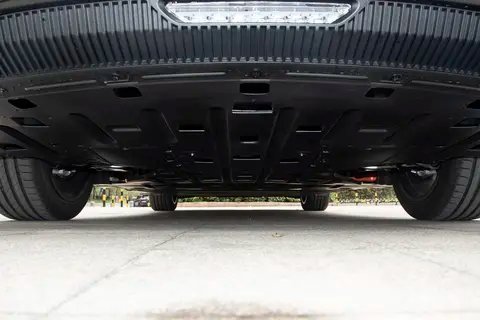
The chassis is one of the more noteworthy aspects of this car. The Yun辇-A dual-chamber air suspension is standard across the entire lineup, with body height adjustment of up to 100 mm, and it includes a road preview function, allowing the suspension to adjust damping in advance according to road conditions. The front double wishbone plus rear five-link structure, together with standard rear-wheel steering across the lineup, means that for a sedan over 5.2 meters long, the turning radius is only 4.95 meters, so U-turns on narrow roads and side parking in residential compounds will not be difficult due to the huge body. The four-wheel-drive version has a 100-0 km/h braking distance of 32.83 meters, delivering solid braking performance.
In terms of the electric drive system, the Han EV is fully equipped with a 102.3 kWh second-generation blade battery, and the rear-wheel-drive version has an energy consumption of 11.5 kWh per 100 kilometers. The rear-wheel-drive model is equipped with a single motor with a maximum power of 370 kW and accelerates from 0 to 100 km/h in 4.9 seconds; the four-wheel-drive version adds a 200 kW motor on the front axle, with a combined system power of 570 kW, accelerating from 0 to 100 km/h in 3.3 seconds and reaching a top speed of 270 km/h.
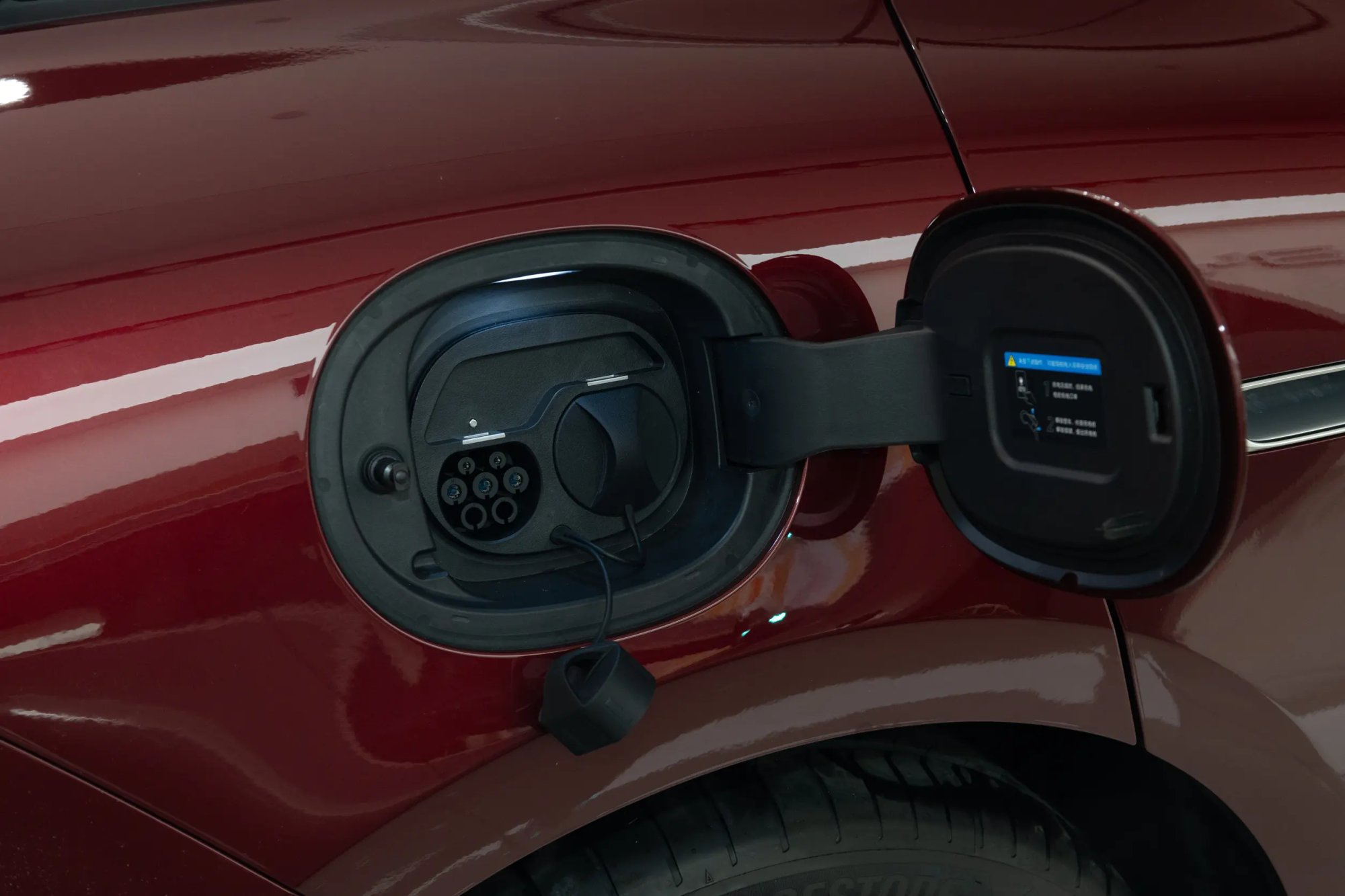
In terms of charging, it supports high-power fast charging. Under normal conditions, charging from 10% to 70% takes only 5 minutes, and charging to 97% takes 9 minutes. Even in a low-temperature environment of minus 30 degrees Celsius, charging time increases by only 3 minutes, and charging degradation control in low-temperature scenarios has been optimized accordingly. According to the plan, BYD will build 20,000 fast-charging stations by the end of this year, gradually improving the charging network and alleviating charging concerns for long-distance travel.
Overall, the core idea of the Han EV is to bring features once available only on high-end luxury models, such as air suspension, rear-wheel steering, and lidar-based intelligent driving, down to this model and make them standard across the lineup. The large body, long range, and fast-charging capability balance business travel and long-distance travel, and the starting price of 235,900 yuan also gives this large pure electric sedan strong differentiation in the same-price market.


