Everyone will have their own opinions, and opinions are mostly formed based on one's own standpoint. This is true for confrontations between countries, and it is also true for technological confrontations!
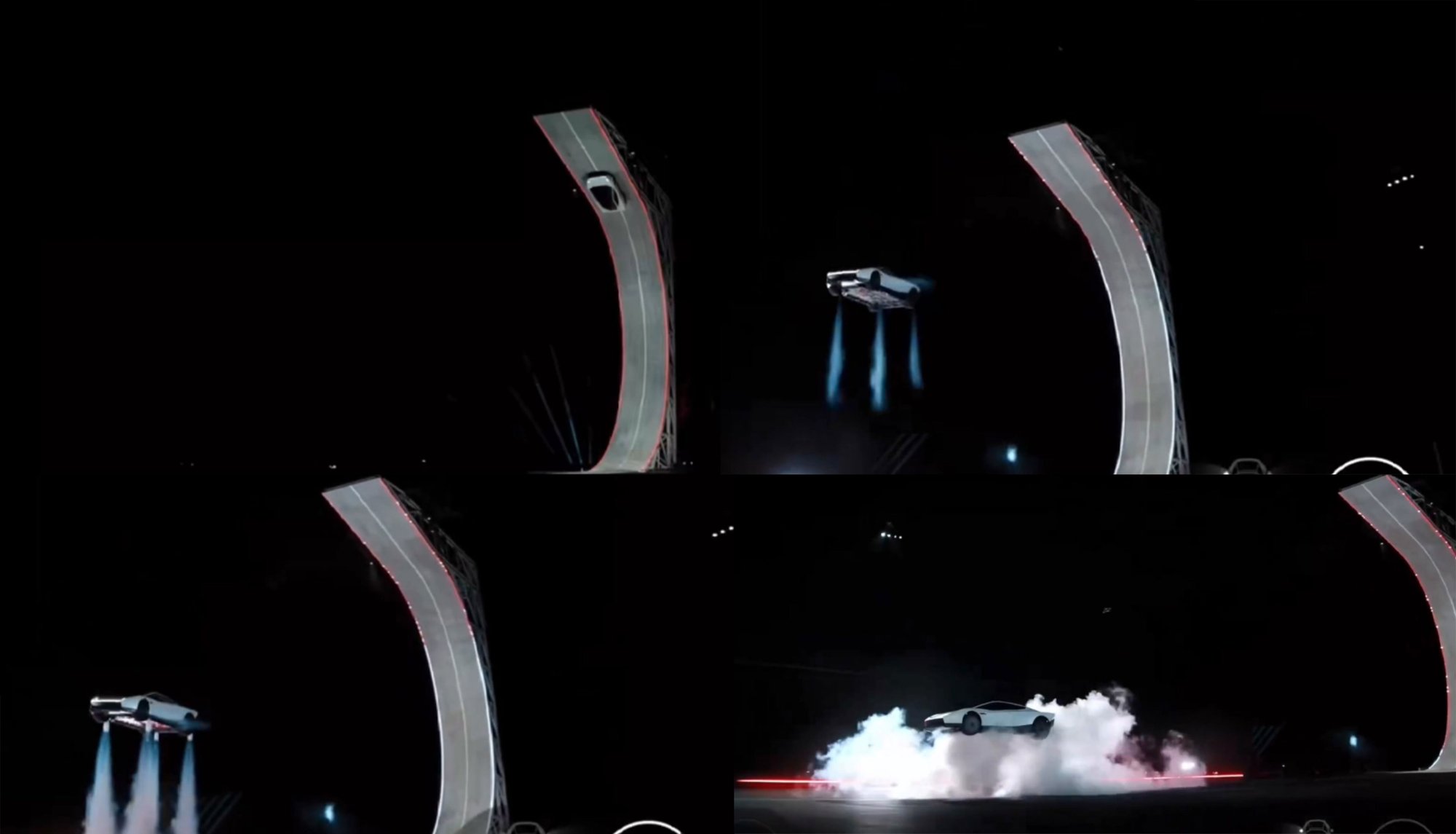
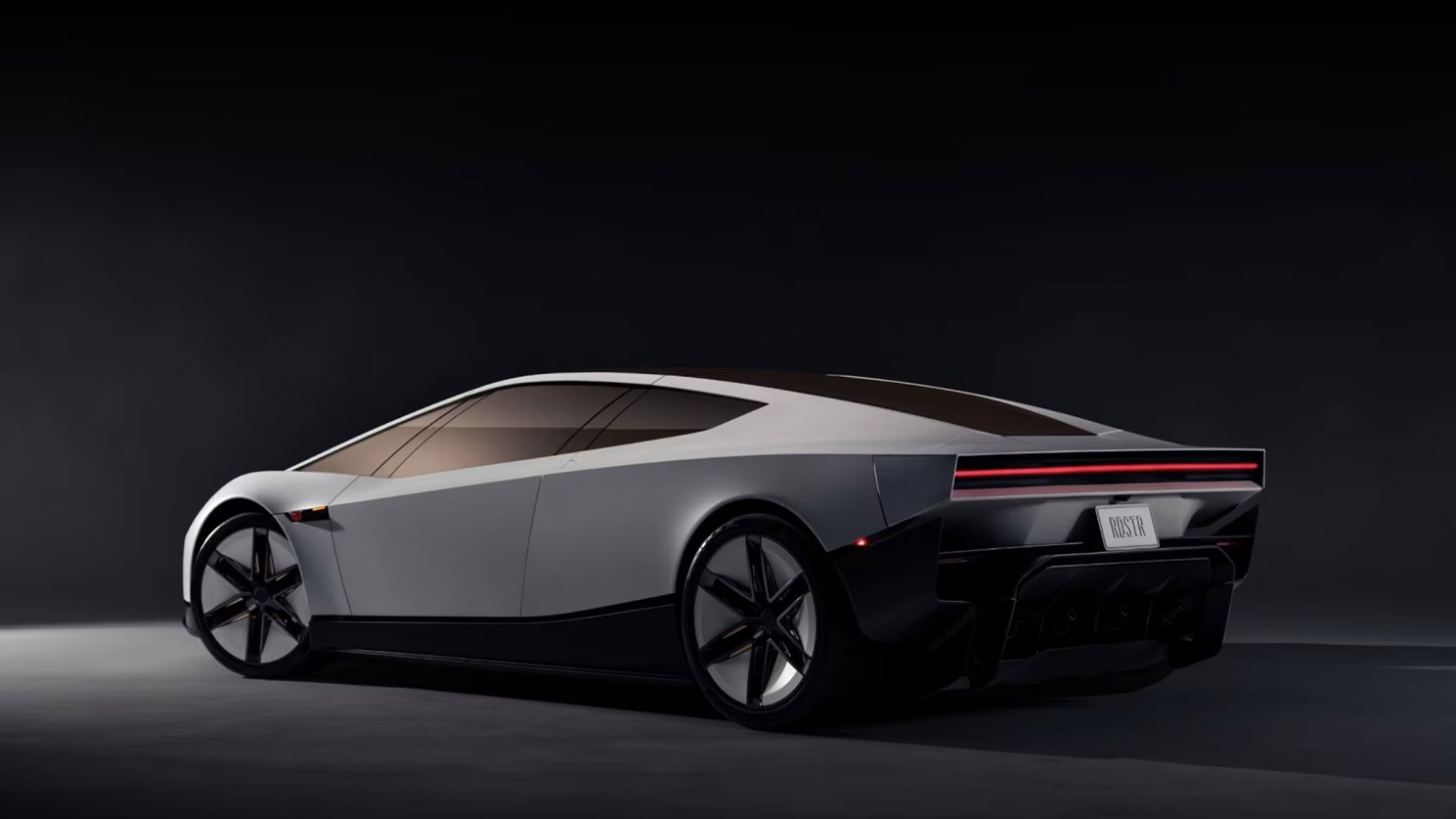
A few days ago, the automotive media circle seemed to have another climax, because the Roadster II demonstrated its maneuverability at the launch event, including hanging upside down and sticking to the ceiling, flipping in the air, jet-powered landing, and zero-to-hundred acceleration. Online information shows that production is expected to start in 2 years. The deposit for the Performance version is $50,000, the deposit for the Thrust version is $250,000, and the Rocket version is limited to invited users only...
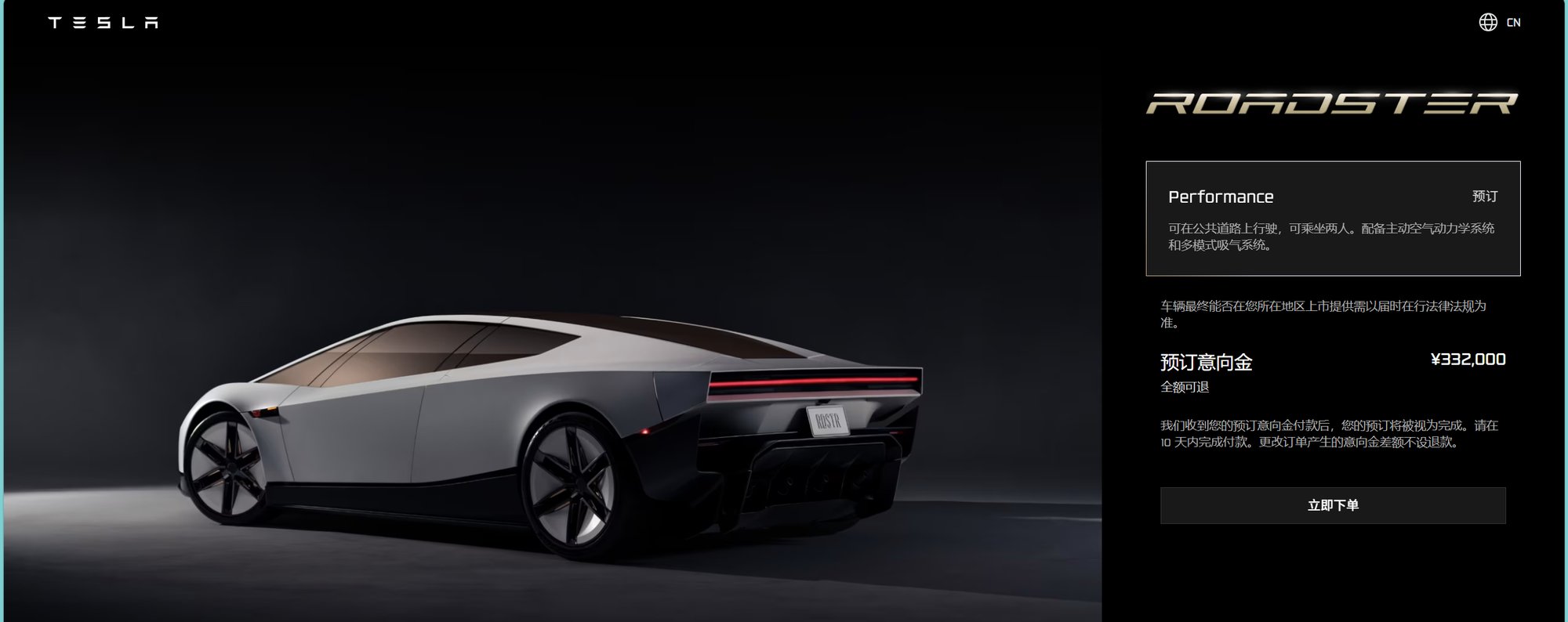
Obviously, this is a story that the "capital market" desperately needs, because the Roadster has not been updated for too long. Judging from the deposit of up to 332,000 yuan for the Performance version, making money—well, it is easier to make money from wealthy families. In business, you still have to earn money from rich people!
It must be said that this story was told well, but Old Ma saying he had never seen a similar scene in a movie is a bit hard to justify.
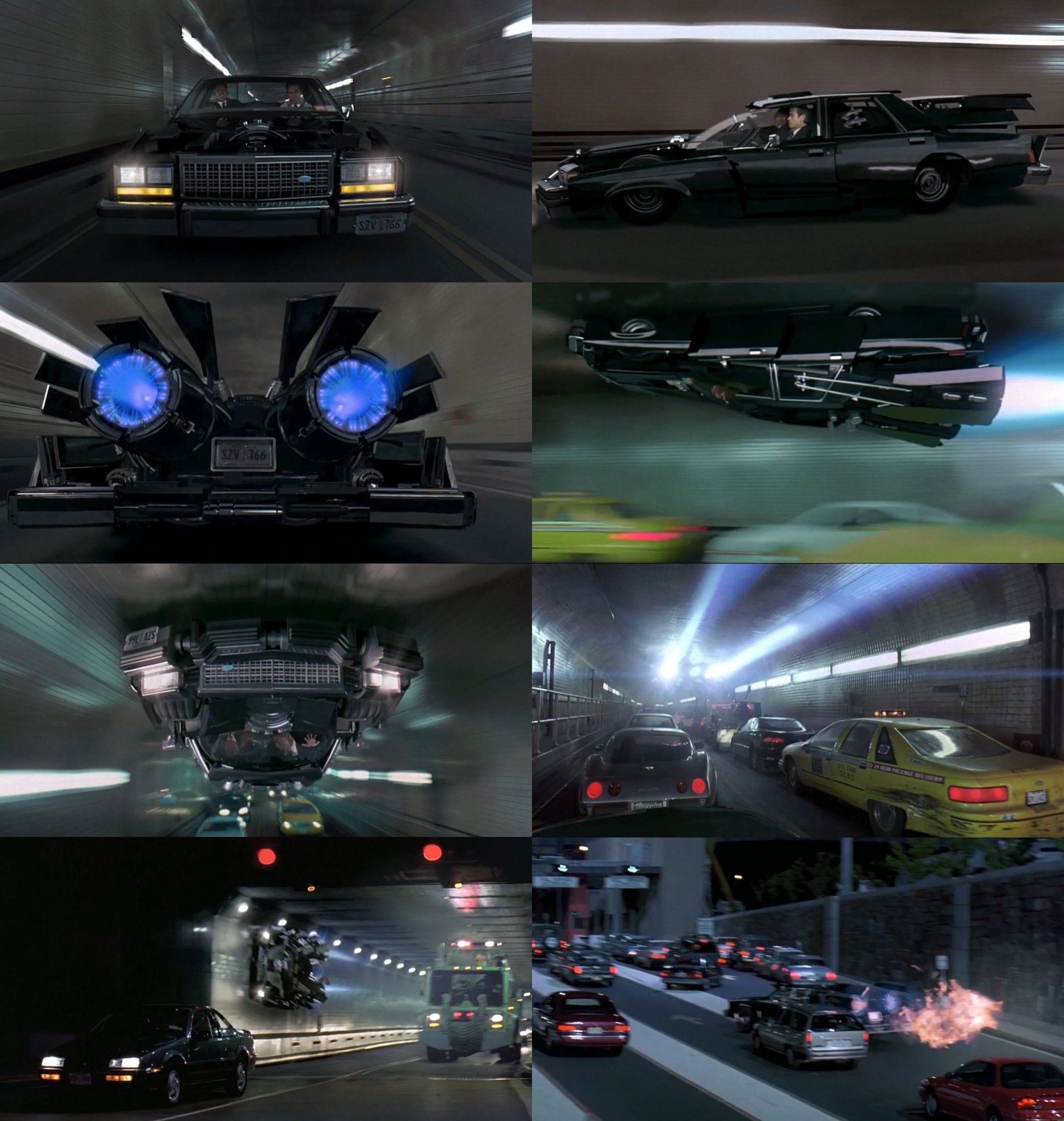
I wonder if any car enthusiasts have seen "Men.In.Black Men in Black 1." Online information shows the release date was July 2, 1997, starring Tommy Lee Jones and Will Smith. At around 1 hour 17 minutes to 1 hour 18 minutes into the film, the two leads drive a car "flying against the ceiling" in the Queens tunnel, with thrusters at the rear of the car.

If there is a "Queens tunnel," its length should be longer than the "U-shaped platform where the Roadster II showed off its tricks." Moreover, this segment lasts 1 minute. Judging by that speed, the distance traveled would probably be much longer, and there is no "U" shape. Old Li directly accelerated, flew up onto the side wall, and went straight to the top of the tunnel, flipping over and sticking to the ceiling to "fly."
Netizens who have read this far, have you seen this film?
It must be said that every profession has its own expertise, and Americans do not seem to care about their own movie market either.
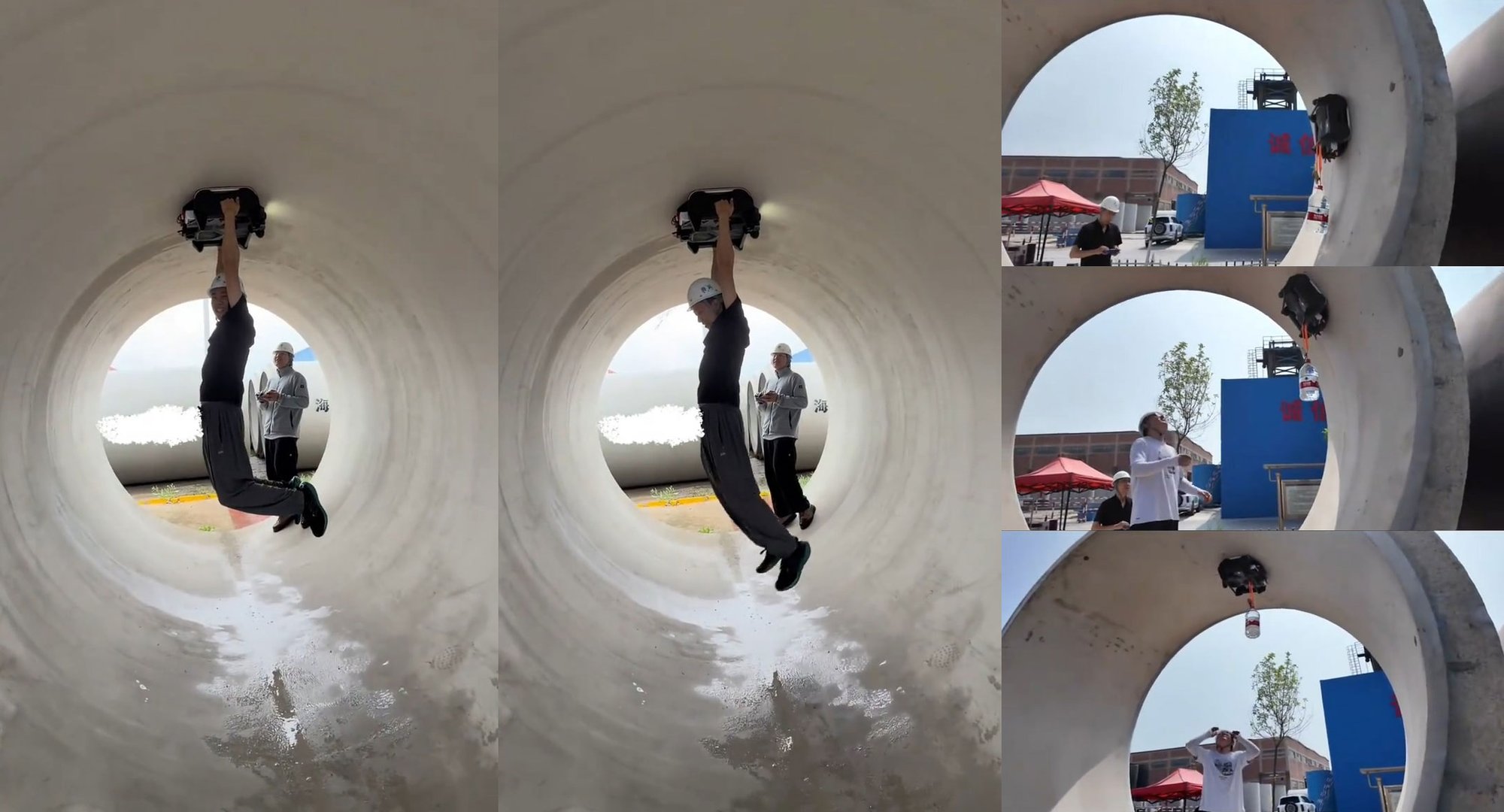
Then there was another online popular science post about "negative-pressure wall-climbing robots." As shown in the picture above, their principles are similar: using a vacuum pump or fan to extract air and create a pressure difference to fix the robot to a side surface or top surface. They are commonly used in high-risk scenarios such as ship rust removal, bridge inspection, and wind turbine blade inspection. This should be a fairly mature technology.
For use in cars, it is simply a matter of increasing the power of the vacuum pump/fan. It is nothing new, right?
I originally did not plan to speak on this matter, because I believe the Roadster II's showmanship is not even as meaningful as the emergency floating demonstrated by the Yangwang U8, or the "vertical motor capable of jumping in place" in the Yunian suspension series, because the audience for these technologies is broader.
Moreover, since the Yangwang U8 released "emergency floating," this technology has now been extended to some models in the 300,000 yuan class. Being popularized for ordinary family cars in such a short time—this is truly serving the public! Don't you think these are more worthy of the automotive circle's "wide publicity"?
As an ordinary consumer in an ordinary car-owning family, I stand with ordinary people in looking at issues. This is to echo the "standpoint determines opinion" mentioned at the beginning of the article.
[The technological gap between Chinese cars and Tesla]
Because some people in the automotive circle have already launched the topic "the gap between Chinese cars and Tesla," subtly criticizing "refrigerators, color TVs, and big sofas," while when it comes to advances in power battery technology, advances in intelligent assisted driving technology, advances in intelligent chassis technology, and advances in China's internal combustion engine technology... these seem unable to enter their discerning eyes. But judging from their daily posts, many have clearly taken money from domestic automakers, yet at this moment they are smashing the rice bowls of domestic automakers. This is inappropriate.
Next, let us talk about the gap between "Chinese cars and Tesla." Not long ago, I test-drove the Xiaomi SU7, Fangcheng S, and Model 3. Through these three cars, let us analyze those who "boast about technology" but ignore facts and do not understand technology.
Statement 1: The Model 3 has good range. Its battery capacity is smaller, but its range is relatively longer. This means its three-electric technology is better.
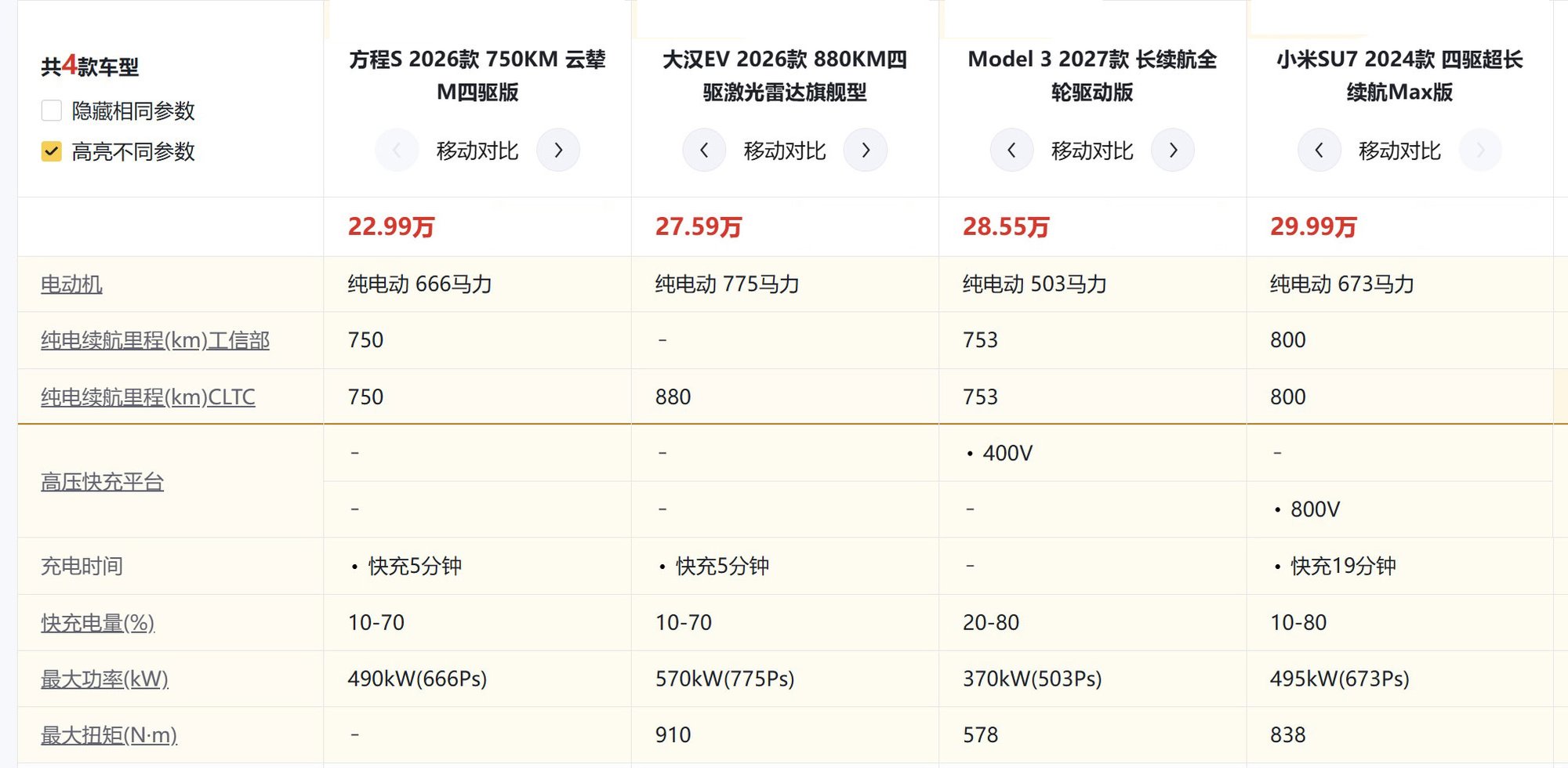
I believe anyone who knows a little about cars should know that energy consumption, vehicle class/curb weight, electric drive output power, and tire width are all more or less related, right?
Using price as the yardstick, we found the Fangcheng S, which is more than 50,000 cheaper, the Dahan EV, which is nearly 10,000 cheaper, and the Xiaomi SU7, which is about 15,000 more expensive. All four configurations are four-wheel drive.
In terms of CLTC range, the Fangcheng S and Model 3 are similar, both around 750 km; the Xiaomi SU7 is 800 km, and the Dahan EV is 880 km.
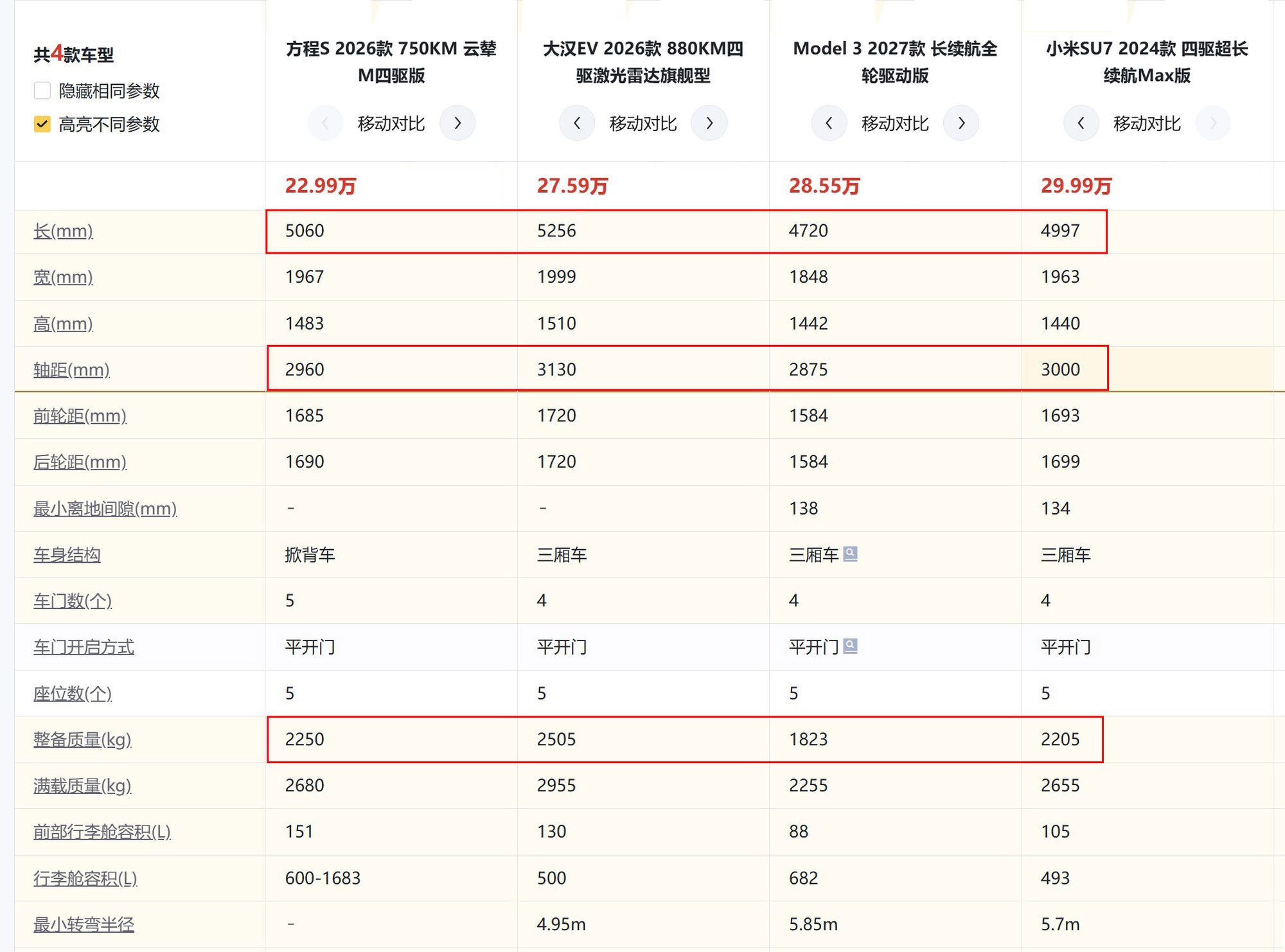
Next, let us look at class and curb weight. As shown in the picture above, vehicle length/wheelbase/curb weight are all circled in red boxes. The other three cars are higher-class than the Model 3. There is no doubt about that, right?
In this chart, we mainly look at curb weight. The Fangcheng S is 427 kg heavier than the Model 3. If an adult weighs 75 kg, that is equivalent to the Fangcheng S carrying 5.69 more adults;
the Dahan EV is 682 kg heavier than the Model 3, equivalent to carrying 9 more people;
the Xiaomi SU7 is 382 kg heavier than the Model 3, equivalent to carrying 5 more people;
Setting aside other conditions, if you conduct a range achievement rate test without loading the cars to the same weight, would you say the Model 3 is taking advantage?
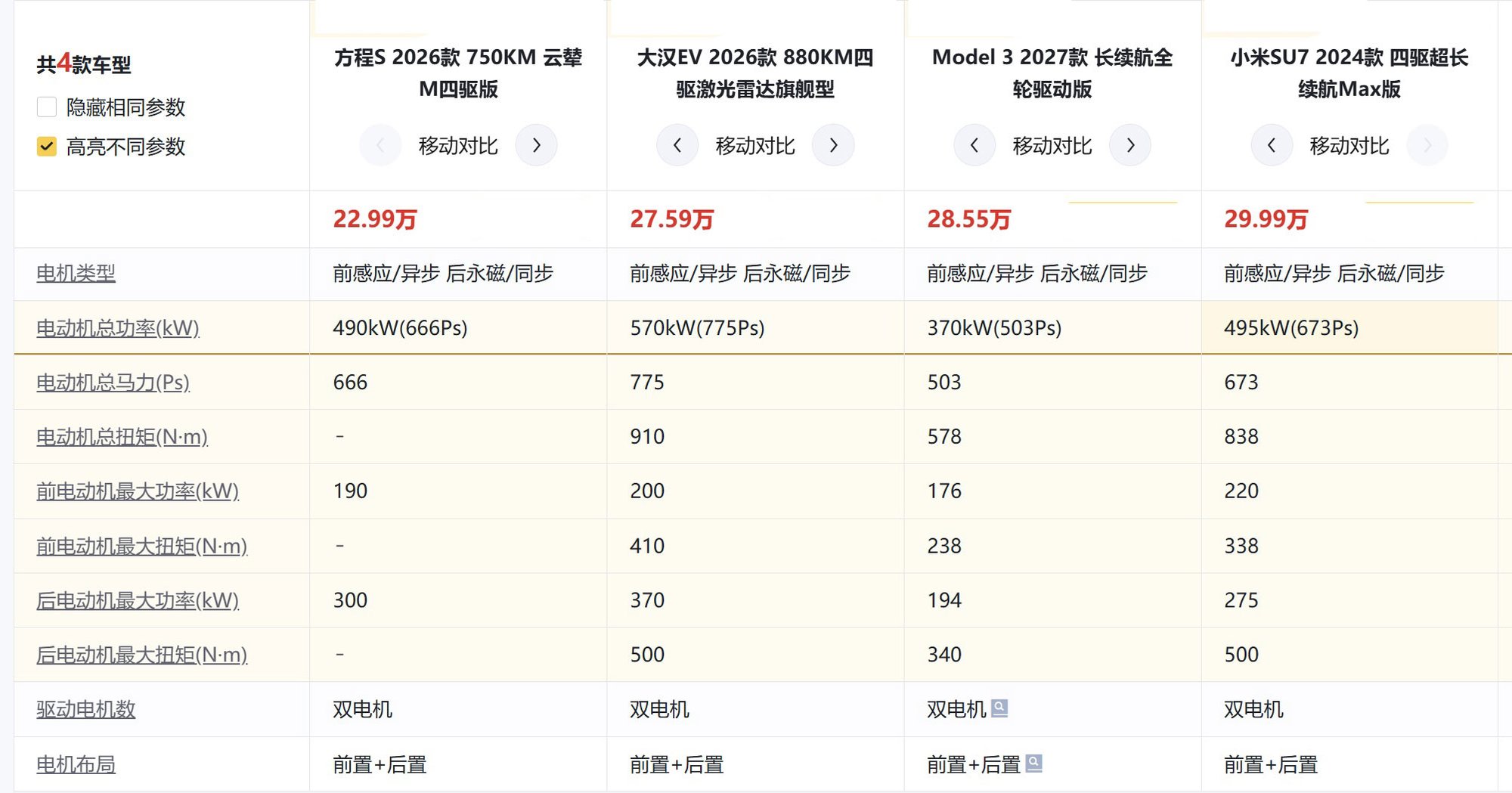
Next, let us look at drive motor output power. The Fangcheng S is 490 kW, the Dahan EV is 570 kW, the Model 3 is 370 kW, and the Xiaomi SU7 is 495 kW.
With power differences as high as 100 kW+, if you run a range achievement rate test, would you say lower power output is taking advantage?
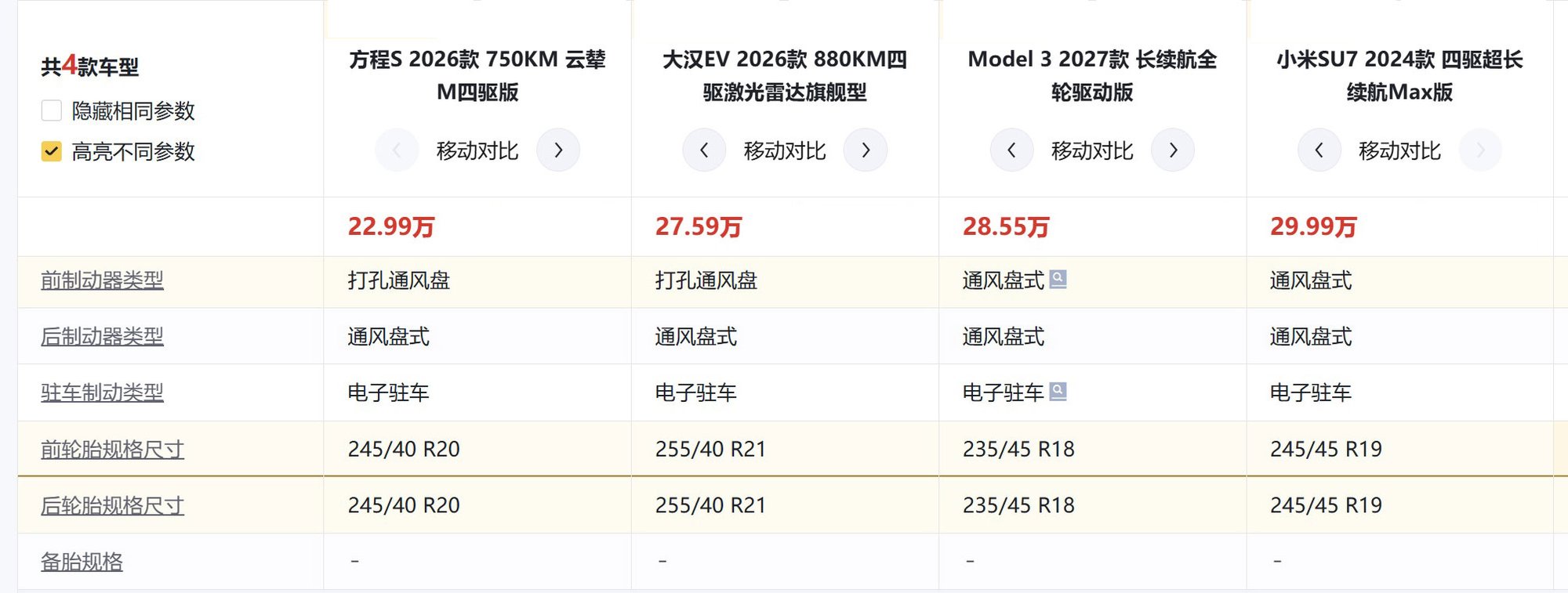
Let us look again at tire specifications. Even if we only focus on tread width, the Fangcheng S and Xiaomi SU7 are both 245, the Dahan EV is 255, while the Model 3 is only 235. If you run a range achievement rate test, would you say narrower tires are taking advantage?
There is also tire pressure. A small number of models provide recommended tire pressure as high as 2.9 bar, and the full-load and standard tire pressures are the same. Some models are quite proper in this respect, with recommended tire pressure generally around 2.6-2.7. So if you run a range achievement rate test, would you say higher tire pressure is taking advantage?
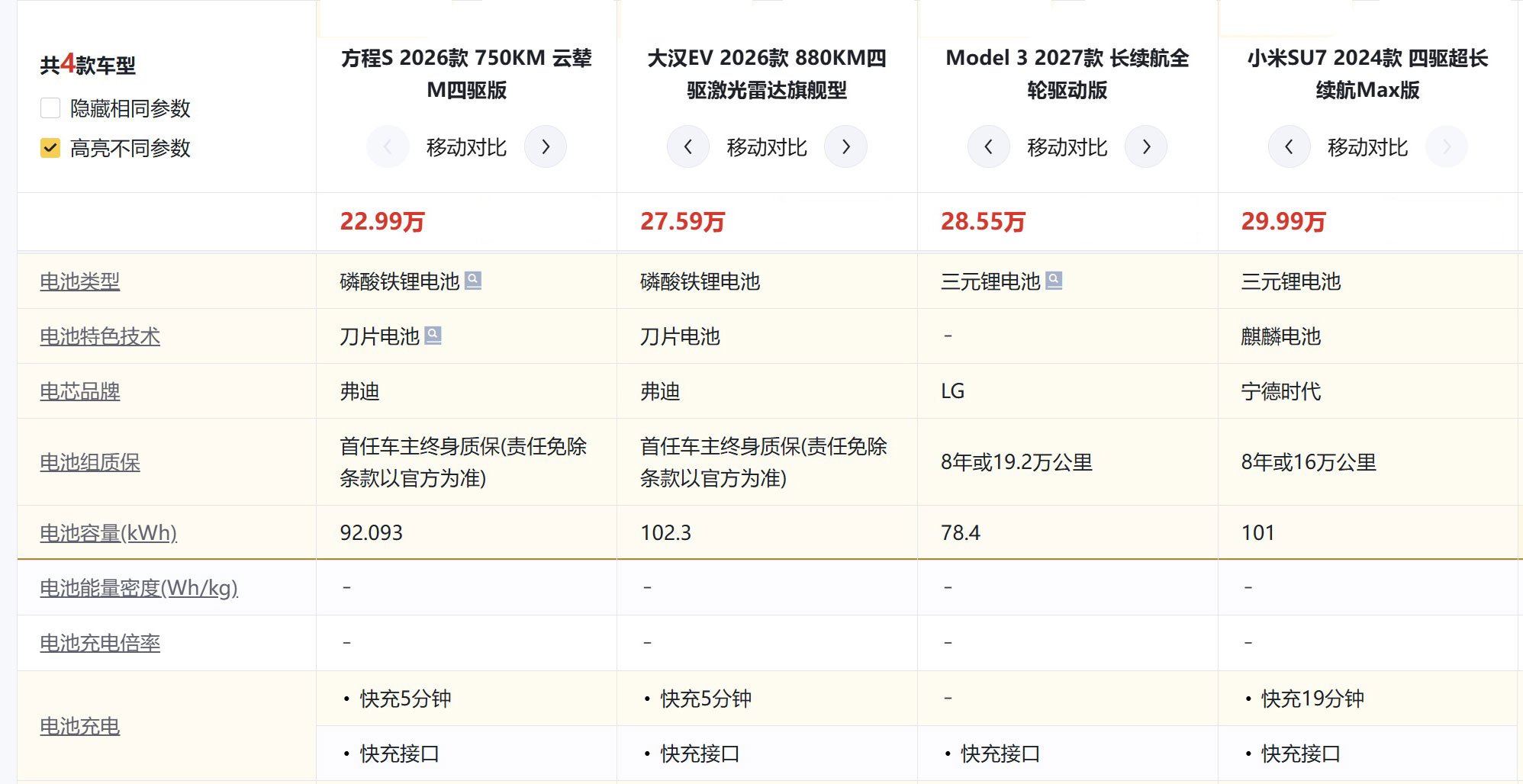
At this point, look at this set of data:
The Model 3 uses only a 78.4 kWh capacity to achieve 753 km of range;
the Fangcheng S uses 92 kWh+ to achieve 750 km of range;
the Dahan EV uses 102.3 kWh to achieve 880 km of range;
the Xiaomi SU7 uses 101 kWh to achieve 800 km of range. Do you still think it is clear whose three-electric technology is better?
Anyone with a little basic knowledge of automotive technology should know after reading the above that so-called higher range, or a better range achievement rate, is entirely taking advantage of factors such as "lower vehicle class, much lighter curb weight, lower drive motor output power, narrower tires," and so on!
If anyone reading this still insists that one company's three-electric technology is better and therefore its range achievement is higher, then that person probably really does not understand automotive technology.
[Flying cars]
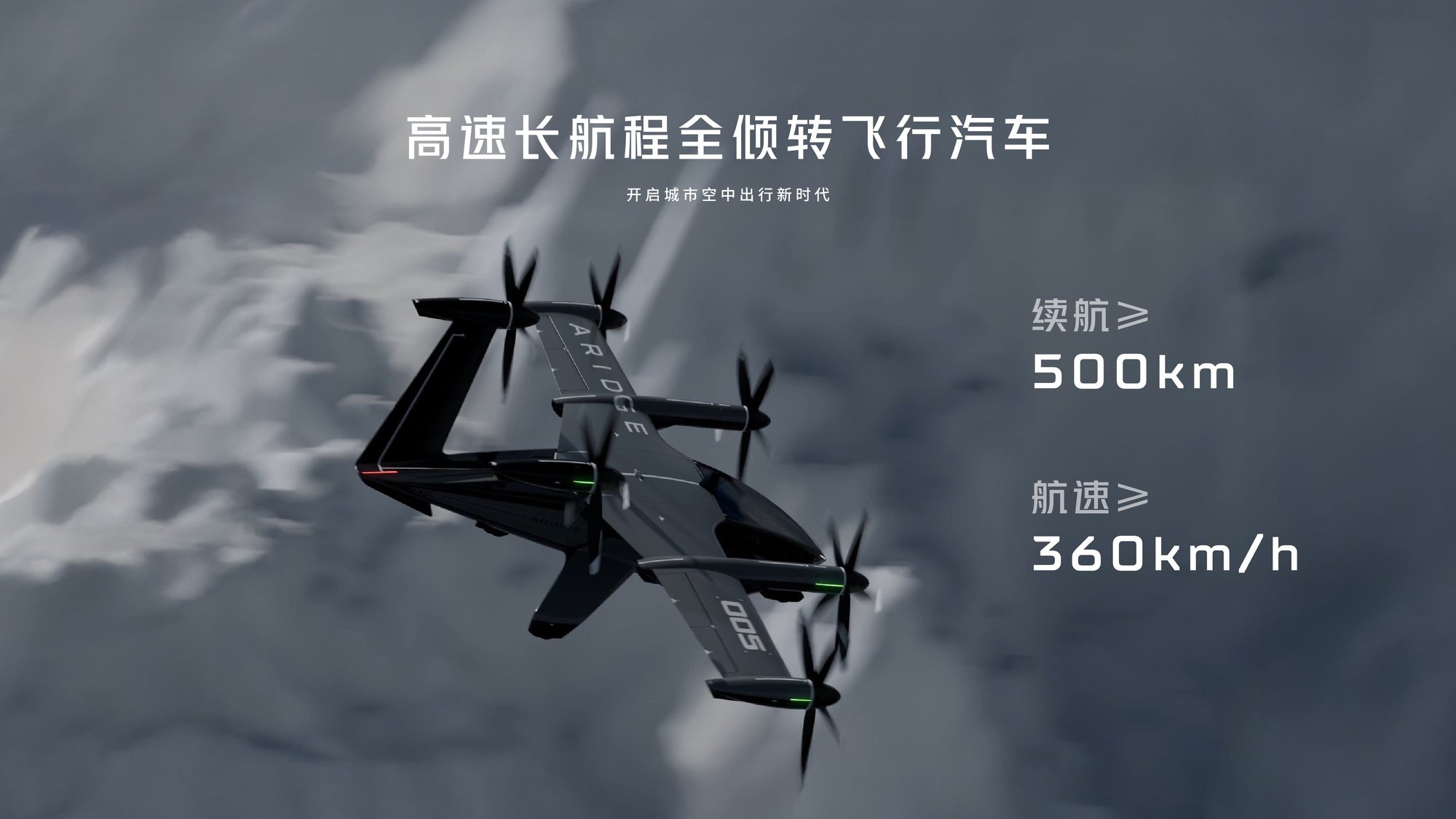
Next, let us talk about flying cars. XPeng has already released this type of vehicle for several years: 500 km range, 360 km/h flight speed. Compared with the flying Roadster II version, it is not inferior, right!
If you understand the technical forms of both, under the premise that range and flight speed are not much different, and taking the safety of the technical form as the premise, if you had to choose between XPeng's flying car and the flying Roadster II, which technical form would you prefer?
I wonder, if this flying car from XPeng had been released by Old Ma, what kind of praise would some people in the automotive circle have given it?
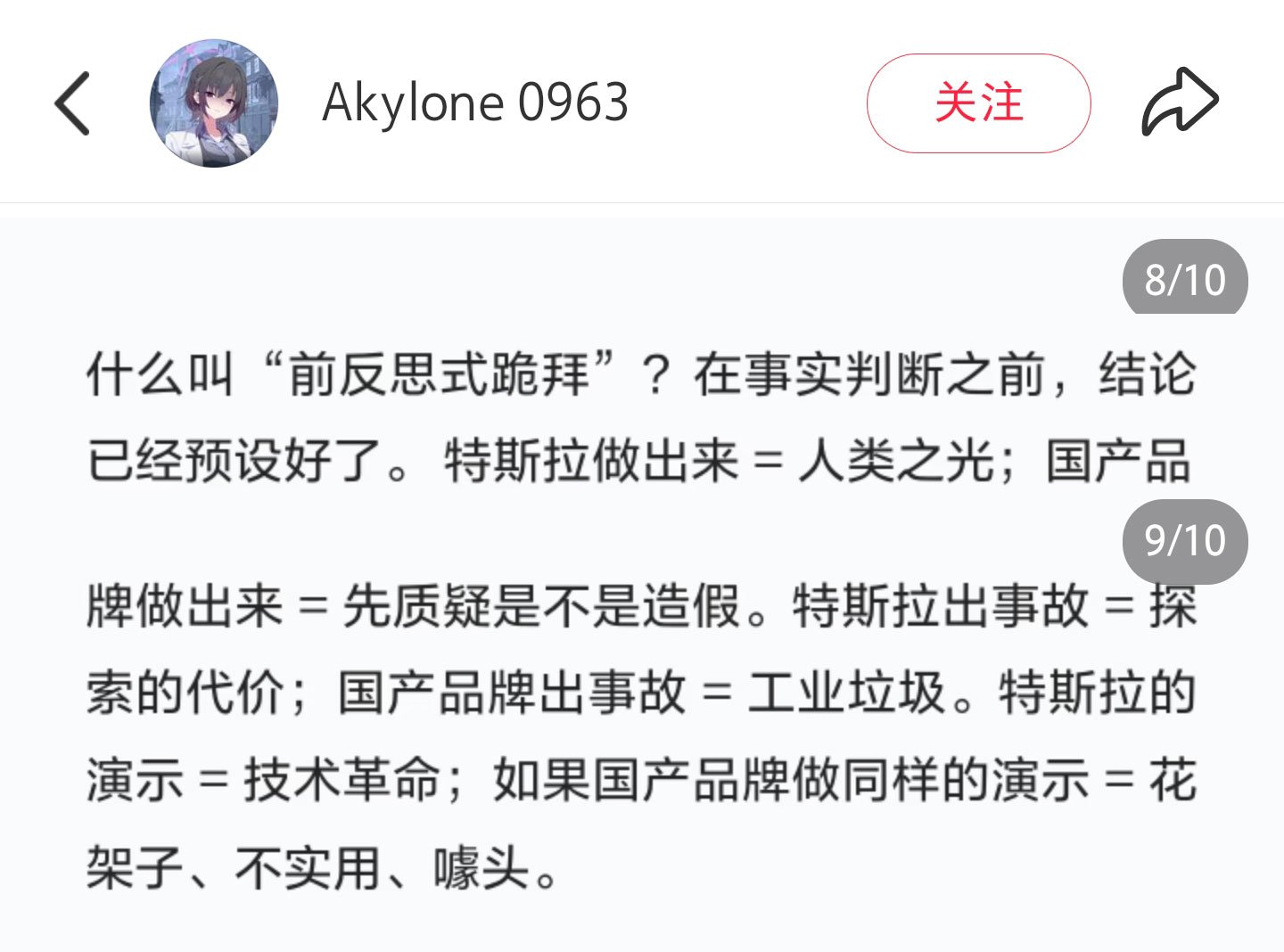
A few days ago, I came across a blogger's statement mentioning "pre-reflective kneeling worship," and I agree with what he said.
Of course, we must also acknowledge the technological gaps. For example, with today's rechargeable electric vehicle power batteries, the safety factor is relatively lower than that of HEV-style shallow charging and shallow discharging, which is friendlier to power battery life and safety;
for example, the risk of scraping a power battery mounted under the passenger cabin is greater than that of installing the power battery under the seats inside the cabin. This is a physical hardware difference, and there is nothing to argue about.
Therefore, still echoing the opening line "standpoint determines opinion," as an ordinary car consumer, I am more optimistic about technologies that can quickly reduce costs and be popularized to more ordinary car-owning families.
Of course, for the capital market, they need to harvest investor investment or attract retail investors to enter and get trapped. There is nothing wrong with making money from wealthy families who are easier to earn from. But as ordinary car consumers in ordinary families, or ordinary automotive industry practitioners, there is no need to look up to a car that can fly after adding thrusters!


