In recent years, buying a mid-to-large all-electric sedan means running into an unwritten rule: looks, intelligence, range, chassis—automakers let you pick at most three, and the remaining one always has to be compromised. They call this clear positioning; I call it costs not being spent where they should be, packaging "trade-offs" as a virtue. What young people hate most is being forced to make multiple-choice decisions—at this budget level, why should I pay for your shortcomings?
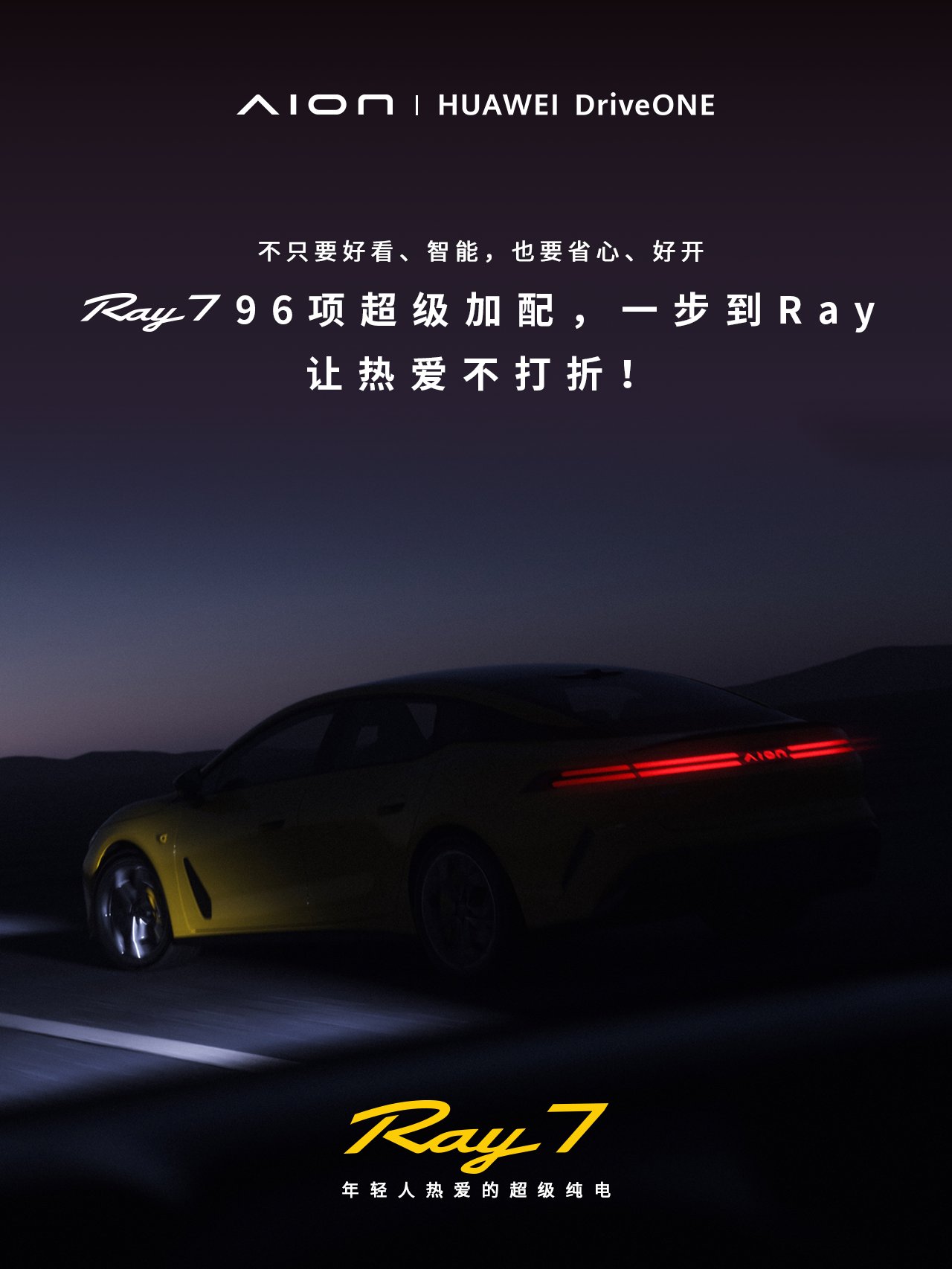
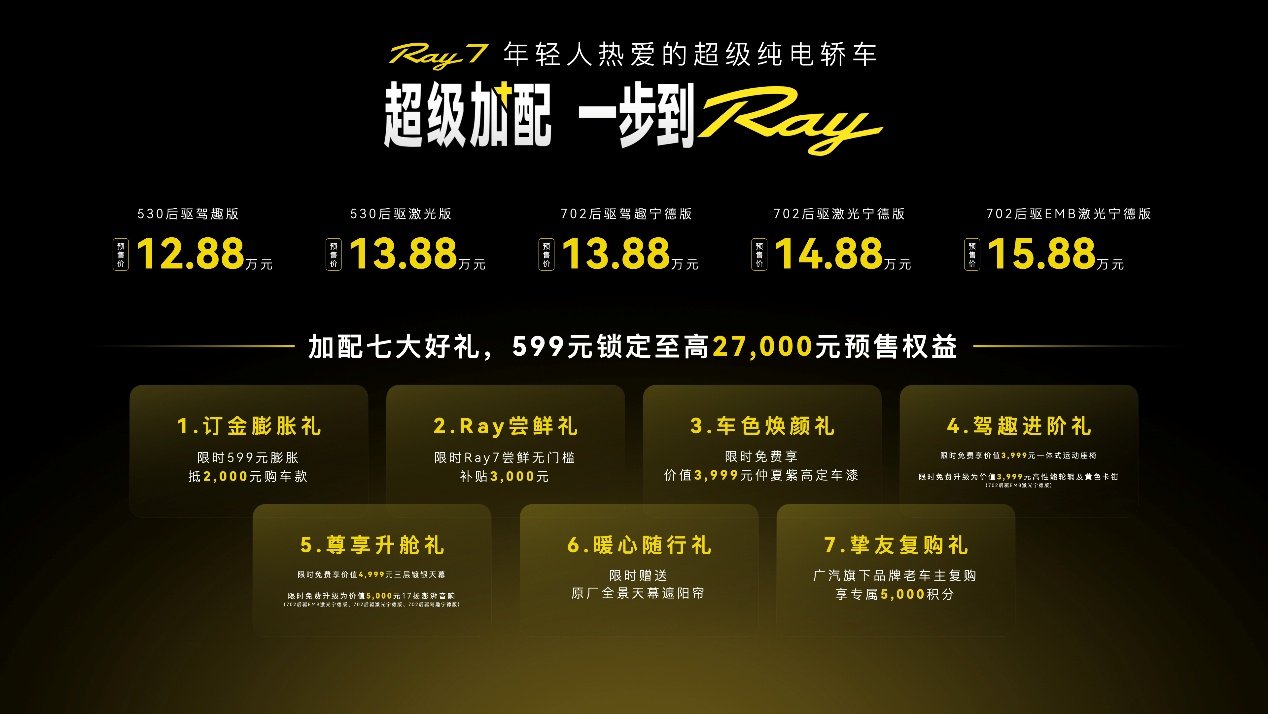
On October 17, Hyptec Aion Ray opened presales at the National Speed Skating Oval, priced from 128,800 to 158,800 yuan, with 96 configurations added. What is most striking about Ray7 has never been its presale price starting at 128,800 yuan, but that it forces competitors in the same class to answer a question that should have been asked long ago—why should young people spend 200,000 yuan on a car and still have to subtract from looks, smart driving, energy consumption, and chassis themselves?
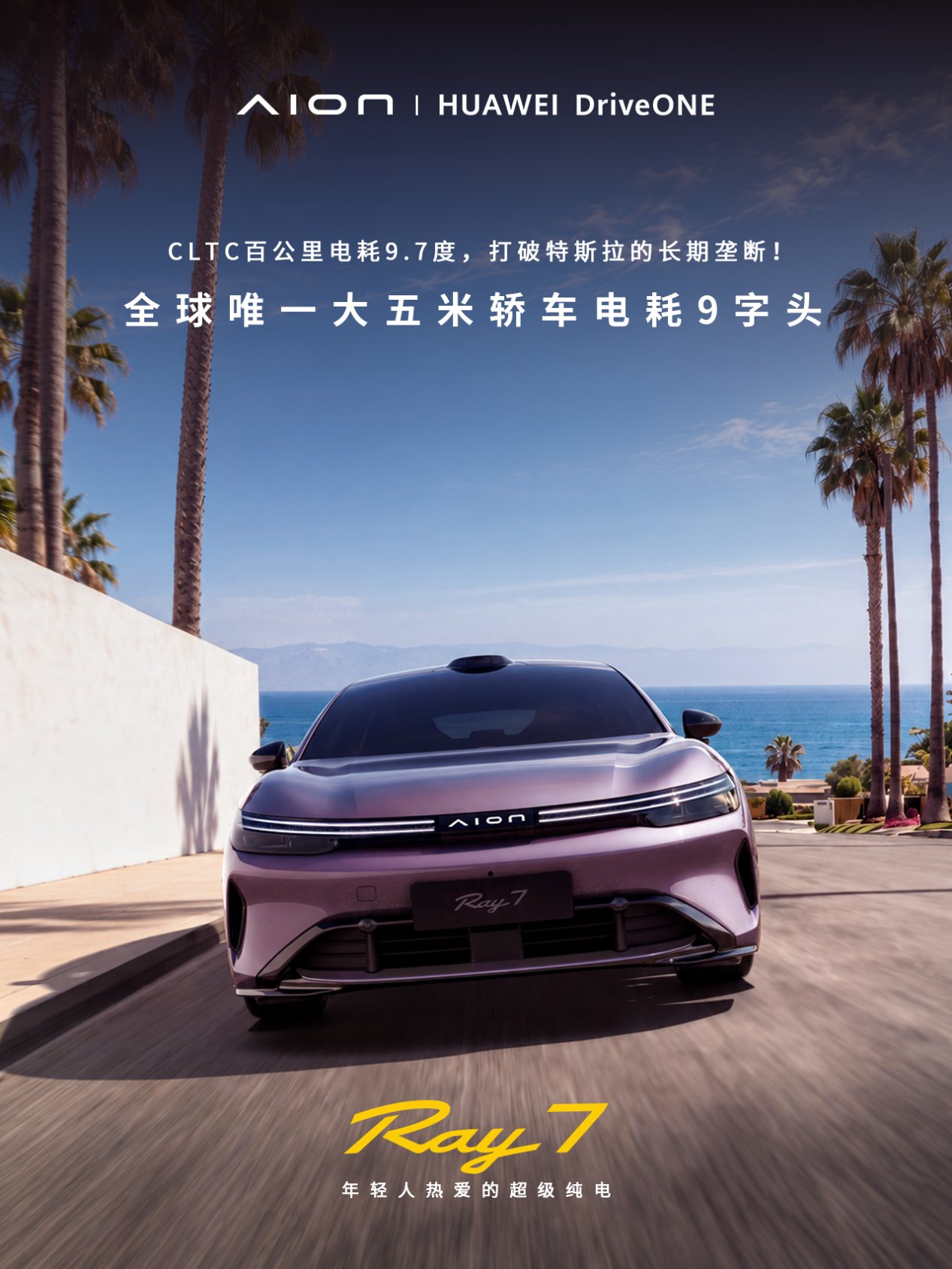
702 km CLTC range, no need to look for a charger between Beijing and Jinan; energy consumption pressed into the 9 kWh/100 km range, the first time globally a large five-meter all-electric sedan has achieved this level; 599 yuan locks in 27,000 yuan in benefits—let's talk about this together first.
Making users make trade-offs is an industry that has been lazy for twenty years
Flip through the high-trim options lists of mid-to-large all-electric sedans on the market, and you will find a tacit understanding: if the design is on point, smart driving gets cut; if the three-electric system is solid, the chassis goes soft. Users have been trained to make multiple-choice decisions, and after a while they even think this is normal. This is not a cost constraint; it is laziness in product definition.
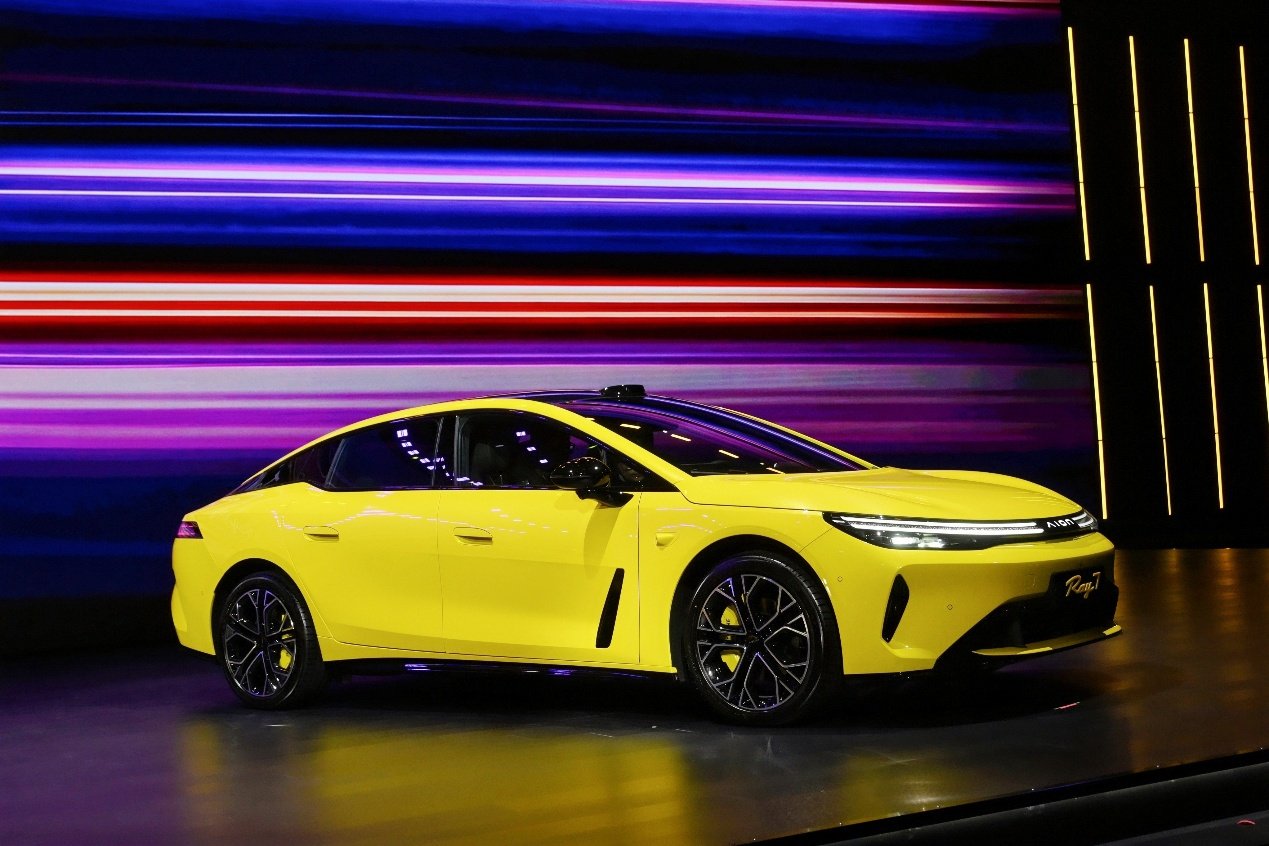
Ray7's approach is fairly direct—large five-meter body length, 1.30 width-to-height ratio, 0.48 wheel-to-height ratio, and all 26 appearance configurations are included. The low-slung, wide-body presence is established first, with a 3.25-meter dual-ring light strip as a visual anchor, and metallic paint using 3C2B process—it has no intention of skimping on the shine. It handles the looks test very cleverly—it does not lecture you about design philosophy, it just makes you take another look in traffic. Good-looking is good-looking; you do not need to understand the specs.
Eight-time champion smart driving—don't just look at the champion title
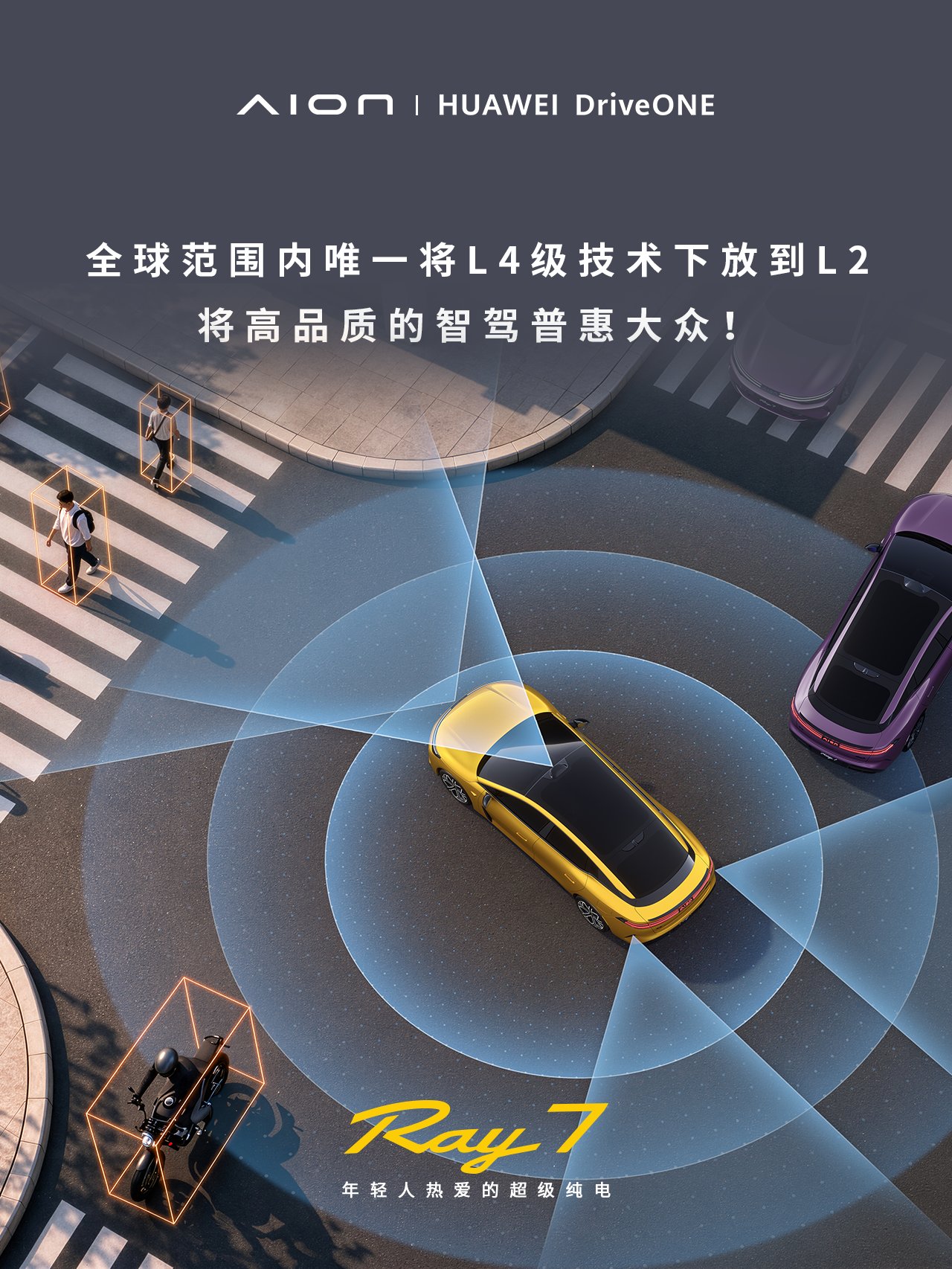
WeRide L4-level same-origin one-stage end-to-end large model, paired with a 192-line lidar and 27 sensors, champion of 8 stops in the China Smart Driving Competition. The championship is the result; the process is more worth mentioning: traffic jam following, cut-in handling, highway lane changes—these high-frequency daily scenarios are handled maturely, and it does not falter in low-light environments either.
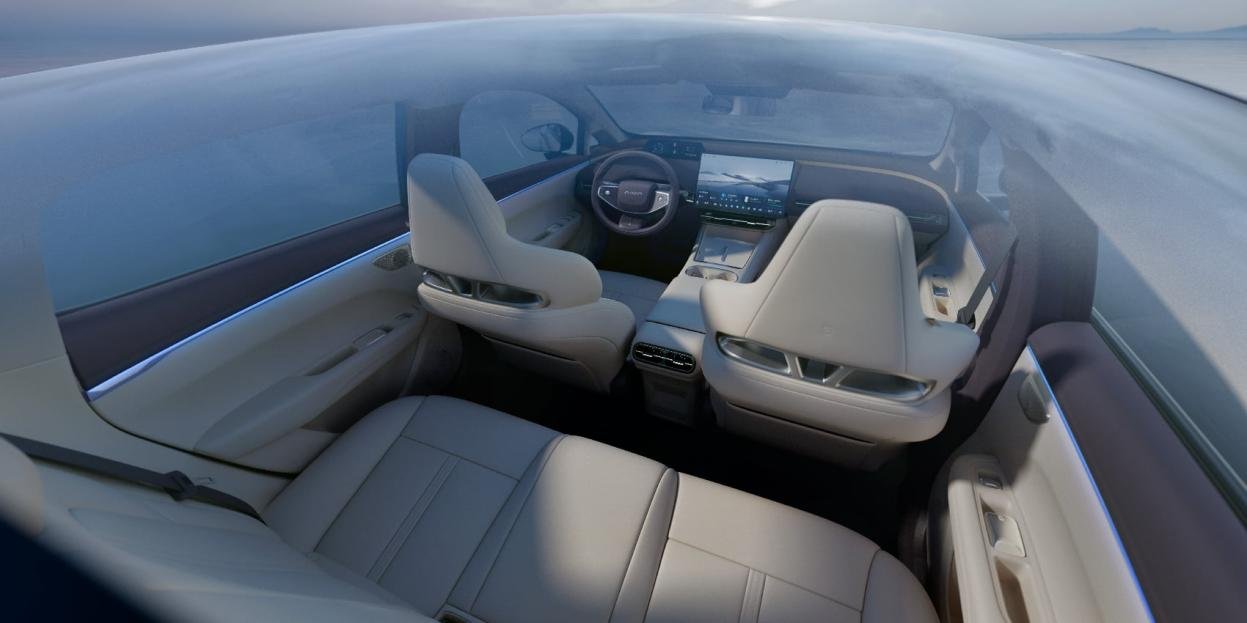
The cockpit offers Qualcomm 8295P, 24G memory, 128G flash storage, and a 15.6-inch 2.5K screen; apps can be installed freely, and response is not sluggish. With smart driving, spec sheets can lie, but cut-ins on the commute definitely won't.
Energy consumption in the 9s is far more respectable than stacking batteries
Most mid-to-large all-electric sedans improve range by stacking batteries—the heavier the car, the higher the energy consumption, a vicious cycle. Ray7 takes another path: Huawei DriveONE multi-in-one electric drive efficiency of 92.5%, with the high-efficiency range leading the industry by 10 percentage points; a 28-in-one integrated thermal management module with a twelve-way valve uses waste heat to warm the battery above minus 9°C; plus 0.22Cd drag coefficient and a curb weight more than 150 kg lighter than the same class. Stacking batteries is physical labor; lowering energy consumption is skilled work. CATL battery plus Magazine Battery 2.0, with 24-hour dual monitoring on the vehicle side and cloud side—it did not use this safety bottom line as a selling point for hype, and that attitude is right.
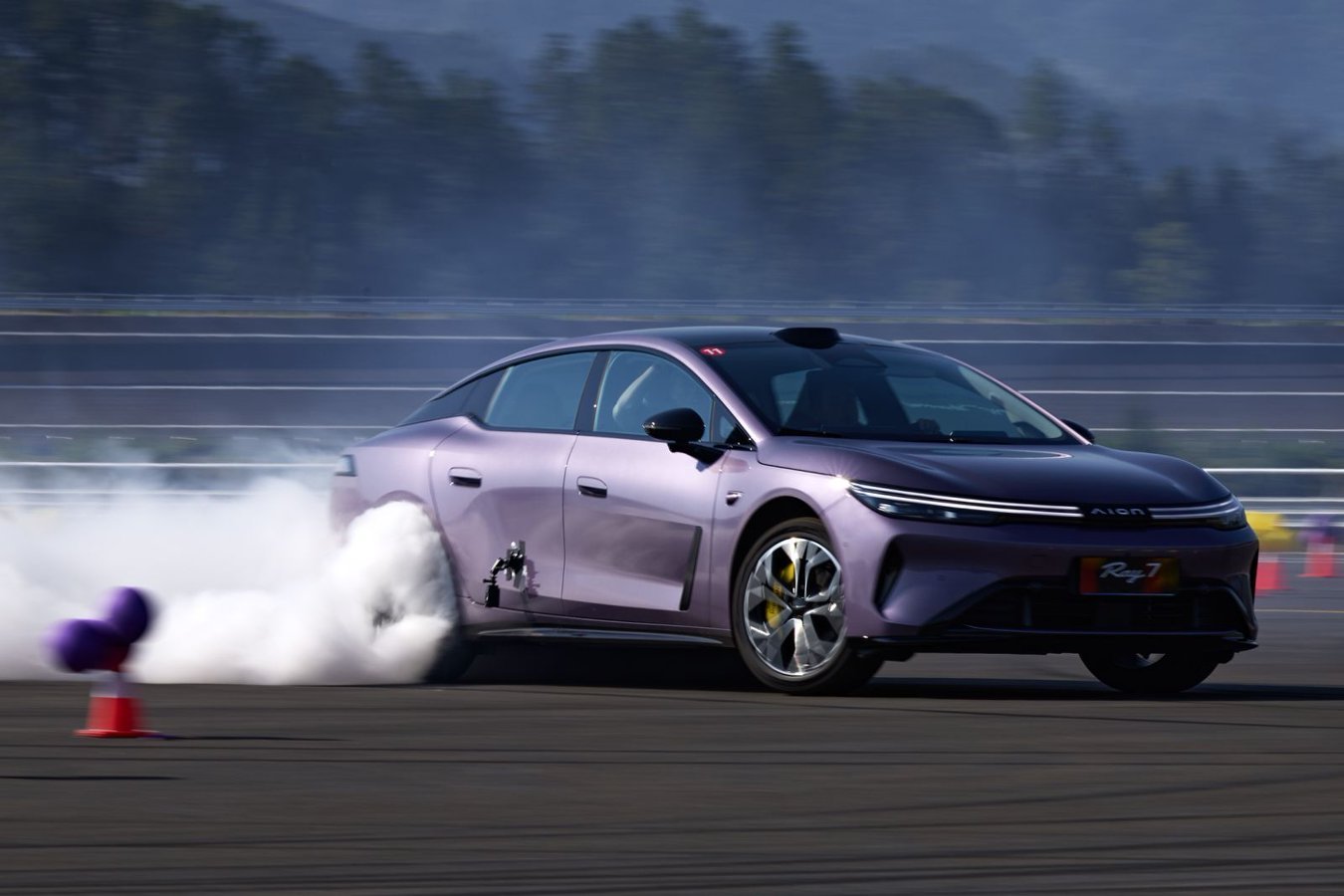
Pure rear-wheel drive—bringing back the joy of driving
"Heavy cockpit, light driving control" has almost become the default rule in the new energy circle. A soft, sagging chassis paired with a big screen is absurd, but it is everywhere. Ray7 returns to driving control: chip-level drive-brake fusion architecture, with one chip coordinating drive and braking, so lane changes do not fishtail and braking does not nod; Huawei EMB full-wire brake control responds in 78 milliseconds; iTrack intelligent torque control manages slippery roads; aluminum hybrid front double wishbone plus rear five-link, with FSD adaptive damping and HRS hydraulic rebound stoppers, and a turning radius of 5.3 meters. Measured 0-100 km/h braking stop in 32.8 meters, at least 2.2 meters shorter than the same class; at 120 km/h single-side wading, the body does not fishtail. The chassis is the car's conscience; the screen is only its expression.
Price and benefits—sincerity must be calculated carefully
128,800-158,800 yuan, 599 yuan locks in up to 27,000 yuan in benefits, including a 2,000 yuan expansion bonus, a 3,000 yuan no-threshold subsidy, 3,999 yuan Midsummer Purple paint, 3,999 yuan integrated sport seats, 4,999 yuan three-layer silver-plated panoramic roof and original sunshade; GAC old owners who repurchase also receive 5,000 points. Paint plus seats plus panoramic roof alone comes to nearly 13,000 yuan, so those who act during the presale period really do get a bargain. On the 18th, Ray7 serves as the official designated vehicle for the Beijing Marathon, serving 30,000 runners—this kind of occasion tests a car's fundamentals better than a launch event.
Final thoughts:
No "subversion," no "redefinition." What Ray7 does is raise the passing line for mid-to-large all-electric sedans under 200,000 yuan: large five-meter size, 700 km-class range, 9s energy consumption, L4 same-origin smart driving, pure rear-wheel-drive chassis—these four things are no longer mutually exclusive. Giving the full configuration list at once and changing "choose two of four" to "take them all" is not sloganeering; it is real cost sincerity. What young people want has never been cheapness, but the confidence to say "I don't compromise." Whether the car sells explosively depends on the market's mood, but at least it has turned a multiple-choice question into a fill-in-the-blank question—this step is beautifully taken.


