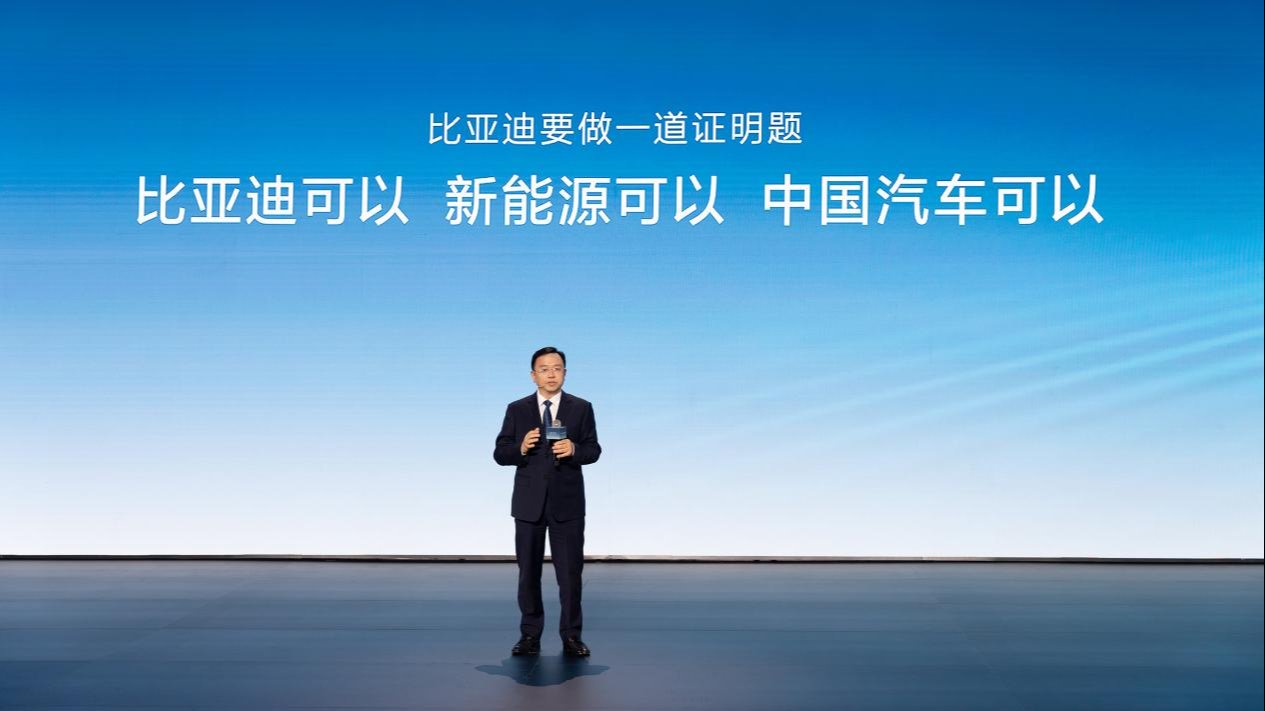
When BYD pierced through technological barriers with its blade battery and rewrote the rules of the global new energy vehicle race with its DM-i hybrid system, when "Made in China" finally carved a deep mark on the map of the global automotive industry—yet this leader's identity seems to have become the original label that burdens it with storms of public opinion.

Within just one month, two clearly targeted public opinion storms followed one after another, coiling around this diligently working company like shadows.
On July 10, BYD announced a partnership with the "Chinese Football Boys" youth training organization, with all funds to be invested in youth football development. This long-term investment focused on the future, however, suffered a dramatic distortion just one week later. On social media, a wave of "boycott the national football team's sponsors" erupted suddenly, and within 48 hours, "boycott BYD" unexpectedly surged onto trending topics. No one bothered to examine the actual achievements of "Chinese Football Boys" as a benchmark for grassroots youth training, still less did anyone pay attention to BYD's pure original intention of separating its sponsorship from competition results. The goodwill of long-termism was easily simplified into a target for emotional venting in the carnival of traffic.
On July 24, a more precise sniper attack descended. A short video of a vehicle losing control and spinning in circles at Chengdu Tianfu Airport was carefully edited and paired with the horrifying label "brake failure," instantly igniting the entire internet. At that time, police investigation had not yet begun, and BYD had not yet had time to respond, but accusations of "technical defects" and "quality problems" had already been mass-produced by marketing accounts and spread virally. Ironically, that very evening was BYD's Sealion 06 technology launch event—netizens who did not know the truth flooded into the livestream, spamming "loss of control," turning a carefully prepared technology showcase into an execution ground for public opinion siege. What is thought-provoking is that the day before, an authoritative platform had just published excellent test data for its models.
The truth did not stay absent—the police notice clearly stated that the incident was caused by the driver's emotional operational error—but the label "brake failure" had long been branded deeply into public perception. In the communication chain, the concentrated efforts of regional media and the "resonance" formed by internet influencers and marketing accounts uniformly outputting labeled content revealed a certain deliberate agenda-setting: they did not want the public to see BYD's investments, but only wished to amplify distorted fragments.
Why does BYD repeatedly become a target? This is far from the isolated predicament of a single company, but rather the "windbreaker's curse" that Chinese innovators inevitably encounter when leaping from follower to frontrunner. When it broke the foreign monopoly on core technologies through independent research and development across the vertical industrial chain, when it won global discourse power for "Made in China" through hardcore innovations such as the blade battery and DM-i super hybrid, the existing interest landscape and market order were bound to be shaken. The more one breaks through the wind, the more one faces pressure directly—this pressure comes not only from the steep peaks of technological challenges, but also from cold arrows of public opinion lurking in the shadows.
What is more worrying is the ecological distortion of the public opinion field. The threshold for spreading rumors is suffocatingly low: a clipped video and a blurry screenshot are enough to stir up towering waves. The cost of refuting rumors, however, is heavy as a mountain: companies must go through procedures, search for ironclad evidence, and conduct public education, and by the time the truth limps in, rumors have already taken deep root and flourished. The dissemination volume of the Tianfu Airport police notice was far less noisy than the initial "loss of control" video; the pure heart behind the youth training sponsorship could not withstand the malicious distortion of a single phrase, "sponsoring the national football team." The logic of traffic has twisted value judgments; some media and accounts turn a selective blind eye to a company's long-term contributions and sense of responsibility—such as building makeshift hospitals during the pandemic, promoting dragon boat culture, and deepening technology equalization—while flocking to distorted fragments. As if the stronger the company and the more outstanding its contributions, the more it should endure the absurd harsh demand that "heavy is the head that wears the crown."
BYD's lonely exploration in opening up uncharted territory has lit the torch of technology equalization for China's automotive industry. From the resilient layout of the vertical industrial chain and the hardcore strength of massive exports to the contemporary expression of Eastern aesthetics through "Dragon Face" design, it has quietly pushed the label of "Made in China" to the forefront of the world. Yet when a company that has won dignity through core technologies is forced to repeatedly prove its innocence in the swamp of baseless smears, whose heart is chilled if not BYD's? It reflects the collective predicament faced by all steadfast practitioners of Chinese manufacturing—the more dazzling the innovation achievements, the more likely they are to become targets for hidden arrows.
When Carnegie said, "Great fortunes perish in the quarrels of sons, and great enterprises are often destroyed from within," he was warning precisely of the fatal erosion of creativity by internal friction. The rise of Chinese manufacturing requires the courage to break through technological blockades, and equally requires the clarity to withstand hidden arrows of public opinion. Society as a whole urgently needs to build a healthier public opinion immune system: raise the cost of malicious slander, let the spread of truth outrun rumors, and let objective and rational voices drown out emotional venting. Only when companies can be free from the worry of "fire in the backyard" can they devote more energy to innovation battles at the front line.
In the journey of the new energy vehicle industry, BYD is only a microcosm. In the future, more Chinese companies will forge ahead on the path of technological innovation and social responsibility. We should give these companies a thumbs-up! And protecting these windbreakers who dare to light the sparks of technology in uncharted territory is protecting the future of Made in China. Do not let the cold arrows that chill the hearts of innovators ultimately pierce through the sea of stars and vast ocean of industry that we all look forward to.


