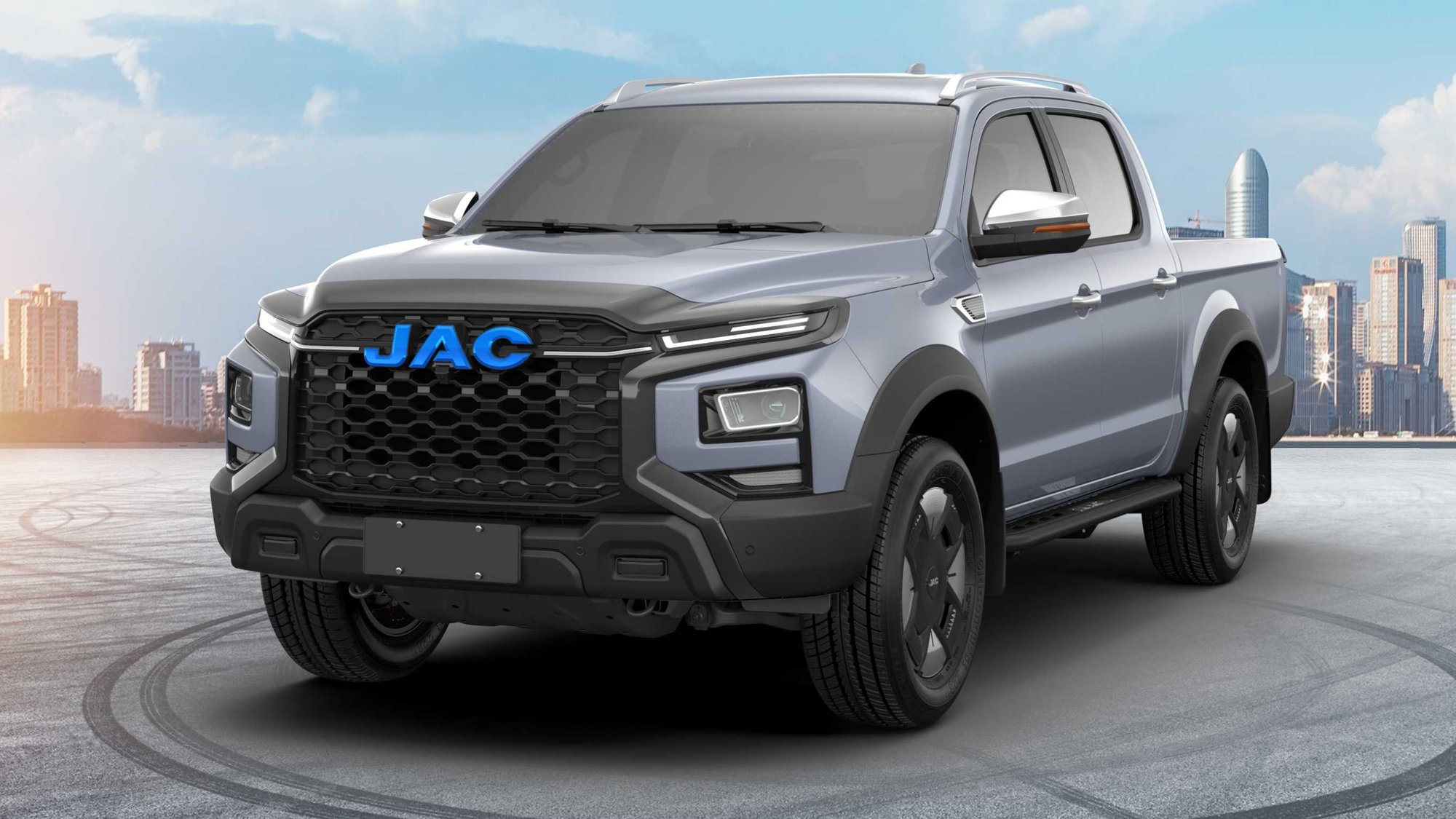
Recently, the Ministry of Industry and Information Technology released the 392nd batch of new vehicle announcements, showcasing multiple popular models. Among them, JAC Pickup's first plug-in hybrid pickup—the JAC Hunter PHEV—was publicly revealed for the first time. Its power performance can be called a "trump card," and it has attracted considerable attention and popularity, marking the arrival of a strong leader in the plug-in hybrid pickup market.
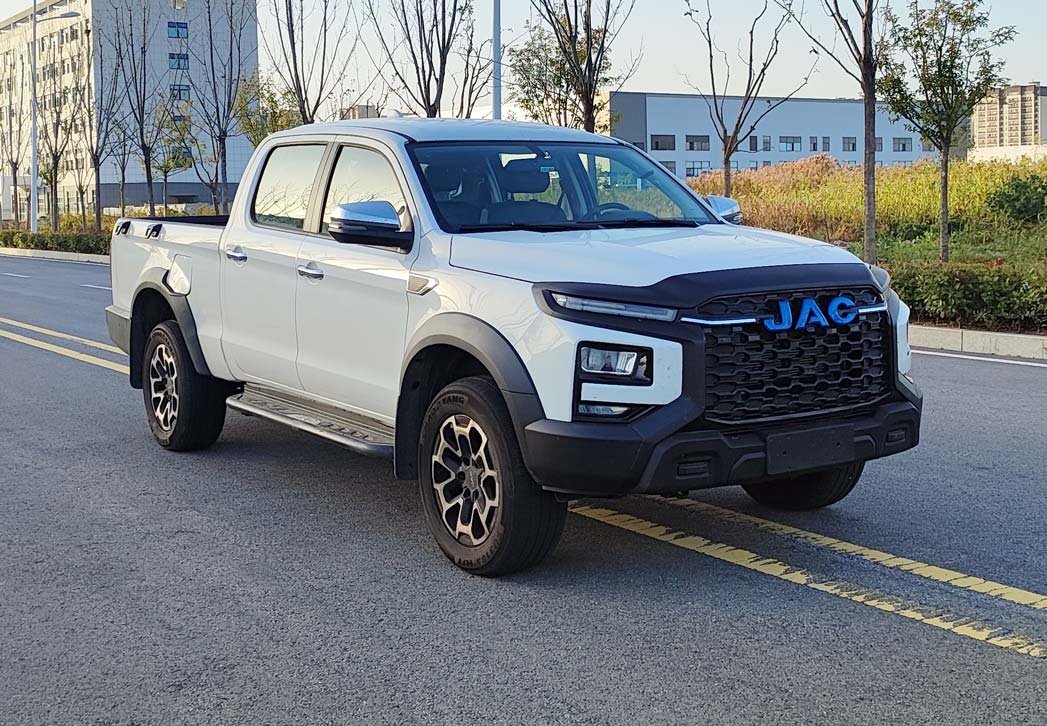
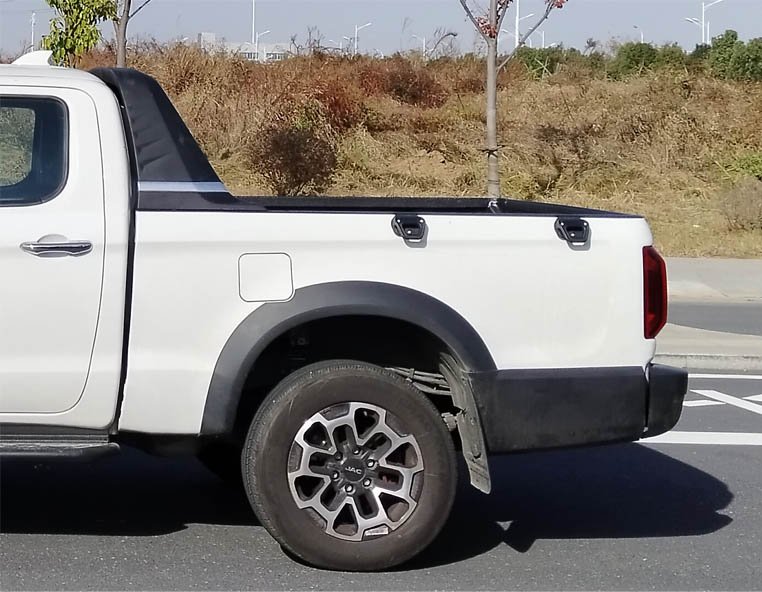
According to the MIIT announcement data, the styling of the JAC Hunter PHEV is basically consistent with the fuel version, adopting the Chinese Dingguochao front-face design, paired with hunter-eye thick-wall sequential turn signals and split headlights, and swapping in a blue JAC logo, giving it strong brand recognition. A roll bar and wheels of different styles are available as options, and a "PHEV" badge has been added to the rear. The interior design has not yet been announced and is expected to be upgraded, with further tracking to follow.
In terms of body dimensions, the JAC Hunter PHEV measures 5620/1965/1620mm in length, width, and height respectively, with a wheelbase of 3400mm and a cargo box size of 1810/1590/470mm. These dimensions are completely consistent with the large double-cab fuel version and are at a leading level in the same class. The vehicle length is basically the same as that of the Changan Hunter and superior to the BYD Shark, while the vehicle width and height are both superior to the Changan Hunter, ensuring comfort and practicality in both cabin space and cargo box space.
As a plug-in hybrid pickup, the powertrain system is naturally the focus of consumers' attention. According to the MIIT announcement data, the JAC Hunter PHEV is equipped with a 2.0T hybrid dedicated engine codenamed HFC4GA5-6E, with a maximum power of 160kW and a maximum torque of 370N·m. The maximum power of the front and rear dual motors is 130kW and 150kW respectively, providing powerful output and significantly improving the driving experience and reducing usage costs. It also eliminates the range anxiety of pure electric pickups while retaining the advantage of payload capacity.
In terms of the power battery, the JAC Hunter PHEV is equipped with a lithium iron phosphate battery pack from Gotion High-tech. The specific battery capacity and range have not yet been announced, but a good combined range performance is expected with a full tank and full charge. However, the announcement shows that the JAC Hunter PHEV allows external charging and is expected to feature an external discharge function, which can meet the power needs of different users and different scenarios, such as outdoor camping, fishing, and special operations such as agricultural drones and emergency rescue, offering high playability and adaptability.
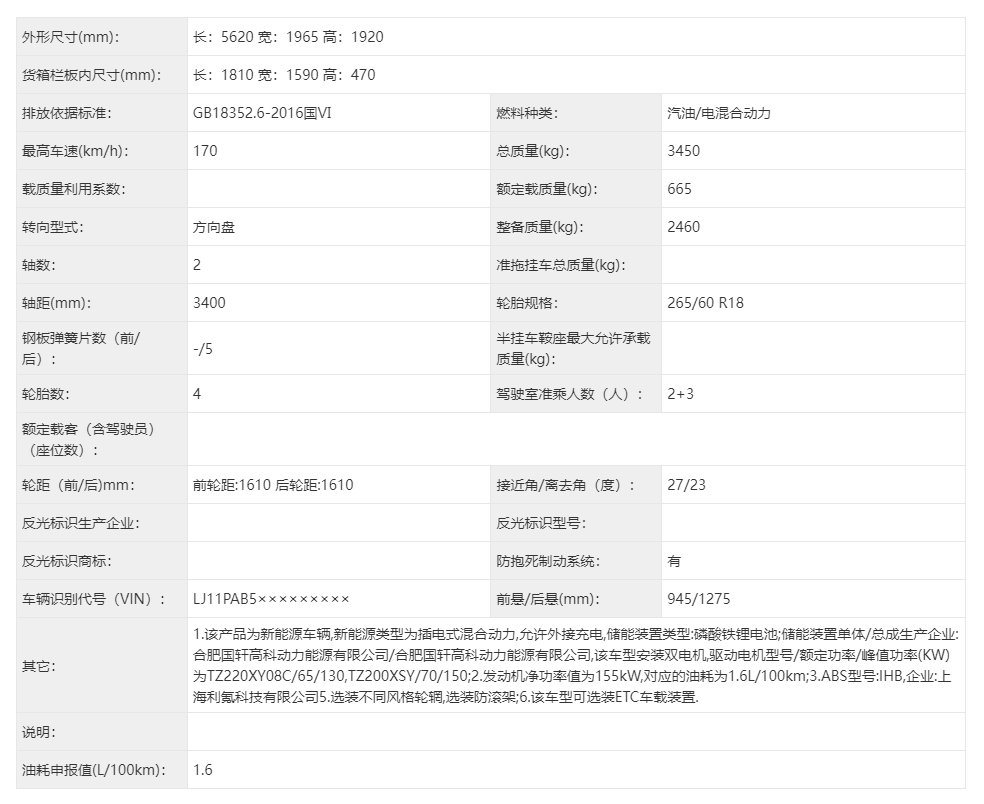
Judging from the parameters revealed this time, compared with other hybrid pickups, the power advantage of the JAC Hunter PHEV is relatively obvious. Compared with the Changan Hunter, the total power of the JAC Hunter PHEV's front and rear dual motors is 280kW, superior to the Changan Hunter's 200kW; compared with the BYD Shark, the JAC Hunter PHEV is equipped with a 2.0T hybrid dedicated engine, with a displacement higher than the BYD Shark's 1.5T, delivering stronger power and being more suitable for pickup models used in commercial and off-road scenarios. The body-on-frame construction also makes its load-bearing capacity and safety second to none.
In summary, as the first plug-in hybrid pickup launched by JAC Pickup, the JAC Hunter PHEV directly addresses consumer pain points with its advantages in power, comfort, and economy. Its overall performance can be called a "trump card," and it is expected to stand out in the market after launch. Users who have recently wanted to buy a body-on-frame plug-in hybrid pickup with high load-bearing capacity and strong performance may want to look forward to it.


