Speaking of something that might happen as a joke, I figure these past couple of days, the product managers at Geely Galaxy and Changan Qiyuan have probably been in their offices pulling their hair out like crazy.
Why?
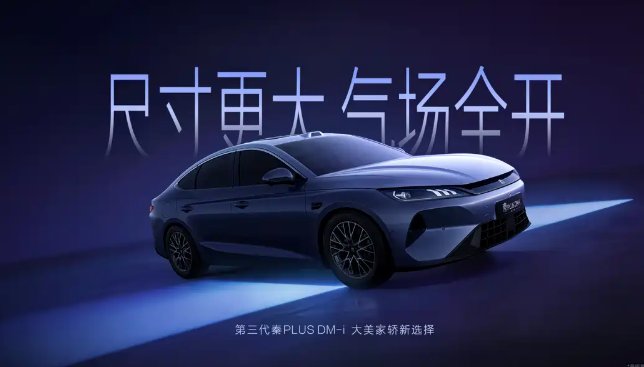
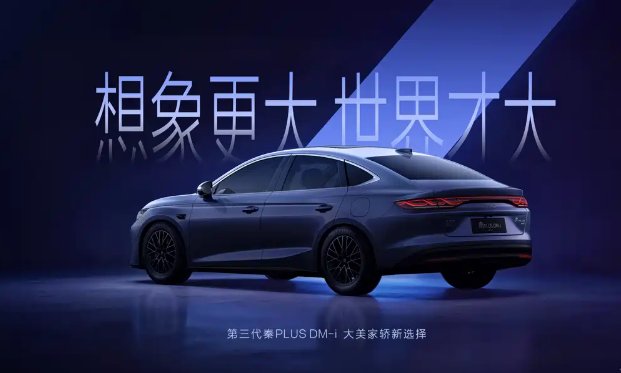
It's all because BYD just released the official images and MIIT filing info for the third-generation Qin PLUS!
When I looked at it, I almost thought the MIIT had pasted the wrong data for the Qin L or some B-segment car.
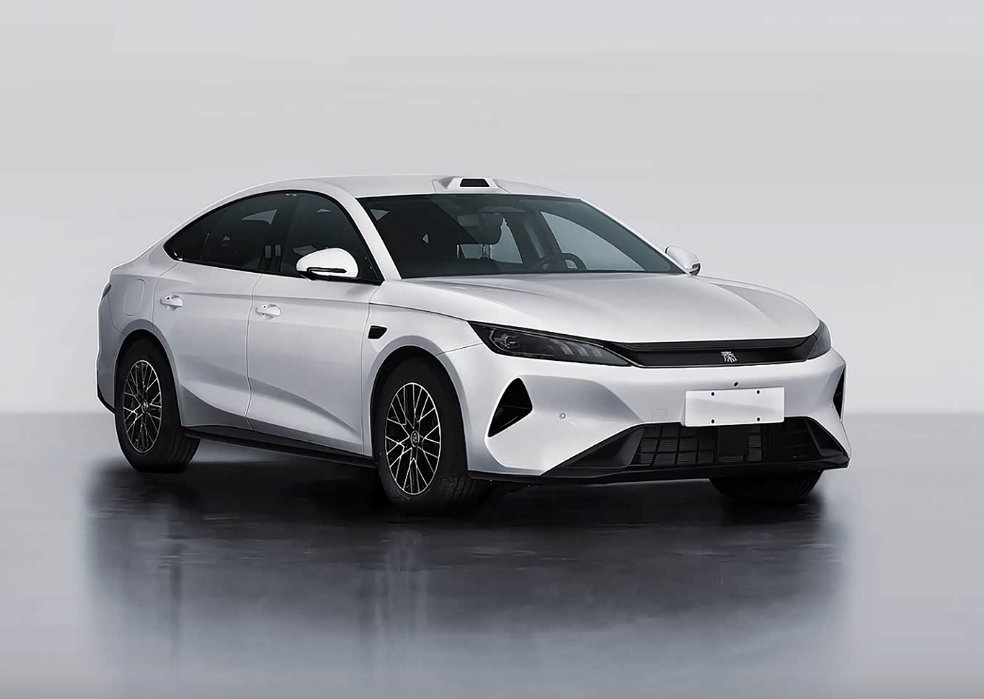
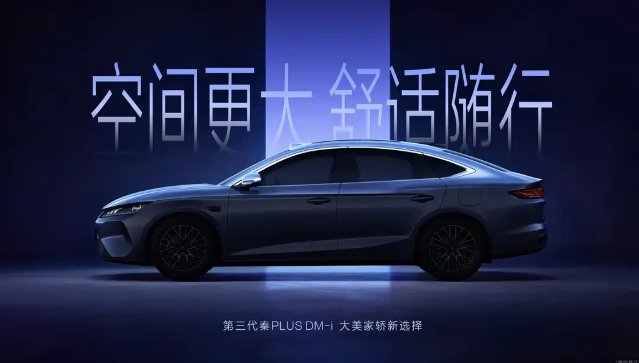
Length 4840mm, width a full 1.9 meters, wheelbase stretched to 2800mm.
Even more absurd, there's an optional lidar unit in the middle of the roof—can you handle that?
I have to say, this is getting interesting.
Think about it—an A-segment family sedan that was once firmly stuck with the labels "ride-hailing car" and "sub-100k grocery getter," and the third generation directly stretches its body into a standard mid-size car, with a "watchtower" on its head.
Is this a normal iteration?
This is clearly meant to push competitors to the brink, and give its own Han DM-i and Qin L a hard kick in the back while at it.
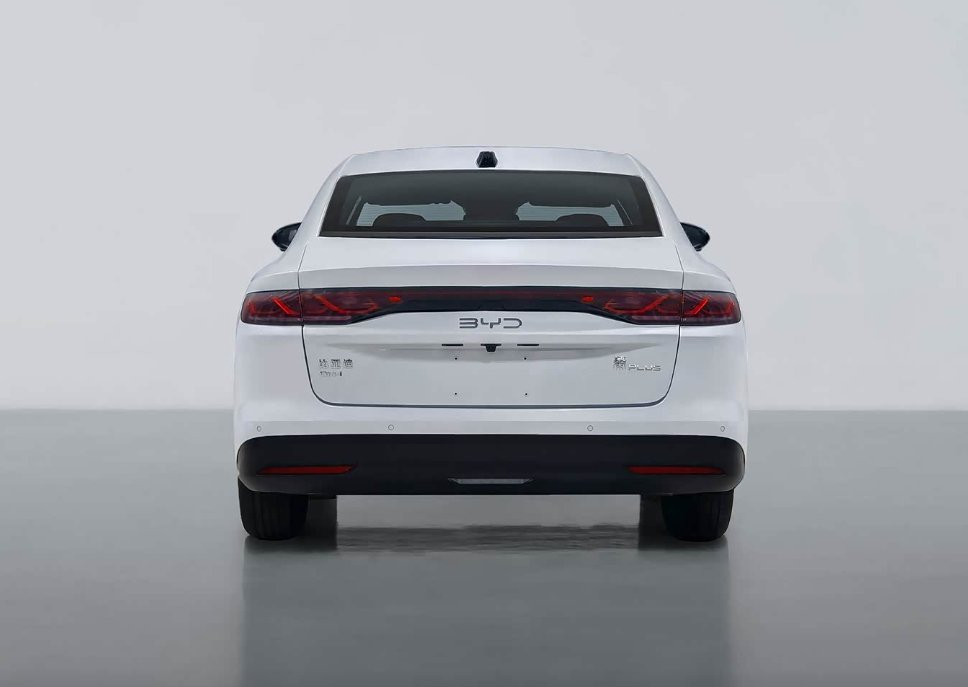
For a sub-100k plug-in hybrid family sedan, is equipping lidar a dimensional strike or just taking off your pants to fart?
I'll give you a few minutes to think it over, then answer me.
Let me first share my take, or rather my viewpoint.
Actually, anyone buying a Qin PLUS is someone who counts every penny down to the bone, right?
Daily grocery runs, picking up the kids, commuting—who's playing with high-level navigation assist in their car every day?
If the area above the windshield gets bumped, repairing a lidar costs thousands to tens of thousands, and next year's insurance premium skyrockets—that's just asking for trouble.
That said, I think we need to look at this from the opposite angle.
Notice the official wording—it's just three big words: "optional equipment"!
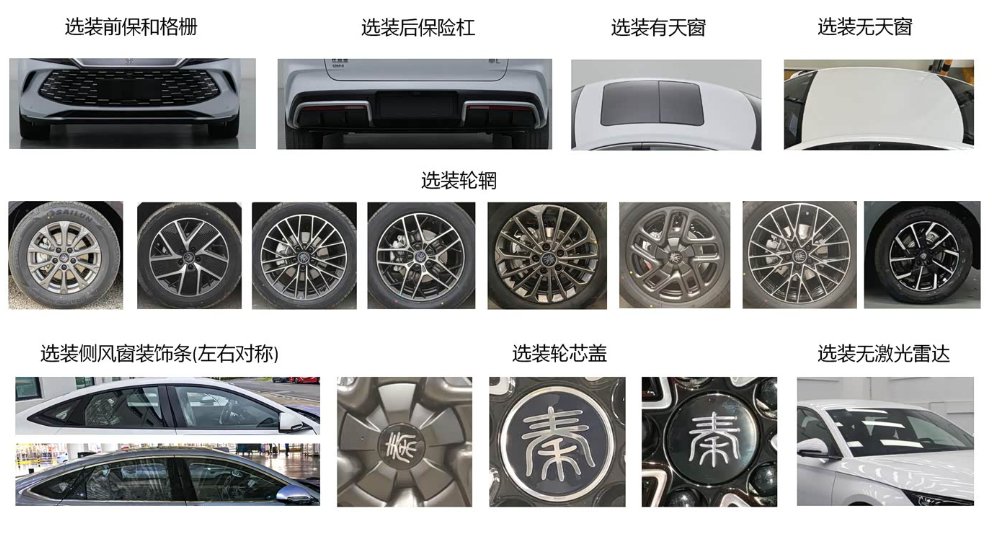
Honestly, that's pretty sly—it uses lidar to max out the car's tech appeal and break the Qin series' "cheap" stereotype, without forcibly passing the cost onto budget-focused commuter users.
Young users who want urban mapless NOA can pay extra to option it; those who just want fuel savings and low cost can pick the lower trim. As long as the smart driving package pricing doesn't get carried away, this is actually a very solid move.
However, praise aside, when I saw the chassis section, I couldn't help but want to complain a bit.
BYD's stinginess on tires is truly consistent across generations.
Look at the filed tire specs: 215/65 R16 and 215/60 R17.
Fellow car enthusiasts, the body width is already 1900mm, wheelbase 2.8 meters, curb weight 1.52 tons, and they still put on 215-width "noodle tires."
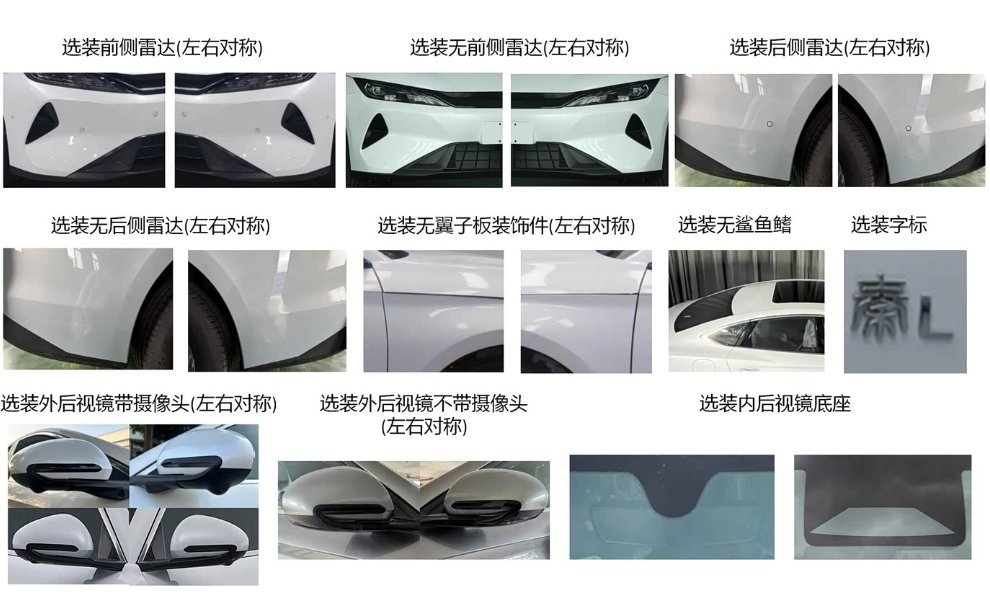
No need to guess—everyone knows the manufacturer is doing this to reduce rolling resistance and post pretty depleted-battery fuel consumption numbers, but such a big body with 215 narrow tires inevitably gives off a "big guy wearing small shoes" visual.
The grip limit during hard braking or rainy-day cornering might well deserve a small question mark.
On the powertrain side, the engine is still the 1.5L naturally aspirated unit coded BYD472QC, with a maximum power of 74kW.
The drive motor peak power is 120kW, rated power 55kW, and top speed is listed at 180km/h.
The numbers are honest—typical fuel-saving family car orientation. Don't fantasize about push-you-back-in-your-seat acceleration; it's essentially still that mild-mannered, gentle family car.
But this car does have one genuine highlight this time—the battery is quite generous.
This time they filed two lithium iron phosphate batteries: 16.227 kWh and 24.337 kWh, corresponding to pure electric ranges of 107 km and 160 km respectively.
That 160 km version is quite competitive among plug-in hybrid family sedans.
Many office workers nowadays commute only about 30 km a day—with 160 km of pure electric range, they can easily charge once a week and drive it as a pure EV.
For people who don't have a home charger and have to go to public fast-charging stations, a bigger battery means fewer trips to charge—that's the kind of incremental feature that truly hits ordinary people's pain points.
Now looking back at its competitive environment.
Geely Galaxy L6 focuses on chassis quality and performance, Wuling Starlight focuses on extreme cost-effectiveness, and Changan Qiyuan A05 competes with it on price every day.
But with the third-generation Qin PLUS doing what it's doing—taking B-segment space, optional lidar high-level smart driving, plus 160 km of pure electric long range—it's basically throwing a wild flurry of punches to knock out the old masters.
As for those planning to buy this car, the way I see it, if your budget is tight after launch, just go straight for the mid-to-low trim, the 107 km pure electric version without lidar—the value proposition is still unbeatable.
But if you have a bit more room financially, grit your teeth and go for the 160 km range version—the ownership experience goes up a notch.
This car is expected to officially launch in late October. As long as the pricing doesn't pull any tricks, the compact family sedan pool is probably going to get turned upside down again.


