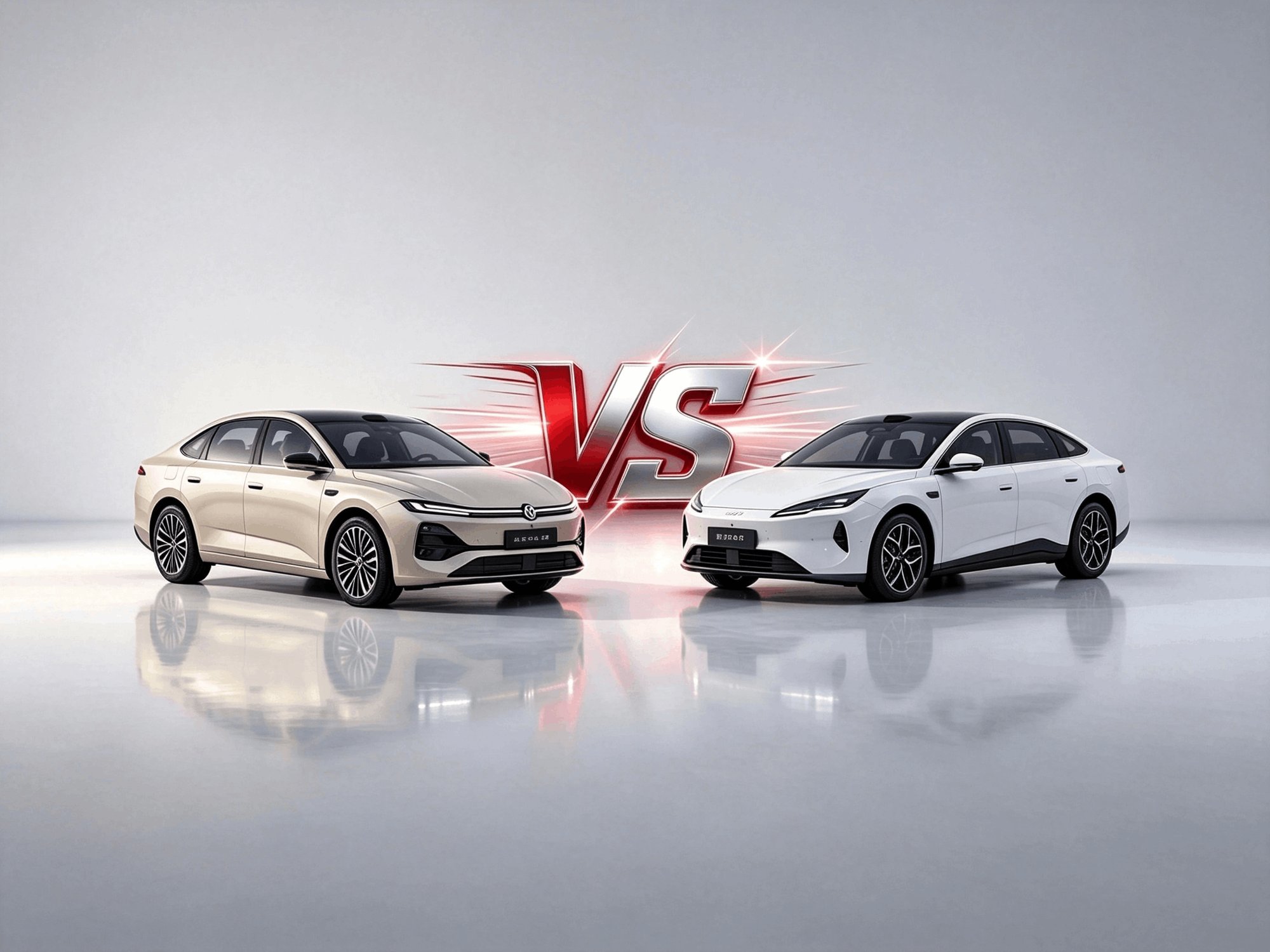
On August 11, BYD Seal 06 launched, and 10 days later, SAIC Volkswagen ID.ERA 5S followed suit. Squeezing into the same market back-to-back, with prices locked together—putting these two cars side by side isn't about comparing which is stronger, but about the collision of two car-building philosophies: one is a joint venture brand desperately catching up with a "German foundation plus local intelligence," the other is an independent brand holding its ground with "three-electric reputation plus configuration equality."
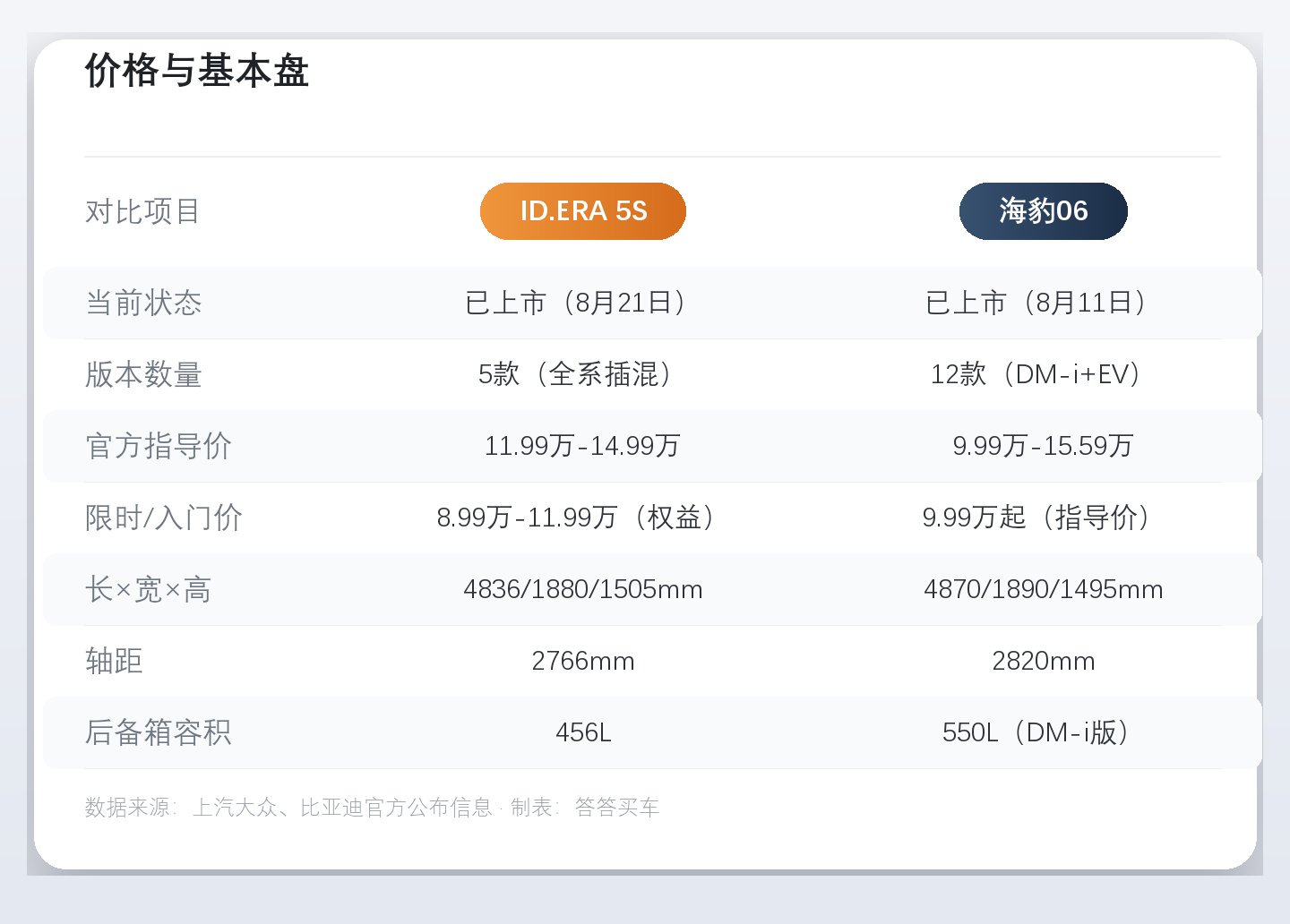
Caption: Price card
One bleeding for promotions, one stocking the shelves full
The ID.ERA 5S has an official guide price of 119,900 to 149,900 yuan. Stack on deposit expansion, trade-in and upgrade, insurance and purchase tax subsidies, and the limited-time benefit price drops to 89,900 to 119,900 yuan, with lifetime whole-vehicle warranty for the first owner. That 89,900 yuan is conditional—you have to meet the benefit criteria to get it.
The Seal 06 takes a different approach: 12 models spread out, with the plug-in hybrid version at 99,900 to 141,900 yuan and the pure electric version at 109,900 to 155,900 yuan, so there's always one that fits your budget. The 99,900 yuan is a real entry guide price—no need to stack benefits.
Market response is hot on both sides. ID.ERA 5S deliveries had already broken 10,000 by mid-October, with more than 17,000 orders still in queue, and the Max version accounting for over 60% of choices; the Seal 06, backed by the Ocean Network's volume-driving base, has long held monthly sales steadily above 10,000 units.
Numbers are tight on paper, but the trunk gives it away
In terms of dimensions, the Seal 06 measures 4870/1890/1495mm with a 2820mm wheelbase, 30mm longer than the previous generation; the ID.ERA 5S is 4836/1880/1505mm with a 2766mm wheelbase. The Seal 06 has 54mm more wheelbase, giving it the advantage on paper.
But the 5S pushes space utilization to the extreme: 68% interior space efficiency, 136mm rear knee room, a completely flat floor—it doesn't feel small inside. The real gap is in the trunk—the Seal 06 DM-i has a regular 550L volume, while the 5S, affected by battery layout, has only 456L, nearly a hundred liters less. When a family goes on a long trip, whether the suitcases fit—this one item gives the answer.
One fastback German style, one ocean-fresh vibe
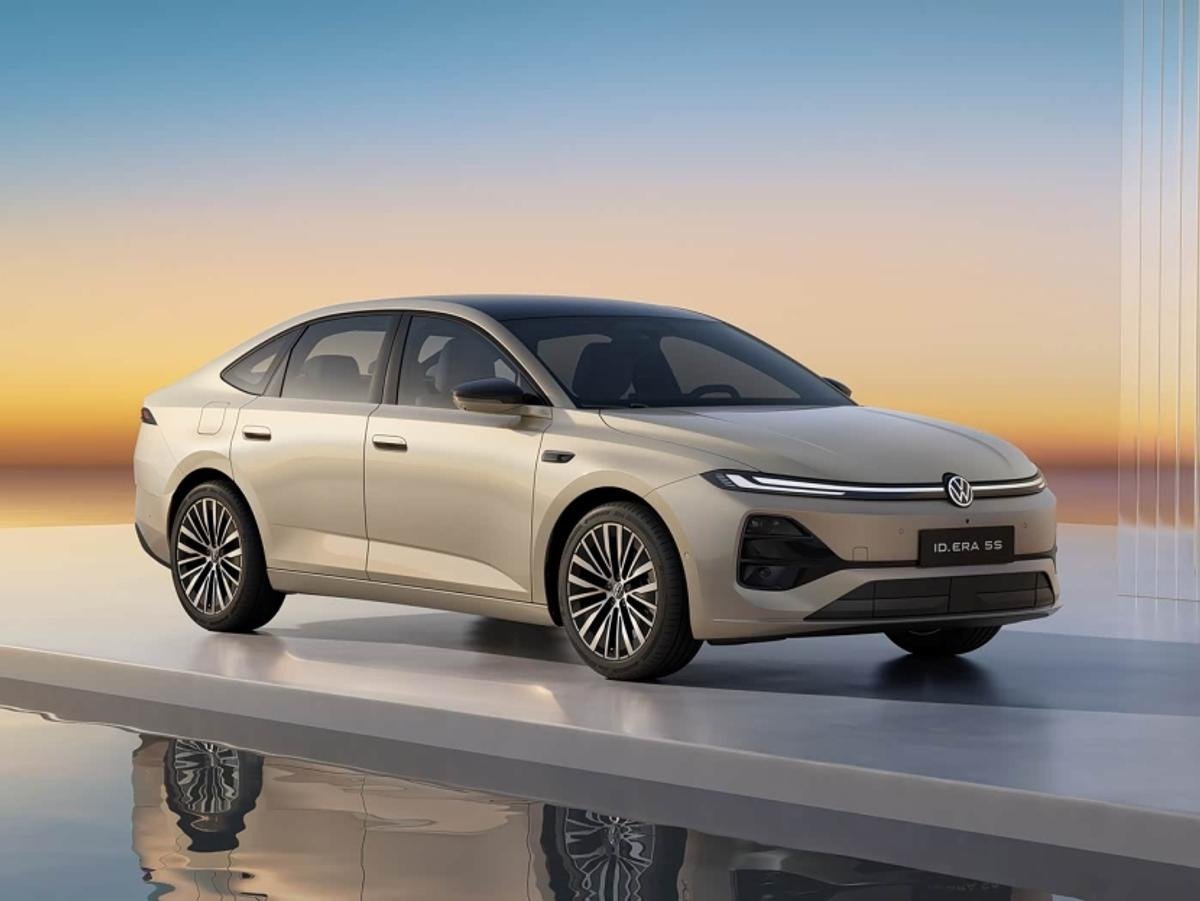
Caption: 5S exterior
The ID.ERA 5S is Volkswagen's first globally launched sedan equipped with urban navigation assist, and the exterior is restrained: closed front face with a continuous light strip and illuminated logo, semi-hidden door handles, fastback lines yielding a 0.247Cd drag coefficient—it looks like a widened Passat.
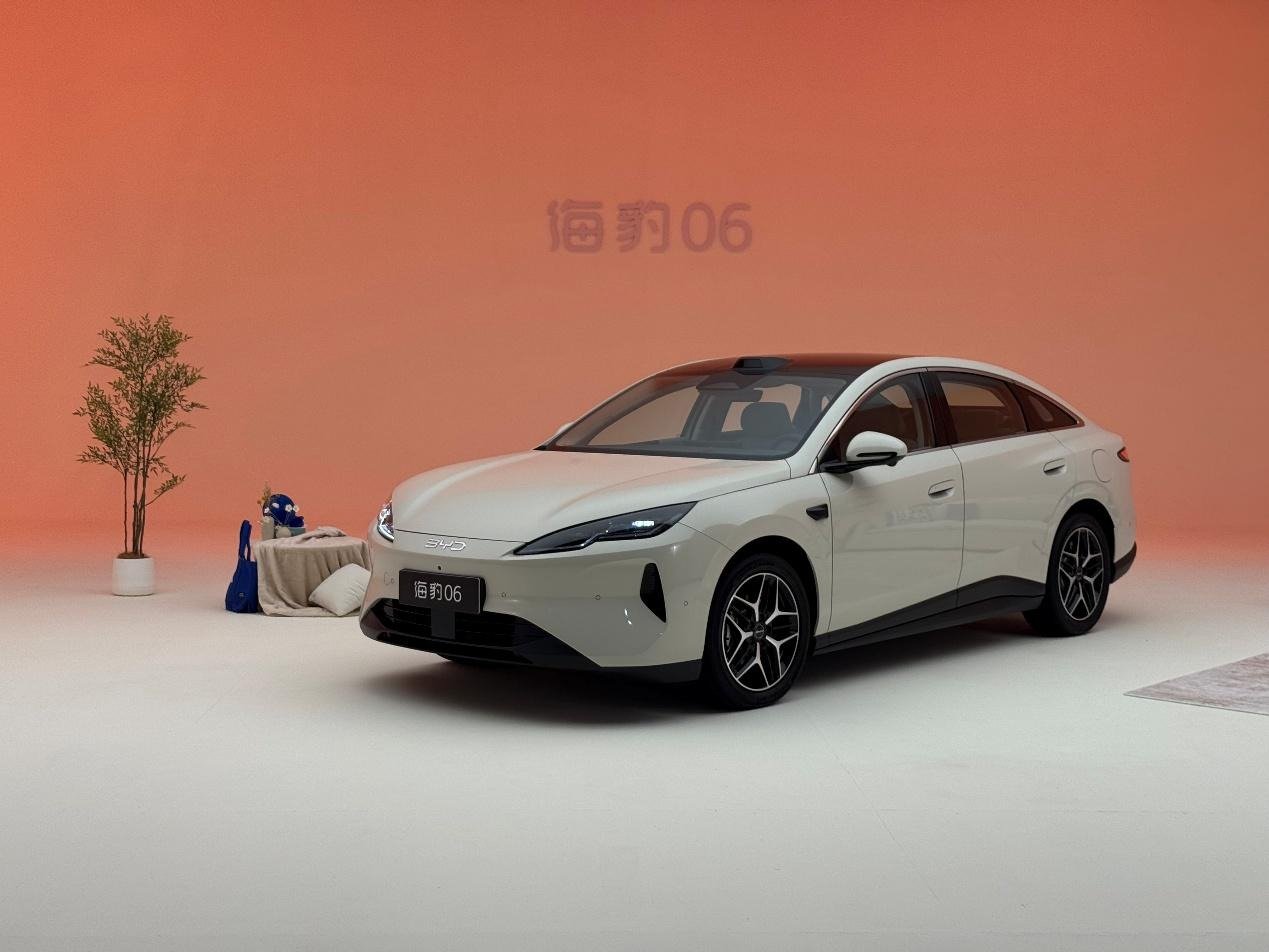
Caption: Seal 06 exterior
The Seal 06 switches to a unified closed front face across the lineup, with sharper "Wave Chasing Star River" headlights, blacked-out A, B, and C pillars creating a floating roof, and a rear continuous wave taillight with an illuminated BYD logo embedded. One is steady, one is fresh—beauty is in the eye of the beholder.
Both save fuel, but the confidence to "drive it as an EV" is different
The ID.ERA 5S has one powertrain across the lineup: a 1.5L engine (80kW) plus a 130kW front motor, a 19.1kWh lithium iron phosphate battery, 160km CLTC pure electric range, 2.82L fuel consumption at low charge, and over 2,000km combined range on full fuel and charge—China Automotive Technology and Research Center measured 2,033.8km in real testing, 30%-80% fast charging in 15 minutes, and it can run on 92-octane fuel.
The Seal 06 DM-i uses the fifth-generation DM system, a 1.5L engine paired with a 120kW or 175kW motor, pure electric range in two tiers of 230km and 320km, 2.59L fuel consumption at low charge (NEDC), and a maximum combined range of 2,370km.
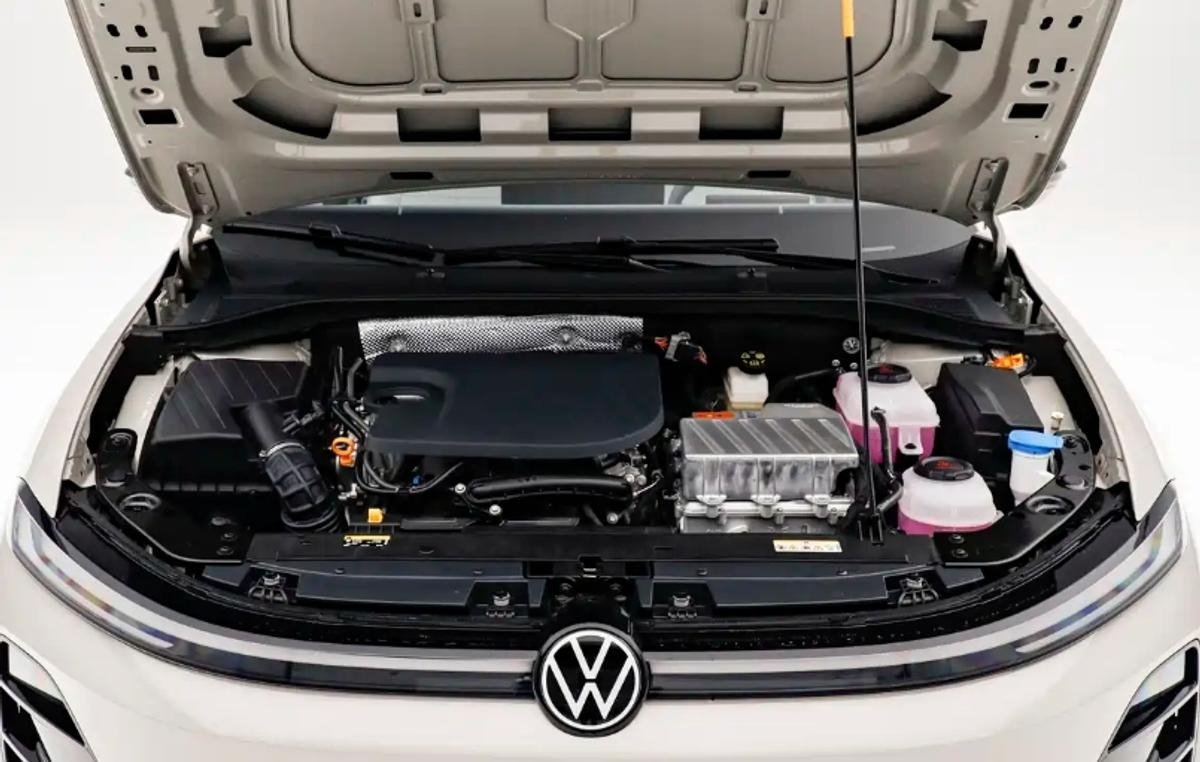
Caption: 5S powertrain bay
Here's an honest note: the 5S's 160km is CLTC nominal, and the WLTC figure is only 120km. Owner and media real-world feedback indicates that at a steady 120km/h on the highway, actual pure electric range is roughly 120-140km, and winter heating cuts it further. The Seal 06 DM-i starts at 230km and tops out at 320km—for the same commute distance, the Seal 06 can go a week on one charge, while the 5S needs charging every two days. Families who want to "drive it as an EV" need to weigh this gap carefully.
Urban NOA is the 5S's card, lidar is the Seal 06's card
The ID.ERA 5S's killer move is bringing urban navigation assist down to the 100,000-yuan class. The Pro Navigation Edition and Max Edition carry the "Xingyun Zhixing" system co-developed with CARIAD Horizon (a joint venture between Volkswagen CARIAD and Horizon Robotics), based on the Horizon Journey 6M chip, supporting urban NOA, highway NOA, cross-floor memory parking, and traceable reversing. The Max Edition has lidar, and AEB works up to 140km/h. No joint venture brand has offered urban navigation at this price point before.
The Seal 06 takes a tiered approach: higher trims get the God's Eye B laser version with a roof-mounted lidar, supporting urban navigation and highway navigation, plus intelligent parking as a fallback; lower trims focus on basic driver assistance. Want the full feature set, you'll need to raise your budget.
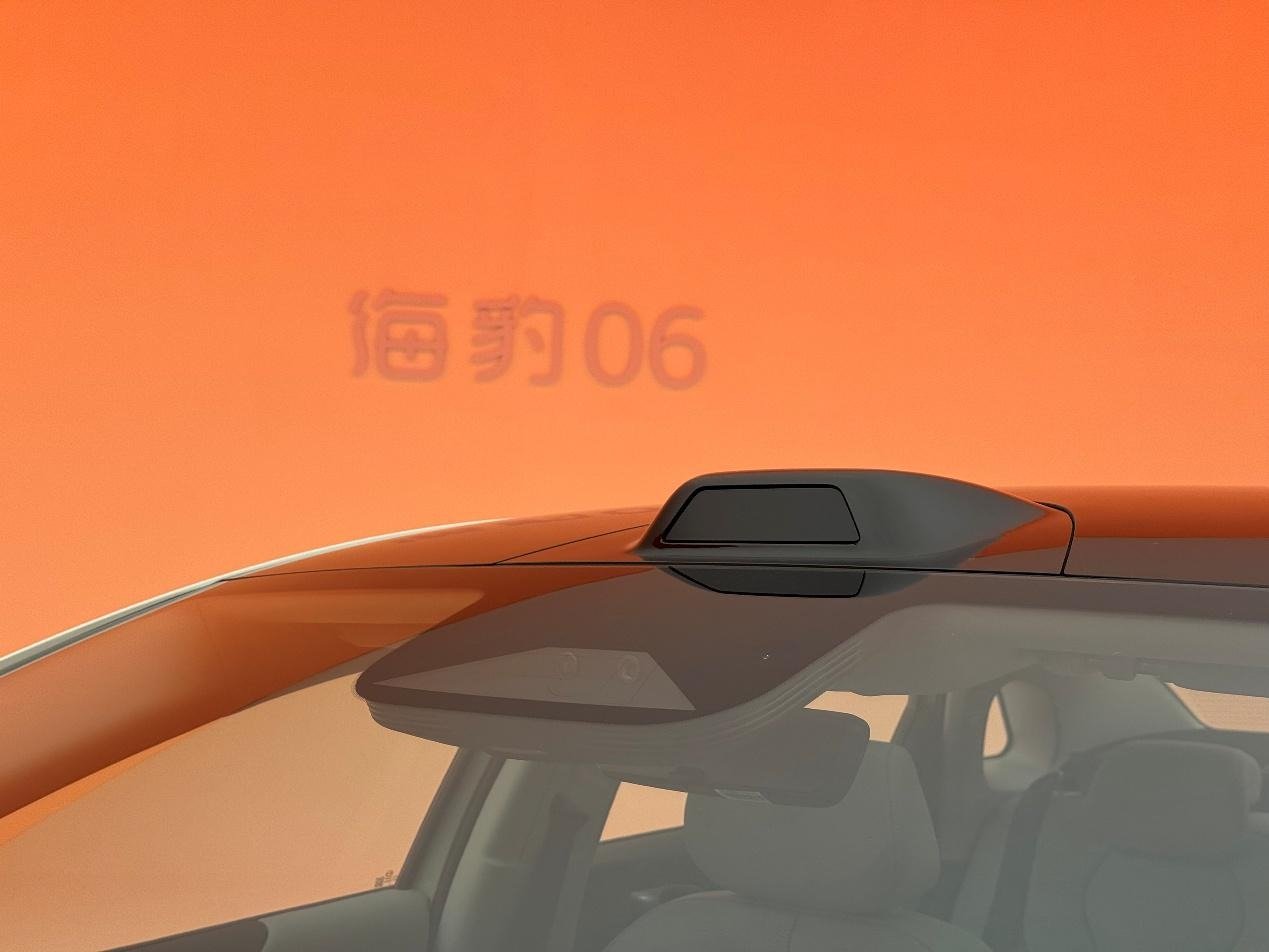
Caption: Seal 06 lidar
However, the 5S's system is still in its磨合期. Owners have already reported that the driver assistance logic occasionally gets confused when entering and exiting elevated on-ramps—failing to exit when it should, or exiting early. New cards are easy to play, but stability still needs to be built up slowly through OTA.
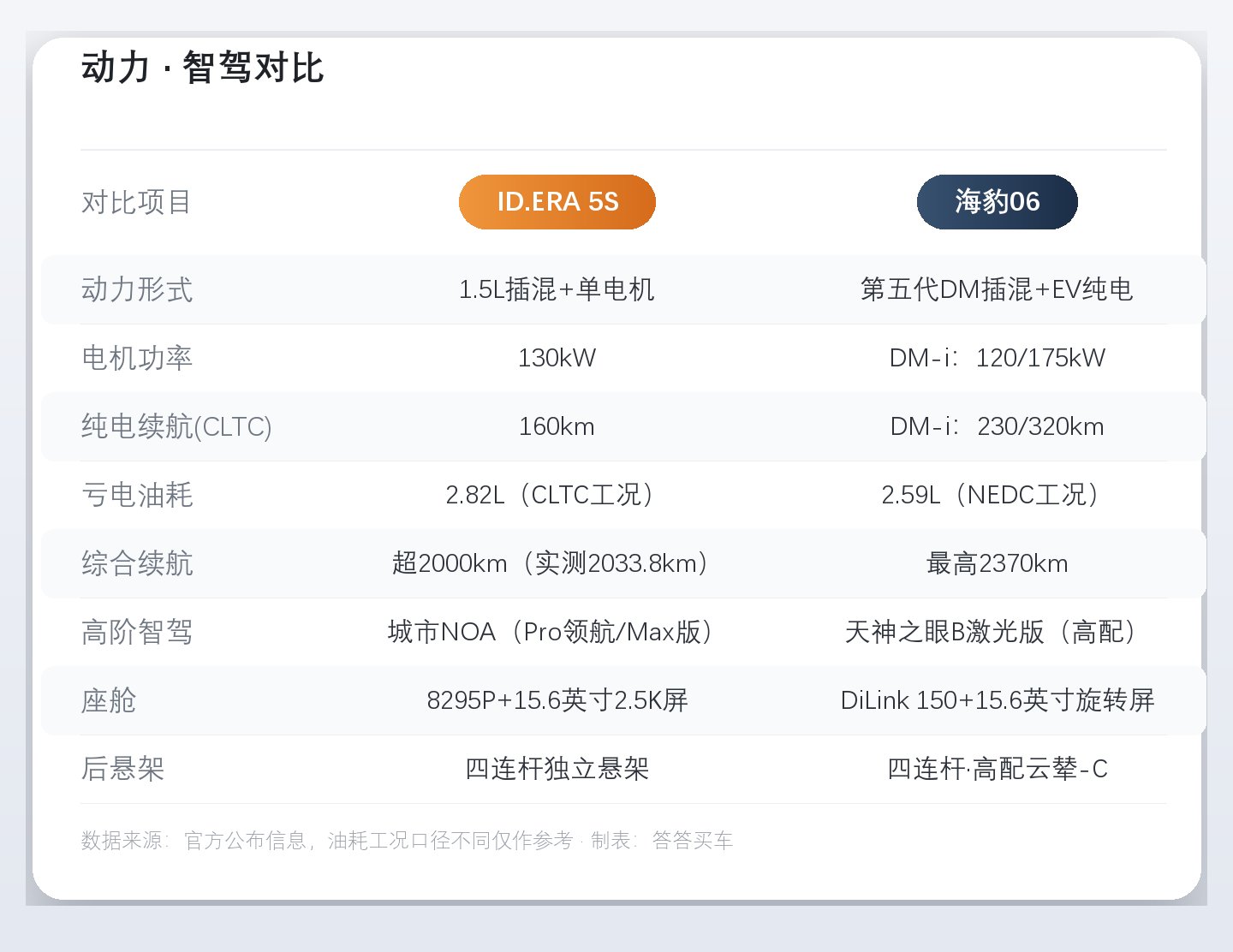
Caption: Powertrain and smart driving card
One stacks chips, one stacks ecosystem
The ID.ERA 5S cabin comes standard across the lineup with an 8.8-inch instrument cluster plus a 15.6-inch 2.5K central control screen, powered by the Qualcomm 8295P chip, supporting CarPlay, HiCar, and CarLink three-way phone connectivity—very friendly to long-time joint venture car owners. Higher trims get front-row ventilation, heating, and massage, and the front passenger seat reclines to 145 degrees to form a 1.8-meter bed with the rear row.
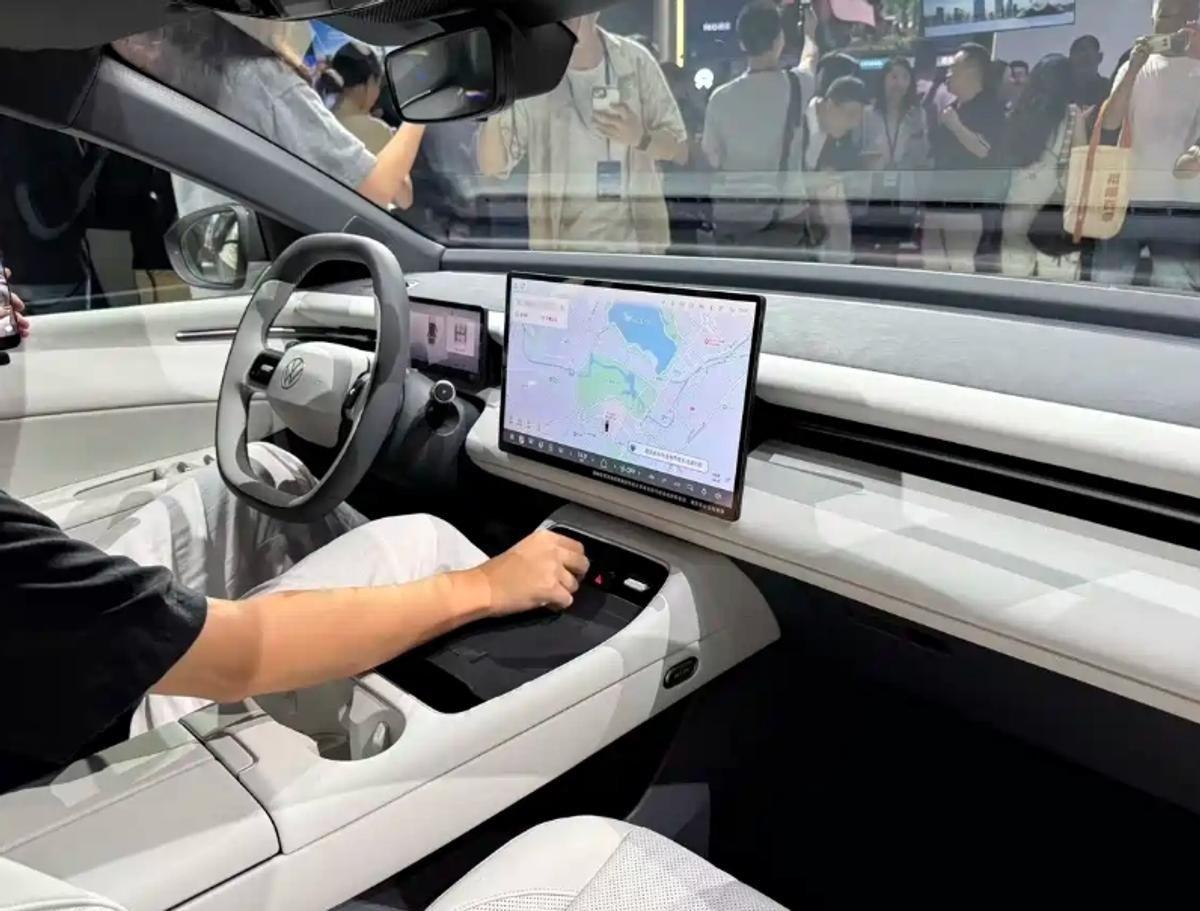
Caption: 5S cabin
The Seal 06 uses DiLink 150 with a 15.6-inch rotating screen, packed with the full-blooded DeepSeek, and higher trims also get a 12-inch W-HUD, Cloud辇-C intelligent damping suspension, and a hot-cold fridge. BYD has always been generous with comfort features.
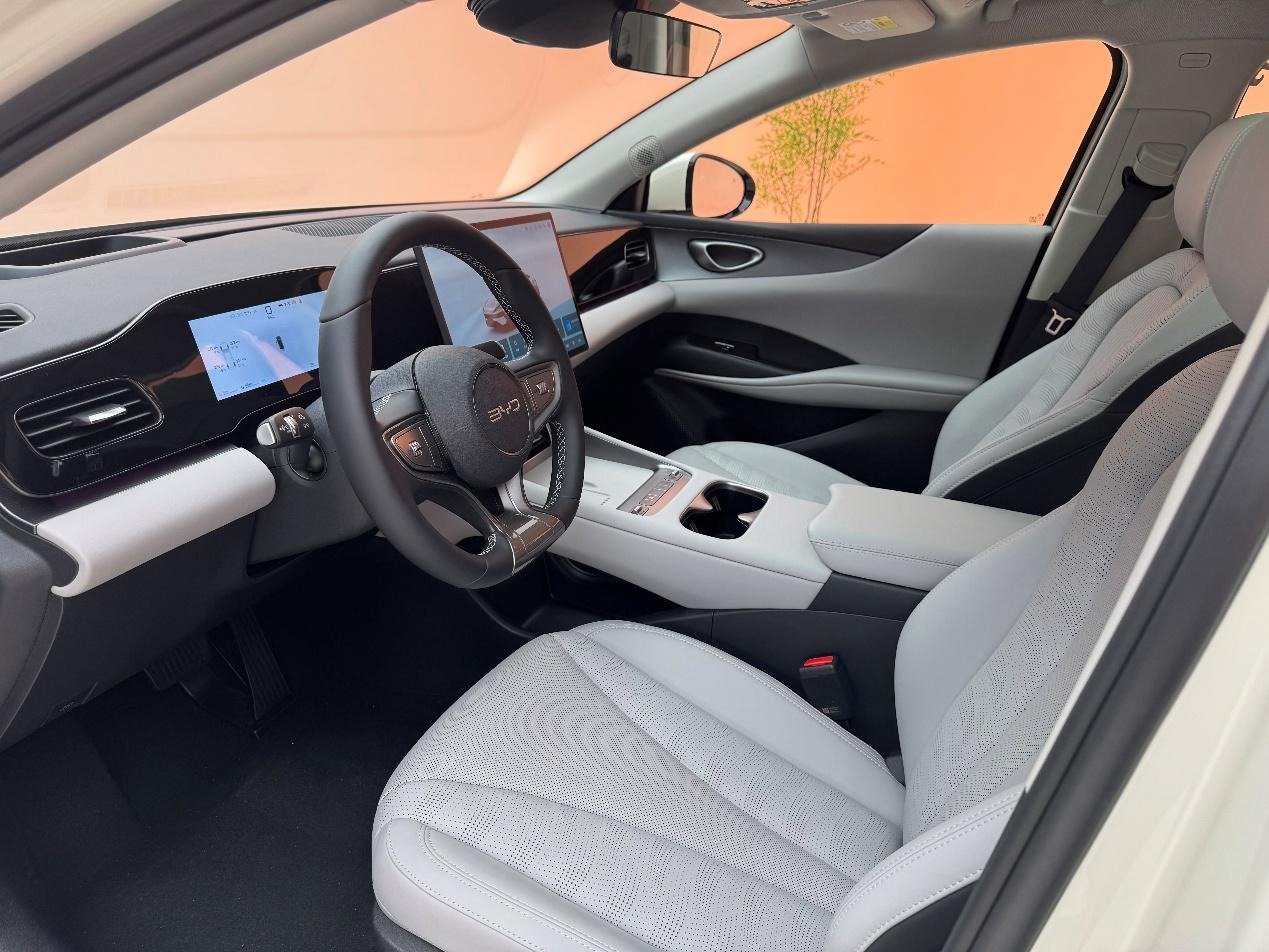
Caption: Seal 06 cabin
Both cars have their own headaches: owners report the 5S infotainment occasionally lags, menu switching is slow, and highway wind noise is noticeable; the Seal 06's wind noise at 120km/h is also repeatedly mentioned. For a car in the 100,000-plus range, sound insulation and infotainment smoothness are both sacrifices made for cost—it's six of one, half a dozen of the other.
The early-ownership hurdle the 5S still has to clear
This is where the 5S is currently at a disadvantage. Several complaints have already appeared on Car Quality Network within very short periods after delivery: one owner, less than a month after taking delivery and with 663 kilometers driven, had the sunroof sunshade jam and rattle; another complaint reported the vehicle losing power after sitting for a day, with deep throttle producing no movement, recovering after about ten minutes, along with sentry mode frequently exiting automatically; there are also cases of center console rattling. The Seal 06's three-electric system has been validated through large-scale market exposure, and complaints about rattling and sound insulation exist, but most are "old issues"—rarely sending owners to the service center in the first month.
Of course, for a new car that has just broken 10,000 deliveries, the complaint sample is still small, and individual cases cannot represent batch quality. But for family users spending real money, the psychological hurdle of "do I need to visit the service center in the first month of ownership" is something the 5S has to clear on its own.
Dada's take
The choice between these two cars is essentially "peace of mind when buying" versus "peace of mind when using." The ID.ERA 5S offers a German chassis, lifetime warranty, and urban navigation assist rarely seen at the 100,000-yuan level for a limited-time 89,900 yuan, with shortcomings in trunk space, pure electric range, and unverified new-car quality control; the Seal 06 holds its base with a wider price band, longer pure electric range, and proven three-electric system, at the cost of paying extra for advanced smart driving. My advice: test drive both—things like chassis feel can't be seen in a spec sheet, only felt behind the wheel.
(All information in this article is compiled from official announcements by SAIC Volkswagen and BYD, as well as public reports from Car Quality Network and media. Owner feedback represents individual cases. Specific configurations and benefits are subject to official releases.)


