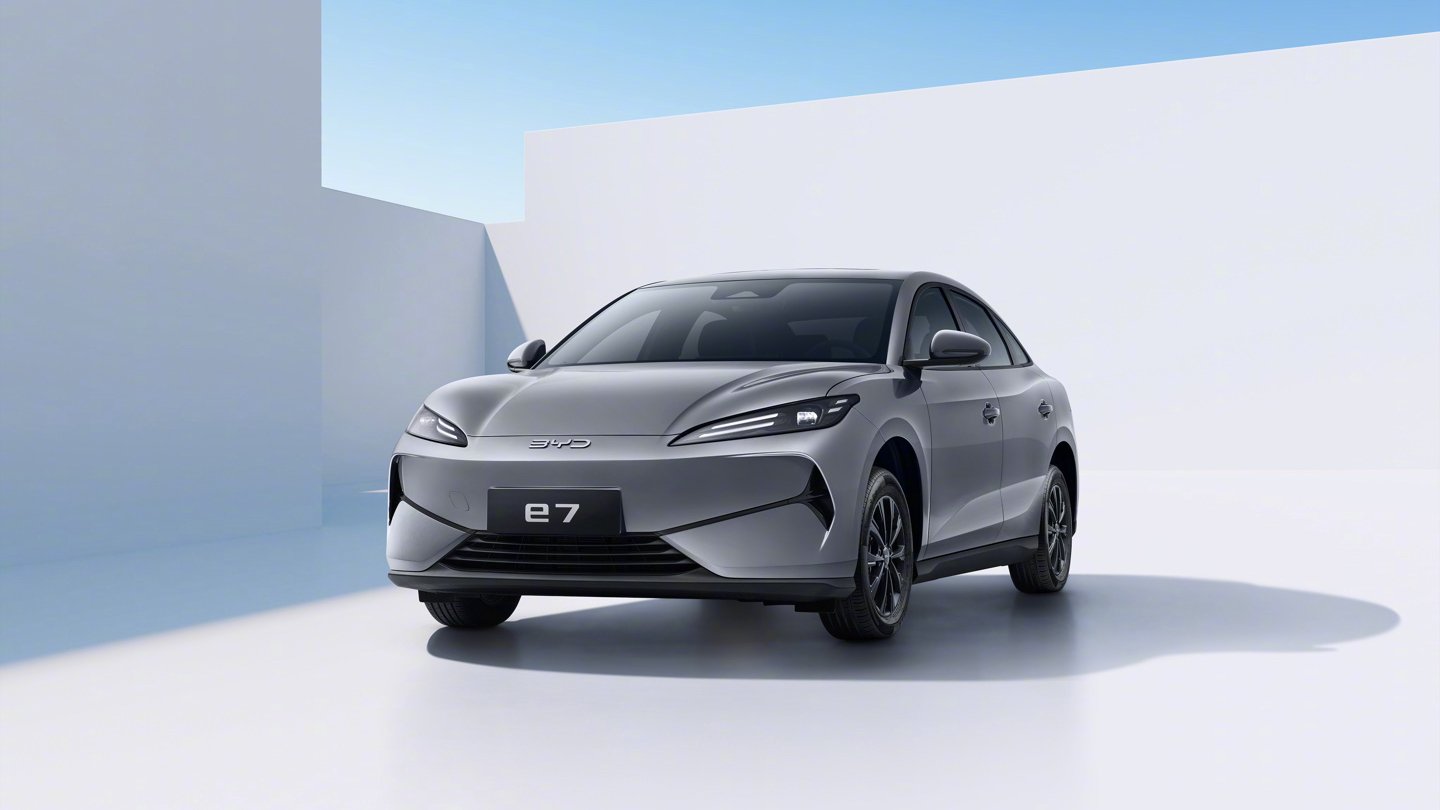
It is reported that the all-new mid-size sedan BYD e7 from the Ocean Network will officially go on sale on May 17.
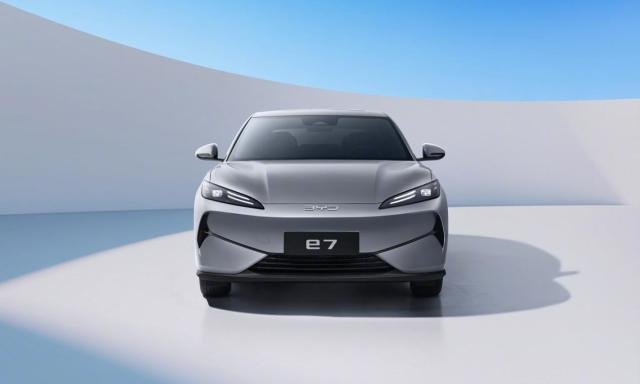
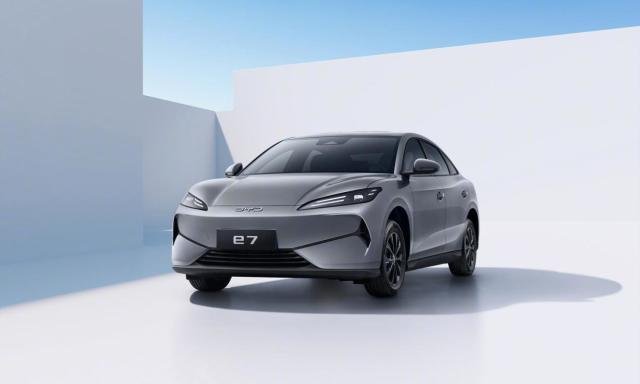
The new car's exterior adopts a closed front face paired with horizontally extended light clusters, with dual LED daytime running lights and projector lenses combining to form the basic lighting unit. The air intake channels at the front bumper and the lower grille form an X-shaped airflow guidance structure; in the EV segment, such designs primarily serve heat dissipation and aerodynamic optimization functions. The retention of traditional mechanical door handles and small-sized wheels reflects consideration for reliability and maintenance convenience.
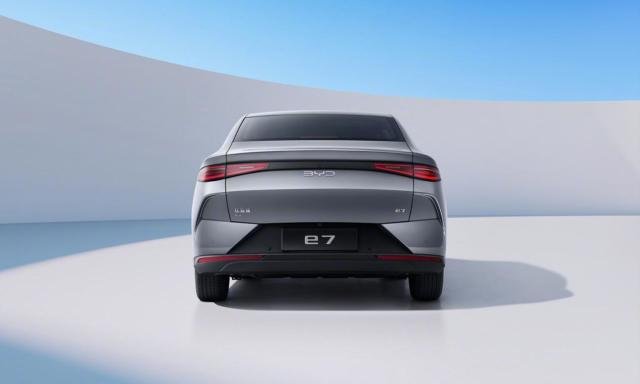
The rear adopts a visual connection scheme of split taillight clusters paired with black high-gloss trim, without using a full-width illuminated structure. The rear bumper styling geometrically echoes the front face, and the bottom diffuser adopts a non-functional decorative design. Regulatory filing information shows the vehicle offers optional configurations including 4 wheel styles, a panoramic sunroof, and ETC equipment.
The interior adopts a layered instrument panel layout, with an 8.8-inch LCD instrument cluster and a 12.8-inch rotating central control screen forming the digital interaction interface. The column-mounted shifter design frees up the central tunnel area, creating a multifunctional storage matrix with a total volume of 18.5L, including document slots, cup holders, and electronic device storage areas. The seats use a synthetic leather/PVC mixed material, and the top-trim model's driver seat supports 6-way power adjustment and three-level ventilation/heating functions.
The designers adopted a differentiated strategy for rear passenger space: the seat cushion height is lowered by 15mm to improve leg support, but the backrest angle is set toward a more upright posture. This trade-off seeks a balance between the high-frequency short-trip needs of ride-hailing services and the long-distance travel needs of families.
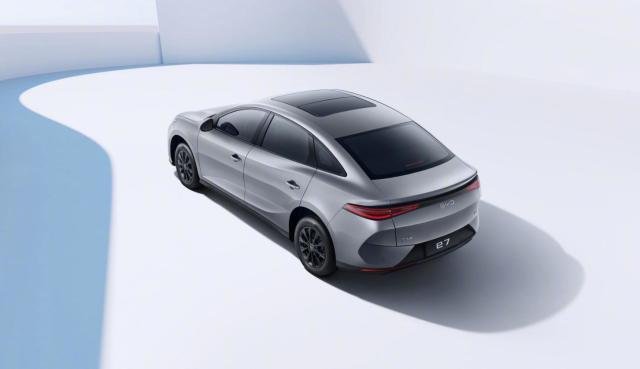
The powertrain continues with a permanent magnet synchronous motor solution, with a peak power of 100kW (134Ps), maximum torque of 180N·m, and a top speed set at 150km/h. The battery pack offers two lithium iron phosphate blade battery options of 48kWh/57.6kWh, with CLTC range of 450km/520km respectively. The charging system supports DC fast charging from 30% to 80% SOC (30 minutes) and 7kW AC slow charging mode, and the battery management system introduces refrigerant direct cooling technology to improve thermal management efficiency.
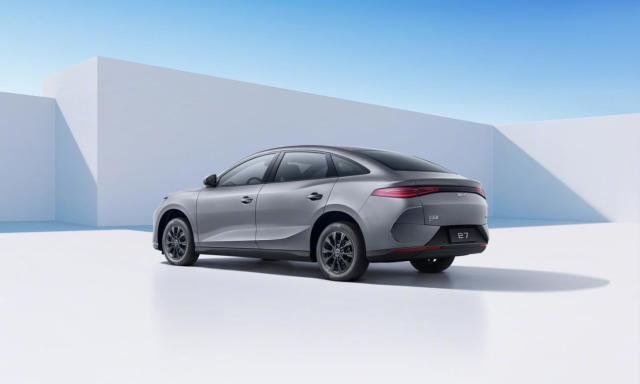
The vehicle's overall energy consumption control is at a mainstream level in its class, with a comprehensive electricity consumption figure of 12.3kWh/100km showing a 3%-5% advantage over competitors. The power parameters are completely identical to those of the Qin PLUS EV, indicating cost optimization brought by supply chain sharing.
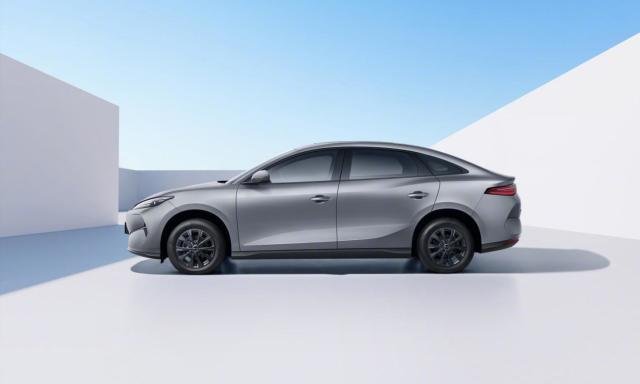
The 4780mm vehicle length and 2820mm wheelbase establish a B-segment sedan positioning, providing 120mm more rear longitudinal space than mainstream A+ segment EVs. The pre-sale price of 120,000 yuan cuts into the ride-hailing procurement baseline, with the entry-level version achieving cost control by canceling the sunroof and reducing screen size, keeping operating costs at 0.13-0.15 yuan per kilometer. The top-trim version, by adding range, leather seats, and intelligent connectivity features, mainly competes in the 140,000-160,000 yuan private consumer market.


